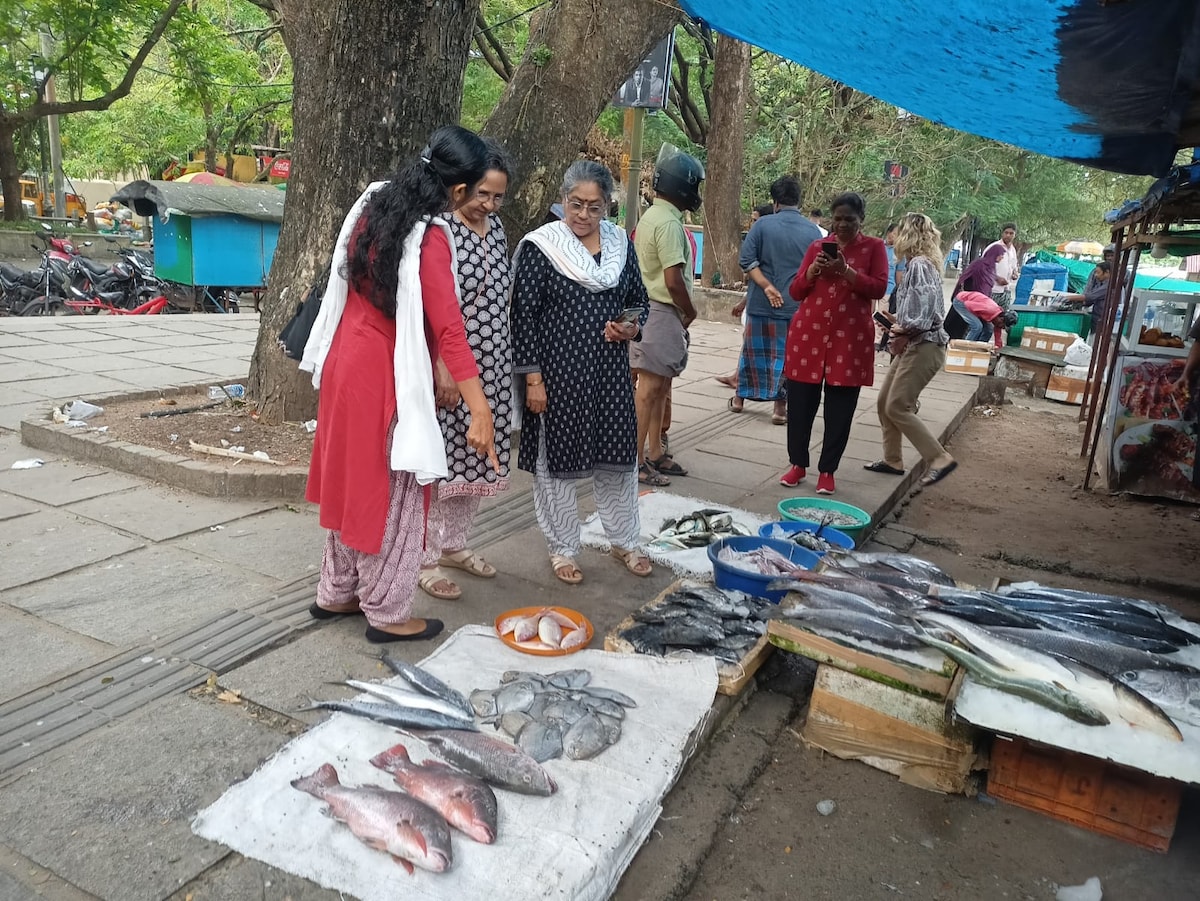
auction eers take over and once sold, it changes hands with the trader who has bought it. He then resells it to the retail fish-sellers who buy it from them and transfer it to their respective aluminium vessels, buckets, bamboo baskets, plastic tubs or thermocol packs as the case maybe. The catch is then briskly transported on human heads, old rusty bicycles, or mopeds, pickups, autos, trucks and so on to make its way out from the harbour to the local markets or the fisheries for further processing. The fish then changes hands with fish-mongers who set up shops in busy neighbourhoods, where the retail consumers flock for their daily buy of fish. Here the buyer pays money to the fish-monger and takes the fish home to either have it cooked readily or have it refrigerated for later use. The fish at home gets to the hands of the cleaner who cleans it and sets it up for the person who cooks who will prepare the dish that will travel to the dining tables in serving dishes, which will then finally be eaten by the end consumer over a hearty meal. Thus ends the journey of that unfortunate fish that was trapped in the ocean a few days back, hundreds of miles away from where it is being ultimately consumed. You will agree that it was quiet a fascinating journey that the fish had made to find its final resting place in human tummies
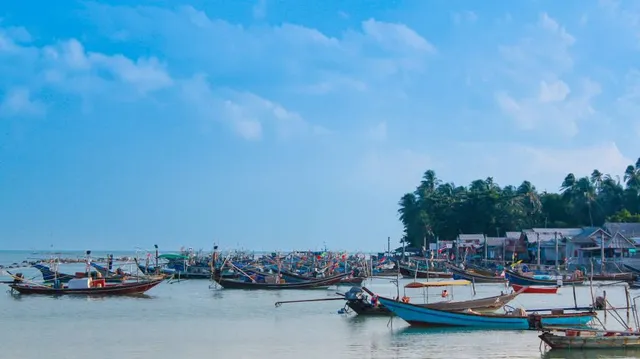
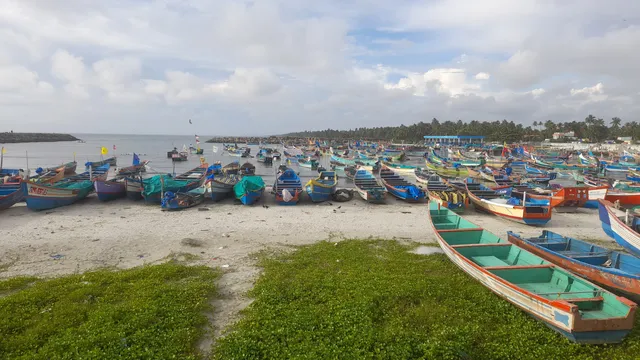
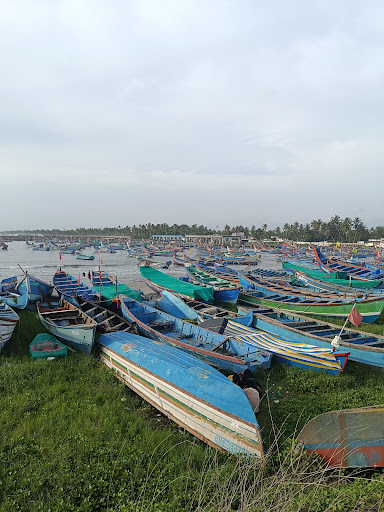
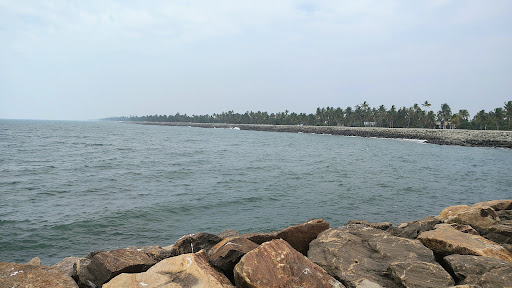
I always make it a point in my travels to new destinations to strike a polite conversation with ageing locals. If only to get a share of their wisdom and perspective on life as they narrate the local gossip, the must dos for the place, the taboo topics, best brews the place is famous for, where to eat and what to eat there, the best things to shop and where to buy what and at what prices etc. So I got talking with Mammukka an ageing fisherman whom I had chanced upon at the busy and only tea-stall on the beach. He turned out to be a man of few words therefore less gossipy and more professor-like and factual. He told me that the harbour was born out of a persistent demand from local fishermen for a fishery harbour, which provided a tranquil basin with safe entry conditions. This fishing gap was a man-made creation which lies in between two seawalls which were recently built to stop the rapid sea-erosion this area was earlier prone to. The Chellanam Fishing Harbour is located in the Kandekkadu gap of Chellanam Panchayath of Ernakulam District along the Thoppumpady-Chellanam State Highway which is 8.5 km from the NH 47 Eramalloor Junction. The nearest railway station is Thuravoor, which is 6 km south of the place. This waterfront is fabled to be rich in fish because there are shifting mud banks that are often formed by the synergy of rapidly changing current patterns and tidal activities. He also told me there were about 200 motorized valloms and 15 inboard valloms operating from there. The maximum number of fishing days in a year here is only 120-125 days. The local fishermen are therefore forced to take up alternative employment to keep themselves busy for the two-thirds of the year that they remain out of the sea. So we have many multi-talented fishermen who also double up as singers, movie-extras, band players, barbers, mechanics, salesman, cooks, waiters, butchers, cobblers, tailors, auto and...
Read moreChellanam Beach, situated in the Ernakulam district of Kerala, India, is a serene coastal stretch renowned for its natural beauty and tranquility. Unlike some of the more crowded beaches in Kerala, Chellanam offers a peaceful retreat away from the hustle and bustle of city life.
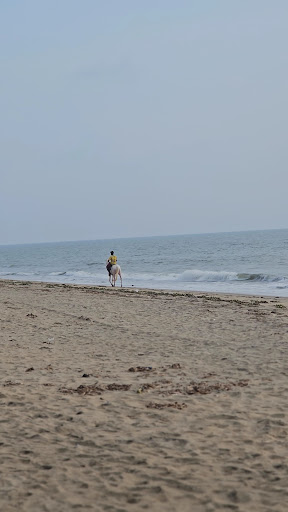
The beach boasts soft golden sands and clear blue waters, perfect for leisurely strolls along the shoreline or relaxing sunbathing sessions. With fewer tourists compared to other beaches in the region, visitors can enjoy a more intimate and secluded experience amidst the picturesque surroundings.
Chellanam Beach is also known for its thriving fishing community, providing an authentic glimpse into the local way of life. Visitors can witness fishermen casting their nets into the sea and bustling fish markets where fresh catch is sold daily.
While the beach lacks extensive tourist infrastructure, such as restaurants and hotels, this adds to its charm, allowing visitors to connect more intimately with nature. However, it's advisable to carry essentials like water and snacks when visiting.
One of the highlights of Chellanam Beach is its stunning sunsets, painting the sky in hues of orange and pink, creating a mesmerizing backdrop against the tranquil waters.
Overall, Chellanam Beach offers a serene and authentic coastal experience, making it an ideal destination for those seeking relaxation and a deeper connection...
Read moreThere is no beach as such. There is a sea wall which is saving the nearby people and their homes. The sea waves and its power is at its peak at this place and due to which it is known to have eaten up the homes of the people until the government had to intervene and build up a sea wall. The sea wall is amazing and there is a walkway to it where one can walk with their family at any point of time during the day or night. The place itself is very safe and there is ample amount of parking available if one is planning to visit this place with their vehicle. I would recommend this place to anyone who is tired of the nearby Fort Kochi beach and wants something secluded and private to walk with...
Read more