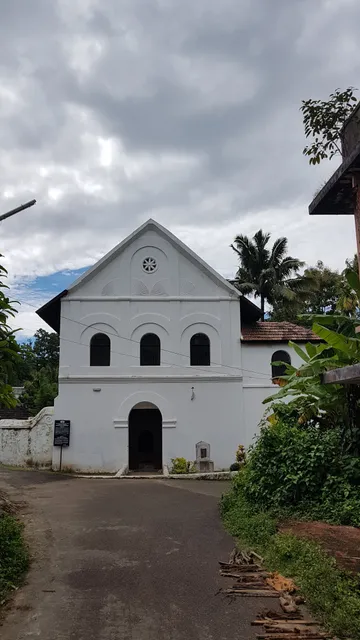
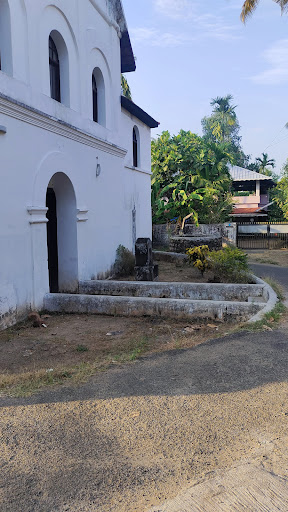
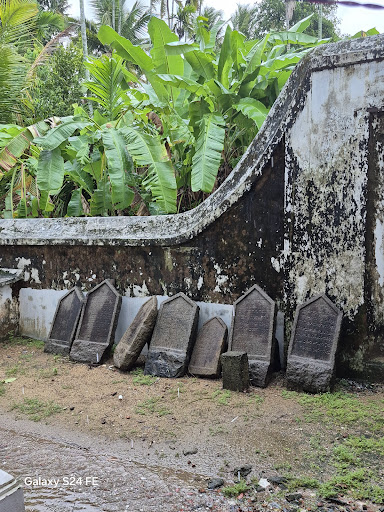
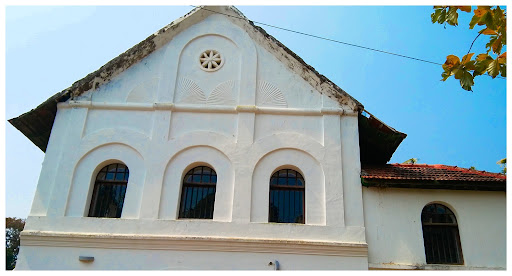
The Paravur Synagogue aka Parur Synagogue is the one of largest and most complete among the Jewish synagogues in Kerala, located in North Paravur (Parur).
It is currently non-operational as a synagogue for worship. However, it has been recently renovated by the Government of Kerala and is now open to public visits as the Kerala Jews History Museum.
Jewish people (Malabar Jews) had been arriving in Kerala since 1st millennia BC for trading, and their communities were mostly settled around today's Kodungallur region (which was then a Roman trading port named Muziris) and Kollam. They received royal patronage and special rights from the local Chera kings such as Cheraman Perumal and established Synagogues at their respective settlements for public worship.3 This was documented in the copper plates dated 10th century AD issued by Bhaskara Ravi Varman to the Jewish community leader Joseph Rabban.4
In the 14th century AD, after the Periyar Flood of 1341 (that also caused a Tsunami, according to some sources 1]), the community had to relocate to nearby towns such as Paravur, Chendamangalam and Kochi. Memories of this incident were preserved by oral tradition through traditional songs in Jewish Malayalam.[68]
The Paravur Synagogue is among the oldest Synagogues that still exist in Kerala and is also the largest Synagogue complex.[9] The current synagogue was built in 1615 AD at the Jewish street of Paravur and very close to the Paravur Market where the Jewish community had settled and worked as traders. However, traditional accounts hint at a much older heritage, indicating that it was built on top of the ruins of an older synagogue dated 1165 AD.[5]
Although the community lived peacefully throughout their history among the locals, there were conflicts due to foreign invaders such as Mysore Kingdom (during the Malabar raids led by Hyder Ali and his son Tipu Sultanduring the 18th century) and European colonizers such as Portuguese and Dutchduring 16th and 17th centuries.[9] According to a traditional Jewish Malayalam song, the synagogue was put to fire in 1662, most likely by the Portuguese, at around the same time when the Paradesi Synagogue near Fort Kochiwas also burnt.[10]
After the modern State of Israel was established in 1948, the Paravur Jews started to make Aliyah.[1] As of 1949, there were about three hundred Jews still living in Paravur, but most of them immigrated to Israel in large numbers by the mid 1950s.[9] By 1970s, the public worship at the Synagogue ceased as the minyan (the quorum or minimum number of 10 Jewish adults required to conduct worship) could not be met and the Synagogue largely remained unattended during later decades.[9] The last ever worship service was conducted in 1988.[5]
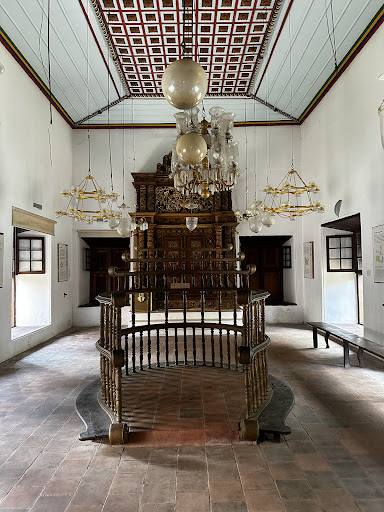
According to a report by the International Survey of Jewish Monuments (ISJM), the original bimah and the ark (containing Torah scrolls) were moved to Israel in 1995 and preserved there.[5]
In 1996, the synagogue was declared as a protected monument, however it continued to remain mostly neglected until 2009 when it was handed over to the Kerala State Department of Archaeology.[5] Since 2010, the Government renovated the dilapidated structure as part of the Muziris Heritage Project and converted this into a museum to highlight the Jewish heritage of Kerala.[2] They were opened to...
Read moreA Glimpse into History: Chendamangalam Jew Synagogue
Nestled amidst the tranquil backwaters and lush greenery of Kerala, the Chendamangalam Jew Synagogue stands as a testament to the rich and diverse history of the region. This historical gem, located in the quaint village of Chendamangalam, offers visitors a unique opportunity to explore the vibrant Jewish heritage of India.
At first glance, the synagogue's unassuming exterior might lead one to underestimate the treasures hidden within its walls. However, as you step inside, you are transported back in time to an era when Jewish settlers found a home in this picturesque corner of the world.
The architecture of the Chendamangalam Jew Synagogue is a captivating blend of Indian and Jewish influences. The wooden structure, adorned with intricate carvings and colorful glass lamps, is a masterpiece in itself.
One of the most striking features of the synagogue is the dazzling blue and white floor tiles imported from China, which tell stories from Jewish history through their intricate patterns. These tiles, with their unique designs, add a touch of mystique to the place, and you can't help but marvel at the narrative they portray.
The synagogue also houses an impressive collection of artifacts and relics that provide a glimpse into the lives of the Jewish community that once thrived in this region.
What truly sets the Chendamangalam Jew Synagogue apart is its serene atmosphere. The peaceful surroundings, the gentle rustling of the palm trees, and the soothing sounds of the nearby backwaters make it a place for quiet reflection and contemplation. It's not just a historical site; it's a place to connect with the past and appreciate the beauty of the present.
While the Chendamangalam Jew Synagogue is undoubtedly a site of historical significance, there are a few aspects that could enhance the visitor experience. It would be beneficial to have more detailed informational plaques or guided tours to provide context and insights into the history and significance of the synagogue. Additionally, preservation efforts should be ongoing to ensure that this remarkable piece of history remains intact for generations to come.
In conclusion, the Chendamangalam Jew Synagogue is a hidden treasure in the heart of Kerala, offering a glimpse into a bygone era and a cultural heritage that deserves recognition and preservation. Its unique architecture, fascinating artifacts, and peaceful ambiance make it a must-visit destination for history enthusiasts, culture seekers, and anyone looking to connect with the rich tapestry of India's diverse past. While there is room for improvement in terms of information dissemination, this historical site is undoubtedly worth exploring for its historical value and...
Read moreChennamangalam Synagogue – A Window into Jewish Heritage in Kerala Tucked away in the quiet heritage town of Chennamangalam, this historic synagogue is one of the most significant reminders of Kerala’s Jewish past. Built in 1614, during the period of the Portuguese Inquisition, the synagogue was once the spiritual center for the small Jewish community that thrived here for centuries.
The synagogue was surrounded by tall stone walls that offered both protection and perhaps a sense of grandeur, reflecting the style of nearby Paliyam Palace. Remarkably, the Jews of Chennamangalam lived in harmony with their Hindu, Christian, and Muslim neighbors for more than 350 years, making this spot a symbol of Kerala’s tradition of religious tolerance.
Although the Jewish population here was always modest—in 1848, only 164 Jews lived in Chennamangalam out of over 1,300 Cochin Jews—their heritage remains alive in this building. The present structure is actually the third synagogue on this site, as earlier versions were destroyed by fire.
After the creation of the State of Israel in the 1950s, most families migrated abroad, and the synagogue slowly fell silent. By the 1980s, with few Jews left in the region, the building was placed under the care of the Government of India. Today, it no longer functions as a place of worship but has been preserved as a monument of history and faith.
What to See The Synagogue – A small yet historically rich building that offers a glimpse of Jewish life in Kerala. Mini Museum – Displays artifacts and information about the Jewish community of Chennamangalam. Jewish Cemetery – Located nearby, giving visitors a solemn reminder of the community that once flourished here.
Nearby Attractions Ferry Ride to Malavana Paara – A scenic and peaceful trip across the water. Kottayil Kovilakam Heritage Area – Famous for housing a temple, a church, a mosque, and the synagogue all within one kilometer, representing Kerala’s legacy of coexistence.
Tip for Visitors: Plan your visit to also explore nearby heritage sites for a complete...
Read more