Chinnar Wildlife Sanctuary (CWS) is located 18 km north of Marayoor on SH 17 in the Marayoor and Kanthalloor panchayats of Devikulam taluk in the Idukki district of Kerala state in South India. It is one of twelve wildlife sanctuaries among the protected areas of Kerala.
It has earned the name for only rehabilitation centre for star tortoise in India.
It is under the jurisdiction of and contiguous with Eravikulam National Park to the south. Indira Gandhi Wildlife Sanctuary is to the north and Kodaikanal Wildlife Sanctuary is to the east. It forms an integral part of the 1,187 km2 (458 sq mi) block of protected forests straddling the Kerala-Tamil Nadu border in the Anaimalai Hills. The Western Ghats, Anamalai Sub-Cluster, including all of Chinnar Wildlife Sanctuary, is under consideration by the UNESCO World Heritage Committee for selection as a World Heritage Site
CWS is located between latitude 10Âş15' - 10Âş21' N and longitude 77Âş5' - 77Âş16' E.  The Munnar â Udumalpet road SH 17 passes through the sanctuary for 16 km and divides it into nearly equal portions. Average annual rainfall is only 500 mm, spread over about 48 days, because it is in the rain shadow region of the southern Western Ghats.
The altitude ranges from 400 meters (1,300 ft) at east end of the Chinnar River to 2,522 meters (8,274 ft) at Kumarikkal Mala peak. Other major peaks in the sanctuary are Nandala Malai 2,372 meters (7,782 ft), Kottakombu malai (2,144 meters (7,034 ft)), Vellaikal malai (1,863 meters (6,112 ft)) and Viriyoottu malai 1,845 meters (6,053 ft). In contrast, Anamudi peak 2,695 metres (8,842 ft), located 23 kilometers (14 mi) away in the adjacent Eravikulam National Park, is the highest peak in South India.
The Chinnar and Pambar rivers are the major perennial water resources in the sanctuary. The Chinnar originates near Kumarikal Malai, follows the interstate boundary along the northwest edge of the sanctuary for 18 km and becomes the Amaravati River in Tamil Nadu.
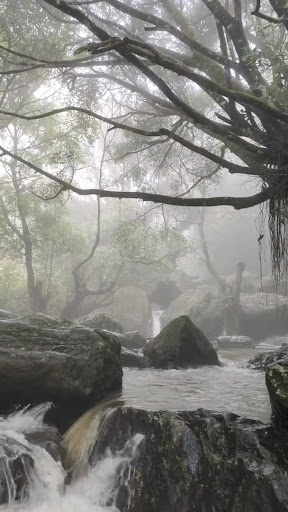
The Pambar River originates in the Anaimudi Hills and is joined by seasonal rivulets and a few perennial streams originating from sholas in the upper reaches. It traverses the Turnerâs Valley in Eravikulam National Park and flows down into the sanctuary through the Taliar Valley between Kanthalloor and Marayoor villages and eastwards through the sanctuary. It joins the Chinnar River at Koottar. The Thoovanam water falls lie deep within the sanctuary on the Pambar River. This cascade is a major tourist attraction. The Chinnar, Pambar, Kabani and Bhavani are the only rivers of the 44 in Kerala that flow eastwards
There are 11 tribal settlements inside the Chinnar WLS, each is well demarcated by temporary stone walls. The main inhabitants are Muthuvas and Pulayars. Cultivation of maize, ragi and lemongrass is practiced in the settlements. The Mudhuvas carry out small scale ganja cultivation for their religious purposes.
Senior officials of the Ministry of Environment and Forests (India), Principal Chief Conservators of Forests of Kerala, Tamil Nadu, Andhra Pradesh and Karnataka, together with other senior forest officials of these states and the Union Territory of Pondicherry, met at Thiruvananthapuram on 3 and 4 November 2006 and resolved several mutual issues concerning conservation and protection of forests and wildlife of the region.
A regular conference of the forest ministers and forest officials of the southern states is held once a year, in rotation...
   Read moreChinnar wildlife sanctuary is nice place and home for many endangered species. On way to munnar, this place has may watch towers and view wildlife. One has to be careful while driving through this place. Make sure to carry required water and food. Summer is very difficult in this place. Forest department must create some water ponds inside the forest.
The Chinnar and Pambar rivers are the major perennial water resources in the sanctuary. The Chinnar originates near Kumarikal Malai, follows the interstate boundary along the northwest edge of the sanctuary for 18 km and becomes the Amaravati River in Tamil Nadu.
The Pambar River originates in the Anaimudi Hills and is joined by seasonal rivulets and a few perennial streams originating from sholas in the upper reaches. It traverses the Turnerâs Valley in Eravikulam National Park and flows down into the sanctuary through the Taliar Valley between Kanthalloor and Marayoor villages and eastwards through the sanctuary. It joins the Chinnar River at Koottar. The Thoovanam water falls lie deep within the sanctuary on the Pambar River. This cascade is a major tourist attraction. The Chinnar, Pambar, Kabani and Bhavani are the only rivers of the 44 in Kerala that flow eastwards
Excellent by all means. And this is an unexplored tourist destination. The local people contribute their interest for the development of tourism. The Forest Department has appointed them as Guides, Cooks, Drivers, helpers etc through Eco Development Committees of Chinnar Wildlife Sanctuary. The tourists can stay in the hut, tree top or log house near the flowing river. Still I feel there is a lack of communication skills. Please note that it will take its own time to overcome this forms of undulating nature.
Awesome ride in forest and forest gaurds are very friendly road is one way have safe ride then reach by check post before 6pm , for cars all documents are they will check in check post please carry
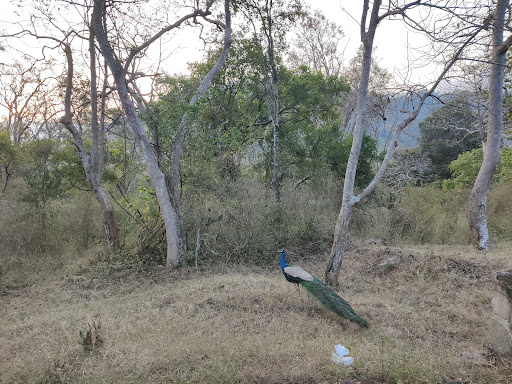
the experience was very good and the trek was very adventurous we had booked for 3 hours trek which costed us Rs 300 pp and we had got to spot peacocks, spotted deers, Indian Gaur, and bison. it was one of the memorable trek with moderate level of difficulty
We travelled from Palani to Munnar via Chinnar for a weekend. The roads are good and calm and the drive was easy. There are not many places where you could stop by but Karimuttam waterfalls is a relief. We did not check out Iravikulam National Park due to our time schedule though.
Worth walking to this place. Beautiful river with picturesque locations and the guides are well trained to lead a group to some natural happiness. Even though the place looks adventurous, we may not encounter much wild animals but the signals might frighten us which is thrilling. Youth especially would love to walk those trails with much enthusiasm....
   Read moreThere was an absolute lack of information online on how to arrange or book a trek in the area. When we called the checkpost up, the border guard simply told us to turn up at 8am and a guide would arrive. This was a huge ask as we were staying 2.5 hrs away in Munnar but we rolled the dice after being swayed by the pretty pictures we saw online.
Woke up at 4am, got picked up at 5am, and reached the Chinnar Wildlife Sanctuary Kerala checkpost at 7+am. The guards waiting there told us that the trekking guides would come around 8 to 830. We sat at the checkpost and proceeded to eat our breakfast while fending off the very aggressive macaques (saw a big male actually break into a car that had stopped at the checkpost to make off with an apple. The occupants inside the car ran out screaming).
830 came and went. Enquired with the border guards again. They assured us the guides would come. We asked if they had a number to call, they said the guides were from the tribal areas and beyond the reach of cell reception.
At about 8.55am, the guides finally turn up, decked in camo uniform with CWS badges. We were taken into the ecotourism centre, where we paid 700 rupees each for a 3 hour trek (foreigner rate). We were issued a receipt.
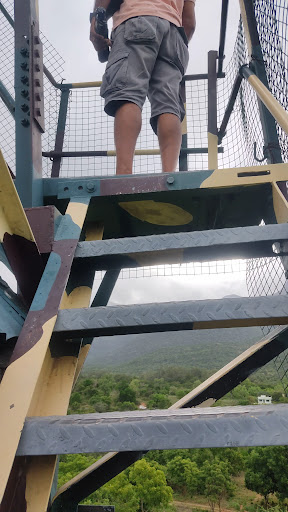
Our guide then took us back to the checkpost and registered our trek with the border guards. We then proceeded off into the bush with our guide who took us on a 3 hour hike that included a climb up a watchtower.
During our trek, we saw elephants and gaur from a distance (and lots of their dung up close). The sounds they made could be heard across the valley. Our local guide had eyes that were preternaturally sharp and pointed out the wildlife to us that we would have otherwise missed.
Overall, the experience was great and I greatly enjoyed myself. The only downside was the scorching hot weather so please bring lots of sunblock, a wide brim hat, or even an umbrella. This was on 20 Feb 2023.
Anyway, for those looking to come here, my advice would be to reach the Chinnar Kerala checkpost at about 9 or 930am, when the ecotourism office should be open. Sign up with a local guide and you'll be on your way.
(Other online reviews of the checkpost talk about being robbed by the border guards, which honestly sounds quite scary. When we were there in the morning, the guards were entirely professional and polite, if somewhat punctilious about insisting that we do not wander around and stay put while waiting for the guides...
   Read more