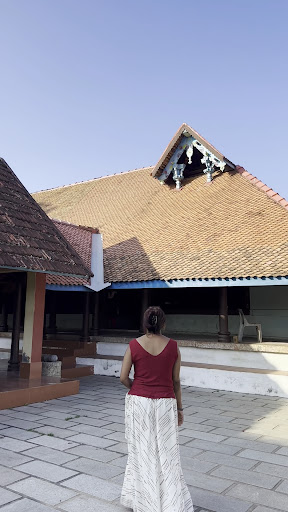
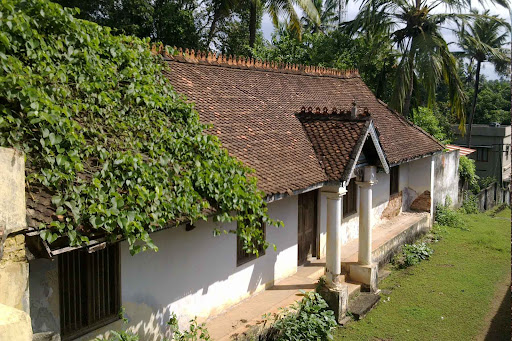
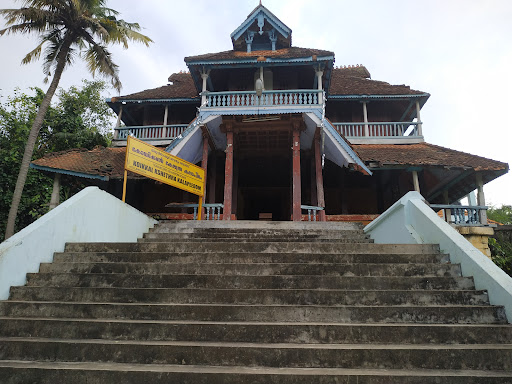
The first War of Independence against the East India Company started from this Palace in Attingal, Kerala. This war was headed by the Attingal Queen.
1810-53 Junior Rani H.H. Sri Patmanabha Sevini Vanchi Dharma Dyumani Raja Rajeshwari Rani Gouri Parvati Bai of Attingal in Travancore (India)
1815-29 Regent of Travancore
When her elder sister Regent Maharani Gowri Lakshmi Bayi died after childbirth in 1815 she was only thirteen years of age and being the only female left in the family, besides her deceased sister's little daughter, she became Regent Maharani on behalf of her nephew, the heir, Maharajah Swathi Thirunal Rama Varma. She was on her accession actively counselled by her brother in law, Raja Raja Varma of the Changanssery Royal family as well as her husband, Raghava Varma, who belonged to the Royal family of Kilimanoor. Her first act was to appoint a new Dewan, and she continued the reforms of her older sister. Christians got more freedom and some of the restrictions put on some of the lower castes were removed, she also introduced health reforms. er mother, Princes Atham of the Travancore, was the Senior Rani of Attingal. Her first husband was Raghava Varma of the Kilimanoor Royal family and after his death she married his brother After his death in 1824, she married again, but did not have any children. She lived (1802-53).
1815-? Senior Rani Gowri Rukmini Bayi of Attingal in Travancore (India)
succeeded to the title of Senior Rani of Attingal after the death of her mother, the Queen Regent, Rani Gouri Lakshmi Bai. Apart from her aunt, who was regent 1815-29, she only female in the matriarchal Travancore Royal Family, she married Rama Varma Koil Thampuran of Thiruvalla Royal Family in 1819 and had seven children, five sons and two daughters. One of these daughters died soon while the other married and had two sons, including Moolam Thirunal Sir Rama Varma. In 1888 two princesses were adopted from the Mavelikara Royal family into Travancore. (b. 1809-?).
History
On the night of April 11, 1721 150 Britishers were done to death at the Attingal Palace near Thiruvananthapuram. What perhaps was the first major attack on the British in India though rarely mentioned in Indian history . It was a clever plot laid by Kodumon Pillai, Minister of the queen of Attingal, Umayamma Rani, who out smarted the shrewd British who had superior weapons. The Nair Pada and the local Muslims took part in the operation and the British met with the biggest debacle in the region. The immediate provocation was about the building of a Fort at Anchu Thengu, Anjengo in British records. The scheming British had entered in to a series of maneuvers to make trade in spices their monopoly. Greed for huge profits drove them wild, capturing the spice country itself later. Those were the early days of the English East India Company in India, the Dutch and the British on Indian shores were engaged in a series of conflicts to stake control of the sea trade. Muslims, traditionally intermediaries in spice trade, were severely affected with the curbs in trade. Equipped with their guns and cannons, what the local soldiers were not yet having, they became menacing. Orders of the Rani to stop the building of the Fort were disobeyed. Initial attacks launched by the Nair Pada was rebuffed with severe casualties. It was after a wait that the clever trap was laid and almost everyone in the Fort was executed. Cannons and gunfire of the British came to naught.
Attingal was the seat of the sovereign of Venad during this period and there were only queens, Ranis, in power. Apart from Attingal proper the principalities of Elayidam or Kottarakkara, Perakam or Nedumangad, Thiruvithamkode or Travancore, Kollam, Kaymkulam, Karunagappalli and Karthikappalli were all under the Attingal Rani. The sovereigns were ceremonial rulers and the actual power remained with the feudal lords titled Pillais, Nairs, who kept their own armies and administration. Feuds between the Pillais used to lead to intermittent clashes at the time. This was a turning point in the...
Read more
 Learn more insights from Wanderboat AI.