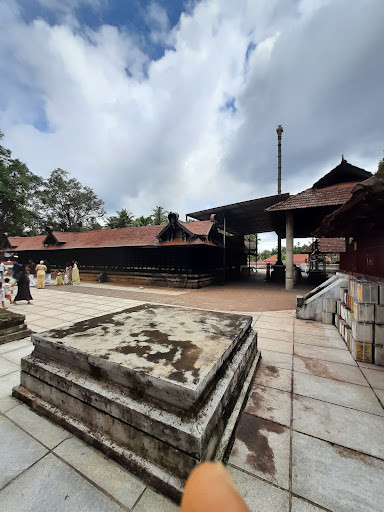
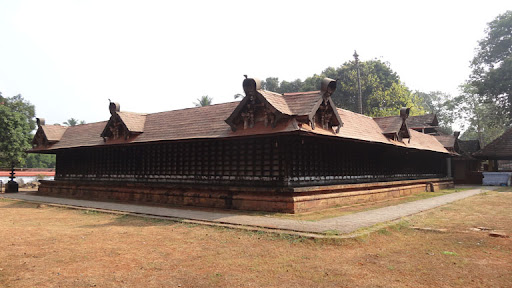
Lokanarkavu Temple is in Memunda 4 km from Vatakara. Lokanarkavu Templ is located in Kozhikode District, North Malabar region of Kerala state of south India. There is a association of heroes and heroines of the Vadakkanpattu or northern ballads with this temple. It combines an arresting simplicity and a legendary aura. The candid murals and carvings here are a delight to art lovers. Lokanarkavu is a short form of Lokamalayarkavu which means lokam (world) made of mala(mountain), aaru (river) and kavu (grove). It is the official family temple of the 500 Aryan Nagariks who had migrated to Kerala and their successors.
The main deity in the Lokanarkavu temple is Goddess Durga. It is adjacent to two shrines dedicated to the Lord Vishnu and Lord Siva. The dance, performed during the festival is Thacholikali. It resembles the martial art Kalarippayattu. Kalaripayattu artists seek the blessings of the deity of lokanarkavu temple with legendary hero Thacholi Othenan. The main temple, according to legend is 1500 years old.
Trade was the main occupation of the Aryans Brahmins. It was the temple built by the Aryans Brahmins. They accepted the traditions of the local Nairs and made relationship with them. But on close examination their customs and beliefs were evidently different from local Nair community. The goddess travelled with them to Lokanarkavu in the form of a lady who followed the five hundred Aryans. The successors still see this goddess as their mother and not as goddess. Othenan was a great devotee of Goddess Durga. But he had nothing to do with the establishment of Durga temple. It is evident from the fact that the goddess is Durga at Lokanarkavu and not the Kali form. The same applies to the local rulers who later claimed Lokanarkavu as their family goddess. All the rulers of Kerala had Goddesses with Thamasa pooja or shakteya pooja. During such poojas there were the sacrifice of either animals or humans to praise the lord. This tradition was not only followed by the locals but also by the Kerala Kings and later it was modified. This was one of the common practice of the locals and kings. In the older times they have refused to pay taxes to the local kings of kerala, as none of them was an Aryan. This shows that the race spirit was so high at that time. But at the same time or say at a later period they began to ignore the cast restrictions and even seemed to threaten the cast equations. But slowly they became adjusted. And more reclusive and settles around Lokanarkavu Temple areas and withdrew from all other matters of Local people. As time passed there were certain modifications that were made by replacing human sacrifice with cutting plantain or performing poojas with tender coconut. And cereals were meant to replace liquor and meat. Unlike this local tradition Lokanarkavu durga temple do not have any such traditions.
Thacholi Meppayil Kunjhu Othenan or more popularly Thacholi Othenanwas a legendary hero from North Kerala, a small state in south India. He lived in the 16th century. His real name was Udayana Kurup who started practicing Kalarippayattu from a very young age. Later through practise he became a skilled warrior. Legends portray him as being a merciless opponent to enemies and a friend to the helpless. This is the only temple where a peculiar folk dance called Thacholikali is presented during festivals. The dance, performed during the festival resembles the martial art Kalarippayattu. Even today, all Kalaripayattu artists seek the blessings of the deity before their debut due to the association of lokanarkavu temple with legendary hero...
Read moreThis is famous temple of the Goddess Durga situated in a place called Meemunda which is about 5 km from Badagara town (87 km from Calicut airport) . The name is derived from loka malayar Kavu ( Indicating that it is a situated near a mountain and river and is one of this earth). The temple is specially famous for it being the temple where the Very famous Hero of Kerala, Sri Thacholi Othenan worshipped. Due to this the temple is mentioned in most of the Vadakkan Pattu verses( Ballad of heroism of the northern part) . Even today those people who get trained in “Kalari Payithu”(Martial art form of Kerala) come to this temple after the completion of their training to worship here. Most of the devotees believe that the temple is about 1500 years old. There are several stories relating to its origin. One of them is that it was found by a group of 500 Aryan Brahmins who migrated to this place .These Brahmins were traders and slowly adapted the customs of Nayars of this place. It is believed that the goddess followed these Aryans from the previous place of stay. Slowly this community got in to marital ties with the local nairs and became one of them. The other story is that there was a quarrel among the family members of the Zamorin royal family about a thousand years back and one part of the family crossed the river and settled in Badagara(northern shore) . They brought along with them an idol of the Goddess and established a temple for her . They chose a place which was near the already existing temples of Shiva and Vishnu. Yet another story is that a group of merchants of Kollam , belonging to caste of Ravari Nayars (see the write up on Pisharikkavu) migrated to Malabar and brought with them the idol of this Goddess. It seems they wanted to settle in a place , where people are truthful. Wherever they went they gave a pot of Sugar for safe keeping in a house. Inside the sugar , they hid a bar of gold. Wherever they gave this, the people stole the gold bar and returned the vessel to them. But in Badagara , a family called “Puthu panathu”, returned the gold along with the sugar. It seems these Ravari nayars settled down in that place and built a temple for their goddess in Lokanar Kovil. It seems later this group of people had a quarrel with the local population and shifted to a place called Nada Puram. It is also believed that this entire community was converted in to Islam after the conquest by Tipu Sultan. There is one yearly pooram festival in the month of Meenam (March-April) and It is celebrated for a period of eight days On the fifth and sixth day there is a dance by Theyyambadi kurup which attracts a large crowd. On the eighth day there is arattu( Ceremonial bath of the deity in the river). On this day the Goddess is taken to the nearby Shiva temple and the story of the Goddess is sung there (Poora Pattu).There is also performance of a dance form resembling Kalari Payithu called “Poora Kali” The month of Vruschigam (October-Novamber ) is celebrated as “Mandala Vilakku” . The Three thousand oil lamps which are there in the outer walls of the temple are lit...
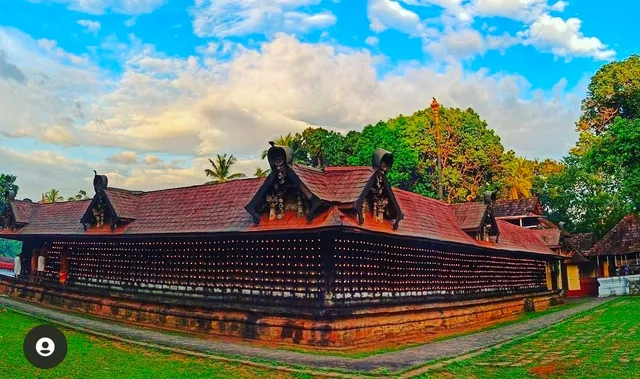
Read moreLokanarkavu is one of the must visit famous historic temple. It is an ancient temple of cool architectural beauty. It is believed to be 1500 years old. There are three temples in the temple complex. They are Durga ( Bhagavathy/Kavilamma ) Vishnu and Shiva temples. There are many legends behind the construction of the temple. It is supposed to be constructed by the Lohanas who migrated from the Sind province of Gujarath There is an aryan link also behind the construction. Another popular legend is associated with the ravaris of Kollam who migrated to Kadathanad. But due to conflict between locals they fled from here and the temple came in the hands of Kadathanad Rajas family. There are numerous imprints of ravari communities life and settlements around Kilometre surroundings of Lokaharkauvu temple. Now Malabar Devaswam Board is managing the temple. There is a large Pond (valiya chira) which surpasses centuries and remains as a marvel even today without much damage. Martial art icon like Thacholi kunhi Othenen, Unniyarcha , Mathileri Kunki must have bathed here many a times. Now it is a boon to the local population. There is another small pond known as cheriya Chira-is now in a dilapilated condition. The ceiling of balikkallu structure adorns many erotic wooden sculpture as an expression of the hot human passion. There is an Oottupura (Dining hall) which had served the food to thousands. Legendary martial art icon Thacholi Kunhi Othenen was an ardent devotee of Kavilamma and sought the blessings of Kavilamma very often .He would also visit the temple to express gratitude on victory. There are countless references in the Northern Ballads (Vatakkan Pattukal) about Thacholi Kunhi Othenen and Kavilamma . Thacholi Othenen and Kavilamma are the central themes of many popular films. Lokanarkavu situates about 4 kms east of Vadakara new bus stand. Catch a bus enroute to Memunda -Kottappally and get down at Kavil Road stop. There is only walkable distance of about 250 metres. One can catch taxi from vadakava new bus stand. There are some vegetarian restaurants with local food. Lodging facility is limited.The govt has sanctioned about 6.75 crore rupees for renovation of the temple.Service quality is average.There is enough parking place. Sargalaya, Siddhasram are the other must visit tourists destinations.Payamkuttymala, ThacholiManikkoth,Kunhali Marakkar Museum are the other places to visit.All these places are situated within 5 kms surroundings of Vatakara...
Read more