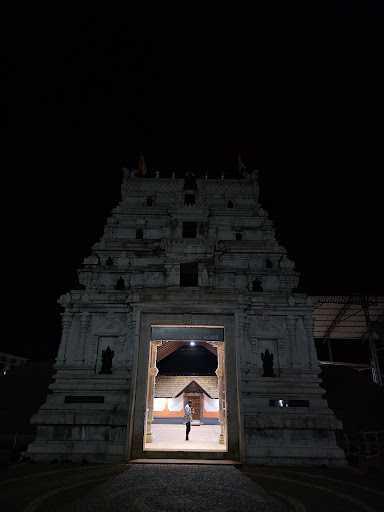
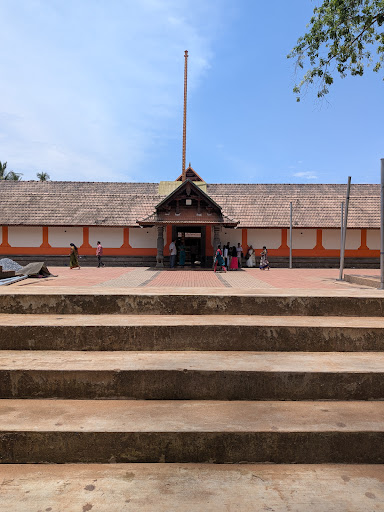
A journey to this village at Karnataka-Kerala border will introduce us to some amazing legends. This enchanting temple on the banks of Madhuvahini river is considered to be a powerful place. Madhur Temple, also known as Madanantheshwara Siddhi Vinayaka Temple, is one of the popular temples in North Kerala.
Madhur Temple ➖➖➖➖➖➖➖➖➖➖➖➖➖➖➖ Madhur temple is located on the banks of River Madhuvahini at a distance of about eight kilometres from Kasaragod town. Though the name of the temple, Madhur Ananteshwara Vinayaka temple suggests that the deity is Lord Ganapathy, it is actually dedicated to Anantheswara, a manifestation of Lord Shiva.
Madhur Sree Madanantheshwara-Siddhivinayaka Temple is a popular Shiva and Ganapathi temple located 7 km (4.3 mi) from Kasaragod town, on the banks of Mogral river, locally known as Madhuvahini. Though the main deity of this temple is Lord Shiva known as Madanantheshwara, meaning the god who killed Kama, the god of desires, more importance is given to Lord Ganapathi, who is installed facing south in the main sanctum itself.
The temple was built by the Mypadi rulers of Kumbla in the 10th century and renovated to its present form in the 15th century.
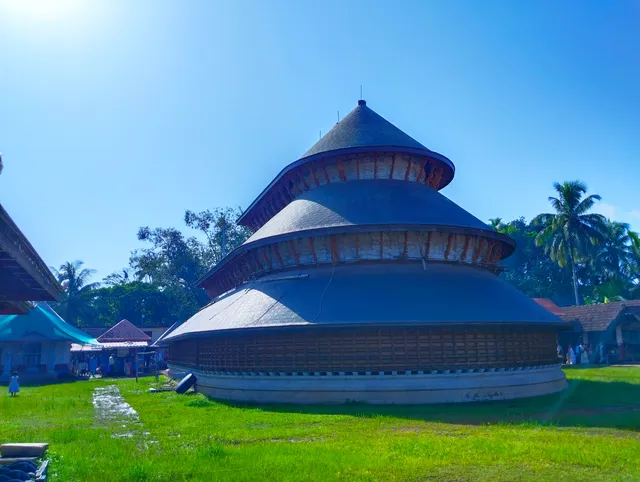
The temple has an oval shape with a three-tiered dome. The top two storeys have copper plate roofing while the lowest has tile-roofing. The intricately carved wooden pillars and beams inside the temple compound speak volumes about the skill of the craftsmen of a bygone era.
Madhur Temple houses a shrine of Shiva and Ganesha. It is a three-tiered building constructed in 'Gaja Prista' (resembling an elephant back) style. The beautiful architecture attracts many people to this place. Here Ganesha is offered 'Appa', famous local dish while offering prayers. 'Moodappam' - (Ganesha is dressed in 'Appa' ) is another famous ritual followed here.
There is a deep well inside the temple compound. The water, which remains untouched by the rays of the sun.
There is also a story associated with Tipu Sultan. While on his conquering spree, he reached this temple intending to destroy it. Feeling thirsty, he had water from the well of the temple. After relaxing a while, he changed his mind and left the temple unharmed, except for a mark with his dagger. The mark of Tipu’s dagger can still be seen here.
Madhur Temple is originally a Shiva Temple and he is only the presiding deity of this temple. According to the legend, the self-manifested Shiva Linga was found by an old lady 'Madharu'. Hence, the temple became famous as Madhur Temple.
Another myth is about the Ganesha idol at Madhur Temple. It is said that a small Brahmin boy carved a small Ganesha picture on the temple wall. Later, it grew and became a big idol of Lord Ganesha. The boy started calling him Boddajja or Bodda Ganesha. Later,the idol was named as Madanantheshwara Siddhi Vinayaka.
This is one of the Ganapathi temples of six ganpathi temples of ancients Tulunadu, the other five are located at Mangalore (Sharavu Mahaganapathy), Anegudde, Hattiangadi, Idagunji and Gokarna.
How to Reach Madhur Temple ➖➖➖➖➖➖➖➖➖➖➖➖➖➖➖ Madhur Temple is around 7km from Kasaragod. it is easily accessible by road from the town of Kasaragod. Visitors can also take local transport like auto-rickshaws to reach Madhur Temple from Kasaragod.
Many people across the surrounding regions come here to seek blessings from Shiva and Ganesha. In fact, Madhur Temple is also one among the 6 ancient Ganesha temples of Konkan region. So, don't miss out on visiting this shrine on your trip to Kasargod...
Read moreMadhur temple was originally Madarantheswara (Shiva) Temple and as the lore goes, an old women called Madaru from local Tulu Moger Community discovered an "Udbhava Murthy" (a statue that was not made by a human) of shiva linga. Initially, the Ganapathy picture was drawn by a boy, on the southern wall of the Garbhagriha(sanctum sanctorum) while playing. Day by day it became big and fat; so that the boy called Ganapathi as "boddajja" or "bodda ganesha". The legend of Kumble seme says Tipu Sultanwanted to demolish the temple like Adooru Mahalingeswara temple during his invasion of Coorg, Tulunadu, and Malabar. But after drinking water from the well of the temple, he changed his mind on attacking and demolishing the Garbhagudi and marched towards Malabar. But to satisfy his soldiers and Islamic scholars he made a cut with his sword symbolizing the attack. The mark is still visible on the building that is built around the temple well. The temple architecture is of 3-tiered gajaprishta type resembling the back of an elephant. One can also find beautiful wooden carvings depicting scenes from the Ramayana.The vast spacious gopurams give good ambiance for the devotees to relax and enjoy the Ganapathi`s presence. Devotees usually offer prayers to Mahaganapathi in the form of "Udayastamana". "Appa", Madhur's famous prasad, is a very tasty preparation. This is prepared daily and anyone offering prayers can avail these at the counters. Among the special poojas that are performed, "Sahasrappa" (Thousand appas) is very prominent. It consists of making an offering of thousand appas and then the devotees get to take home all these (and eat them with full relish). Another very special pooja that happens is Moodappam Seva which involves covering the Mahaganapathi statue with Appam. This is usually done on a community scale. Ganesh Chaturthi and Madhur Bedi are the occasions when the temple is at its busiest. The temple usually carries out special poojas on all the major festivals. Madhur is a village about 7 km from the district headquarters Kasaragod. There are private buses every ten minutes from Kasaragod private bus stands (both old and new). Auto rickshaws are also available which charge more than 100 rupees from the town. The buses are regularly available from...
Read moreMadhur temple is located on the banks of River Madhuvahini at a distance of about eight kilometres from Kasaragod town. Though the name Madhur Ananteshwara Vinayaka temple suggests that the deity is Lord Ganapathy, the temple is actually dedicated to Anantheswara, a manifestation of Lord Shiva.
History and architecture The temple was built by the Mypadi rulers of Kumbla in the 10th century and was renovated later to its present form in the 15th century. The imposing temple attracts not only devotees but also connoisseurs of architecture who find its blend of Hindu and Jain architectural styles fascinating.
The temple has a three-tiered dome of which the top two storeys have copper plate roofing and the lower one has tile-roofing. The intricately carved wooden pillars and beams inside the temple compound speak volumes for the artistry of the craftsmen of a bygone era. The walls and roofs of the temple are decorated with stucco images depicting scenes from Indian mythology. The Namaskara Mandapam (the pavilion in front of the sanctum) is adorned with wood carvings depicting scenes from the Ramayana. There is a deep well inside the temple compound. The water, which remains untouched by the rays of the sun, is believed to have many curative properties.
The temple has a history associated with many rulers, especially the Kumbla ruler, Jai Simha I. There is also a story associated with Tipu Sultan. While on his conquering spree, Tipu approached this temple with the intention of destroying it. Feeling thirsty, he had some water from the well inside the temple. It is said that after relaxing for a while, Tipu changed his mind and left the temple untouched, except for a mark made with his dagger. The mark of Tipu's dagger can still be seen here.
Moodappa Seva is a special pooja conducted here and is a ritual in which a large idol of Ganapathi is covered with Appam (an offering made out of the mixture of rice and ghee). This ritual festival is conducted only occasionally. The last one was held in 1992.
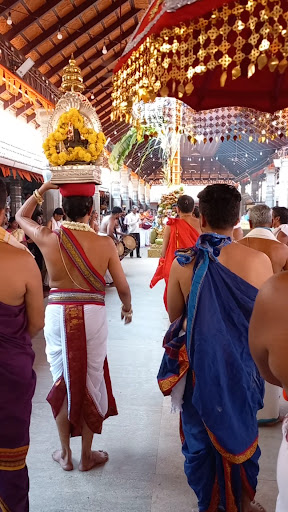
The major festival celebrated here are the Ganesh Chaturthi and annual festival called Madhur Bedi. Madhur Bedi is a colourful five-day event and on the fourth day, the utsava moorthi (Thidampu) is taken out in...
Read more