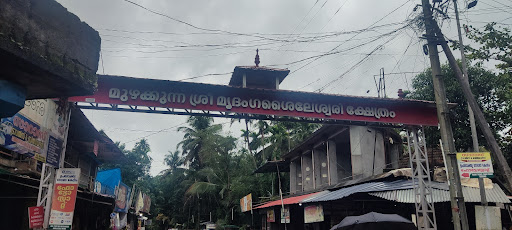
Mridanga Saileswari Temple, situated in Kannur, a land of Theyyam and Thira glorifying the cultural pomp and tradition of Kerala, is believed to belong to the series of 108 Durga Temples set up by Saint Parasuraman.
Mridanga Saileswari Devi is renowned to shower her blessings to all those who pray earnestly before her, lighting the ghee lamp. The diety, Goddess Durga is omnipotent, easy to please, demolisher of evils and foes, and is celebrated as one who grants all the wishes of devotees instantly!
The temple nomenclature revolves round Mridanga, acclaimed to be the mother of all musical instruments, originated in Devaloga or heaven. Devi is presumed to have originated in the form of Mridanga and the reverberation of her voice provided the name Muzhakkunnu, the hill that echoes. MridangaSailam stands for the drum hill and the Goddess seemed to have appeared on the south eastern premises of the temple. Lord Parasurama captivated the essence of Devi into an idol and founded the temple in MridangaSailam or Muzhakkunnu.
It is worth mentioning that Kathakali took shape here in this temple premises by the acclaimed king of Kottayam Thampuran, who got influenced by the Ramanattam of KottarakkaraThampuran. Kottayam Thampuran penned the texts of Bakavadham, Kirmeeravadham, KalyanaSaugandhikam and Nirathakavachakalakeyavadham in this temple.
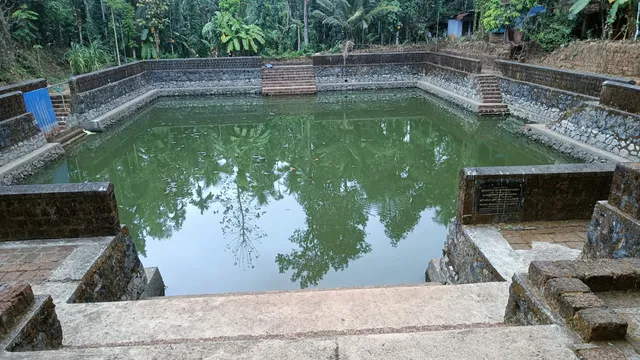
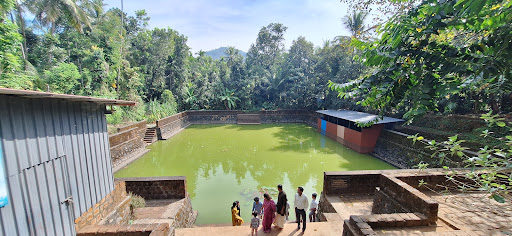
The first lines of Kathakali seeking God’s blessings, speak out the relevance and fame of Mridanga Saileswari and echoes all through the world! A popular myth related to Kathakali, prevailing here is that when Thampuran could not properly visualise the ‘lady figure’ in Kathakali, he meditated for a while. The Goddess appeared in the temple pond, exhibited a lady form and till now without a change, this feminine attire is employed in Kathakali. The clan diety of Kerala Lion Veera Kerala Varma Pazhassi Raja, Goddess Porkkali stays in trio-state here-that of Saraswathy, the goddess of education, Lakshmi-the goddess of plenty and Kali-the evil destroyer Goddess. In whatever form we appeal to her, Devi appears is in the same shape and structure! The name Porkkali came into existence as sacrifice was offered to Devi by kings before setting out for warfares. This was the custom of all Purali kings as the Goddess was their family diety as expressed in black and white in ‘KokilaSandesham’. The sacrifice and the trance experience happened in the cave temple situated west of the main shrine. ‘Kali’ or blessings for ‘Por’ or war later contributed a new title to Devi as Porkali. The Guha temple believed to be the pivot of all Porkkali temples of South India is now no more, just the remnants remain. We all must anew take pledge on behalf of the Goddess and dedicate ourselves for the renovation of the temple and reconstruction of the Guha temple bringing back its past pomp and glory, lifting it to the forefront to be acclaimed as the best temple of the world. Let us take this as our mission, as it is the need of the times and surrender ourselves for its...
Read moreMridanga Saileswari Temple (Malayalam മൃദംഗശൈലേശ്വരി ക്ഷേത്രം) is a famous Hindu temple located in Muzhakunnu, Kannur district, Kerala, India. It is one among the 108 Durga temples of ancient Kerala, believed to have been installed by Parashurama, the sixth avatar of Lord Vishnu. The main deity, Mridanga Saileswari, is a four-armed Durga holding conch and discus in the two hands pointed upwards, blessing her devotees with the front right hand and placing her front left hand on her waist. The three principle forms of Durga worshiped in Hinduism are Maha-Durga, Chandika and Aparajita. Of these, Chandika has two forms called Chandi who is of the combined power and form of Saraswati, Lakshmi and Parvati and of Chamunda who is an esoteric aspect of Chandi created by the goddess for killing demons Chanda and Munda. Maha Durga has three forms, Ugrachanda, Bhadrakali and Katyayan. Bhadrakali Durga is also worshiped in the form of her nine epithets called Navadurga.
The main Deity in this temple is Durga who is also called Mizhavil Bhagavathi in a separate Sanctum prohibited to public. Mizhavil Bhagavathi, exists as Chandi and Chamunda in this temple. Mizhavil Bhagavathi exhibits herself as Saraswati, also called Mridanga Shaileshwari in this temple Srikovil, with a predominant power of knowledge, giving blessings of skill (Siddhi) in arts and as Chamunda also called Porkali outside the main temple complex. Mizhavil Bhagavathi as Mridanga Shaileshwari, in this temple acts as the patron of music, arts and all kinds of knowledge. Mridanga Shaileshwari in the main temple sanctum sanctorum (Srikovil) can also be worshipped as Saraswati, Parvati Lakshmi or Chandi depending upon the need. The power of Saraswati, knowledge is said to be predominant here and she is the goddess of arts, especially music as per legend. The worship of this temple is said to be not complete unless one worship the secret Mizhavil Bhagavati in the secret sanctum.
Mridanga shaileshwari is the family deity of Kottayam royal family. The legends of Pazhassi Raja is closely associated with...
Read moreA Divine Experience Beyond Words – Sree Mridanga Shaileshwari Temple, Muzhakkunnu, Kannur
Visiting Sree Mridanga Shaileshwari Temple is not just a pilgrimage—it's a deeply moving spiritual experience that leaves a lasting impression on the soul. Nestled in the serene village of Muzhakkunnu in Kannur district, this temple radiates an aura of powerful divinity and tranquility that can only be felt, not described.
The presiding deity, Devi Mridanga Shaileshwari, is revered as a form of Saraswati and is believed to be the goddess of arts and wisdom. Devi Mridanga Shaileshwari, is indeed revered as a form of Saraswati, the goddess of knowledge, arts, and wisdom. She is believed to be the patron of music, arts, and all kinds of knowledge, and is also associated with blessings of skill (Siddhi) in the arts. The moment you step into the temple premises, a sense of peace and spiritual stillness envelops you. The energy here is truly transformative—calm, powerful, and immensely uplifting.
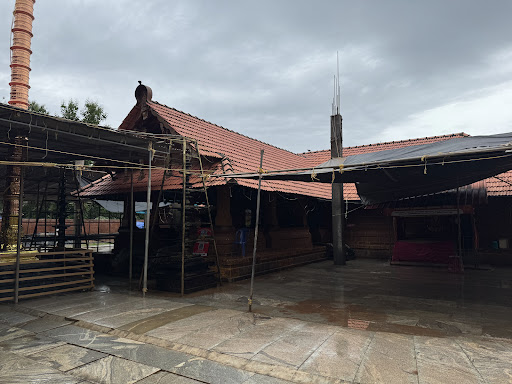
The temple architecture reflects traditional Kerala style, beautifully maintained and steeped in heritage. The priests conduct the rituals with utmost devotion and grace, making every darshan feel intimate and sacred. The sounds of the the rhythmic chanting of mantras create a deeply meditative ambiance that touches your core.
What makes this temple even more special is the unshakeable belief among devotees that the goddess listens and blesses all who come with sincere devotion. Many artists, musicians, and students come here seeking the blessings of the goddess before embarking on important journeys in their careers and lives.
Whether you are a believer, a seeker, or simply someone looking to experience the divine, a visit to Sree Mridanga Shaileshwari Temple is nothing short of magical. It's a sacred space where divinity is palpable, and where the heart feels truly at home.
Highly recommended for anyone seeking peace, blessings, and a connection...
Read more