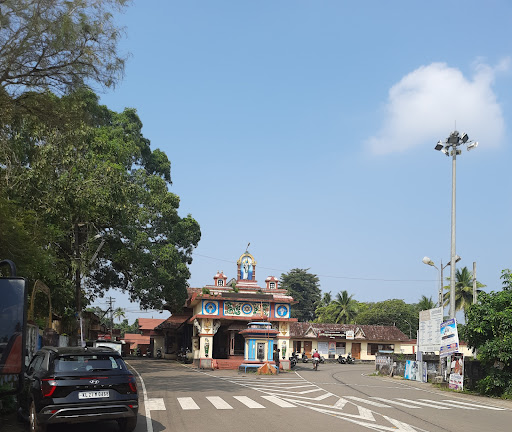
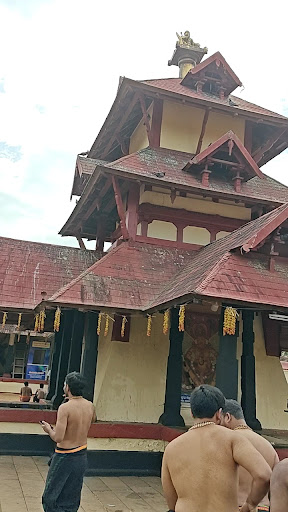
This sthalam explains about the relationship and the unity of Saivam and Vaishnavam. This sthalam also tells about the good character.
Kanda Karan, who is the chief leader of Siva Perumaan's Siva Ganangal (troop (or) Crew) and had a vulgour actions towards everything. He had a ugly structure and that fears all person who sees him. He gave Narabali (Killing peoples) for Siva Perumaan. But, on seeing this, Siva perumaan ordered him not to give Narabali and asked him to worship the Emperumaan, Sriman Narayanan who is said to be the "Santha Sorubhee". He also said by worshipping him, he can get the Mukthi and can attain Paramapadham. On hearing this, Kanda Karnan, who was a great Veera saivan, changed to Vaishnavan and started to tell the Ashtakshara Mantram, "Om Namo Narayanaya". At the same time he left worshipped Siva Perumaan and tied two small bells on his ears to avoid hearing Siva Peruman's name (or) his mantram "Om Nama Shivaya".
Inspite of not wanting to hear the mantram of Sivaperumaan, he was really thinking about him and at the same time he was having the bhakti towards Sriman Narayanan by expressing the Ashtakshara mantram. "Om Namo Narayana". By devoting both the Gods, Lord Shivan and Sriman Narayanan, he forgeot all of his previous actions and started completly to make Dhyanam towards the perumals. By doing so, he got his mukthi and attained paramapadham. Thus by getting the mukthi through Kanda Karnan, the perumal explains about the ralation and unity of both the Saivam and Vaishnavam gods and explains that there should be no racism among the religion. To explains more about this, in this sthalam the thiru Neeru (Vibhoodi) is given as the "Prasadham" to the bhaktas. But, generally Vibhoodhi is given in Saivam temples only. This is one of the special explaination about the unity and explains that both the Gods should be treated as one.
In this sthalam, there lived a good charactered women, by named "Sankaramangala thenmai". She had a great bhakti towards Sriman Narayanan and used to do fasting in Ekadesi and after finishing the Viradham (fasting), she used to give food for any Brahmachari. Likewise, in one Ekadesi day, she waited for a Brahmachari to give food. But at that time, a demon by named "Tholakaasuran" lived and she stood as an obstacle for her viradham and did not allow any persons to get the food from Sankara mangala Thenmai. She was worried about this and prayed to this sthala perumal, Kolapiraan. At that time, accepting the request and pray of her, the perumal came towards her like a Brahmachari to get the food. On seeing him, Tholakaasuran tried to stop him and fought with him. During the fight, Tholakaasuran was killed by the perumal who came there in the form of a Brahmachari.
After, Tholakaasuran was killed, the perumal in Brahmachari form went inside SankaraMangala Thanmai's house and started to eat the food offered by her. At that time, thorugh her Gnana eyes, she found but the perumal has come in the form of Brahmachari and asked him to move the cloth which screened his chest. After the cloth is removed, she could see Periya piratti inhis Thiru Maarbhu. Since, the perumal is so called as "Thiruvaazh Maarbhan". Since, he came as Brahmachari and showed the piratti, he is also called as "Sri Vallabhan".
Since, the perumal gave his presence to explain the good character of a women, the selva Nayagi, periya piratti is named as "Selva thirukozhunthu Naachiyaar". Since, the perumal came as a brahmachari, the piratti is also called as "Vaathsalya Devi".
Behind the Moolavar, Sudharsana Chakkram, who is said to be so powerful is found. So, it is great to get the seva of the perumal in front along with Lakshmi piratti in his chest and behind the perumal, we can worship, the Sudharsana Chakkaram.
Another special news about this sthalam is, there is one separate sannadhi for Thiruppaan Alwar, where no ladies are allowed, only gents are allowed into...
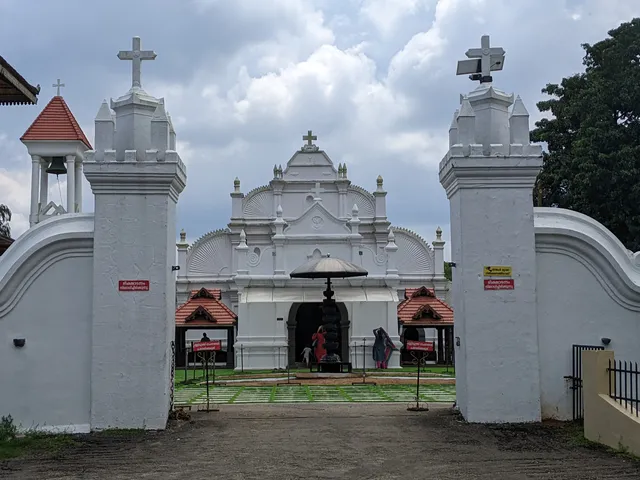
Read moreThis temple is one among the 108 Vaishnav Thiruppathi temples out of which thirteen are in Kerala. There are two main deities in this temple. Lord Sreevallabhan (Mahavishnu) and Lord Sudarsana moorthy in the same Sreekovil. Sreevallabhan is with four arms to eastward direction and Sudarsana moorthy with 16 arms to westward direction with background of Sudarsana Chakram. Subdeities: Dakshinamoorthy, Ganapathi, Parvathy, Subrahmanyan, Sasthavu, Yakshi, Vishak senan. Main vazhipadu in this temple is considered as conducting Kadakali, the famous performing art of kerala temples. Another important vazhipadu is submitting Kannan pazham/Padatti pazham as Nedyam to the Deity. Festival: 10days during the month Kumbham with Aarattu on Pooyam. Another very famous festival in the temple is known as Uthra Seeveli is celebrated on Uthram day of month Meenam. Epic/History: It is believed that Lord Mahavishnu himself placed his weapon Sudarsana Chakram in this place after killing an Asuran named Thokalan. Subsequently, a temple was built around this Chakram and the Deity was known as Sudarsana moorthy. Later the idol of Mahavishnu also was brought from a river of North (Narmada or Netravathy) and placed as Sreevallabhan in the temple by a Kerala king. Another version also is there that it was done by Villuvamangalam Swamiyar. The Sreekovil is round in shape and roofing with copper sheets. Another peculier design in the temple is a tall stoopa (flagmast of height around 53') made of stone/rubble and a statue of Garuda made with Panchaloham (five metals) is placed on the top. It is believed that the statue of Garudan was built by the Perthumthachan who is mentioned as a great Architect in ancient kerala history. Now this flagmast is reinforced with a squre conical shaped multi storied structure around it and is known as Garuda madathara/Garuda mandapam. Garudan is the Vahana of Mahavishnu and the devotees can identity the Deity of the temple by seeing it on the top of flagmast without entering in to the temple. It is usually the custom followed in all temples having flagmast. Apart from this old flagmast and mandapam, a regular flagmast also is placed in the temple for hoisting temple flag during festival. Location: In Thiruvalla at Pathanamthitta District by the side of a connection road of SH and Thiruvalla Kayamkulam road. Travel: Thiruvalla is a main town of Pathanamthitta district touching State highway/MC road and Rail, easily accessible through an Autorikshaw from Bus station or Railway station around 2kms. Facility: Vehicle parking facility is available Infront...
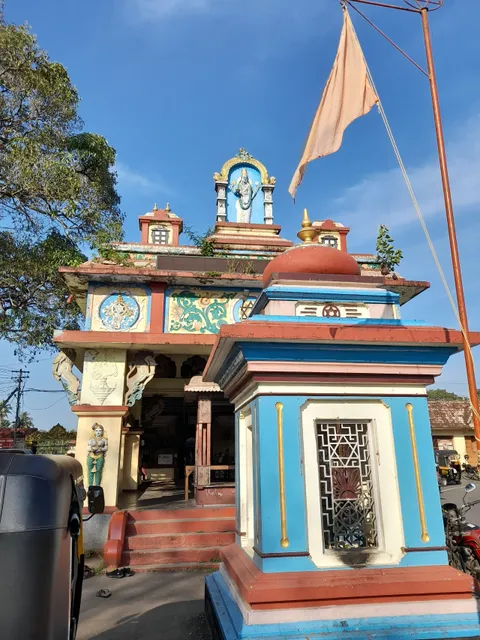
Read moreThe Shree Vallabha Temple in Thiruvalla, Kerala, is a revered pilgrimage destination and a testament to the rich cultural and spiritual heritage of the region. Dedicated to Lord Vishnu in his form as Shree Vallabha, the temple attracts devotees from far and wide who come to seek blessings, offer prayers, and experience the divine presence of the deity.
Nestled amidst lush greenery and serene surroundings, the Shree Vallabha Temple is an architectural masterpiece, adorned with intricate carvings, vibrant paintings, and ornate sculptures that reflect the grandeur of Kerala's traditional temple architecture. The temple's sanctum sanctorum, housing the sacred idol of Lord Vallabha, exudes an aura of divine grace and reverence, drawing devotees into a state of deep devotion and spiritual contemplation.
The temple complex is steeped in tradition and religious significance, with various rituals, festivals, and ceremonies held throughout the year to honor the deity and celebrate the rich cultural heritage of Kerala. The annual Utsavam festival, in particular, is a grand affair, featuring vibrant processions, classical music and dance performances, and elaborate rituals that attract thousands of devotees and tourists alike.
In addition to its religious significance, the Shree Vallabha Temple is also a center for spiritual learning and cultural enrichment. The temple hosts regular discourses, lectures, and educational programs on Hindu philosophy, mythology, and spirituality, providing devotees with an opportunity to deepen their understanding of the scriptures and the teachings of Lord Vallabha.
Moreover, the temple is deeply ingrained in the social fabric of the community, actively participating in various charitable initiatives, educational programs, and social welfare activities aimed at uplifting the underprivileged and promoting social harmony and cohesion.
In conclusion, the Shree Vallabha Temple in Thiruvalla is not just a place of worship, but a sacred sanctuary where devotees can experience the divine presence of Lord Vallabha and immerse themselves in the rich cultural and spiritual heritage of Kerala. With its awe-inspiring architecture, vibrant festivals, and profound spiritual atmosphere, the temple continues to inspire and uplift countless souls on their journey towards self-realization and...
Read more