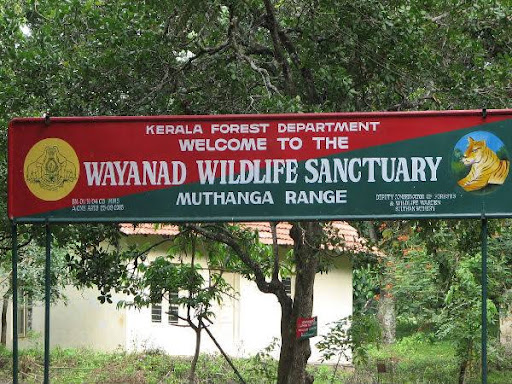
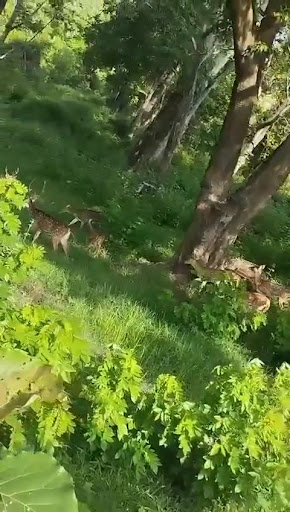
Wayanad Wildlife Sanctuary (Malayalam: വയനാട് വന്യജീവി സങ്കേതം) is an animal sanctuary in Wayanad, Kerala, India. It has an extent of 344.44 km2 with four ranges namely Sulthan Bathery, Muthanga, Kurichiat and Tholpetty. A variety of large wild animals such as Indian bison, elephant, deer and tiger are found there. There are also quite a few unusual birds in the sanctuary. In particular, peafowl tend to be very common in the area. Wayanad Wildlife Sanctuary is the second largest wildlife sanctuary in Kerala. It is bestowed with lush green forests and rich wildlife.This wildlife area houses some of the rare and endangered species of both flora and fauna. Established in 1973, the sanctuary is now an integral part of the Nilgiri Biosphere Reserve. It is bounded by protected area network of Nagarhole and Bandipur of Karnataka in the northeast, and on the southeast by Mudumalai of Tamil Nadu.
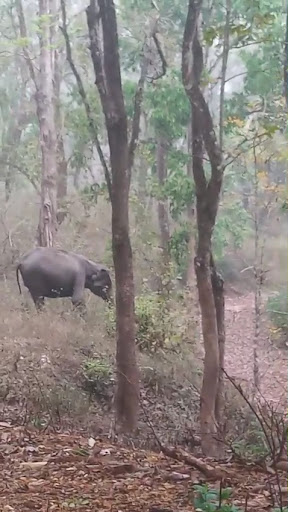
It is part of the Wayanad Plateau and the vegetation is predominantly of the south Indian moist deciduous teak forests. Also, the sanctuary has pastures of the west-coast semi-evergreen trees. The wildlife sanctuary comes under Protect Elephant and one can spot herd of elephants roaming in the area. Elephant rides are arranged by the Kerala Forest Department.
Wayanad district has the largest population of Adivasi in Kerala. Scheduled tribes here include Paniyas, Kurumas, Adiyars, Kurichyas, Ooralis and Kattunaikkans. Comprising an area of 2126 km2, Wayanad has a powerful history. Relicts and edicts found in various parts of Wayanad speak of an important prehistoric era. Historians are of the view that organised human life existed in these parts, at least ten centuries before Christ.
The sanctuary is part of the Nilgiri Biosphere Reserve. The Western Ghats, Nilgiri Sub-Cluster (6,000+ km²), including all of the sanctuary, is under consideration by the World Heritage Committee for selection as a World Heritage Site. Wayanad Wildlife Sanctuary was formed in 1973 and was brought under the Project Elephant in 1991–92. This sanctuary occupies an area of 345 km2. It is the second largest one in the state of Kerala. The sanctuary is separated into two disconnected parts known as the North Wayanad Wildlife Sanctuary and South Wayanad Wildlife Sanctuary. The area in between the two parts was originally a forest region, though it is now occupied majorly by plantations.
In 2012, a tiger was shot dead by the Kerala Forest Department on a coffee plantation on the fringes of the Wayanad Wildlife Sanctuary. Many local political leaders applauded the killing of the tiger. Chief Wildlife Warden of Kerala ordered the hunt for the animal after mass protests erupted as the tiger had been carrying away domestic animals.
Flora and fauna Edit
Indian peafowl in Tholpetty area. Flora: Moist deciduous forest consists of maruthi, karimaruthi, rosewood, venteak, vengal, chadachi, mazhukanjiram, bamboos, more, while the semi-evergreen patches comprises veteria indica., lagerstroemia, lanceolata, termianalia paniculata.
Fauna: Elephants, tigers, panthers, jungle cats, civet cats, monkeys, wild dogs, bisons, deer, bears, monitor lizards and a variety of snakes are seen.
Avian-Fauna: Peacocks, babblers, cuckoos, owls, woodpeckers, jungle fowls are a few of the various types of birds seen here. Wayanad climate is salubrious. Average rain fall in this district is 2322 m.m. Annual rain fall in these high rain fall areas ranges from 3,000 to 4,000 mm. High velocity winds are common during the south west monsoon and dry winds blow in March–April. High altitude regions experience severe cold. This place experiences a high relative humidity which goes even up to 95 per cent during the south west monsoon period. Generally, the year is classified into four seasons, namely, cold weather, hot weather, south west monsoon and north east monsoon. The dale, 'Lakkidi', nestled among the hills of Vythiri taluk has the highest average...
Read moreThe entire Western ghats share portion of core and borders of Reserve Forest in Tamilnadu / Kerala / Karnataka coining as Wayanad Wild Life Sanctuary / Tholpetty Wild Life Sanctuary / Parambikulam Tiger Reserve are more popular in Kerala while Bandipur Wild Life Sanctuary / Kabini / Nagerhole in Karnataka and Mudumalai / SathyamangalamTiger Reserve / Top slip / Chinnar / Annamalai Wild Life Sanctuary in Tamilnadu and it continues as and where the region shared by the states are called with different names. But as a bundle or whole all under one roof of Western Ghats where divided by Line of Control...LOC of different states with different names in simple. Wayanad range is split into two as Muthanga and Tholpetty according to geographic location. Muthanga is located in between Gundlupete and Sulthan Bathery...40 kms away from Gundlupete / 15 kms from Sultan Bathery. Tholpetty is about away from Sultan Bathery little closer to LOC of Karnataka calling it as Naherhole. Wayanad Wild Life especially Muthanga is pocketed with more of Elephants and Tigers. But strictly speaking one requires individual luck to spot Wild animals any where any time. One special point to consider is Muthanga and Tholpetty are not that popular as Kabini / Bandipur / Mudumalai..hence the place is less crowded than other counters. Sanctuary bus and Jeep safari are available at safari counters with specified timings and trips in morning and evening under appropriate charges. Wayanad is a connectivity point in between Mysore and Kozhikode. Sulthan Bathery is a Junction to take diversion for Nilambur / Kozhikode / Bandipur / Ooty. The road is restricted between 9pm to 6am for transportation by any means except few priorities for KSRTC buses of Kerala and Karnataka with prior permission. Forest checkpost are at different LOC of respective states. From entry checkpost to exit checkpost no shops are available so plan accordingly for foods and beverages. Avoid getting down, parking vehicles, Littering, Making noise, PLASTICS of any kind with a speed limit while driving ensuring the welfare of nature / Wild animals...Flora and Fauna and ofcourse safety of ourselves. One who is passionate towards nature and Wild Life can make a ROUND ABOUT ROUTE Gundlupete- Muthanga- Sulthan Bathery- Mudumalai -Bandipur - Gundlupete for people from Karnataka and for the one from Kerala Sulthan Bathery - Mudumalai- Bandipur - Gundlupete - Muthanga - Sulthan Bathery. Even one can try Himavad Gopalsamy Betta a Krishna Temple on a steep Hillock nearer to Gundlupete once again it is a Pilgrimage located in Berambadi Hills Forest Range.. Bandipur / Karnataka with restrictions to travel uphill and down with own vehicle. Government operated buses are available for up and down with charges for people from other regions [aadhar not necessary ] & FREE for Karnataka people[ with aadhar verification]. Even animals especially Jumbo do can be sighted in and around Temple surroundings. A worth place to visit for diviners and nature lovers too. [Plz visit my separate post of Himavad Gopalsamy with...
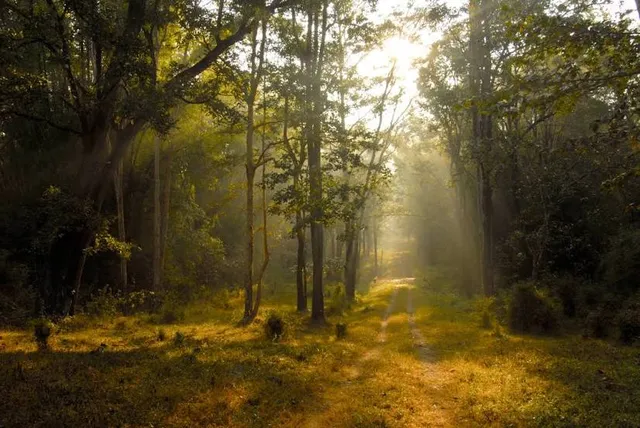
Read moreNestled in the verdant hills of Kerala, the Wayanad Wildlife Sanctuary is a haven for nature enthusiasts and wildlife aficionados alike. Spanning approximately 345 square kilometers, it comprises two distinct ranges: Muthanga and Tholpetty. These ranges are part of the Nilgiri Biosphere Reserve, which is under consideration for UNESCO World Heritage status due to its rich biodiversity and ecological significance. Flora and Fauna The sanctuary's landscape is predominantly characterized by moist deciduous forests interspersed with bamboo thickets and teak plantations. This diverse vegetation supports a plethora of wildlife. Visitors can encounter majestic herds of Indian elephants, the elusive Bengal tiger, Indian leopards, sloth bears, and the Indian bison (gaur). The sanctuary is also home to various species of deer, langurs, and macaques. Birdwatchers will find the sanctuary particularly rewarding, with over 200 species recorded, including the Indian peacock, Malabar grey hornbill, and crested serpent eagle. The sanctuary's rivers and wetlands further enrich its biodiversity, supporting numerous amphibians and reptiles, such as the Malabar gliding frog and the green whip snake. Safari Experience To explore the sanctuary, visitors can embark on guided jeep safaris, which are the primary means of entry. The forest department operates safaris during two shifts: 7:00–10:00 AM and 3:00–6:00 PM. Each safari is limited to a small number of vehicles to minimize disturbance to wildlife. It's advisable to arrive early, as slots fill up quickly. The safari fee is approximately ₹1,200 per vehicle, accommodating up to six passengers. A guide fee is additional. Best Time to Visit The ideal time to visit the Wayanad Wildlife Sanctuary is between October and February. During these months, the weather is pleasant, and wildlife sightings are more frequent. The sanctuary is open year-round, but accessibility can be challenging during the monsoon season (June to September) due to heavy rainfall and slippery roads. Accommodation While there are no luxury accommodations within the sanctuary, basic forest rest houses are available at Tholpetty and Muthanga. These rustic lodgings offer an immersive experience, allowing guests to stay close to nature. For more comfort, visitors can opt for accommodations in nearby towns such as Mananthavady or Sulthan Bathery. The Wayanad Wildlife Sanctuary offers a unique opportunity to experience the rich biodiversity of Kerala's Western Ghats. Whether you're an avid wildlife photographer, a birdwatching enthusiast, or simply someone seeking tranquility amidst nature, the sanctuary promises an unforgettable experience. Its commitment to conservation and sustainable tourism ensures that future generations can also enjoy its...
Read more