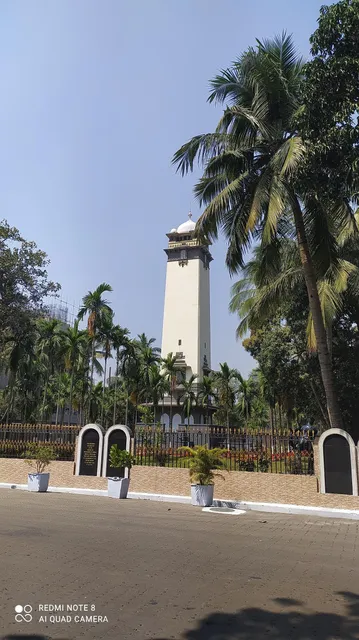
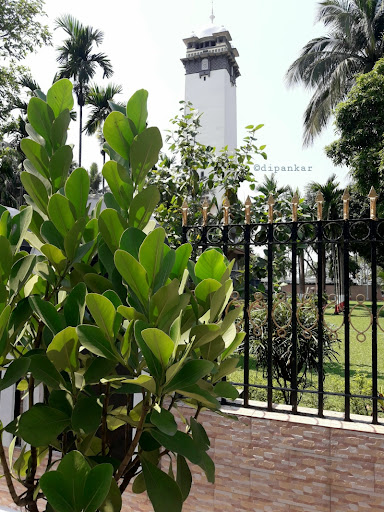
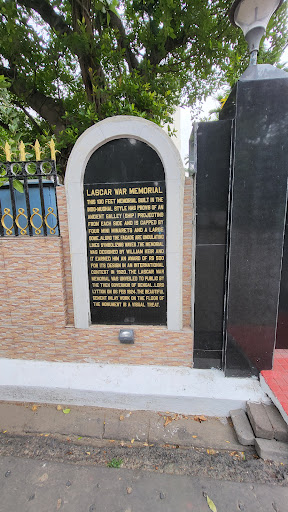
The Lascar War Memorial, located on Napier Road in the Hastings area of Kolkata, is amemorial dedicated to the memory of the 896lascars (sailors from the Indian subcontinent) who died serving on ships of the Royal Navy and British Merchant Service during World War I.
A lascar (Lashkar, Laskar) (Persian: لشکر) and (Bengali:লস্কর) was a sailor or militiaman from the Indian Subcontinent or other countries east of the Cape of Good Hope, employed on European ships from the 16th century until the beginning of the 20th century. The word comes from the Persian Lashkar, meaning military camp or army, and al-askar, the Arabic word for a guard or soldier. The Portuguese adapted this term to lascarim, meaning an Asian militiaman or seaman, especially those from the Indian Subcontinent. Lascars served on British ships under 'lascar' agreements which gave shipowners more control than the usual agreement. The sailors could be transferred from one ship to another and retained in service for up to three years at one time. The name lascar was also used to refer to Indian servants, typically engaged by British military officers.
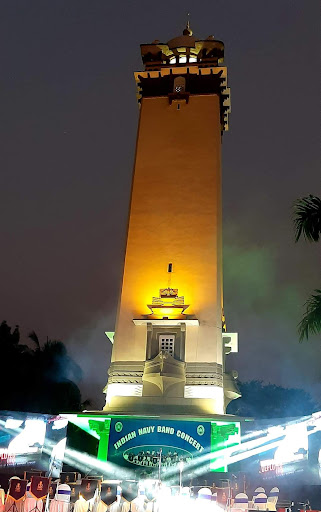
The Lascar War Memorial was erected by shipping and mercantile companies, in the memory of the 896 Lascars of undividedBengal and Assam who lost their lives during World War I.[5] The monument is situated at the southern end of the Maidan, on Naiper Road, Hastings, near Prinsep Ghat. The 100 feet high monument was unveiled by Lord Lytton, then Governor of Bengal on 6 February 1924. The monument, built in typical Oriental style, is a four-sided column, having designs reflecting the prow of an ancient galley on each side of the column. The upper part of the monument consists of four small minaretsand a large gilt dome. A typical Indian look has been given by adding wavy lines beneath the projected balcony, which symbolises waves, along with chhajjas and trellises.[3] The Lascar War Memorial has similarities with the victory tower of Chittor.[1] The memorial built in the Indo-Mughal style by William Ingram Keir, who also designed the Kidderpore Bridge, buildings at Bengal Engineering and Science University in Shibpur, the Indian Institute of Technology, Kharagpur, andIslamia College, and also replaced the 1934 earthquake affected spire of St. Paul's Cathedral, Kolkata with a tower. William Ingram Keir won a prize of Rupees 500 for designing the memorial.[2] The inside of the Memorial is approached through a huge doorway on the Northern wall. The interior contains three plaques below the inscription "Lascar Memorial." One plaque commemorates the unveiling of the memorial by Lord Lytton, then Governor of Bengal on 6 Feb. 1924. The second plaques says that the memorial was erected by shipping and mercantile community of India in memory of the 896 seamen of Bengal Assam and upper India (the term Lascar is not used) who lost their lives in service of the British Empire in the great war of 1914 – 18. The third smaller plaques tells about the renovation and lighting of the Lascar...
Read moreThe Lascar War Memorial, located on Napier Road in Hastings, Kolkata. It is a memorial dedicated to the memory of the 896 Lascars or sailors from the undivided India who died serving on ships of the Royal Navy and British Merchant Service during World War I. It was erected by shipping and mercantile companies near the Prinsep Ghat. The 100 feet high monument was unveiled by Lord Lytton the then Governor of Bengal on 6 February 1924. It has a typical Oriental Style with a four-sided column, having designs reflecting the prow of an ancient galley on each side of the column. The upper part of the monument consists of four small minarets and a large gilt dome. A typical Indian look has been given by adding wavy lines beneath the projected balcony, which symbolises waves, along with chajjas and trellises and has striking similarity with victory tower of Chittor. It was built by William Ingram Keir who also had made notable contribution in building other iconic structure like IIT Kharagpur. The inside of the Memorial is approached through a huge doorway on the Northern wall. The interior contains three plaques below the inscription "Lascar Memorial." One plaque commemorates the unveiling of the memorial by Lord Lytton on 6 Feb. 1924. The second plaques says that the memorial was erected by shipping and mercantile community of India in memory of the 896 seamen of Bengal Assam and upper India (the term Lascar is not used) who lost their lives in service of the British Empire in the great war of 1914 – 18. The third smaller plaques tells about the renovation and lighting of the Lascar War Memorial. In 1994, commodore B K Mohanti spotted the ruined and neglected Lascar War Memorial overgrown with vegetation during his morning walk. Recognising the importance of the monument, he arranged for funds for the renovation of the memorial. The renovation and lightning was completed in December 1994. A.L. Dias, then Governor of West Bengal switched on the illumination on December 7, 1994[1] on the occasion of the 40th anniversary of INS Netaji Subhas. National Navy Day of India is celebrated every year at the Lascar War Memorial every year on 4th December. Unfortunately this Memorial does not see much of footfall due to its location and lack of awareness of the...
Read moreThe Lascar War Memorial was erected by shipping and mercantile companies, in the memory of the 896 Lascars of undivided Bengal and Assam who lost their lives during World War I.The monument is situated at the southern end of the Maidan, on Naiper Road, Hastings, near Prinsep Ghat. The 100 feet high monument was unveiled by Lord Lytton, then Governor of Bengal on 6 February 1924. The monument, built in typical Oriental style, is a four-sided column, having designs reflecting the prow of an ancient galley on each side of the column. The upper part of the monument consists of four small minarets and a large gilt dome. A typical Indian look has been given by adding wavy lines beneath the projected balcony, which symbolises waves, along with chhajjas and trellises.The Lascar War Memorial has similarities with the victory tower of Chittor.The memorial built in the Indo-Mughal style by William Ingram Keir, who also designed the Kidderpore Bridge, buildings at Bengal Engineering and Science University in Shibpur, the Indian Institute of Technology, Kharagpur, and Islamia College, and also replaced the 1934 earthquake affected spire of St. Paul's Cathedral, Kolkata with a tower. William Ingram Keir won a prize of Rupees 500 for designing...
Read more