Likir is mentioned in the Ladakhi chronicles as having been erected by King Lhachen Gyalpo (Lha-chen-rgyal-po) (c. 1050-1080 CE). It presumably, originally belonged to the early Kadampa order of Tibetan Buddhism.[
When Francke visited the monastery in 1909 he was shown a long inscription written in black ink on a wall which outlined the history of the monastery. Francke had it copied and interprets it as follows:
"King Lha-chen-rgyal-po founded the monastery in the 11th century. In the 15th century, Lama Lha-dbang-chos-rje [a famous pupil of Tsongkhapa] converted the lamas to the reformed doctrines of the Ge-lug-pa order, and thus founded the monastery afresh as a Ge-lug-pa establishment. Then it is stated that seven generations after Lha-chen-rgyal-po, King Lha-chen-dngos-grub [c. 1290-1320] arose, and that he introduced the custom of sending all the novices to Lhasa. This statement is found in exactly the same words as we find in the rGyal-rabs" Eighteen generations later King bDe-legs-rnam-rgyal reigned, but his name has been erased from the inscription because he embraced Islam after the battle of Basgo in 1646-1647. The inscription itself is dated to the reign of King Thse-dbang-rnam-rgyal II (Tsewang namgyal II, c. 1760-1780), who repaired the monastery after a conflagration.| Below the monastery was a large chorten with frescoes inside representing Tsongkapa and other lamas of his time. "Painted above the door, a very strange figure is found which looks much like one of the ordinary representations of Srong-btsan-sgam-po (SongtsƤn Gampo). I was told by the lamas that it represents a lama of Srong-btsan-sgam-po's times. The figure wears a three-pointed hat of white colour and carries two leopard skins under his arms." The lower part of the chorten is a square room which a lama said was the earliest temple at Likir, and was already there when King Lha-chenrgyal-po built the monastery.
The monastery currently has approximately 120 Buddhist monks and a school with almost thirty students.The Central Institute of Buddhist Studies runs it and teaches in three languages, Hindi, Sanskrit...
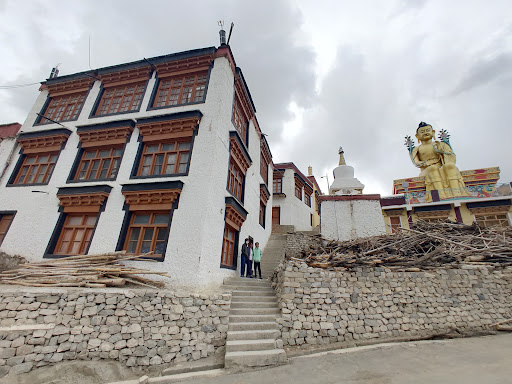
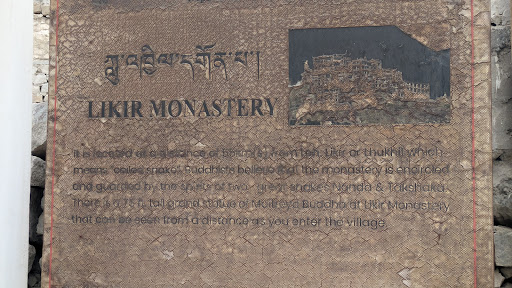
Ā Ā Ā Read moreLikir MonasteryĀ orĀ Likir GompaĀ (Klud-kyil) is aĀ BuddhistĀ monastery inĀ Ladakh, NorthernĀ India. It is located at 3700m elevation, approximately 52 kilometres (32Ā mi) in the west ofĀ Leh. It is picturesquely situated on a little hill in the valley,1]Ā inĀ LikirĀ village near theĀ Indus RiverĀ about 9.5 kilometres (5.9Ā mi) north of theĀ SrinigarĀ toĀ LehĀ highway.[2]Ā It belongs to theĀ GelugpaĀ sect ofĀ Tibetan Buddhismand was established in 1065 by Lama Duwang Chosje, under the command of the fifth king of Ladakh,Ā Lhachen GyalpoĀ (Lha-chen-rgyal-po).[3]Likir is mentioned in the Ladakhi chronicles as having been erected by KingĀ Lhachen Gyalpo(Lha-chen-rgyal-po) (c. 1050-1080 CE).[5]Ā The name Likir means "The Naga - Encircled", representing the bodies of the two great serpent spirits, the Naga-rajas, Nanda and Taksako.[2]Ā It presumably, originally belonged to the earlyĀ KadampaĀ order of Tibetan Buddhism.[6
When Francke visited the monastery in 1909 he was shown a long inscription written in black ink on a wall which outlined the history of the monastery. Francke had it copied and interprets it as follows:
King Lha-chen-rgyal-po founded the monastery in the 11th century. In the 15th century, Lama Lha-dbang-chos-rje [a famous pupil ofĀ Tsongkhapa] converted the lamas to the reformed doctrines of the Ge-lug-pa order, and thus founded the monastery afresh as a Ge-lug-pa establishment. Then it is stated that seven generations after Lha-chen-rgyal-po, King Lha-chen-dngos-grub [c. 1290-1320] arose, and that he introduced the custom of sending all the novices to Lhasa. This statement is found in exactly the same words as we find in the...
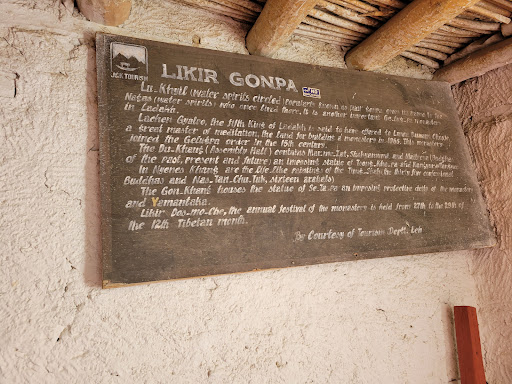
Ā Ā Ā Read moreLikir lies at a distance of 52 kilometeres west of Leh During the life time of Lhachen Gyalpo, the fifth king of Ladakh a religious estate and the land on which to build the mo tery was offered to a great champion Lama Duwang Chosje, of meditation. The Lama blessed the site and in 1065 the monastery was built and community introduced Material necessities were provided without fail for the support of at the most five hundred monks and at the least one hundred monks while they meditated at the three lakes of Kangri Kailash). The site of the monastery was encircled by the bodies of the two great serpent spirits, the naga-rajas Nanda and Taksako and so its name became widely renowned as Likir (The Naga-Encircled) Galdan...
Ā Ā Ā Read more