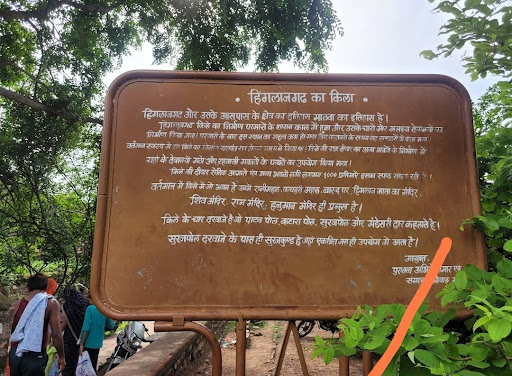
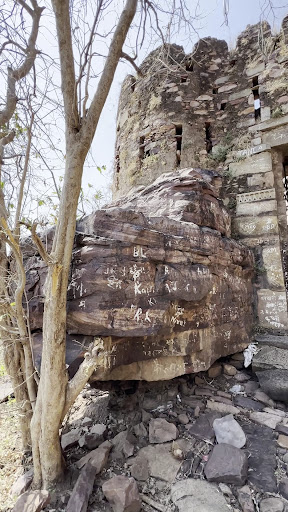
Located deep in the dense forest of the Gandhi Sagar Sanctuary in the geologically significant tehsil of Bhanpura in West Malwa on the border of Madhya Pradesh and Rajasthan is the important monument and temple site of the fort of Hinglajgarh. This fort has a rich and glorious ancient history that is marred by the tragic events that occurred during the Mughal invasion.This fort has a tremendous geographical and strategic advantage as it sits atop a hill, is designed as a semi-circular for almost 10kms, has a trench that is almost 300 feet deep and has the Chambal river flowing on two sides of the hill. The present structure is said to have been built about thousand years ago but the ancient inscriptions written in Pali script found here has baffled historians. Historical evidence suggests that the temple of Hinglaj Mata has existed even before the early period of the Mauryas and the fort derives its name from the presiding deity. Locals believe that this temple is one of the fifty-two Shakti Peethas though this is not generally accepted by scholars.As Hinglaj Mata of Hinglajgarh is considered to be the kuladevi of the Maurya dynasty, it is thought that this temple has been established during the reign of the Mauryas for an important Shakti Peetha of Hinglaj Mata is located in the province of Balochistan in Pakistan that was previously a part of Akhanda Bharat.The discovery of ancient images of the Goddess in her myriad forms and the innumerable idols of Gauri found here has added strength to the argument that the temple of Hinglaj Mata is indeed a Shakti Peetha. The number, kind and time period of Gauri idols found here have not been discovered in any other place till date. Besides Gauri idols, the idols of Sapta Matrikas have also been found.It would appear that from the time tantrism has been inculcated as an intrinsic part of the worship of Divine Mother, sculptors and artisans of Hinglajgarh have been creating exquisite masterpieces of Divine Mother as a Yogini. The sculptures of Divine Mother as Katyayani, Vinayaki, Aparajitha, Bhuvaneshwari and Bagalamukhi and others have been found here. It is evident from the discovery of hundreds of sculptures and idols of unparalleled craftsmanship that Hinglajgarh at one time occupied a seat of prominence in arts and sculpture.These discoveries have only strengthened the faith and belief of the locals in Hinglaj Mata who throng this place in large numbers. Some of the statues obtained here are seen in the Central Museum of Indore and have made their way to museums abroad.It is difficult to state authentically when the foundation of this fort was laid and by whom but it would appear that this fort gained importance as a military and strategic outpost during the reign of the Paramara dynasty. Statues found here are said to belong to the 5th to 6th century but historical evidence points to this fort being either renovated or built in the 12th century by the Paramara dynasty. This fort fell into the hands of many dynasties but was never made a capital or a permanent residence. This fort has been mentioned as a haveli in the historical documentation of 1688 of the kings of Chandravat dynasty of RampuraWestern Malwa region witnessed continuous bloody wars between the Mughals and Mewar kings during the years of 1520 to 1752, a period often remembered for the unspeakable atrocities and acts of inhumanity committed by the invaders who forgot all boundaries of decency. The fort of Hinglajgarh was also an unfortunate victim for several years till the mighty Marathas under the leadership of Maharani Ahilyabai Holkar took charge of this fort in the latter part of the 18th century. Maharani ordered that the fort be restored to its former glory and the ancient temples of Hinglaj Mata and Lord Shiva and the grand Rani Mahal were rebuilt along with some other renovations and new constructions.
The fort underwent extensive reconstruction during the reign of Maharaja Yashwantrao Holkar. Several artisans were employed to renovate this ancient fort and the temple of Hinglaj Mata....
Read moreHinglajgarh (Hindi: हिंगलाजगढ़) or Hinglaj Fort(Hindi: हिंगलाज क़िला Hinglaj Qila) is an ancient fort situated near village Navali in Bhanpuratehsil of Mandsaur district in Madhya Pradesh. Its coordinates are latitude 25°30' N and Longitude 65°31' E. It is situated 165 km from Mandsaur town and 26 km from Bhanpura town in Madhya Pradesh.[1] This fort was at its peak of grandeur during Parmara rule.[2] There are many artistic sculptures of various periods in this fort. The Nandi and Uma-Maheshwar sculptures were sent from there to France and Washington for display in India festivals and left a mark at international levels.[3] The Hinglajgarh was the centre of excellence in craftsmanship of sculptures for about 800 years. The statues recovered from this fort are from the Guptasperiod to Parmara period. The most ancient statues are from 4th–5th century AD. Hinglajgarh gets name after the goddess Hinglaj Devi, the kuldevi of Kshatriyas & Brahamkshtriya Marwari Khatri Hinglaj Mata temple is situated in the Hinglajgarh.[5]Originally temple located at Hinglaj (Urdu: ﮨنگلاج) is an important Hindu pilgrimage place in Balochistan, Pakistan. It is situated in Balochistan province about 250 km north-west of Karachi.[6] The Kshatriyas in ancient times had movements between baluchistanand India. The Mauri rulers founded the temple of Hinglaj Mata as she was their kuladevi. Initially this area was known as 'Hinglaj Tekri' but later the Mauri rulers built a fort here and this came to be known as Hinglajgarh or Hinglaj Fort.
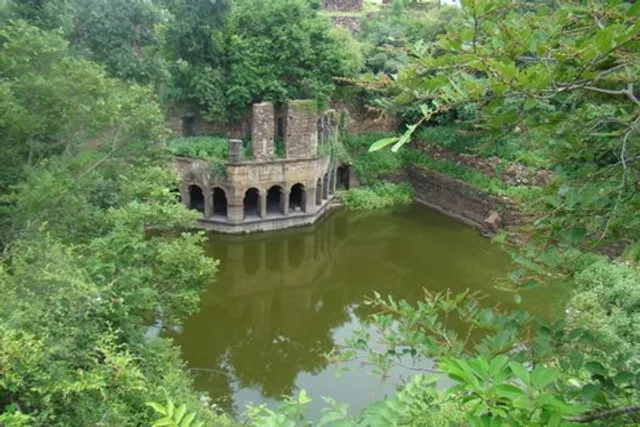
※History:- ————— Hinglaj Fort became very strategic during the Parmara rule and they strengthen it. In 1281 the Hada ruler halu occupied it, and later it came under Chandrawat rulers. Mention of Haveli of Gopal Singh, a Chandrawat ruler, is found in the patnama of Chandrawats.[8] In 1773 the Holkar Queen Ahilya Bai defeated Laxman Singh Chandrawat and occupied it. The fort was renovated during Holkar rule along with Hinglaj Mata Temple, Rama Temple, and Shiva Temple. Though various dynasties occupied the fort but it was never used as a permanent capital. It was mainly used as a shelter by various rulers. This is the reason why there are not many...
Read moreHinglajgarh (Hindi: हिंगलाजगढ़) or Hinglaj Fort(Hindi: हिंगलाज क़िला Hinglaj Qila) is an ancient fort situated near village Navali in Bhanpuratehsil of Mandsaur district in Madhya Pradesh. Its coordinates are latitude 25°30' N and Longitude 65°31' E. It is situated 165 km from Mandsaur town and 26 km from Bhanpura town in Madhya Pradesh.[1] This fort was at its peak of grandeur during Parmara rule.[2] There are many artistic sculptures of various periods in this fort. The Nandi and Uma-Maheshwar sculptures were sent from there to France and Washington for display in India festivals and left a mark at international levels.[3] The Hinglajgarh was the centre of excellence in craftsmanship of sculptures for about 800 years. The statues recovered from this fort are from the Guptasperiod to Parmara period. The most ancient statues are from 4th–5th century AD. Hinglajgarh gets name after the goddess Hinglaj Devi, the kuldevi of Kshatriyas & Brahamkshtriya Marwari Khatri Hinglaj Mata temple is situated in the Hinglajgarh.[5]Originally temple located at Hinglaj (Urdu: ﮨنگلاج) is an important Hindu pilgrimage place in Balochistan, Pakistan. It is situated in Balochistan province about 250 km north-west of Karachi.[6] The Kshatriyas in ancient times had movements between baluchistanand India. The Mauri rulers founded the temple of Hinglaj Mata as she was their kuladevi. Initially this area was known as 'Hinglaj Tekri' but later the Mauri rulers built a fort here and this came to be known as Hinglajgarh or Hinglaj Fort.
※History:- ————— Hinglaj Fort became very strategic during the Parmara rule and they strengthen it. In 1281 the Hada ruler halu occupied it, and later it came under Chandrawat rulers. Mention of Haveli of Gopal Singh, a Chandrawat ruler, is found in the patnama of Chandrawats.[8] In 1773 the Holkar Queen Ahilya Bai defeated Laxman Singh Chandrawat and occupied it. The fort was renovated during Holkar rule along with Hinglaj Mata Temple, Rama Temple, and Shiva Temple. Though various dynasties occupied the fort but it was never used as a permanent capital. It was mainly used as a shelter by various rulers. This is the reason why there are not many...
Read more