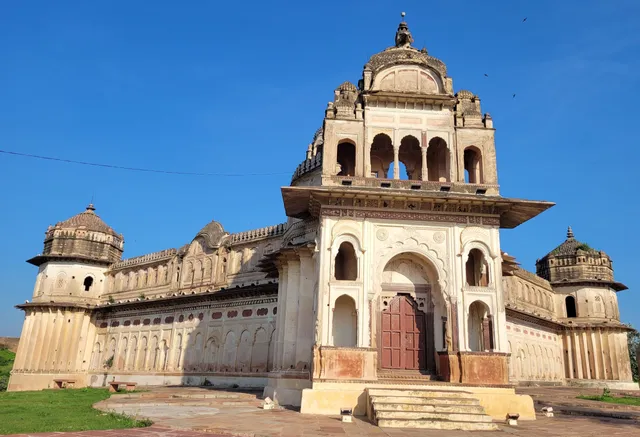
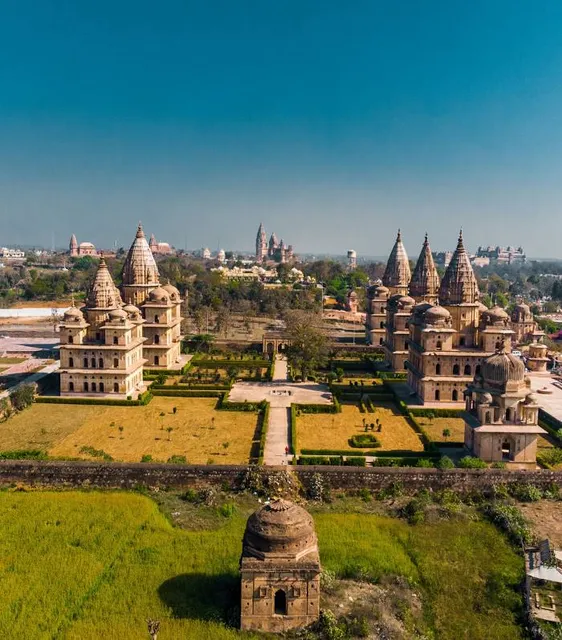
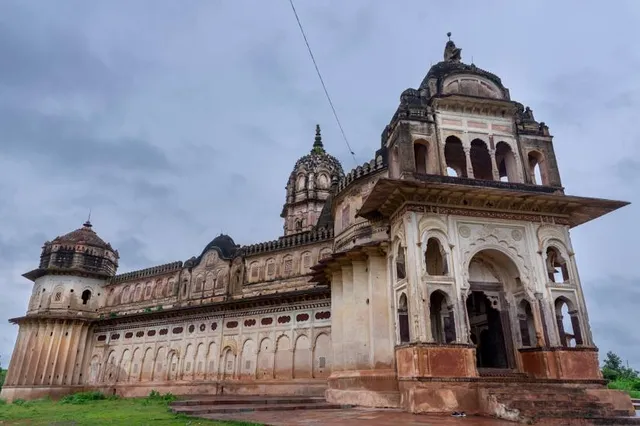
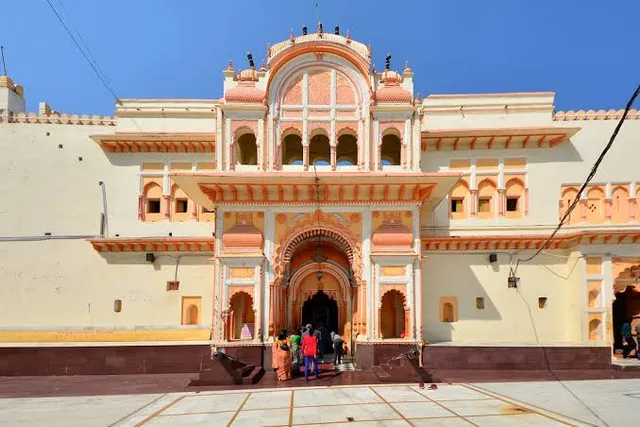
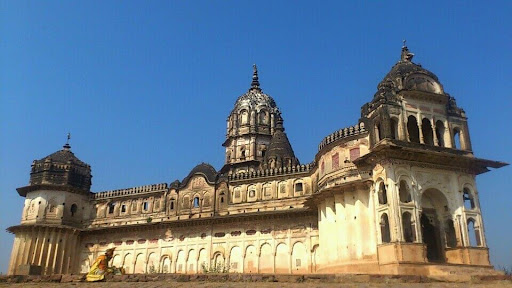
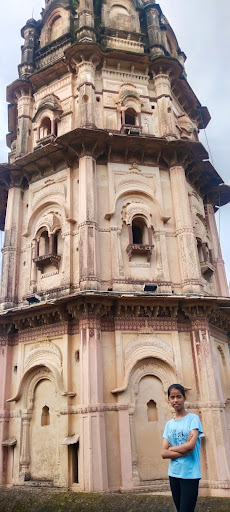
Laxmi Mandir, also referred to as Laxmi Narayan Temple, in Orchha, Madhya Pradesh, is a hidden gem that beautifully blends spirituality, history, and architectural brilliance. Visited in early 2025, this 17th-century temple, built by Raja Bir Singh Deo in 1622 and later reconstructed by Prithvi Singh in 1793, stands as a testament to the artistic prowess of the Bundela dynasty. Located about 2 km from Orchha’s main town on a small hillock, it offers a serene escape from the more crowded attractions like Ram Raja Temple. The temple’s unique architecture, a fusion of temple and fort design, is immediately striking. Its high walls, cannon slots, and octagonal central tower give it a fortress-like appearance, while the triangular inner layout within a square compound is a geometrical marvel. The exterior, built with lime mortar and bricks, features intricate carvings, but the true highlight lies inside. The vibrant frescoes and murals adorning the walls and ceilings are breathtaking, depicting scenes from Hindu mythology—Rama, Krishna, Vishnu, and more—alongside historical events like battles with British forces during the 1857 uprising. These paintings, remarkably well-preserved despite their age, showcase a blend of Mughal and Bundela art styles, with vivid colors that still pop centuries later. Though dedicated to Goddess Laxmi, the temple has no idol in the sanctum, a curious detail attributed to a legend of a golden statue stolen long ago. This absence doesn’t detract from the spiritual ambiance; the tranquil atmosphere invites introspection, enhanced by the soft rustle of leaves and distant views of Orchha’s palaces from the temple’s elevated vantage point. Climbing to the top offers a panoramic view of the town and Betwa River, making the short trek worthwhile. The temple is less crowded than other Orchha sites, which adds to its charm. A single ticket (around ₹12) grants access to multiple attractions, including Raja Mahal and Jahangir Mahal, making it budget-friendly. However, the approach road could use better maintenance, and the lack of signage might make it tricky for first-time visitors to locate. I recommend hiring a local guide to fully appreciate the historical and artistic significance of the frescoes, as they provide detailed insights into the temple’s stories. Note that flash photography is prohibited to preserve the artwork, and the temple closes promptly at 5:30 PM, so plan for at least 1.5–3 hours to explore thoroughly.
Overall, Laxmi Mandir is a must-visit for art lovers, history buffs, and anyone seeking a peaceful retreat. Its exquisite murals, unique architecture, and serene setting make it one of Orchha’s most underrated treasures. I’d rate it 4.5/5—slightly marked down for accessibility issues, but otherwise a captivating experience that lingers long...
Read moreYear 1996 was the first time when I visited Orchha, it was a sleepy dusty town trying to find its way onto the tourist map of india. I took an early morning train from old Delhi railway station to Jhansi and asked a friend in Jhansi as he was working in that area as an English speaking guide and was trying hard to convince travel agents to promote Orcha as a destination instead of day visit. In those days there were very few hotels in Orcha. His persistent calls and striking history of Bundela clan is what made me go.
I reached Jhansi in afternoon and my friend and I drove from Jhansi to Orcha the landscape was dry deciduous and rocky patches…. Very unique.. trees of teak added a bit of colour to dry landscape. After about 45 minutes drive we reached the town center.. cross road from where one coming from Jhansi, one leading to Ram mandir, one leading to Khajuraho and fourth one lead us to Fort.
Today Orchha has become a major destination to visit in Madhya Pradesh. Apart from the overall infrastructure, the tourism support network of the town has improved immensely. You'll now find many restaurants, Bed n breakfast, shops bridges and agents selling rafting and boating on river Betwa, there are newly built, cemented ghats, and there’s even a tourist police checkpost by the river.
Among the many jewels in the crown of this ancient town, the Lakshmi Temple stands is extraordinary with unusual layout, frescoes, murals and structure. true to Orchha’s name which translates to ‘hidden gem’. The temple was hidden from the usual touristy places but my friend a passionate and knowledgeable guide insisted that we visit the temple of Lakshmi.
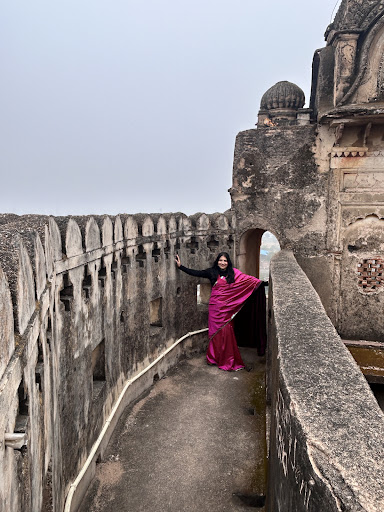
This temple is built like a fort with an octagonal central tower residing within a triangular temple and housed in a square compound. Its ceilings and walls have some outstanding frescoes with stories of Hindu deities, epic stories and warfare. The temple is an architect’s delight and the temple may appear rectangular from the outside but is a perfect triangle within. As the Raja of Bir Singh of Orchha commissioned the temple in year 1622. The walls and ceilings are covered with frescoes depicting stories of Mahabharata, Ramayana and victory of gods over demons. The terrace or topmost part of the temple bear intricately carved domes and the windows feature keyholes that were probably designed to position archers and soldiers who could attack when needed. Today there is no idol or statue of Mother Goddess Lakshmi in temple.
Please leave a comment if you like the travelogue. Please follow us on Instagram...
Read moreThis magnificient Lakshminarayan temple was built by Bir Singh Deo around 1662. But due to inadequate maintenance the condition of the temple soon worsened. It was reconstructed by Prithvi Singh during 1793. This temple was dedicated to Goddess of wealth & prosperity, Laxmi, and within the inner chambers of the temple, Vir Singh made arrangements for offering sacrifices for Laxmi. The Laxminarayan Temple of Orchha is built in an exceptional blend of temple and fort architecture, with the help of lime mortar and bricks. There are frescos and paintings within the walls of the temple that are a blend of Mughal and Bundela forms of art. These frescos illustrate certain social and secular themes. The vivacious colors of the frescos are still retained. Within the Laxminarayan temple, the carvings are displayed in a geometrical pattern and there are scenes from the life of Lord Krishna, adorned with flowers and animals. Another important structure of this delightful shrine is the flagstone path that connects this temple with the Ram Raja Temple. The temple along with its exquisite paintings presents an enthralling feeling and is a worthy to watch spectacle. The carvings on the central dome are exquisite as can be seen. The pillars on the corners are ornate with carvings. There is a statue of Lord Ganesh on this structure. The subjects of the paintings are particularly unusual. While some of them illustrate episodes from the sacred epic, the Ramayana, and of the lord Krishna the eighth incarnation of the Preserver, others depicts mythical, martial and secular scenes. There in an interesting painting of legendary 'Shungi Chirya' the monstrous bird that could fly away with elephants capyured in this talons. This could have inspired the Roc of the Arabian Sinbad stories. Then there are paintings of the siege of Jhansi fort by the forces of the British east...
Read more