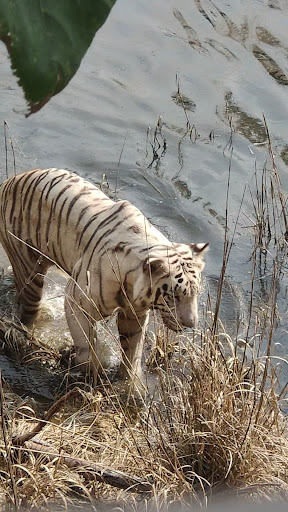
यह स्थान मध्य प्रदेश की शान सफ़ेद शेर मोहन का घर है अभी वर्तमान में यहाँ पर दो सफ़ेद शेर मौजूद है एक मादा शेर (विन्ध्या) एवं एक नर शेर (नकुल) है दोनों को देखना के बाद मानो ऐसा प्रतीत होता है कि ये वाकई मध्य प्रदेश का गौरव है | Mohan was the founding father of the white tigers of Rewa.2] He was captured as a cub in 1951 by Maharaja of Rewa,[3] whose hunting party in Bandhavgarh found a tigress with four 9-month-old cubs, one of which was white. All of them were shot except for the white cub. After shooting a white tiger in 1948 the Maharaja of Rewa had resolved to capture one, as his father had done in 1915, at his next opportunity. Water was used to lure the thirsty cub into a cage, after he returned to a kill made by his mother. The white cub mauled a man during the capture process and was clubbed on the head and knocked unconscious. He was not necessarily expected to wake up, and this was his second brush with death. He recovered though, and was housed in the unused palace at Govindgarh in the erstwhile harem courtyard. The Maharaja named him Mohan, which roughly translates as "Enchanter", one of the many names of the Hindu deity Krishna.
The white tiger the previous Maharaja had kept in captivity from 1915 to 1920 was also a male, unusually large like most white tigers (Mohan was no exception in this regard), and had a white male sibling still living in the wild. After the captive white tiger's death in 1920 he was mounted and presented to the Emperor King George V, as a token of loyalty.[4] This specimen is now in the British Museum. The first live white tiger reached England in 1820, and was exhibited at London's Exeter Change menagerie where it was examined by the famous French anatomist Georges Cuvier, who described it in his "Animal Kingdom" as having faint stripes only visible from certain angles of refraction. In 1960 there was a mounted white tiger, with faint reddish brown stripes, in the throne room of the Maharaja of Rewa.
In 1953, Mohan was bred[5] to a normal-coloured wild tigress called Begum ("royal consort"), which produced two male orange cubs on September 7, one of which went to Bombay Zoo. In 1955 they had a litter of two males and two females on April 10 (which included a male named Sampson and a female named Radha), all normal-coloured. On July 10, 1956 they again had a litter of two males and two females, which included a male named Sultan who went to Ahmedabad Zoo, and a female named Vindhya who went to the Delhi Zoo and was later bred to an unrelated male named Suraj.[6] Once again, the breeding experiments failed to yield a single white cub.[4]
Mohan was then bred to his daughter Radha (who carried the white gene inherited from her father) with success. The initial litter of four cubs—a male named Raja, and three females named Rani, Mohini, and Sukeshi—were the first white tigers born in captivity, on October 30, 1958.[4 Raja and Rani went to the New Delhi Zoo, and Mohini was bought by the German-American billionaire John Kluge8] for $10,000, for the National Zoo in Washington D.C., as a gift to the children of America, in 1960.
The Government of India made a deal with the Maharaja, under the terms of which Raja and Rani would go to the New Delhi Zoo[9 for free. In exchange the Maharaja's white tiger breeding would be subsidized and he would receive a share of their cubs. He wanted Rs 100,000 for them. Technically Sukeshi was also the property of the New Delhi Zoo, and in a sense India had nationalized the captive white tigers of Rewa. The Parliament of India would hear reports on the progress of the white tigers, and Prime Minister Indira Gandhi and U Nu of Burma participated in public christening ceremonies for white cubs at New Delhi Zoo.[11] Sukeshi remained at Govindgarh Palace, in the harem courtyard where she was born, as a...
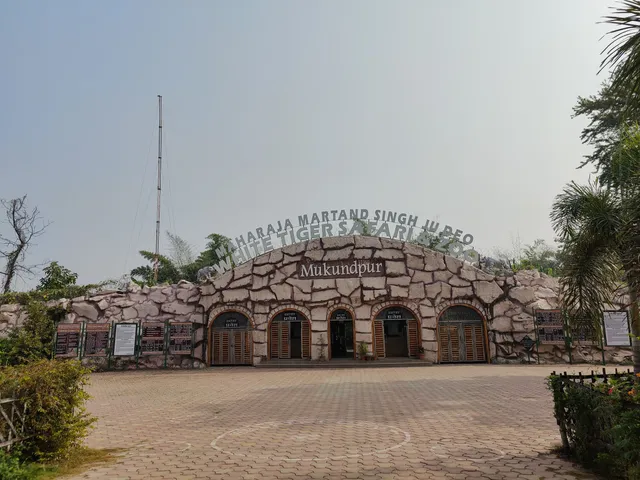
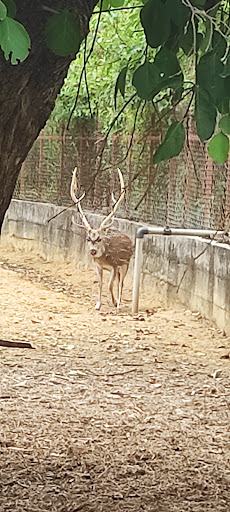
Read moreThe White Tiger Safari in Mukundpur emerges as a meticulously planned and well-maintained haven for both wildlife enthusiasts and families seeking an extraordinary outing. With continuous expansions on the horizon, promising an even more immersive experience, this safari and zoo have positioned themselves as a gateway to lifetime memories. From the graceful majesty of lions to the enigmatic presence of panthers, the thrilling encounters with hyenas, leopards, bears, and an array of deer species, including the elusive white deer, all come together to create an enthralling tapestry of wildlife diversity.
However, the true crown jewel of this safari is undoubtedly the ethereal white tiger, a majestic creature that commands attention. Designed with an innate understanding of both the animals' needs and the visitors' experiences, the enclosures are thoughtfully laid out. This enables visitors to explore the zoo by foot or, for those who prefer a leisurely journey, by battery-operated vehicles. Meanwhile, the safari itself unfolds in a bus, providing an excellent vantage point to observe these incredible creatures in their near-natural habitats.
The highlight of the safari remains the white tiger, a male of rare and mesmerizing beauty who goes by the name "Raghu." Here, you're afforded the unique opportunity to observe this magnificent creature in astonishing proximity, a sight that leaves an indelible mark on your memory.
The White Tiger Safari and Zoo extend their invitation from 9 AM to 5 PM, except for Wednesdays when it's closed for maintenance. For families seeking a day filled with unforgettable experiences, this destination fits the bill perfectly. A delight for kids and adults alike, the well-thought-out layout offers a visual and sensory treat, creating a harmonious blend of aesthetics and functionality.
While the journey to the White Tiger Safari promises a plethora of wonders, one aspect that may require attention is the dining options. Visitors have noted the absence of a good restaurant or fast-food outlet in close proximity to the zoo. A nearby option that could potentially satisfy culinary cravings is non-operational, and this could be an area of improvement for the zoo's administration. Perhaps, the inclusion of a small café or eatery near the parking area could add a new dimension to the visitors' experience, offering them a convenient place to refuel after a day of exploration.
For those contemplating the best time to embark on this journey, the winter and monsoon seasons emerge as ideal choices. These seasons provide a comfortable climate for both animals and visitors, ensuring a vibrant display of animal activity. It's advisable to avoid the scorching summer days when the animals might prefer to remain in the shade due to the heat.
Financially, the White Tiger Safari offers various ticket options, with charges starting from 50 bucks and going up to 120 bucks per person if you opt for the go-cart and safari ride combo. It's a modest investment considering the treasure trove of experiences that await within the safari's boundaries.
The White Tiger Safari ensures that the safety, convenience, and environmental considerations are at the forefront of the visitor experience. With water tanks, restrooms strategically placed, and the availability of a golf cart for easy travel, every effort is made to ensure a smooth and pleasant journey.
One can't help but marvel at the pride of the White Tiger, a creature that commands its realm with regal presence. The museum on-site offers an immersive insight into the history and significance of the white tiger, adding a layer of educational enrichment to...
Read moreMukundpur White Tiger Safari is near to Rewa but is in Satna district of MP It has a zoo where you will see well fed white tiger and routine asian tigers a black bear There is also a safari named (Mohan white tiger safari)after famous first ever white tiger captured in the last century by ruling kings of Rewa in the very same jungles (interestingly I have seen Mohan also when I was a kid since he was kept in a zoo very near place called Govindgarh though now no more ) Since the zoo and safari are new in tourist circuit hotels and restaurants are yet not operative but many are coming up Safari closes at 4pm and zoo by 5 pm so be in time A very small but informative museum also worth visiting In all it is going to be a good outing for all. Decent place, not too far from Rewa, and is also priced reasonably. We took the golf car for the zoo, and the mandatory van for the white tiger reserve. The place is quiet and well maintained. There are two white tigers which we saw, one in the tiger reserve and the other in the zoo. Overall it was a peaceful viewing. I visited this zoo on august 2021 the weather was rainy and cool and this helped the white tiger to come out in open ground for the visitors to have a sight to behold for life. This was unlike my first visit to this safari during the first week of may when the weather was too hot and the white tiger was lying and hiding inside the ditch beside the veiwing side wall.
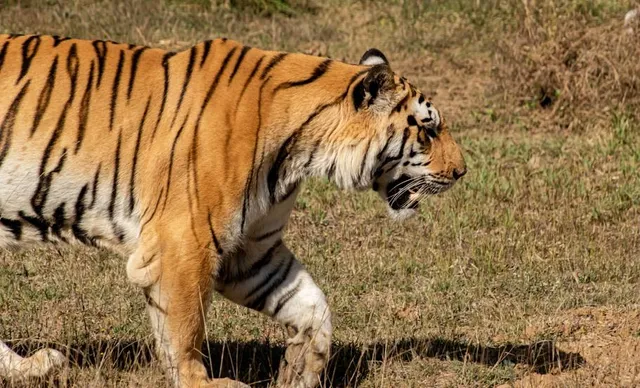
The white tiger is average in size but looked very healthy and active. the entry ticket per person is Rs 20. The zoo looks well managed. The road from rewa to the safari site is acceptable.It takes about 20-30 minutes from Rewa...
Read more