The Basics Difficulty Level: Easy. Time required: One day. Base Village: Warangade. Best time to go: All year round. Altitude: Approximately 1,070 feet (Above sea level) Accommodation: Possible to pitch a tent or stay in large natural cave which is located a few metres below the top of the fort Drinking Water: A few water tanks on the fort, but they are dried up in the summers. Water in the cave is present all year round, and quite clear, but covered by a layer of ash. So it is better to carry enough water. Food: No food available at the base village,so carry your own food/snacks.
History of the fort
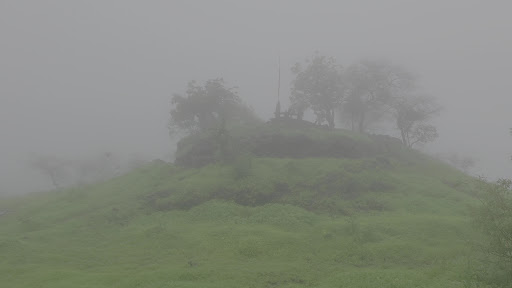
Not much is known about this fort, which lies in the Palghar range of the Sahyadris. It is thought to have served as a watchtower. The Palghar range of forts offers a great set of easy and moderate trails for those who live in Mumbai.
How to reach
From Mumbai, take a train via the Western line to Boisar station. If you are looking for an early start, I would recommend the train leaving from Churchgate station at 5.24 a.m. This train will reach Boisar by approximately 7.38 a.m. Have some tea and breakfast at Boisar itself, as there is no other place on the way to grab food. From the station, a short walk of 5 minutes will lead you to the Boisar bus stand. Ask for buses that go to Warangade village. All buses heading to Kalyan or Thane will halt there.
About the trail
The trail starts from a dirt road where you alight. You will first pass by a small factory (with a blue coloured building), and then in 5 minutes, you will be able to spot a small cement bridge. This bridge also has a painted arrow on it, marking the beginning of the trail for the fort. Keep going on the prominent trail, guided by the painted arrows on rocks.
You will climb across 2 small hills before reaching Asawa. Because of the arrows marking the trail throughout, it is quite easy to find the way. This trail takes you about an hour to reach the top.
There is an alternate route that goes to the fort, which is quicker but steeper. This trail starts a little ahead of Warangade, from opposite Mamacha Gaon resort (before Tarapur MIDC). This trail is also marked with blue painted arrows. You will encounter a large cave on the way from this route. You can reach the top of the fort in less than an hour.
A good idea to explore both trails is to ascend via the longer trail, descend to the cave, and further down to the base via the steeper route.
Things to see
There a two main attractions in and around the fort. The top of the fort has a massive water tank with steps to descend into it. There are a few smaller water tanks around as well, and a broken structure. Below the fort is a HUGE famous natural cave, called ‘Ganesh Gufa’. The way to the cave is from a partially-destroyed gate structure, and there are arrows marking the way. It takes around 15 minutes to reach the cave from the top of the fort.
This cave can easily fit 50 people! It also has some water, which is present throughout the year. It has quite a few frogs, but is quite clear below the layer of whitish ash/powder on...
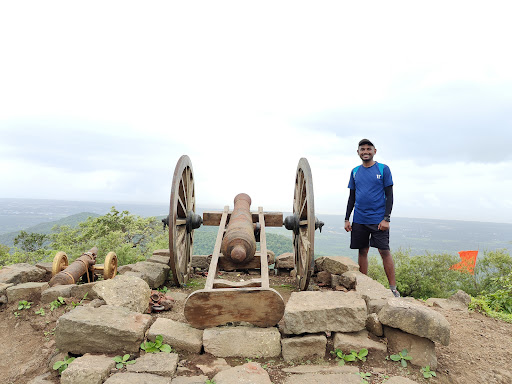
Read moreBoisar is a prominent city of Palghar district. In ancient times, ports like Shoorparak, Dahanu, Tarapur, Shreesthanak/sthanakiya pattan(thane), kaliyan(kalyan) etc; were doing brisk trade on a massive scale with other countries. The goods offloaded at thses ports used to be get distributed countrywide by different routes. Forts were built to overlook the safety of these routes. The Asava fort is one of such forts that was built in ancient times to oversee the route connecting the country to the ports of Dahanu and Tarapur. Climbing this old fort is not only easy; but the path through dense forest to the fort; makes it a very refreshing one day trek.The entry to the fort is over the fortifications which is built by stacking stones one over other. The cannons found on the fort are mounted on a wooden rail with wheels. There are two water tanks carved in the stone beside the cannons. On the south end of the fort; there is a huge, nicely built tank that is 50 ft long, 20 ft wide and 15 ft deep. The speciality of this tank is, one side of the tank is made of monolith plain stone and the remaining three sides are built by arranging stones. There are stairs carved on the westside wall of the tank. As the water runs down the slopes of inclining side of the tank; it passes through circular ditches carved; each 6 inch deep and 1 foot in diameter; so the sludge gets separated letting the clean water to accumulate in the tank. With the current bad condition of the tank; hardly any water is retained in the tank. After visiting the tank, walk towards the north and on the left side; there is the decrepit west-facing main entry door. In front of that doorway; one can see a wall. It belongs to stone- built water tank. Even though it is small in size; its structure arrangement is similar to that of the large tank; one side of monolith stone wall while other three sides built with stones. A small water-way(Char) is carved in the stone plain side of the tank. The water that comes from this small water-way; first fills a small stone tank built prior to the main tank. After the small stone tank overflows; then it fills the main tank. This arrangement makes sure that the sludge gets settled in the first tank and clean water is passed to the main tank. Some small steps are carved in the stone beside the tank. On the left side of the destroyed entry doorway; there is a narrow pathway to get down. On this path; there are remains of porches. Passing through the door way; towards left; there are remains of fort wall. Some steps are carved in the stone here. Continuing on this path; walking past a small stone patch, down the road; the path ends in a fork road leading into two different paths. The left one leads to the broken down idol of lord maruti and the right one leads to the 3 caves. After visiting the caves; return on the same path and arrive at top of the fort and the sighting is all done. The Devakop lake of Palghar can be seen from the fort...
Read moreAsava Fort, also known as Asava Killa, is a historical hill fort located in the Palghar district of Maharashtra, India. It is a lesser-known but intriguing destination for history enthusiasts and trekkers. Here are some key details about Asava Fort:
Historical Significance: Asava Fort has historical importance, dating back to the Maratha era. It was part of the network of forts used for defense and surveillance by the Maratha Empire.
Location: The fort is situated near the village of Asava, in the Sahyadri mountain range. It is relatively close to other forts and historical sites in the region, making it part of a rich historical landscape.
Architecture: Asava Fort features typical Maratha fort architecture, with strong defensive walls, bastions, and strategic viewpoints. The remnants of structures within the fort give a glimpse into its past glory and strategic significance.
Trekking Destination: The fort is a popular trekking destination. The trek to Asava Fort is moderately challenging, making it suitable for both novice and experienced trekkers. The trail offers scenic views of the surrounding hills and valleys.
Scenic Views: From the top of Asava Fort, visitors can enjoy panoramic views of the lush green landscape, neighboring hills, and distant water bodies. The fort's elevated position provides a commanding view of the surrounding region.
Natural Surroundings: The area around Asava Fort is rich in flora and fauna, with diverse plant species and wildlife. The natural beauty of the region enhances the trekking experience.
Cultural Insights: Visiting Asava Fort provides insights into the Maratha culture and their architectural prowess. The fort is a testament to the strategic importance of hill forts in the Maratha defense system.
Accessibility: The fort can be accessed from the nearby villages, and local guides are often available to help visitors navigate the trek and explore the historical aspects of the fort.
Best Time to Visit: The best time to visit Asava Fort is during the monsoon and winter seasons (June to February), when the weather is pleasant, and the surrounding landscape is lush and green.
Asava Fort is a fascinating destination for those interested in history, trekking, and nature. It offers a blend of historical exploration and outdoor adventure, making it a worthwhile visit in the...
Read more