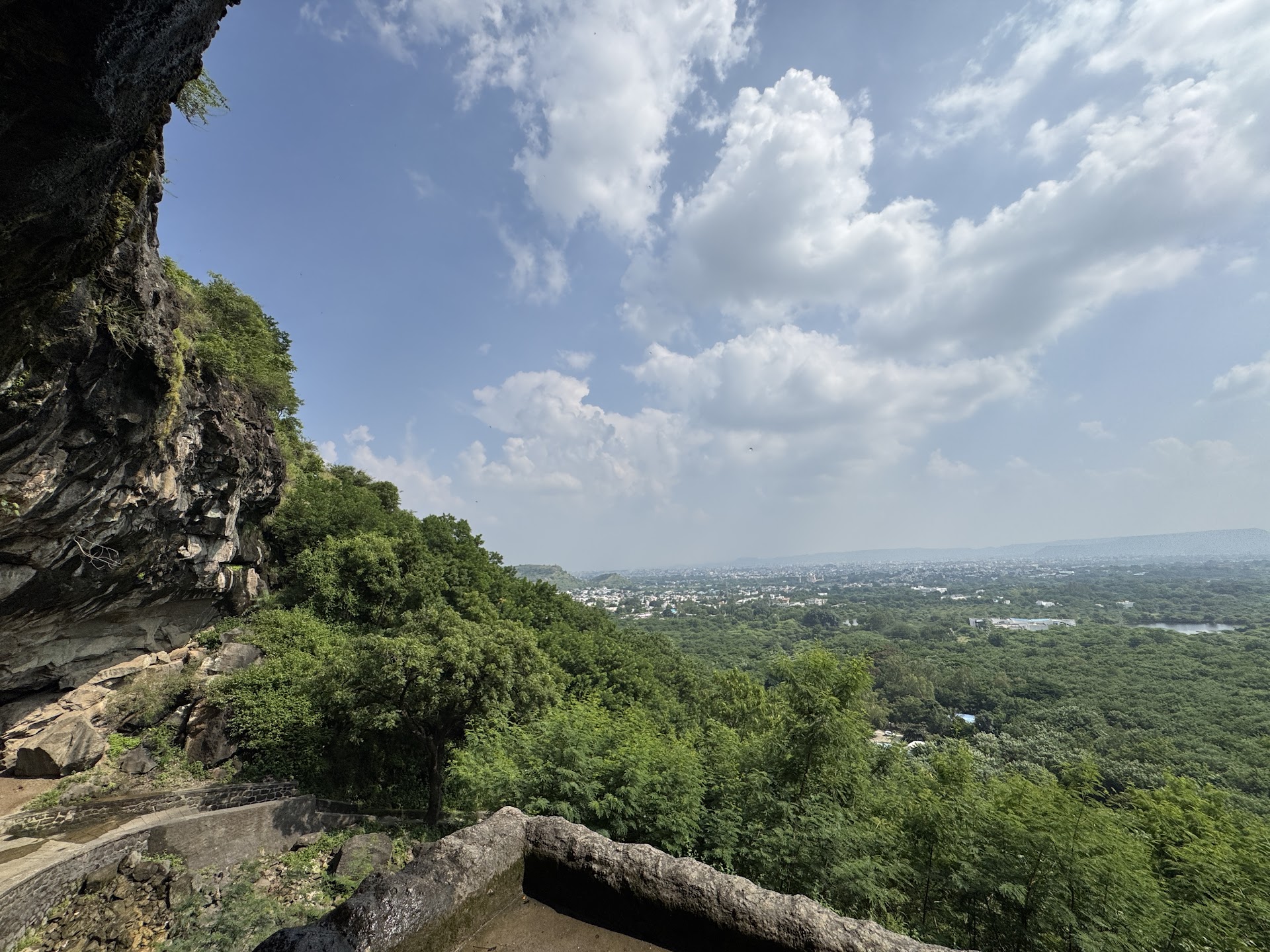
Aurangabad is situated in a valley watered by the River Dudhna between the Sihyachal and Satara range of hills. The old name of Aurangabad is Khirki, which means a ‘window’ or ‘entrance’. The Aurangabad Caves (19°55’; 75°30’) remained unknown for a long time. Dr. Bradley gave an account of these caves in a report to the Nizam Government in 1850. Dr. James Burgess described the caves extensively in Vol. III of the reports of the Archaeological Survey of Western India during 1875-76.
The caves were hewn at the height of nearly 70’ from the ground level. The rock formation in the hill is not entirely suitable for excavation in the Sihyachal range. Hence, at many places, the rock surfaces have collapsed, developed cracks. This was the reason that many of the caves were left unfinished. The excavators also took great care to avoid the faulty and lose rock mass.
In all 12 Buddhist Caves (1 chaityagriha and 2 viharas) are excavated in basalt rock of Deccan trap which fall into three separate groups. The first group consists of caves 1 to 5; the second from 6 to 9 located to the east of the first group at a distance of nearly 500 m; and third from 10 to 12 which are plain and unfinished cells 1 km further east of the second group. The caves are dated from circa 3rd century AD to 7th century AD and are noted for their architectural and sculptural beauty. The authors and period of the third group is difficult to determine in the absence of any identifiable features.
Among the first group, Cave 4 belongs to the early phase, i.e., Hinayana phase. The remaining is assignable to the Mahayana phase. Cave 4 is a chaityagriha, the front portion being collapsed, the stumps of which survive now. The evidence indicates it having a rectangular hall with an arrangement of 17 pillars dividing it into a nave and side aisles. The pillars are plain octagons, most of them are reconstructed now. A series of stone ribs on the roof of the nave indicates wooden imitation. The stupa is placed at the rear of the hall which has a high cylindrical drum, bulbous dome, mounted by a harmika with the usual railing decoration over which is the inverted stepped pyramid pattern. The nature and shape of the stupa indicates a date of not earlier than 3rd century A.D. to the chaityagrha.
The remaining caves of the first cave group are devoid of any early character as that of Cave 4. Cave 1, the westernmost among the group is an incomplete cave of which only the portico and pillars are finished. The pillars are fashioned and the ornamentation resembles those at Ajanta. Three panels depicting Buddha attended by Padmapani and Vajrapani could be seen in the verandah. Also to be seen is the relief of seven Buddhas in preaching attitude, and Padmapani & Vajrapani flanking them.
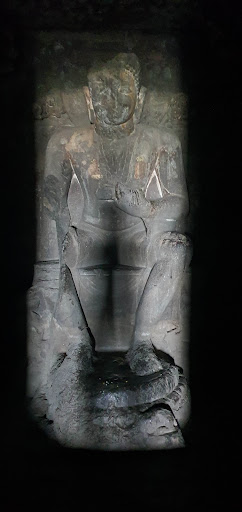
Cave 2 is a square shrine with a circumambulatory (pradakshinapatha) around. On plan, it resembles the structural temples of the period which is uncommon in rock-cut examples. It has a square shrine, a colonnade and a porch. A colossal image of seated Buddha in preaching position is housed in the shrine, the entrance of which is attended by Avalokitesvara on either side. They carry the stalk of a lotus, on which is shown the Dhyani-Buddha Amitabha. Several figures of Buddha in low relief and some attended by Vajrapani and Padmapani are seen on the walls of sanctum, porch and the processional path.
Similar to Cave 2 is Cave 5, which also has a shrine with a circumambulatory passage. The façade of this cave is missing.
Among the first cave group, Cave 3 is the prominent and largest one. This is a huge monastery, the plan resembles with those at Ajanta. On plan, it consists of a pillared verandah with cells on either end, a square pillared hall with two cells on two sides, a pillared porch, and a shrine. The pillars of the square hall are arranged in a square and are richly carved with floral and geometrical designs. Carvings are also noticed on the architrave above the pillars, in one example, the Sutasoma Jataka can be...
Read moreOh, the Aurangabad Caves! They are a fascinating treasure trove of ancient rock-cut Buddhist caves located in Aurangabad, Maharashtra. These caves provide a captivating glimpse into the rich history and artistic brilliance of ancient India. Let's embark on a conversational exploration of the Aurangabad Caves together!
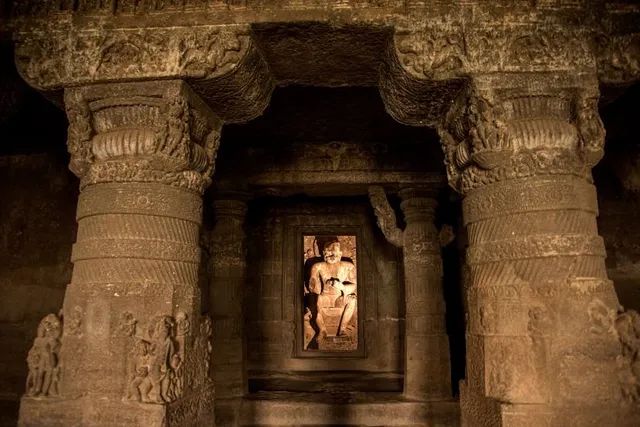
First things first, did you know that the Aurangabad Caves date back to the 6th and 7th centuries? That's right! These caves are believed to have been excavated during the reign of the Kalachuri dynasty and showcase a unique blend of Buddhist and Hindu architectural styles. It's truly incredible to witness the cultural amalgamation through the intricate carvings and sculptures found within these caves.
Speaking of carvings, prepare to be awestruck by the exquisite craftsmanship on display. As you enter the caves, you'll be greeted by intricately carved doorways adorned with intricate motifs and figurines. The attention to detail is simply breathtaking! Every nook and cranny of the caves seems to tell a story of devotion and artistic finesse.
There are a total of twelve caves in the Aurangabad Caves complex, each with its own distinct character and purpose. The caves were primarily used as monastic retreats for Buddhist monks, and some even served as prayer halls. It's amazing to imagine the serene atmosphere that must have prevailed within these ancient walls.
As you venture deeper into the caves, you'll come across elaborately carved Buddha statues, serene Bodhisattva figures, and decorative panels depicting scenes from Buddhist mythology. The caves also house intricately designed prayer halls and chaitya-grihas (Buddhist prayer halls), which were spaces for communal worship and reflection. It's truly a spiritual experience to witness these ancient places of devotion.
One of the highlights of the Aurangabad Caves is Cave 7, also known as the Tincha Lena. This cave stands out for its impressive size and exquisite sculptures. The main hall of Cave 7 is adorned with striking images of deities, intricate friezes, and ornate pillars that leave visitors in awe of the artistic mastery of the craftsmen who brought these caves to life.
Now, here's a fun fact: Despite their historical significance, the Aurangabad Caves are not as well-known as some other ancient sites in India. However, this relative obscurity only adds to their charm. Visiting the Aurangabad Caves feels like embarking on a hidden adventure, discovering a lesser-explored slice of history that truly deserves appreciation.
So, whether you're a history buff, an art enthusiast, or simply someone seeking a unique and enriching experience, the Aurangabad Caves are a definite must-visit. Immerse yourself in the serenity, marvel at the artistic brilliance, and let the ancient whispers of these caves transport you to...
Read moreTucked away amidst the stark, rocky landscapes of Maharashtra's Sahyadri hill ranges lies one of India's most extraordinary archaeological treasures - the Aurangabad Caves. This vast rock-cut cave complex stands as an enduring testament to the profound religious devotion and artistic genius that defined Buddhist civilization across the ancient Deccan plateau.
Dating back nearly 2,000 years to the Satavahana period, the Aurangabad Caves represent the physical manifestation of generations of spiritual devotion by Buddhist monastics and artisans. As you approach the horseshoe-shaped escarpment pocked with cave entrances, you can't help but marvel at the sheer magnitude of human effort and engineering prowess required to painstakingly carve away millions of tons of solid basaltic rock.
The caves were gradually excavated and elaborately embellished over many centuries through the perseverance of innumerable hands - from the 3rd century BCE through the 6th century CE. In total, there are 12 major caves of outstanding significance, in addition to numerous smaller viharas, shrines, cisterns, and ancillary chambers.
Cave 7, known as the Brick Monastery Cave, is deservedly the centerpiece. This massive three-level cave complex contains some of the most refined and iconic Buddha imagery in all of India. The immense 39-foot buddha statue presiding over the intricately carved chaitya prayer hall is simply breathtaking, simultaneously radiating stillness and dynamism. The architectural features like the ornate pillars, window traceries, and sculpture friezes demonstrate an incredible mastery of rock-cutting.
But Cave 7 is hardly alone in its magnificence. The Buddha's life story seems to come alive through the vivid sculptural panels in Cave 6. The sensuous yakshi fertility carvings flaunt an artistic confidence and celebration of the human form. Cave 3 contains the oldest intact Buddhist sculptural art, while Cave 4's massive horseshoe-shaped chaityacontains India's largest single rock-cut monolithic shrine.
As you wander between the serene interiors and stark gorges outside, you gain a profound appreciation for the spiritual fortitude of the monastics devoting their lives to excavating these shrines from solid rock. The Aurangabad Caves endure as an unparalleled highpoint of India's Buddhist artistic, architectural, and religious heritage carved directly from the bones of the earth itself. Their scale, artistry, and reverence for the Buddha's teachings have rightly earned them UNESCO World Heritage status as a wonder of human...
Read more