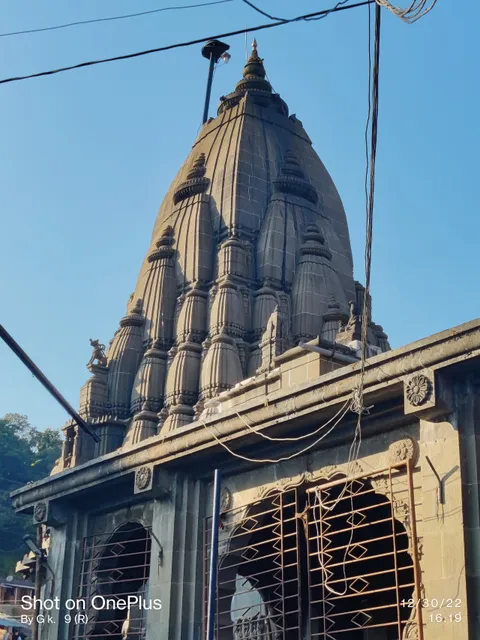
The Shiva temple at Bhimashankar in Pune is one of the 12 Jyotirlingas located across India. Situated in the Ghat region of the Sahyadri Hills, Bhimashankar is also the source of the River Bhima, which flows southeast and merges with the River Krishna near Raichur. According to legend, the Bhimashankar Temple was an outcome of a deva-asura struggle. With an army of ganas and yoginis like Dakini and Shakini by his side, Shiva assumed a gigantic form, Bhima, to kill a demon called Tripura, who had become too powerful because of the boon he received from Brahma after performing severe penance. And that is why the place is called Bhimashankar. The temple is located at the spot where Shiva is believed to have killed Tripura. The surrounding forest is famous as Dakini Van since ancient times.
It is believed that yoginis reside in the forest to perform the ritualistic ablution of Shiva. In the month of Shravan and on the auspicious day of Mahashivratri, grand fairs are held here every year. The Bhimashankar Temple is more than 1, 200 years old. This beautifully sculpted temple was restored to its present state by the Peshwa rulers. There is a huge iron bell with the inscription ‘1729’in the temple, which was captured by the great warrior, Chimaji Appa, from the Portuguese at Vasai Fort. To reach the sanctum sanctorum, the pilgrims have to climb down 300 steps, on the sides of which vendors sell freshly-made pedas and other sweets. Many of them also sell medicinal plants. Bay laurel, called tejpatta in Hindi, grows abundantly in the region.
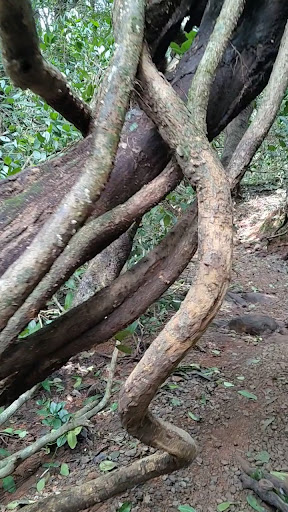
Bhimashankar is an evergreen forest and is home to boars, barking deers, wild cats, civets, panthers, hyenas, a variety of monkeys, giant flying squirrels, peacocks and kites. If you are lucky, you will also spot the Blue Mormon butterfly. It is believed that the River Bhima originates from the Shivalingam at Bhimashankar; it flows underground and resurfaces five kilometres away in the eastern part of the forest, where it’s called Gupt (hidden) Bhimashankar. While circumambulating the Shiva temple, one can see a narrow corridor that leads to the evergreen forest of Bhimashankar. The forest is so dense that the trees seem to embrace each other tightly with their giant branches. The trees have intermingled into each other in such a way that their branches don’t allow sunrays to reach the ground even when the sun is at its peak.
This unique network of trees has made the forest a safe haven for the giant squirrel. It’s a delightful trek to Gupt Bhimashankar as the twittering and chirping of birds keep you entertained. If you care to pause for a while and look up, you will surely see giant squirrels hopping across trees. If you happen to come here during the monsoon, you will find luminous fungi growing on the trees, called Jyotivanti in Marathi. These emit a green glow, giving a shimmering look to the entire forest. Walking along the guiding arrow marks nailed to trees, I reached a small temple called Sakshi Vinayaka. The deity here is said to keep a record of every person who enters the forest.
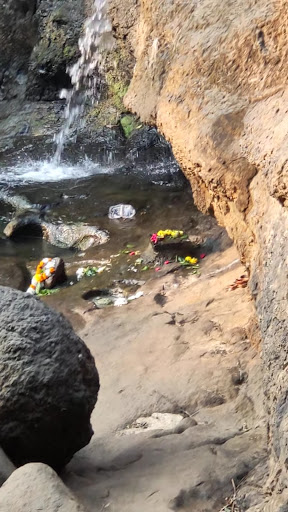
Opposite the temple are rows of stones piled up in a strange manner, but I couldn’t find anyone who could explain the story behind the arrangement. After crossing the temple, I reached a spot where the Gupt Bhimashankar was cascading down as a waterfall. As I inched closer for a clearer view, I saw, underneath the waterfall, a small Shivalingam, with an even smaller Nandi, a trishul and a damru. The swirling water falls on the lingam, as if offering abhisheka to the Lord. Whether it was the excitement of seeing the unusually located shrine or it was the effect of the unpolluted, tranquil surroundings — where one gets to interact with the raw forces of nature — all I could do was whisper ‘Har Har Mahadev, Har Har Mahadev, ’ several times in salutation to Shiva. It was a chant of gratitude to the Lord for making it possible for me to pay...
Read moreThe Gupt Bhimashankar Temple is a mesmerizing spiritual haven, nestled in the scenic beauty of the Sahyadri range. Its architectural grandeur, intricately carved sculptures, and serene ambiance create an ethereal experience for devotees. The temple's sanctity is heightened by the mystique surrounding its hidden location, contributing to a sense of discovery and reverence. Pilgrims attest to the divine energy resonating within, making it a deeply fulfilling pilgrimage destination. The surrounding natural landscape adds to the allure, making the Gupt Bhimashankar Temple a holistic and soul-stirring retreat.
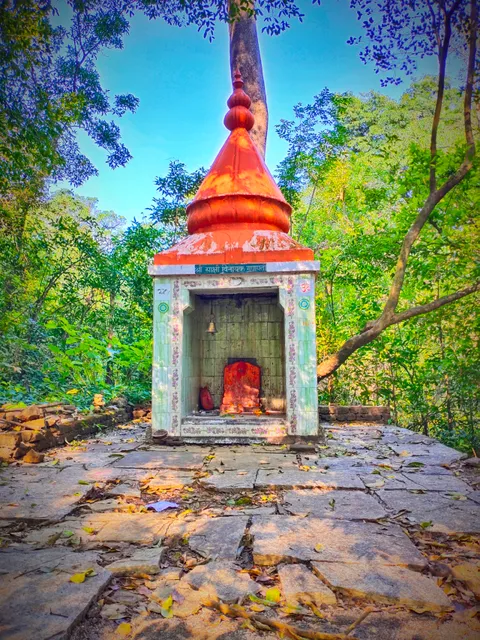
Embarking on a spiritual journey to the Gupt Bhimashankar Temple is not merely a pilgrimage but a profound adventure, demanding a rigorous and awe-inspiring trek of 3 kilometers through the heart of a dense jungle. The trail, shrouded in verdant foliage, weaves through a labyrinth of ancient trees, their gnarled roots and towering canopies forming a natural cathedral. As one treads the uneven path, the air becomes charged with the earthly scent of damp soil and the distant rustle of wildlife. The symphony of birdsong and the occasional rustling leaves create a harmonious melody that resonates with the very pulse of nature. The trek unfolds like a sacred odyssey, each step a communion with the untamed beauty of the wilderness. Sunlight filters through the thick canopy, casting a dappled glow on the path, while the anticipation of reaching the hidden temple heightens the spiritual resonance of the journey. With every turn, the lush surroundings become a testament to the symbiosis between the sacred and the wild, culminating in an unforgettable pilgrimage that transcends both physical and spiritual realms.
Cautionary whispers among seasoned travelers reveal a crucial piece of advice for those venturing towards the Gupt Bhimashankar Temple – a solemn suggestion to navigate the journey sans reliance on Google Maps. The digital cartographer, in its well-intentioned but fallible nature, fails to accurately decode the intricate tapestry of trails leading to the temple's elusive abode. As if veiled in secrecy, the temple beckons pilgrims through routes not meticulously documented in the digital realm. This necessitates a departure from the algorithmic guidance, urging intrepid seekers to trust in local wisdom and hand-drawn maps passed down through generations. The veritable maze of the jungle demands a navigation method that transcends the binary precision of technology, relying instead on the nuanced guidance of seasoned guides and the age-old markers left by those who treaded the path before. An undertaking that eschews the predictable monotony of automated directions, this journey becomes a testament to the authenticity of exploration, urging pilgrims to embrace the unknown and forge a connection with the intangible essence of the untamed wilderness.
The sacred aura of the Gupt Bhimashankar Temple is heightened by the awe-inspiring revelation that the revered Shivling within its hallowed sanctum is positioned with divine precision directly beneath a cascading waterfall. As one approaches this sacred space, the rhythmic symphony of water meeting stone becomes an intrinsic part of the spiritual experience. The thunderous resonance of the waterfall serves as an elemental hymn, merging the terrestrial and celestial in a captivating dance. Devotees are greeted by the ethereal sight of water gushing forth, gracefully veiling the ancient Shivling in a constant flow, symbolizing the cosmic cycle of creation and renewal. The juxtaposition of the powerful natural force and the revered symbol of Lord Shiva creates a visceral connection between the tangible forces of nature and the divine, transforming the act of worship into a sensory journey where the purity of water converges seamlessly with the spiritual essence of the...
Read moreA Peaceful Trek with a Confusing Turn! Read this if you want directions.
This trail is truly beautiful and one of the more peaceful treks in the area. The sounds of birds and the dense jungle are a welcome break. Like many others, I also had a dog "guide" me for part of the way, which was an amazing experience!
My main reason for writing this review is to help others who, like me, got lost on the trail. What should have been a 45-minute trek turned into a 2.5-hour ordeal due to a lack of clear signs. It's not a challenging trail, but the directions can be very misleading.
Important Directions to Gupt Bhimashankar: Crucial Right Turn: Look for a man-made Ganesha statue made of stones. When you see this, take a sharp right turn.
Follow the Path Downhill: After the right turn, follow the path downhill. You will soon see a waterfall.
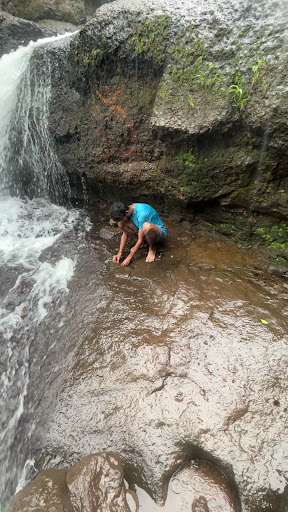
The Linga is Below the Waterfall: The etched linga is located right below this waterfall. There's a path that leads down to it. Look for an orange Om symbol written on the rock—the linga is right below it.
Misleading Signs: Do NOT follow the "Gupt Bhimashankar" sign painted on a tree that points right; this is what confused me. The correct turn is to go down towards the waterfall.
Important Tips:
Grippy Shoes: The rocks around the waterfall are covered in moss and are very slippery. Wear grippy shoes or consider crossing barefoot. (Talking from experience cause I slipped and fell on the rock)
Don't Litter: Please carry your trash out with you. It's a sacred place and has unfortunately been littered by others.
I did this trek solo, but if you can, it’s a good idea to go with a guide or a companion, especially if it's...
Read more