HTML SitemapExplore
logo
Find Things to DoFind The Best Restaurants

Jaigad Fort — Attraction in Maharashtra

Name
Jaigad Fort
Description
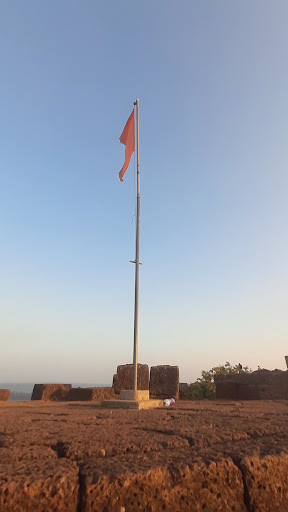
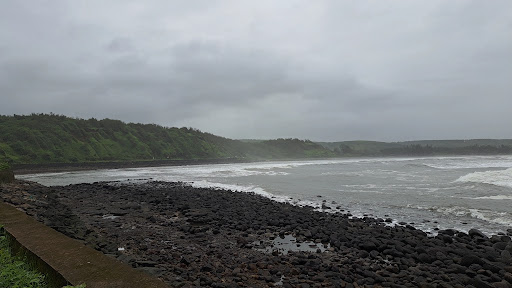
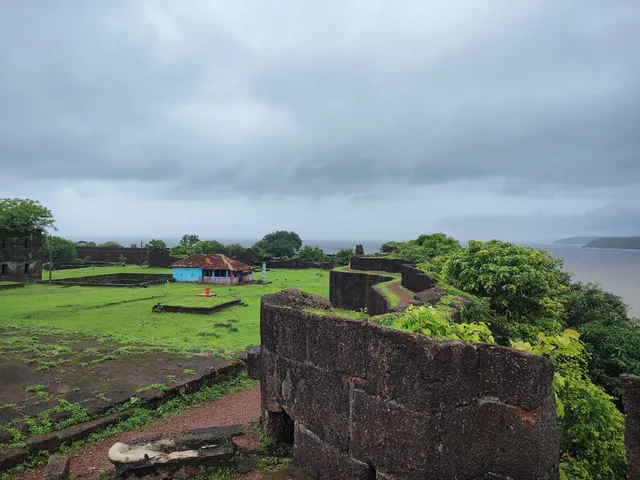
Jaigad Fort is a coastal fortification that is located at the tip of a peninsula in Jaigad, Ratnagiri District at a distance of 14 km from the temple town of Ganpatipule, in the state of Maharashtra, India. Nestled on a cliff, it overlooks a bay formed where the Shastri river enters the Arabian Sea.
Nearby attractions
Nearby restaurants
Nearby hotels
Jog Residency
Dr. M. V. Jog Chowk At Post Jaigad Tal And Dist, Jaigad, Maharashtra 415614, India
Related posts
Keywords
Jaigad Fort tourism.Jaigad Fort hotels.Jaigad Fort bed and breakfast. flights to Jaigad Fort.Jaigad Fort attractions.Jaigad Fort restaurants.Jaigad Fort travel.Jaigad Fort travel guide.Jaigad Fort travel blog.Jaigad Fort pictures.Jaigad Fort photos.Jaigad Fort travel tips.Jaigad Fort maps.Jaigad Fort things to do.
Jaigad Fort things to do, attractions, restaurants, events info and trip planning
Jaigad Fort
IndiaMaharashtraJaigad Fort

Basic Info

Jaigad Fort

862C+5JX, Costal Road, Jaigad, Maharashtra 415614, India
4.1(1.6K)
Open 24 hours
Save
spot

Ratings & Description

Info

Jaigad Fort is a coastal fortification that is located at the tip of a peninsula in Jaigad, Ratnagiri District at a distance of 14 km from the temple town of Ganpatipule, in the state of Maharashtra, India. Nestled on a cliff, it overlooks a bay formed where the Shastri river enters the Arabian Sea.

Cultural
Outdoor
Family friendly
attractions: , restaurants:
logoLearn more insights from Wanderboat AI.

Plan your stay

hotel
Pet-friendly Hotels in Maharashtra
Find a cozy hotel nearby and make it a full experience.
hotel
Affordable Hotels in Maharashtra
Find a cozy hotel nearby and make it a full experience.
hotel
The Coolest Hotels You Haven't Heard Of (Yet)
Find a cozy hotel nearby and make it a full experience.
hotel
Trending Stays Worth the Hype in Maharashtra
Find a cozy hotel nearby and make it a full experience.

Reviews

Get the Appoverlay
Get the AppOne tap to find yournext favorite spots!
Wanderboat LogoWanderboat

Your everyday Al companion for getaway ideas

CompanyAbout Us
InformationAI Trip PlannerSitemap
SocialXInstagramTiktokLinkedin
LegalTerms of ServicePrivacy Policy

Get the app

© 2025 Wanderboat. All rights reserved.
logo

Reviews of Jaigad Fort

4.1
(1,625)
avatar
4.0
6y

Jaigad Fort Overview

Jaigad Fort, also known as the Fort of Victory, is a 16th-century fort that extends over an area of 13 acres in the coastal region of Ratnagiri, Maharashtra. Located near Jaigad Village and approximately 20 kms to the north-west of Ganpatipule, the remains of the fort stand steady on a cliff overlooking the Jaigad creek where River Shastri enters the vast and mesmerising Arabian Sea. Jaigad Fort is an engineering marvel for the purpose it was built. A glance at the magnificent structure before you enter will surely amaze you. A visit to the Jaigad lighthouse which was built in close vicinity to the Jaigad fort is a must.

Jaigad Fort is considered as one of the chief ports on the Western Coast of India. It is also said that the mighty fort was built along with another fort named the Vijaygad Fort in order to protect the creek; with the Vijaygad Fort to the North and the Jaigad Fort to the South of the creek. The intelligence and brilliant planning put together in the era the Jaigad Fort was built in is commendable considering the limited availability of resources they had. Now, the fort comes under the Archaeological Survey of India and most of the ruins are studied by them.

History of Jaigad Fort

The Jaigad fort was built by the Bijapur Sultanate who was incapable of retaining their power in the region and lost the fort to the Naiks belonging to Sangameshwar. The Naiks, at that time, controlled over 600 troops and owned about 8 villages. While the glorious fort was under their command, they were attacked by the Portuguese and also the Bijapur Sultanate, but the Naiks fought fiercely and were successful in protecting it. Subsequently, the region became a part of the Shivaji dominion and was managed by Balaji Vishwanath Peshwa who surrendered it to Kanhoji Angre in 1713. In 1818 however, the Jaigad fort was captured by the British during the third Anglo Maratha War.

Some believe that many attempts were made to build the majestic fort but in vain. It was only after a human sacrifice that it was entirely constructed. The young boy, Jaiba Malhar, who sacrificed his life willingly, is believed to be resting in one of the ramparts of the fort. The name "Jaigad" was thus derived from the young boy's name.

Architecture of Jaigad Fort

The Jaigad Fort stands about 250 feet above sea level and has been erected very close to the shore. It is surrounded by a moat stretching on the northern and the eastern sides. The moat is also known as Khandak in local language which was filled with water for protection against attacks.

Although the fort is in ruins, some of the architecture has outlived the tests of time and weather. The spectacular fort consists of a high upper fortress connected by bastions on the edge of the cliff, the lower line of defence on the shore and two sweet water wells. The steep stairways lead to the upper fortress from where the beautiful creek can be seen. The palace of Kanhoji Angre lies in the middle of the fort along with temples of Lord Ganesh and Hanuman in the premises.

Best time to visit Jaigad Fort

October to March is the best time to visit Jaigad Fort because of the pleasant temperature that ranges from 11 to 20 degrees Celsius.

How to Reach Jaigad Fort

The Jaigad Fort is only 20 km from Ganpatipule and can be reached using an auto or a taxi if one is staying at Ganpatipule. You can reach here using private vehicles or MSRTC buses from Ratnagiri, but the roads are not very good due to frequent potholes. Private or tourist vehicles can be driven till the fort by road via NH-17. The fort is about 35 kms north-west of the Nivali Phata.

Tips

The fort is open for the entire day; however, it is advisable to visit during the daytime. There are no security guards at the site. Travellers are responsible for their own safety. Group explorations are recommended. Watch your step while exploring the site. Carry water to keep...

   Read more

avatar
5.0
1y

Jaigad Fort is a coastal fortification that is located at the tip of a peninsula in Jaigad, Ratnagiri District at a distance of 14 km from the temple town of Ganpatipule, in the state of Maharashtra, India. Nestled on a cliff, it overlooks a bay formed where the Shastri river enters the Arabian Sea. Built by Presumed to be Sultan of Bijapur, strengthened by Kanhoji Angre. (May 1694.4 February 1773) Rajshri Anandrao Ram (Ramji) surnamed Chikankar Yans Narayan Bal Pradhan Hello, you Pune local requested that, your Tirthasya Ramji Mahadev Yans Katwache Yogakshemartha Moje Nandivade on behalf of the second province Rajapur is also a market and garden and Mithagar Sudha reward gave letters, that market My text is on the ground below the fort Jaigad. Therefore, the villagers of Kalyan, Taloje province have given letters of reward to the government for the disadvantages of the fort. There were frequent interruptions during the construction of the Kii, so a Nikhwan named 'Jaicha' himself took a living Samadhi, after which the construction of the fort continued smoothly, the place is called Killekar Bayanchi Namadhi. Experts say that the fort got its name 'Jaigad' from this person named 'Jayaba' and the villagers have great faith in this mausoleum. The total area of ​​Jaigad fort is 12 acres, Bale fort has 13 towers and Parkotas has 16 towers. Gomutri is the main entrance of the fort for protection from the enemy. On the arches of the Mahadwara there are two lotuses and Kumbh in the middle. Chor Darwaza is on the north side and a 10 feet high and 15 feet wide protective trench has been dug along the wall on the south-west side. In the fort, you can see Ganapati Temple, Hanuman Temple, Killekar Bacha Samadhi, liquor store, horse stall, wells, guard houses, palace, hall, lake and their ruins. Next to the main main entrance of the fort is the entrance of Parkota on the east side and two other didi gates are on the north and south side of Parkota. There is a fresh water well near the sea outside Dindi Darwaza on the north side. Ghatge in Parkot, the congregation bearing the nicknames Nimbalkar have been Bamndhyas since ancient times, in Katal cave adjacent to Balekillya, there is a place of goddess 'Mohamaya', the deity of Ghatge congregation, two in front of the cave and one in front of the thief gate, 4 to 5 meters high unbroken carved stone pillars carved out of purple stone. are Parkota has the remains of a chieftain's house. On the northern side of Parkota, there are 5 sakaranas (petals of the tower) in the tower of Tatandi. It is called as Karleshwar with 5 Pandavas/Panchamukhi Shivlinga as well as Vitthal-Rukmini, Ganesha temple and 'Upada Masti' sculpture carved in stone. On the footham and south-west side of the fort, carvings and sati...

   Read more
avatar
3.0
2y

Jaigad Fort. Jai means victory and gad means fort; therefore, one would believe that it was named after a victory in some notable war. However, as per legends and common folklore, it is said that while constructing the fort unforeseen and unexpected obstacles prevented completion of the fort. Despite every possible effort the fort could not be completed. Eventually after the advice of soothsayers and astrologers, it was decided to perform a human sacrifice. A young lad by the name of Jaiba Malhar Volunteered to be sacrificed. After he was sacrificed, the fort construction was completed quite soon. To honour the memory of that valiant lad Jaiba, the fort was named Jai Gad. The fort was built and completed by Bijapur sultans. After being ruled by Naiks who had successfully defended against the Portuguese and the Bijapur forces, the fort eventually Balaji Vishwanath Peshwa, passed on Jaigad along with some other forts to Kanhoji Angre who was the chief of Maratha Navy. As with the rest of India, eventually, Jaigad fort also came under the control of the British. Over the ages due to neglect and the ravages of time all the palaces and buildings within the fort are in ruins. The only place still in good repair and maintained is the Ganapati Mandir close to which stand the ruins of a palace of Kanhoji Angre. The ramparts and the walls are also in fairly good shape testifying to the solid foundation and construction. Going around the fort and its ruins is quite interesting. There are three main ruins. There is no authentic information available about those ruins. There is a two-storied ruin, our guide informed us that it was repaired and used by the PWD department. White ceramic tiles in bathrooms and the presence of water pipes and other modern construction materials bear testimony that this ruin must have been made usable by the said PWD department. Why did they want to occupy it or why did they leave it, to fall again into ruins is not known. Even in this dismal condition, the fort attracts a lot of tourists. It is high time that the tourism department and the Archaeological department of India did something to improve the condition of the fort and make it more tourist-friendly. The least they would do is lay out a path in a manner that the tourist does not have to worry about falling due to the bad condition of the tracks. Also, erect information boards near the major ruins giving information about that ruin. Make a garden with shade trees, and benches where tourists can rest and relax for some time before resuming their tour of the fort. Nine photos and a video were taken at Jaigad fort. All are given here. To see all zoomable photos given here with captions go to the trip album already opened in a new...

   Read more
Page 1 of 7
Previous
Next

Posts

Rohit KadamRohit Kadam
Jaigad Fort is a coastal fortification that is located at the tip of a peninsula in Jaigad, Ratnagiri District at a distance of 14 km from the temple town of Ganpatipule, in the state of Maharashtra, India. Nestled on a cliff, it overlooks a bay formed where the Shastri river enters the Arabian Sea. Built by Presumed to be Sultan of Bijapur, strengthened by Kanhoji Angre. (May 1694.4 February 1773) Rajshri Anandrao Ram (Ramji) surnamed Chikankar Yans Narayan Bal Pradhan Hello, you Pune local requested that, your Tirthasya Ramji Mahadev Yans Katwache Yogakshemartha Moje Nandivade on behalf of the second province Rajapur is also a market and garden and Mithagar Sudha reward gave letters, that market My text is on the ground below the fort Jaigad. Therefore, the villagers of Kalyan, Taloje province have given letters of reward to the government for the disadvantages of the fort. There were frequent interruptions during the construction of the Kii, so a Nikhwan named 'Jaicha' himself took a living Samadhi, after which the construction of the fort continued smoothly, the place is called Killekar Bayanchi Namadhi. Experts say that the fort got its name 'Jaigad' from this person named 'Jayaba' and the villagers have great faith in this mausoleum. The total area of ​​Jaigad fort is 12 acres, Bale fort has 13 towers and Parkotas has 16 towers. Gomutri is the main entrance of the fort for protection from the enemy. On the arches of the Mahadwara there are two lotuses and Kumbh in the middle. Chor Darwaza is on the north side and a 10 feet high and 15 feet wide protective trench has been dug along the wall on the south-west side. In the fort, you can see Ganapati Temple, Hanuman Temple, Killekar Bacha Samadhi, liquor store, horse stall, wells, guard houses, palace, hall, lake and their ruins. Next to the main main entrance of the fort is the entrance of Parkota on the east side and two other didi gates are on the north and south side of Parkota. There is a fresh water well near the sea outside Dindi Darwaza on the north side. Ghatge in Parkot, the congregation bearing the nicknames Nimbalkar have been Bamndhyas since ancient times, in Katal cave adjacent to Balekillya, there is a place of goddess 'Mohamaya', the deity of Ghatge congregation, two in front of the cave and one in front of the thief gate, 4 to 5 meters high unbroken carved stone pillars carved out of purple stone. are Parkota has the remains of a chieftain's house. On the northern side of Parkota, there are 5 sakaranas (petals of the tower) in the tower of Tatandi. It is called as Karleshwar with 5 Pandavas/Panchamukhi Shivlinga as well as Vitthal-Rukmini, Ganesha temple and 'Upada Masti' sculpture carved in stone. On the footham and south-west side of the fort, carvings and sati can be seen.
PM VelankarPM Velankar
Jaigad Fort. Jai means victory and gad means fort; therefore, one would believe that it was named after a victory in some notable war. However, as per legends and common folklore, it is said that while constructing the fort unforeseen and unexpected obstacles prevented completion of the fort. Despite every possible effort the fort could not be completed. Eventually after the advice of soothsayers and astrologers, it was decided to perform a human sacrifice. A young lad by the name of Jaiba Malhar Volunteered to be sacrificed. After he was sacrificed, the fort construction was completed quite soon. To honour the memory of that valiant lad Jaiba, the fort was named Jai Gad. The fort was built and completed by Bijapur sultans. After being ruled by Naiks who had successfully defended against the Portuguese and the Bijapur forces, the fort eventually Balaji Vishwanath Peshwa, passed on Jaigad along with some other forts to Kanhoji Angre who was the chief of Maratha Navy. As with the rest of India, eventually, Jaigad fort also came under the control of the British. Over the ages due to neglect and the ravages of time all the palaces and buildings within the fort are in ruins. The only place still in good repair and maintained is the Ganapati Mandir close to which stand the ruins of a palace of Kanhoji Angre. The ramparts and the walls are also in fairly good shape testifying to the solid foundation and construction. Going around the fort and its ruins is quite interesting. There are three main ruins. There is no authentic information available about those ruins. There is a two-storied ruin, our guide informed us that it was repaired and used by the PWD department. White ceramic tiles in bathrooms and the presence of water pipes and other modern construction materials bear testimony that this ruin must have been made usable by the said PWD department. Why did they want to occupy it or why did they leave it, to fall again into ruins is not known. Even in this dismal condition, the fort attracts a lot of tourists. It is high time that the tourism department and the Archaeological department of India did something to improve the condition of the fort and make it more tourist-friendly. The least they would do is lay out a path in a manner that the tourist does not have to worry about falling due to the bad condition of the tracks. Also, erect information boards near the major ruins giving information about that ruin. Make a garden with shade trees, and benches where tourists can rest and relax for some time before resuming their tour of the fort. Nine photos and a video were taken at Jaigad fort. All are given here. To see all zoomable photos given here with captions go to the trip album already opened in a new window / tab.
VELRAJ TVELRAJ T
Jaigad Fort, located on the western coast of Maharashtra, near the town of Jaigad in the Ratnagiri district, holds historical and strategic significance. The fort stands at the mouth of the Shastri River, where it meets the Arabian Sea, offering stunning views of the coastline and the Jaigad creek. History: Construction and Origins: Jaigad Fort is believed to have been built in the 16th century, during the rule of the Bijapur Sultanate. Its strategic location allowed rulers to control maritime trade and protect the region from potential invaders. Maratha Era: The fort gained prominence under the Maratha Empire, especially during the reign of Chhatrapati Shivaji Maharaj, who is said to have used the fort to secure his kingdom's coastal borders. Later, it came under the control of the Peshwas and the Angres, who were naval admirals serving the Maratha Empire. British Occupation: In 1818, the British East India Company captured the fort, as they were consolidating control over Maratha territories following the Third Anglo-Maratha War. Cars can be parked outside the fort. Took a ferry from the other side of the river.. very good view of the river and also the sea.. the jaigad port can also be seen from the fort.. make sure to walk along the wall instead of walking in the middle ... No fees was collected at the entrance..
See more posts
See more posts
hotel
Find your stay

Pet-friendly Hotels in Maharashtra

Find a cozy hotel nearby and make it a full experience.

Jaigad Fort is a coastal fortification that is located at the tip of a peninsula in Jaigad, Ratnagiri District at a distance of 14 km from the temple town of Ganpatipule, in the state of Maharashtra, India. Nestled on a cliff, it overlooks a bay formed where the Shastri river enters the Arabian Sea. Built by Presumed to be Sultan of Bijapur, strengthened by Kanhoji Angre. (May 1694.4 February 1773) Rajshri Anandrao Ram (Ramji) surnamed Chikankar Yans Narayan Bal Pradhan Hello, you Pune local requested that, your Tirthasya Ramji Mahadev Yans Katwache Yogakshemartha Moje Nandivade on behalf of the second province Rajapur is also a market and garden and Mithagar Sudha reward gave letters, that market My text is on the ground below the fort Jaigad. Therefore, the villagers of Kalyan, Taloje province have given letters of reward to the government for the disadvantages of the fort. There were frequent interruptions during the construction of the Kii, so a Nikhwan named 'Jaicha' himself took a living Samadhi, after which the construction of the fort continued smoothly, the place is called Killekar Bayanchi Namadhi. Experts say that the fort got its name 'Jaigad' from this person named 'Jayaba' and the villagers have great faith in this mausoleum. The total area of ​​Jaigad fort is 12 acres, Bale fort has 13 towers and Parkotas has 16 towers. Gomutri is the main entrance of the fort for protection from the enemy. On the arches of the Mahadwara there are two lotuses and Kumbh in the middle. Chor Darwaza is on the north side and a 10 feet high and 15 feet wide protective trench has been dug along the wall on the south-west side. In the fort, you can see Ganapati Temple, Hanuman Temple, Killekar Bacha Samadhi, liquor store, horse stall, wells, guard houses, palace, hall, lake and their ruins. Next to the main main entrance of the fort is the entrance of Parkota on the east side and two other didi gates are on the north and south side of Parkota. There is a fresh water well near the sea outside Dindi Darwaza on the north side. Ghatge in Parkot, the congregation bearing the nicknames Nimbalkar have been Bamndhyas since ancient times, in Katal cave adjacent to Balekillya, there is a place of goddess 'Mohamaya', the deity of Ghatge congregation, two in front of the cave and one in front of the thief gate, 4 to 5 meters high unbroken carved stone pillars carved out of purple stone. are Parkota has the remains of a chieftain's house. On the northern side of Parkota, there are 5 sakaranas (petals of the tower) in the tower of Tatandi. It is called as Karleshwar with 5 Pandavas/Panchamukhi Shivlinga as well as Vitthal-Rukmini, Ganesha temple and 'Upada Masti' sculpture carved in stone. On the footham and south-west side of the fort, carvings and sati can be seen.
Rohit Kadam

Rohit Kadam

hotel
Find your stay

Affordable Hotels in Maharashtra

Find a cozy hotel nearby and make it a full experience.

Get the Appoverlay
Get the AppOne tap to find yournext favorite spots!
Jaigad Fort. Jai means victory and gad means fort; therefore, one would believe that it was named after a victory in some notable war. However, as per legends and common folklore, it is said that while constructing the fort unforeseen and unexpected obstacles prevented completion of the fort. Despite every possible effort the fort could not be completed. Eventually after the advice of soothsayers and astrologers, it was decided to perform a human sacrifice. A young lad by the name of Jaiba Malhar Volunteered to be sacrificed. After he was sacrificed, the fort construction was completed quite soon. To honour the memory of that valiant lad Jaiba, the fort was named Jai Gad. The fort was built and completed by Bijapur sultans. After being ruled by Naiks who had successfully defended against the Portuguese and the Bijapur forces, the fort eventually Balaji Vishwanath Peshwa, passed on Jaigad along with some other forts to Kanhoji Angre who was the chief of Maratha Navy. As with the rest of India, eventually, Jaigad fort also came under the control of the British. Over the ages due to neglect and the ravages of time all the palaces and buildings within the fort are in ruins. The only place still in good repair and maintained is the Ganapati Mandir close to which stand the ruins of a palace of Kanhoji Angre. The ramparts and the walls are also in fairly good shape testifying to the solid foundation and construction. Going around the fort and its ruins is quite interesting. There are three main ruins. There is no authentic information available about those ruins. There is a two-storied ruin, our guide informed us that it was repaired and used by the PWD department. White ceramic tiles in bathrooms and the presence of water pipes and other modern construction materials bear testimony that this ruin must have been made usable by the said PWD department. Why did they want to occupy it or why did they leave it, to fall again into ruins is not known. Even in this dismal condition, the fort attracts a lot of tourists. It is high time that the tourism department and the Archaeological department of India did something to improve the condition of the fort and make it more tourist-friendly. The least they would do is lay out a path in a manner that the tourist does not have to worry about falling due to the bad condition of the tracks. Also, erect information boards near the major ruins giving information about that ruin. Make a garden with shade trees, and benches where tourists can rest and relax for some time before resuming their tour of the fort. Nine photos and a video were taken at Jaigad fort. All are given here. To see all zoomable photos given here with captions go to the trip album already opened in a new window / tab.
PM Velankar

PM Velankar

hotel
Find your stay

The Coolest Hotels You Haven't Heard Of (Yet)

Find a cozy hotel nearby and make it a full experience.

hotel
Find your stay

Trending Stays Worth the Hype in Maharashtra

Find a cozy hotel nearby and make it a full experience.

Jaigad Fort, located on the western coast of Maharashtra, near the town of Jaigad in the Ratnagiri district, holds historical and strategic significance. The fort stands at the mouth of the Shastri River, where it meets the Arabian Sea, offering stunning views of the coastline and the Jaigad creek. History: Construction and Origins: Jaigad Fort is believed to have been built in the 16th century, during the rule of the Bijapur Sultanate. Its strategic location allowed rulers to control maritime trade and protect the region from potential invaders. Maratha Era: The fort gained prominence under the Maratha Empire, especially during the reign of Chhatrapati Shivaji Maharaj, who is said to have used the fort to secure his kingdom's coastal borders. Later, it came under the control of the Peshwas and the Angres, who were naval admirals serving the Maratha Empire. British Occupation: In 1818, the British East India Company captured the fort, as they were consolidating control over Maratha territories following the Third Anglo-Maratha War. Cars can be parked outside the fort. Took a ferry from the other side of the river.. very good view of the river and also the sea.. the jaigad port can also be seen from the fort.. make sure to walk along the wall instead of walking in the middle ... No fees was collected at the entrance..
VELRAJ T

VELRAJ T

See more posts
See more posts