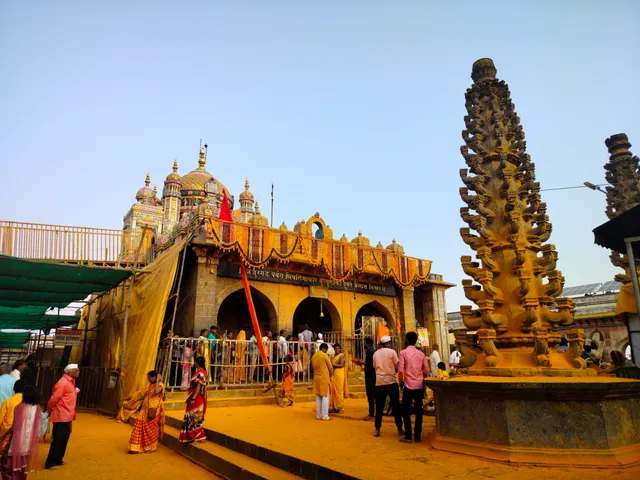
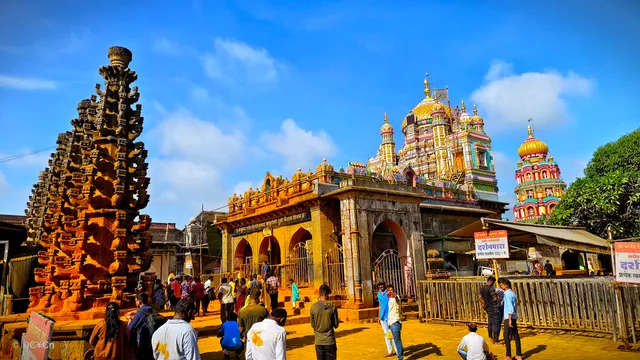
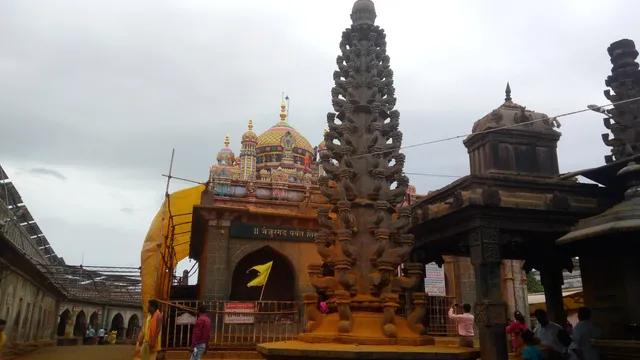
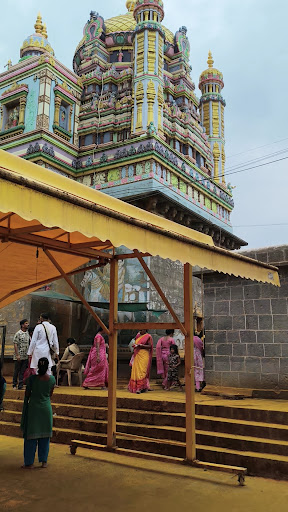
Jejuri Gad, also known as the Khandoba Temple, is a highly revered Hindu temple located on a hill in the town of Jejuri, in the Pune district of Maharashtra, India. It's one of the most prominent pilgrimage centers in Maharashtra.
Here's detailed information about Jejuri Gad:
Location:
Jejuri, Purandar Taluka, Pune District, Maharashtra, India. It's approximately 48-50 km southeast of Pune city. Significance and Deity:
Dedicated to Lord Khandoba, who is considered a warrior deity and an incarnation of Lord Shiva. He is also known as Mhalsakant, Malhari Martand, or Mylaralinga.
Khandoba is a highly popular and revered family deity for many Maharashtrian families, including warriors, priests, farmers, and herders. His cult has linkages with Vaishnava and Jain traditions and also embraces all communities, including Muslims.
Jejuri is often called "Khandobachi Jejuri" (Lord Khandoba's Jejuri) due to its strong association with the deity. The Temple Complex (Jejuri Gad):
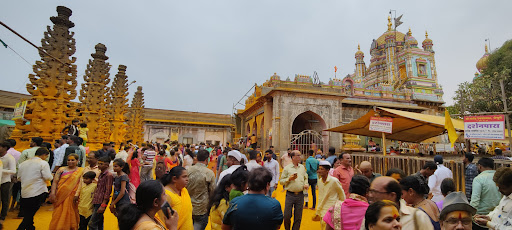
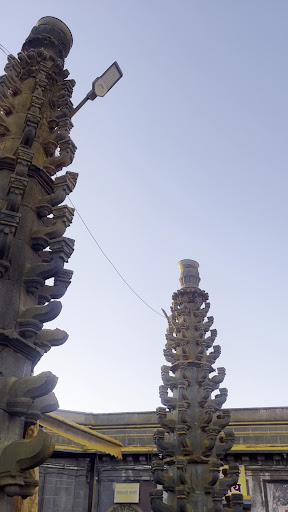
The temple is situated on a hillock, giving it the "Gad" (fort) suffix, as it's designed like a fort with three entrance gates and a walled compound. There are approximately 400 to 750 steps (depending on the specific shrine and starting point) leading up to the main temple. The architecture is primarily in the Hemadpanthi style, characterized by stone and lime mortar construction. The complex features 18 beautifully carved stone arches and numerous Deepmalas (lamp pillars), which are lit up during festivals, creating a stunning visual. Inside the temple, there's a unique brass-coated tortoise measuring 20 feet in diameter. The main sanctum houses a lingam (symbol of Shiva) along with images of Khandoba and his consorts, Mhalsa and Banai. Khandoba is often depicted as a warrior on horseback, holding a sword.
A notable historical detail is the presence of Portuguese church bells, which were gifted by Chimaji Appa (brother of Peshwa Bajirao I) after the Maratha victory in the Battle of Vasai in 1737. These bells were taken as trophies and are still preserved in the temple. Festivals and Rituals:
Bhandara Festival: This is the most famous and vibrant festival, often called the "Golden Festival." Devotees enthusiastically throw turmeric powder (Bhandara) into the air and over the deity, turning the entire temple premises and steps yellow. This symbolizes prosperity, purity, and devotion. It's a truly unique and colorful experience. Champa Shashthi: A six-day celebration held in November or December, marking Lord Khandoba's victory over the demons Mani and Malla. Somvati Amavasya: On this new moon day (when it falls on a Monday), a grand procession takes the palanquin of Lord Khandoba to the nearby Karha River for a ceremonial bath. Other festivals include Mahashivaratri and an annual fair (Jatra) in November. Historical Significance:
The origins of the temple date back to the 12th or 13th century, with major renovations carried out during the Maratha rule. It was a significant religious hub during the Peshwa era, symbolizing Maratha pride and victory. The fort has witnessed many battles and events that shaped the history of Maharashtra, having been controlled by various dynasties over time. Visiting Jejuri Gad:
Best time to visit: October to February, as the weather is pleasant. Opening hours: Generally from 5:00 AM to 9:00 PM every day. Accessibility: While there are steps to climb, a new Khandoba Temple is located at the base of the hill for easier access for the elderly or differently-abled. How to reach: By Air: Pune International Airport (approx. 55-60 km away). By Rail: Jejuri Railway Station (approx. 3 km from the temple), connected to Pune and other major cities. By Road: Well-connected by road to Pune, Mumbai, and other cities by state and national highways. Buses and taxis are readily available. Jejuri Gad offers a rich blend of spirituality, history, and cultural heritage, making it a compelling destination for pilgrims, history enthusiasts, and travelers seeking unique cultural...
Read moreI recently visited Khandoba temple in Maharashtra for the first time. The mandir is also known as Jejuri-gad. Just 48 km from Pune Junction, Jejuri is a town and municipality situated to the southeast of the Pune city. Its 170km from Navi Mumbai with approx 3.5 to 4 hours drive. Pay car parking of 100 bucks is available at the backside of the temple. Entry fee of 50 is charged at the main entrance gate. It's better take the highway road else there is no sign boards or one can face navigation issue if you come from satara side through village road. Refreshments and Prasad stalls are available along the steps. There are 9 lakh stone steps used in the temple. It can take few hours in the line before you get the darshan. Newly-married couples visits the temple to seek the blessings of Lord Khandoba, a manifestation of Lord Shiva. A devotee must climb 200 stone steps to reach the hill top Khandoba Mandir. Though steps are not very steep and on an average you can climb it in 20 minutes. Hindu devotees gather to worship lord khandoba with people Throwing Turmeric At Jejuri Temple and pieces of dry coconut which is offered to the lord. Large amounts of turmeric is thrown all around the temple making the place look like its bathed in yellow colour. Jejuri Khandoba has two wives, Mhalsa and Banai (Banu, Banubai) being the most important. While Khandoba's first wife Mhalsa is from the Lingayat merchant (Vani) community, his second wife Banai is a Dhangar (shepherd caste). In the day -long celebration at the temple at Khandoba , devotees throw turmeric on each other and all around, filling the air and the skies in beautiful hues of golden. This is why the temple premises is called the 'Sonyachi Jejuri' which translates to 'The Golden Jejuri'. Lord Khandoba is also known as Malhari (the warrior king). According to this literary work, the battle between Khandoba and the demons called Malla and Mani is the prime story behind the birth of Lord Martanda Bhairava.
The town of Jejuri is renowned for one of the most pious temples in Maharashtra known as Khandoba Temple and is one of the popular tourist places in Pune.
Jejuri Khandoba Temple is dedicated to Khandoba, who is also known as Mhalsakant or Malhari Martand in the region. Khandoba is the important god worshipped by Dhangar, the oldest tribes in Maharashtra. It is believed that Khandoba is a god of Sakamabhakti, the god who fulfills all the desires of his devotees. Jejuri is popular for its old Deep Mala.
The Khandoba temple in Jejuri is built on a hill and offers good views all around. There are various stone images of elephants on either sides of the main gateway of the temple. The entire flat plateau above the hill is surrounded by a stone pavement in the center, of which stands the Khandoba shrine. The whole courtyard is surrounded by arched aisles on sides, from which highly ornate balconies with cypress pillars and cusped arches project out. This enclosure has three gateways and the temple faces east. The outermost portion is an arched portico- consisting of a square mandapa and a garbhagriha.
The idol of Sri Khandoba enshrined inside the temple is simply beautiful. There are three weapons housed in Jejuri Temple, a sword, a damaru and a paral. They are very exquisite and also have historical importance attached to them. A Sword Competition is held every year at the temple, on the occasion of Dussera. The one, who lifts the sword of the temple high up, for the maximum time, is declared as the winner. It attracts people from all over the state on the occasion of Bandara festival. Yelkot yelkot...
Read moreJejuri, often called "Khandobachi Jejuri," is a renowned pilgrimage destination located in Pune district, Maharashtra. The temple is dedicated to Lord Khandoba, a warrior deity revered as an incarnation of Lord Shiva. Here’s a detailed overview of the temple and its significance:
Location and Accessibility Jejuri is situated approximately 50 kilometers southeast of Pune, easily accessible by road and rail. The temple is perched atop a hill, offering breathtaking views of the surrounding landscape, including lush fields and small villages. Visitors must climb a series of steps to reach the shrine.
Spiritual Significance Lord Khandoba is worshipped as the protector of devotees, especially among the Dhangar (shepherd) and farming communities. Jejuri is a prominent center of worship for devotees from Maharashtra, Karnataka, and beyond. The deity symbolizes valor, strength, and protection, and devotees often seek blessings for family welfare, health, and prosperity.
Unique Rituals and Turmeric Use The temple is famously associated with turmeric, known as "Bhandara" locally, which devotees throw into the air during rituals, symbolizing prosperity and divine blessings. The annual Somvati Amavasya and Champa Shashti festivals attract thousands of pilgrims, with grand processions and vibrant rituals.
Architecture and Layout The temple complex is built in traditional Maratha style, featuring intricately carved pillars, arches, and stone steps. Key attractions include the Sabha Mandap (assembly hall), Deepmalas (lamp towers), and the main sanctum, where the idol of Khandoba resides with his consorts Mhalsa and Banai. The temple premises also house smaller shrines, adding to its spiritual ambiance.
Historical Background Jejuri temple has a history dating back to the medieval period and was patronized by Maratha rulers, including Chhatrapati Shivaji Maharaj. It holds immense cultural importance as a symbol of Maharashtra’s rich spiritual heritage.
Festivals and Celebrations Champa Shashti: A six-day festival celebrating Lord Khandoba's victory over demons Mani and Malla. It includes grand processions, singing of traditional "ovya" (devotional songs), and turmeric rituals. Somvati Amavasya: A day of special prayers and offerings, drawing a massive crowd. Bhandara Festival: Devotees smear turmeric on themselves and the temple as a sign of divine grace and unity.
Cultural and Social Role Jejuri is more than a temple; it is a hub of faith and devotion that brings together diverse communities. The temple’s rituals and traditions have been preserved for centuries, making it a living testimony to Maharashtra’s cultural legacy.
Practical Information for Visitors Visitors are advised to wear comfortable footwear and be prepared for the climb to the hilltop. The best time to visit is during winter (November to February) or during major festivals for an immersive experience. Facilities such as parking, food stalls, and small shops selling devotional items and turmeric are available...
Read more