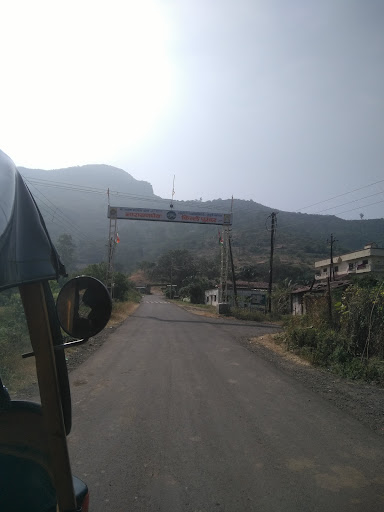
You should drive upto the fort entrance gate and park your vehicle in the parking lot near the gate. Do remember to carry a photo identification as it is required for registering the guests at entry gate. Note this fort is controlled by the military and has some areas that are not accessible to general public as the military has training and other activities in those areas.
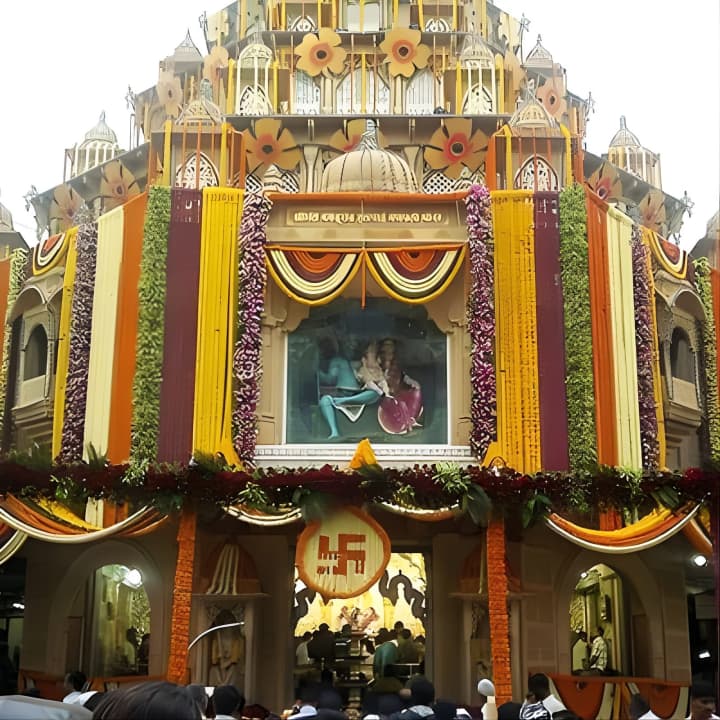
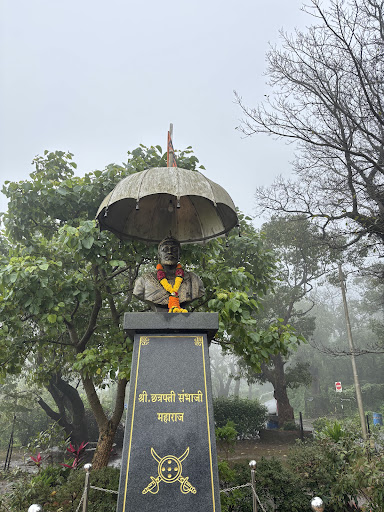
After the parking entrance there were 2 temples and a statue of a brave maratha leader. There is one shop where you can purchase some basic snacks/refreshments and water etc. and public restrooms/toilets nearby.
Then you need to deposit your mobiles and cameras at a checkpost as no photography is allowed on the fort due to security restrictions by armed forces. Just besides these points there is a small staircase that you can take to go up to the fort or you can continue on the road to reach the museum.
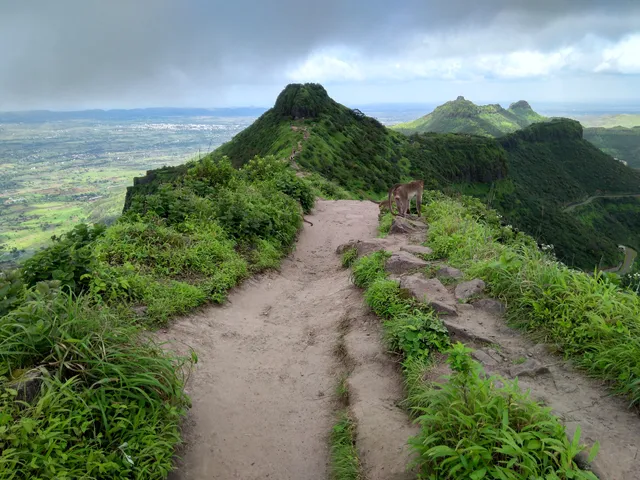
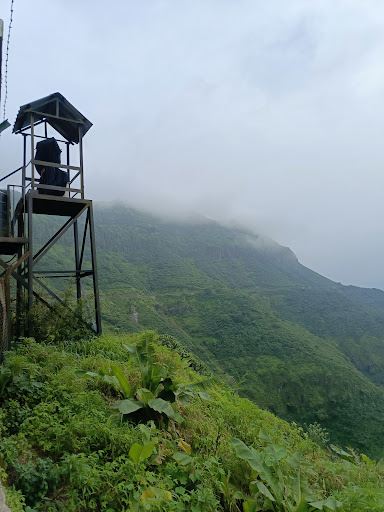
The fort entrance opens at 10 AM, so it was very hot in the summer months to climb all the way up to the kedareshwar temple. The climb was not very steep though there were some steep shortcuts which some people preferred over the longer walkways. There were multiple points with breathtaking views which we enjoyed thoroughly as there was no distraction of camera/mobile.
Some people told us the story of vajragadh and how the Mughals had blocked the fort from all sides which led to the treaty of Purandar signed by ch. Shivaji. There are no cannons etc. just some stone cut water tanks, maachi, buruj, gate and amazing views of the whole area.
Carry atleast 2 litres of water preferably in non-plastic bottles and don't throw any garbage in the fort premises.
The kedareshwar temple at the pinnacle was cool and relaxing where we sat in meditation for a very short while and offered prayers before returning using the same route.
5* as this is maratha legacy and does not deserve...
Read morePurandar Fort is known as the birthplace of Chatrapati Sambhaji Maharaj, the son of Chatrapati Shivaji Maharaj.The fort of Purandhar stands at 4,472 ft (1,387 m) above the sea level in the Western Ghats, 50 km to the southeast of Pune.you can take Bus from pune station. U have to travel through 2buses for purandar fort.u can also hire taxi and auto or private cars but its will cost alot. U have to keep your identity proof with you such as adhar card etc. Because due to there is a army camp on fort you have to enter your details and entry as well. Purandar fort is easy to climb .on fort there is a parking available, At the base village as well near the entry point. On fort there are lots of buildings of churches are on the start to see.then There is a statue of veer murarbaji deshpande .near that a shiv mandir means a temple of lord shiva is situated. There are small gardens to rest which are well decorated. On the middle of fort there is a statue of chatrapati sambhaji maharaj and chatrapati shivaji maharaj.the ways on fort are so adventurous like a jungle. There are two main gates of historical value.there are so many water tanks built by the maharaj.on the top of the fort there is one more temple and a one samadhi is situated .a twin of purandar fort named vajrgad is also near to this fort but due to risky way that way is prohibited and closed.also there are lots of areas of fort are prohibited to comman people due to that areas are in control of indian army.and also carry a sufficient water and food with you as there is no any another option on fort and as well there are no such shops in the base village too.also on few km approximately on 2km there is a one nice temple which is also a tourist spot you can visit there too refresh and you can buy...
Read morePurandar Fort, located near Pune in Maharashtra, India, is a historically significant hill fort with a rich legacy. Situated at an altitude of 4,472 feet above sea level, the fort offers panoramic views of the surrounding landscape. It is renowned for its strategic importance in the Maratha Empire and its association with Chhatrapati Shivaji Maharaj, the founder of the Maratha kingdom.
The fort's history dates back to the 11th century, though it gained prominence in the 17th century when it became a stronghold of the Marathas. In 1646, a young Shivaji captured Purandar Fort, marking the beginning of his military conquests. However, the fort's most notable event occurred in 1665 when it was besieged by the Mughal forces under Jai Singh I. Following a fierce battle, the Treaty of Purandar was signed, in which Shivaji was forced to surrender 23 forts, including Purandar, to the Mughals. Despite this setback, Shivaji recaptured the fort in 1670, reaffirming its importance in Maratha history.
Purandar Fort is also known for being the birthplace of Sambhaji Maharaj, Shivaji's son and successor, in 1657. The fort complex comprises two main sections: the upper fort, known as Balekilla, and the lower fort, called Machi. The Balekilla offers a commanding view and contains the remnants of ancient structures, including temples dedicated to Purandareshwar (the fort's patron deity) and Kedareshwar.
Today, Purandar Fort is a popular trekking destination, attracting history enthusiasts and nature lovers alike. The fort's rugged terrain, coupled with its historical significance, makes it a compelling site for exploration. Visitors can explore the ruins, enjoy the scenic beauty, and reflect on the fort's pivotal role in shaping the...
Read more