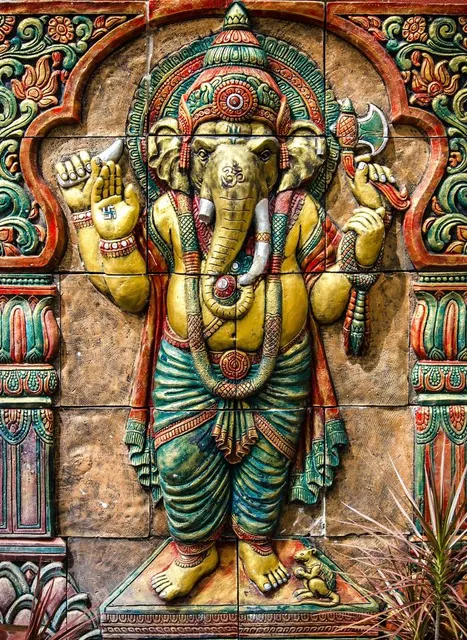
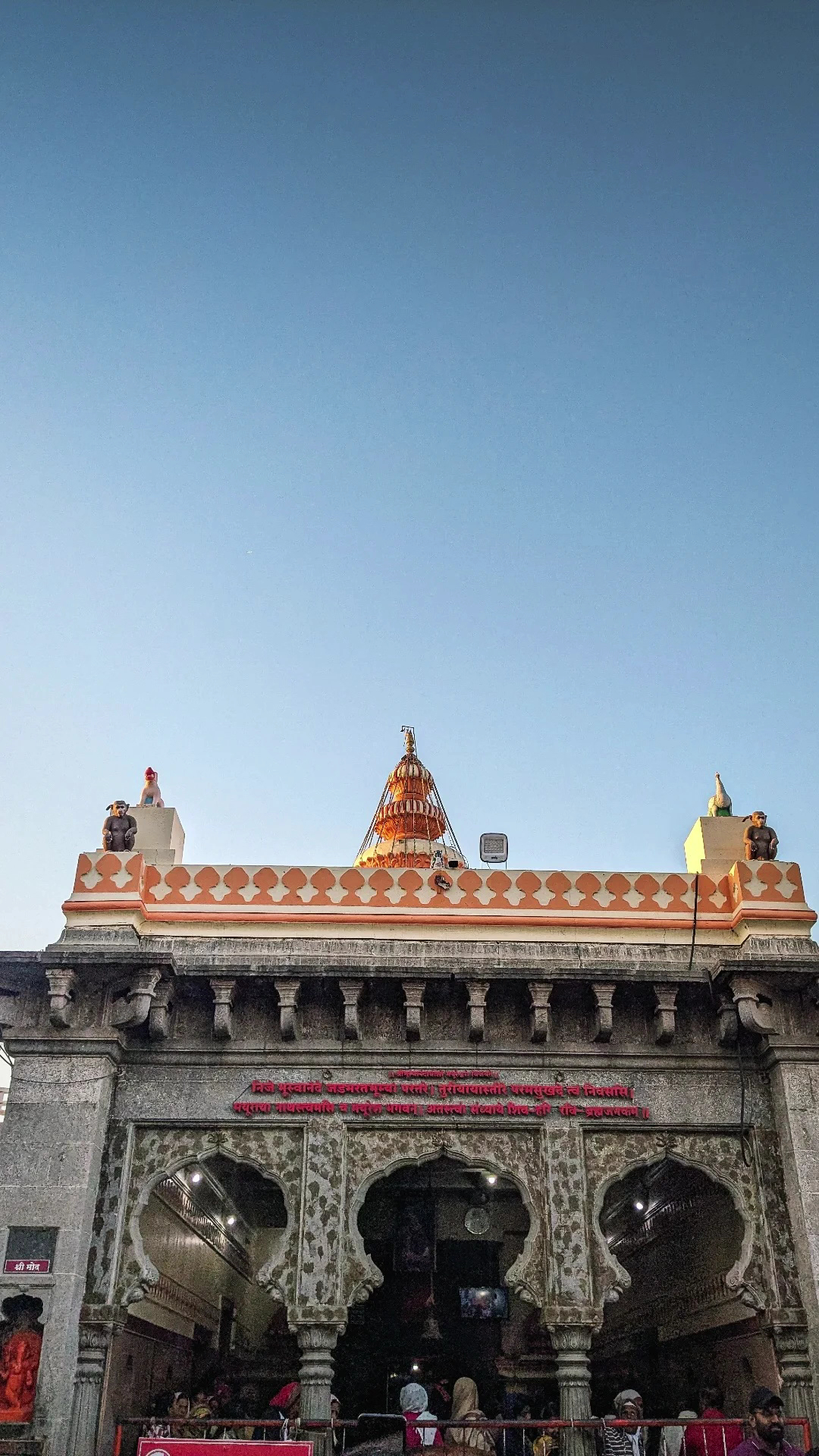
Shri Mayureshwar Mandir or Shri Moreshwar Temple is a Hindu temple (mandir) dedicated to Ganesha, god of wisdom. It is located in Moragaon in Pune District, about 65 km away from Pune city in the Indian state of Maharashtra. The temple is the starting and ending point of a pilgrimage of eight revered Ganesha temples called Ashtavinayaka.Moragon is the foremost centre of worship of the Ganapatya sect, which considers Ganesha as the Supreme Being. A Hindu legend relates the temple to killing of the demon Sindhura by Ganesha. The exact date of building of the temple is unknown, though the Ganapatya saint Moraya Gosavi is known to be associated with it. The temple flourished due to the patronage of the Peshwa rulers and descendants of Moraya Gosavi. The Morgaon temple is the starting point of the pilgrimage of eight revered temples of Ganesha, around Pune.The temple circuit is known as Ashtavinayak ("Eight Ganeshas"). The pilgrimage is considered incomplete if the pilgrim does not visit the Morgaon temple at the end of the pilgrimage.The Morgaon temple is not only the most important temple in the Ashtavinayak circuit, but also is described as "India's foremost Gaṇeśa (Ganesha) pilgrimage" (IAST original).
Morgaon is the adhya pitha – foremost centre of worship of the Ganapatya sect, which considers Ganesha as the Supreme Being. It attracts the greatest number of pilgrims in the Ashtavinayak circuit. Both the primary scriptures of the Ganapatya sect praise Morgaon. While Mudgala Purana dedicates 22 chapters to Morgaon's greatness, Ganesha Purana states that Morgaon (Mayurapuri) is among the three most important places for Ganesha and the only one on earth (Bhuloka). The other locations are Kailash in heaven (actually Kailash is a mountain on earth in the Himalayas, believed to have the abode of Ganesha's parents Shiva and Parvati) and Adi-Shesha's palace in Patala (underworld).According to a tradition, the temple is without beginning and without an end. Another tradition maintains that at the time of pralaya (the dissolution of the world), Ganesha will enter yoganidra here. Its holiness is compared with Kashi, the sacred Hindu city. Morya Gosavi (Moroba), a prominent Ganapatya saint, worshipped at the Morgaon Ganesha temple before shifting to Chinchwad, where he established a new Ganesha temple. The Morgaon temple and other Ganapatya centres near Pune, enjoyed royal patronage from the Peshwa rulers of the Maratha Empire during the 18th century. The Peshwas, who worshipped Ganesha as their kuladaivat ("family deity"), donated in land and/or cash and/or made additions to these Ganesha temples.2
According to Anne Feldhaus, the Morgaon temple does not pre-date the seventeenth century, when Morya Gosavi popularized it. However, even the dating of Morya Gosavi is disputed and varies from the 13th–14th century to the 17th century. The descendants of Morya Gosavi – who were worshipped as Ganesha incarnates at the Chinchwad temple – often visited the Morgaon temple and controlled the finances and administration of many Ashthavinayak temples. The 17th-century saint Samarth Ramdas composed the popular arati song Sukhakarta Dukhaharta, seeing the Morgaon icon. Currently, the temple is under the administration of the Chinchwad Devasthan Trust, which operates from Chinchwad. Besides Morgaon, the temple trust controls the Chinchwad temple and the Theur and Siddhatek...
Read moreShri Mayureshwar Mandir or Shri Moreshwar Temple is a Hindu temple (mandir) dedicated to Ganesha, god of wisdom. It is located in Moragaon in Pune District, about 65 km away from Pune city in the Indian state of Maharashtra.1] The temple is the starting and ending point of a pilgrimage of eight revered Ganesha temples called Ashtavinayaka.Moragon is the foremost centre of worship of the Ganapatya sect, which considers Ganesha as the Supreme Being. A Hindu legend relates the temple to killing of the demon Sindhura by Ganesha. The exact date of building of the temple is unknown, though the Ganapatya saint Moraya Gosavi is known to be associated with it. The temple flourished due to the patronage of the Peshwa rulers and descendants of Moraya Gosavi.The Morgaon temple is the starting point of the pilgrimage of eight revered temples of Ganesha, around Pune.[1 The temple circuit is known as Ashtavinayak ("Eight Ganeshas"). The pilgrimage is considered incomplete if the pilgrim does not visit the Morgaon temple at the end of the pilgrimage.1] The Morgaon temple is not only the most important temple in the Ashtavinayak circuit, but also is described as "India's foremost Gaṇeśa (Ganesha) pilgrimage" (IAST original).[2[4]
Morgaon is the adhya pitha – foremost centre of worship of the Ganapatya sect, which considers Ganesha as the Supreme Being.[4] It attracts the greatest number of pilgrims in the Ashtavinayak circuit.[4] Both the primary scriptures of the Ganapatya sect praise Morgaon. While Mudgala Purana dedicates 22 chapters to Morgaon's greatness, Ganesha Purana states that Morgaon (Mayurapuri) is among the three most important places for Ganesha and the only one on earth (Bhuloka). The other locations are Kailash in heaven (actually Kailash is a mountain on earth in the Himalayas, believed to have the abode of Ganesha's parents Shiva and Parvati) and Adi-Shesha's palace in Patala (underworld).[4] According to a tradition, the temple is without beginning and without an end. Another tradition maintains that at the time of pralaya (the dissolution of the world), Ganesha will enter yoganidra here.[5] Its holiness is compared with Kashi, the sacred Hindu city.[2]
Legends edit According to the Ganesha Purana, Ganesha incarnated as Mayuresvara(Mayūreśvara), who has six arms and a white complexion. His mount is a peacock. He was born to Shiva and Paravati in the Treta Yuga, for the purpose of killing the demon Sindhu.[6]
Sindhu was the son of Cakrapani – the king of Mithila and his wife Ugrā. Ugrā conceived due to the power of a solar mantra, but was unable to bear the extreme heat radiating from the foetus, so she abandoned it in the ocean. Soon, a son was born from this abandoned foetus and the ocean returned him to his grieving father, who named him Sindhu –...
Read moreShri Mayureshwar Mandir, Morgaon – A Divine and Peaceful Destination!
Shri Mayureshwar Mandir, also known as Shri Moreshwar Temple, is a famous Hindu temple dedicated to Lord Ganesha, the god of wisdom. It is located in Morgaon, Pune district, about 65 km from Pune city. This temple is the first and last stop of the Ashtavinayak pilgrimage, a sacred journey covering eight Ganesha temples in Maharashtra.
Religious Significance: The Morgaon temple is an important place of worship and is considered the main center of the Ganapatya sect, where Lord Ganesha is seen as the Supreme Being. The Ashtavinayak yatra is only considered complete when devotees visit this temple at the end of their journey.
Ancient Hindu texts like the Mudgala Purana and Ganesha Purana praise the greatness of this temple. According to the Ganesha Purana, Morgaon (Mayurapuri) is one of the three most sacred places for Lord Ganesha, along with Mount Kailash (home of Lord Shiva and Parvati) and Adi-Shesha’s palace in the underworld (Patala). Legends say that this temple has no beginning or end, and during the pralaya (end of the world), Lord Ganesha will enter a deep meditative sleep (yoganidra) here. The holiness of Morgaon is often compared to Kashi (Varanasi), one of Hinduism’s most sacred cities.
Worship and Festivals: The idol of Lord Ganesha, known as Mayureshwar or Moreshwar, is worshipped daily with rituals at 7 AM, 12 PM, and 8 PM.
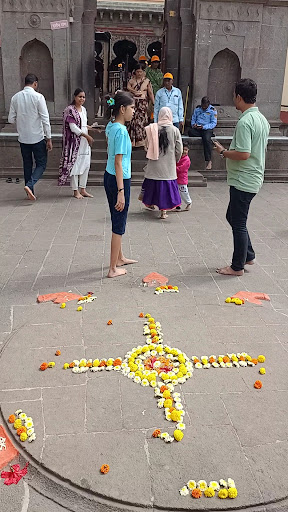
Major festivals like Ganesh Jayanti (Magha Shukla Chaturthi) and Ganesh Chaturthi (Bhadrapada Shukla Chaturthi) attract thousands of devotees. During these occasions, a special palkhi (palanquin) procession arrives from Mangalmurti Temple, Chinchwad, which was established by Saint Morya Gosavi.
The Ganesh Chaturthi celebrations continue for over a month, ending on Ashvin Shukla Dashami. Other major festivals celebrated at the temple include Vijayadashami (Dussehra), Shukla Chaturthi, Krishna Chaturthi, and Somavati Amavasya (a new moon night that falls on a Monday).
A Spiritual and Peaceful Experience
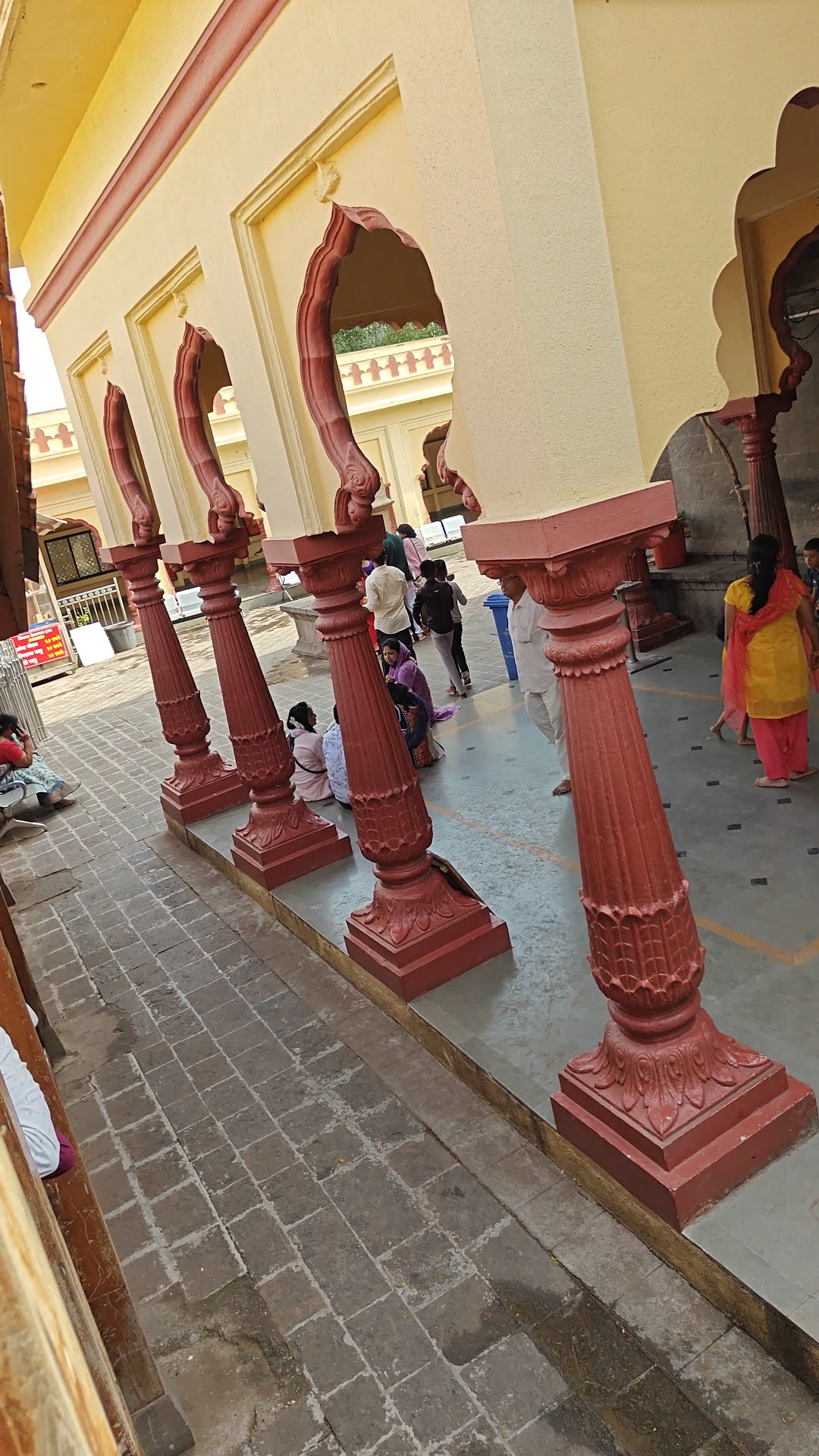
Built between the 14th and 17th centuries, Shri Mayureshwar Mandir features traditional temple architecture and offers a deeply spiritual experience. The peaceful surroundings make it a perfect place for prayers and meditation.
Whether you are a devotee seeking Lord Ganesha’s blessings or a traveler exploring Maharashtra’s rich spiritual heritage, visiting Shri Mayureshwar Mandir is truly a divine and enriching experience. Highly recommended!
Temple Information: District: Pune
Deity: Lord Ganesha (Mayureshwar / Moreshwar)
Festivals: Ganesh Chaturthi, Ganesh Jayanti, Vijayadashami
Location: Morgaon, Maharashtra, India
Built: 14th to...
Read more