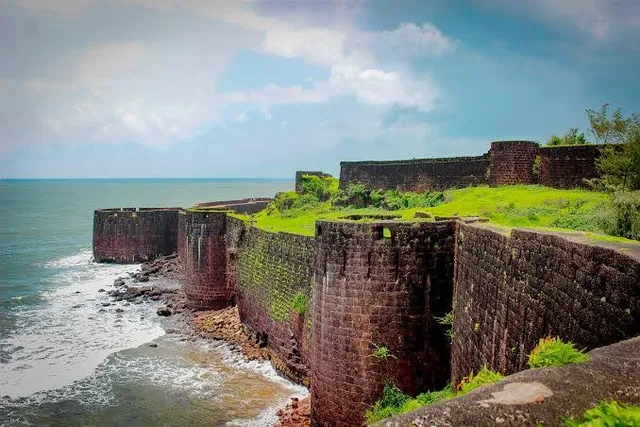
The Vijaydurg Fort is absolutely magnificent , exquisite and most impregnable sea fort in Konkan coastlines.
Most of the fort walls and bastions are still intact . The beauty of this fort is that it is locked by sea from 3 sides and connected to land from 1 side only. The fort provides great views of the sea, the creek, the greenery around and a small beach alongside it .
There is a small entry fee of vijaydurg grampanchayat Rs.5/- per person at the entry gate . It is important to take a guided tour to see lots of places inside the fort and to understand the history of this fort . The guide cost us Rs 300/- and it took about 2 to 3 hours to see the fort from inside .
This is about a 800 yrs old fort and one of the strongest sea forts on the west coast of India. The small entrance is intact and you can see massive fortifications. Upon entry, there is a temple and a doorway which takes you to the wharf. Once you entered , you can see lots of cannon balls and some broken cannons in an open area ...... You can take walk on the outer fort walls as it is connected properly without any damage . You can get a feel of the massive structures of this beautiful fort. Beautiful views of the Arabian sea and cool breeze ......
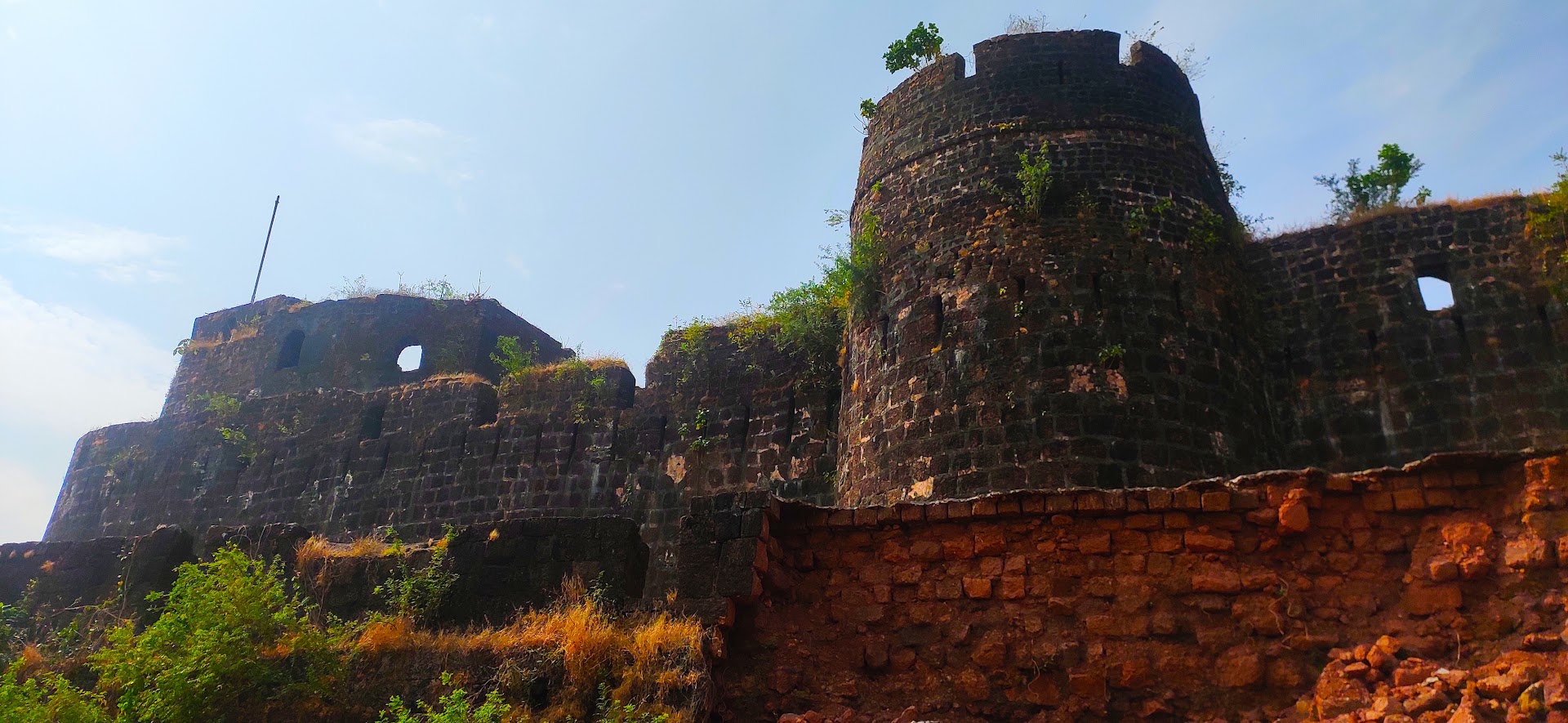
You can view 3 layers of fort wall very clearly ..... also can view bastions, Queen palace, Sadar, arm storage rooms -unfortunately, they are all broken, a big sweet water tank inside the fort etc. ..... The fort is kept clean and routes are connected properly to explore the fort .
A brief history of the fort :
Initially known as Gheria, it was enlarged by the Bijapur rulers and then strengthened and enlarged in the mid - 17th century by Chatrapati Shivaji Maharaj , gave its new name ,Vijaydurg - Victory Fort . The fort is also known as the 'Gibraltar of the East' since it was so impregnable, surrounded by the Arabian Sea from three sides. It is the oldest fort on the coast of Sindhudurg. The fort was very difficult to capture due to the 40 km shallow creek that acted as a natural barrier to ships and protected the fort. Maratha warships used to be anchored in this creek. So that enemy could not see them from the deep sea. It's now a protected monument under ASI .
Some important aspects of this fort :
Construction: This fort is a fine example of strong ancient architecture. The fort was constructed by Raja Bhoj of Shilahar Dynasty. The construction of the fort took place between 1193 to 1205. Walls: It is a huge fort with three level of walls & has 27 bastions. The area of the fort is about 17 acres; it takes around 2 - 3 hours to see all the things. The walls are made of huge black rocks (Laterites). The walls of the fort are about 8 to 10-meter high. Caves: Few caves like structures are also present inside the Vijaydurg fort. The fort is covered by sea on 3 sides and offers magnificent views of the Arabian sea. Water tank : There is also a big water tank, which was the main source of sweet water for people staying on the fort. Cannon Balls: Some old cannon balls have also been kept inside the fort. Even today, you can see blow spots of cannon balls on walls of the fort. Escape Tunnel: There was also a 200 m long tunnel for evacuation during an emergency. Another end of this tunnel was in the Dhulap’s palatial house in the near village. Underwater Wall inside the sea : A few years back, Oceanographic experts have discovered a submerged wall of length 100 meters east of the fort. This under-sea wall is 3 meters high, 7 meters wide and 122 meters long. The wall is composed of Laterite rock and has a depth of 8-10 meter under the sea. So when enemy ships tried to attack the fort, they collided with this underwater wall and shattered into pieces! Portuguese had lost their 2 ships in an attempt to capture Vijaydurg fort.
Timings: You can visit this fort anytime during sunrise and sunset. Time Required: 2-3 hours are enough to explore the fort properly. Entry Fees / Ticket Charges: Rs.5/- per person as entry fee to...
Read moreVijaydurg Fort is a border of Chatrapati Shivrai swarajya
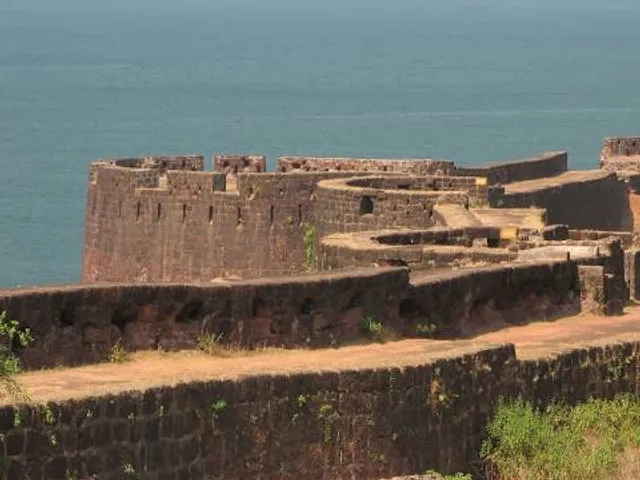
Vijaydurg (sometimes written as Viziadurg), the oldest fort on the Sindhudurg coast, was constructed during the regime of Raja Bhoja II of the Shilahar dynasty (construction period 1193-1205) and restructured by Shivaji Maharaj. Earlier, the fort encompassed an area of 5 acres (1 acre = 4840 square yards or 4047 square metres) and was surrounded by sea on all four sides. Over the years the eastern trench was reclaimed and a road constructed thereon. Presently the area of fort is about 17 acres and is surrounded by the Arabian Sea on three sides. Shivaji extended the area of the fort by constructing three walls on the eastern side, each 36 metres high. He also constructed 20 bastions. According to legend, this is one of only two Maratha forts where Shivaji personally hoisted the saffron flag. The other fort is Torna. Vijaydurg Fort was called the "Eastern Gibraltar", as it was virtually impregnable.[4] Its locational advantages include the 40 km long Waghotan/Kharepatan creek. Large vessels cannot enter the shallow water of this creek. Also, Maratha warships could be anchored in this creek and yet remain invisible from the sea. It is a protected monument. Etymology The name Vijaydurg comes from two words, "Vijay" meaning Victory and "Durg" meaning Fort. The fort was earlier known as "Gheria", as it is situated close to the village of "Girye". Shivaji captured this fort from Adil Shah of Bijapur in 1653 and renamed it as "Vijay Durg" as the then Hindu solar year's name was "Vijay" (Victory).
History In 1653 Shivaji Maharaj had captured this fort from Adil Shah of Bijapur and renamed it as “VijayDurg”. The original name of the fort was “Gheria” and the first fortification appears to have been constructed in 1200 during the regime of Raja Bhoj II. Shivaji developed Vijaydurg as an important base for Maratha warships.
Maratha Empire looked to be in a decline after death of Shivaji In 1680, when his son and successor Chhatrapati Sambhaji was captured by Mughal Emperor Aurangzeb and brutally tortured to death on 21 March 1689. Later in that year the fort of Raigad fell in the hand of Mughals. Wife of Shambhaji and his infant son Shahu along with many others were captured and were treated as state prisoners. Shivaji’s second wife’s son Raja Ram then took in charge of the Maratha Empire. Inspired by the valiant death of Shambhaji, they fought back against the Mughals. It was during his reign Kanhoji Angre alias Conajee Angria became admiral of naval army of the Marathas. In 1698, Kanhoji made Vijaydurg the capital of his territory along the coast. In 1700 Raja Ram died. Tara Bai,the brave widow of Raja Ram took over the control of Maratha Empire. Putting her infant son on Maratha throne styled as “Shivaji II”, Tara Bai led successful operations against the Mughal from 1700 to 1707. Taking advantage of discomfiture of Shivaji’s ruling house Kanhoji Angre became the most “Powerful and independent Naval Chief of West coast of India”. Tarabai gave Kanhoji title of Sarkhel (Admiral). At one time Kanhoji Angre was master of the whole coast from Bombay (Now Mumbai) to Vengurla. Aurangzeb died in 1707 and Shahu was released from the clutches of Mughals. He challenged Tarabai and her son’s legitimacy to the Maratha throne. The Marathas were divided but ultimately Shahu won the right to the throne as Chhatrapati and Tarabai was retreated to rule a small area of Kolhapur under the name of his son Shivaji II in 1713. She was later overthrown and imprisoned till her death by her husband’s second wife Rajas Bai. in 1756 after the Peshwa-British Alliance defeated the Angres clan. In 1818 Vijaydurg was completely in the hand of the...
Read moreVijaydurg (sometimes written as Viziadurg), the oldest fort on the Sindhudurg coast, was constructed during the regime of Raja Bhoja II of the Shilahar dynasty (construction period 1193-1205) and restructured by Shivaji.Earlier, the fort encompassed an area of 5 acres (1 acre = 4840 square yards or 4047 square metres) and was surrounded by sea on all four sides. Over the years the eastern trench was reclaimed and a road constructed thereon. Presently the area of fort is about 17 acres and is surrounded by the Arabian Sea on three sides. Shivaji extended the area of the fort by constructing three walls on the eastern side, each 36 metres high. He also constructed 20 bastions.
According to legend, this is one of only two Maratha forts where Shivaji personally hoisted the saffron flag. The other fort is Torna.
Vijaydurg Fort was called the "Eastern Gibraltar", as it was virtually impregnable.Its locational advantages include the 40 km long Waghotan/Kharepatan creek. Large vessels cannot enter the shallow water of this creek. Also, Maratha warships could be anchored in this creek and yet remain invisible from the sea. It is a protected monument.
Vijaydurg fort is located at the tip of the peninsular region of Vijaydurg in Devgad Taluka, of district Sindhudurg. It is one of the several coastal forts on the western coast of Maharashtra, India. It is surrounded by water on all the four side but connected to the land through a narrow road. The port adjacent to the fort is a natural port and is still used by local fishermen.In 1653 Shivaji had captured this fort from Adil Shah of Bijapur and renamed it as "Vijay Durg". The original name of the fort was "Gheria" and the first fortification appears to have been constructed in 1200 during the regime of Raja Bhoj II. Shivaji developed Vijaydurg as an important base for Maratha warships.
Maratha Empire looked to be in a decline after the death of Shivaji In 1680, when his son and successor Sambhaji was captured by Mughal Emperor Aurangzeb and brutally tortured to death on 21 March 1689. Later in that year, the fort of Raigad fell in the hand of Mughals. Wife of Shambhaji and his infant son Shahu along with many others were captured and were treated as state prisoners.
Shivaji's second wife's son Raja Ram then took in charge of the Maratha Empire. Inspired by the valiant death of Shambhaji, they fought back against the Mughals. It was during his reign Kanhoji Angre alias Conajee Angria became Koli admiral of naval army of the Marathas. In 1698, Kanhoji made Vijaydurg the capital of his territory along the coast.
In 1700 Raja Ram died. Tara Bai, the brave widow of Raja Ram took over the control of the Maratha Empire. Putting her infant son on the Maratha throne styled as "Shivaji II", Tara Bai led successful operations against the Mughal from 1700 to 1707. Taking advantage of the discomfiture of Shivaji's ruling house Kanhoji Angre became the most "Powerful and independent Naval Chief of West coast of India". Tarabai gave Kanhoji title of Sarkhel (Admiral). At one time Kanhoji Angre was master of the whole coast from Bombay (Now Mumbai)...
Read more