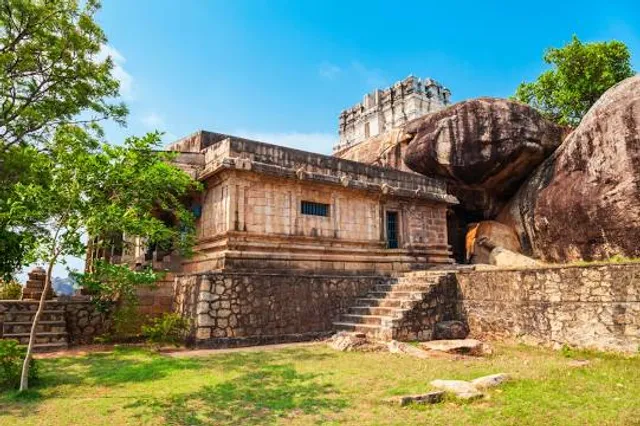
Chitharal Rock Jain Temple, also known as Malaikovil, is a significant religious site located in Chitharal village in the Kanyakumari district of Tamil Nadu, India. The temple is renowned for its ancient Jain rock-cut cave shrines and stone sculptures that showcase the rich heritage and history of Jainism in the region. Let's delve into the history of this remarkable temple.
The origins of Chitharal Rock Jain Temple can be traced back to the 9th century during the reign of the Pandya dynasty in South India. The temple was built by the Pandya kings, who were known for their patronage of Jainism. The rock-cut caves and sculptures were carved into a massive granite hill, making it an architectural marvel of its time.
Chitharal Rock Jain Temple served as a major center for Jain worship and religious activities during the medieval period. It attracted Jain ascetics, scholars, and devotees from various parts of the region, contributing to the propagation of Jain philosophy and practices. The temple complex also became a site for religious discourses and learning, playing a crucial role in the preservation and dissemination of Jain scriptures and teachings.
The temple complex features several notable structures. The most prominent among them are the rock-cut caves, which house beautifully carved sculptures of Jain Tirthankaras (spiritual leaders). The intricate detailing and craftsmanship of these sculptures are a testament to the skill and artistry of the artisans of that era. The cave shrines were used for meditation, prayer, and rituals by Jain monks and devotees.
One of the significant attractions of the Chitharal Rock Jain Temple is the 17-foot-tall statue of Bhagavan Adinath, the first Tirthankara of Jainism. This monolithic statue is believed to date back to the 9th century and is considered an extraordinary artistic and architectural achievement. The serene and majestic presence of the statue adds to the spiritual ambiance of the temple.
Over the centuries, Chitharal Rock Jain Temple underwent periods of neglect and disrepair. However, concerted efforts by the Archaeological Survey of India (ASI) and local authorities have helped in its restoration and conservation. The temple complex is now recognized as a protected monument, ensuring its preservation for future generations.
Today, Chitharal Rock Jain Temple stands as a testament to the rich Jain heritage of Tamil Nadu. It attracts tourists, scholars, and devotees who are captivated by its historical significance, architectural splendor, and spiritual ambiance. The temple serves as a reminder of the enduring legacy of Jainism and its contribution to the cultural tapestry of India.
Visiting Chitharal Rock Jain Temple provides an opportunity to explore the fascinating history, experience the serene atmosphere, and appreciate the remarkable artistry of the ancient craftsmen. It remains an important pilgrimage site for Jains and a treasure trove of knowledge for anyone interested in the religious and cultural heritage of South India.
Chitharal Rock Jain Temple, also known as Malaikovil, is located in the village of Chitharal, which is situated in the Kanyakumari district of Tamil Nadu, India. The temple is approximately 6 kilometers (3.7 miles) from the town of Marthandam and around 35 kilometers (22 miles) from Kanyakumari, the southernmost tip of mainland India. It is easily accessible by road and can be reached by hiring local transportation or driving from nearby cities and towns. The exact address of the temple is:
Chitharal Rock Jain Temple (Malaikovil),
Chitharal Village,
Marthandam Taluk,
Kanyakumari District,
Tamil Nadu,
India.
Visitors to the temple can also enjoy the scenic beauty of the surrounding countryside, as the temple is nestled amidst lush greenery and offers panoramic views of the...
Read moreThe Chitharal Jain Monuments and Bhagavati Temple, also known as Chitharal Malai Kovil (literally "Temple on the Hill"), Chitaral Cave Temple or Bhagavati Temple, are located near Chitharal village in Kanyakumari district, Tamil Nadu, India. They consist of stone beds with inscriptions, and two monuments – one rock cut Jain temple with outer wall reliefs and one Hindu goddess temple next to it that is a combination of rock-cut and stone that was added during the reign of Vikramaditya Varaguna Pandya. The monuments are from the 9th century CE. Inscriptions found at the site and elsewhere such as the Kalugumalai Jain Beds suggest that the history of these monuments extend over the 1st-millennium CE, with some inscriptions in the Hindu temple dateable in the 13th-century. In these historical inscriptions and literature, this site is referred to as Thiruchāraṇathupalli,1] or just Tiruccāraṇam.[4] The hillock is also referred to as Tiruchchāraṇattu malai, which means "the hill holy to the Chāraṇas" (Jain ascetics).[5]
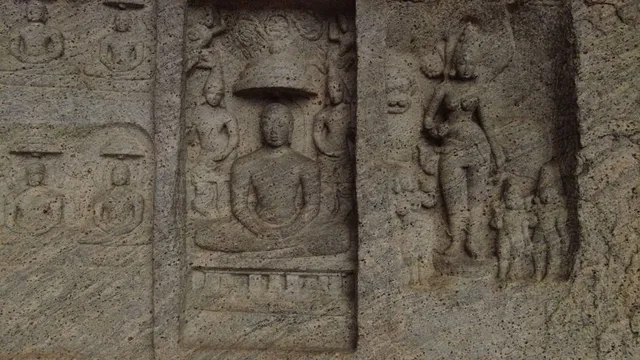
The site consists of beds and two monuments. The older rock-cut Jain beds with inscriptions and drip-ledges among the boulders at the site are the earliest Jain monument in the southernmost part of India. The Archaeological Survey of India states that the beds are from first century BCE to sixth century CE.[3] The cave temple and main Jain monument is from the 9th-century, with three sanctums that has always had Jain iconography – Parsvanatha (left), Mahavira and Padmavati since they were carved in-situ from the stone and have not been damaged. Next to it is a Hindu temple dedicated to goddess Bhagavati (Parvati) which was likely added after the 9th-century, and expanded with mandapa and other Hindu temple architectural elements through the 13th-century based on epigraphic evidence of donors.[5]
The Jain beds and temple are Digambara Jain monuments.[4] They are one of many found in Tamil Nadu from a period prior to the 14th-century. Jainism was active in this region, as evidence by inscriptions and literature in the Madurai region by about 1st-century BCE, and more broadly by the Pallava era, including those from the era of King Mahendravarman I (early 7th-century) famous for sponsoring Jain monuments as well as Hindu sites such as the Mahabalipuram monuments.[6
According to T. A. Gopinatha Rao, the inscription on the southern side says Gunandagi-kurattigal, the disciple of Arattanemi - Bhatariyar of Peravakkudi, presented Bhatariyar of Tiruchchanam malai with some golden ornament during the 28th year of reign of Vikramaditya Varaguna. There is much evidence and an established chronology about the Hindu monarch Vikramaditya of Ay dynasty, states Gopinath Rao, and this helps date this temple to the 9th-century.5 The inscription is Tamil language in Vatteluttu script.3
The Bhagavati temple was an active place for worship for the locals Hindus, when the entire site's significance and antiquity was discovered by archaeologists. However, their general condition was in ruins as attested by the archived 19th-century photographs of the site taken by Gopinath Rao. He remarked that the outside was ruined, but the cave temple was mostly intact. The exception being the murals and plastered images which had been damaged along with the Padmavati Devi image. Gopinath Rao states that these were "destroyed by art] thieves" in late 19th-century or early 20th-century. The original statues of Mahavira and Parswanatha remain in good condition.[5
The monument has been cleaned up, many parts of it rebuilt and restored, particularly the partial Vimana on top of the cave temple.[5] The site has a natural "heart shaped" pond below the temple and provides a picturesque view of the farmlands and...
Read moreBeautiful and peaceful place. If you are going by your own vehicle you have to pay parking fee 40rs for 4 wheeler and 5 rs for 2 wheeler No entry fee inside. But food is not allowed inside. So don't carry food. This is because people who take food to eat from top of hill just throw away the waste there and make the place untidy. To avoid this food is not allowed. If you are carrying snacks pls pls don't throw away anything there. Just keep in your bag and discard in dustbin. Water is must as you will need it while climbing top. So take water. There is a small pipe near the entrance (arch) you can fill water in your bottle there.
Distance to reach top is 1.5km It's like a climb and a small treakking. So will be a bit hard for people who are hardly into any physical activity. If you go fast you can reach in 15 - 20 mins. If you go slow you will reach in 45 minutes. There are rock benches on the way to top to sit and rest. So you can go patiently.
Once you reach the top it's mesmerizing. The temple looks great from outside. Heard it will close at 11am so if you want to see inside the temple, go early like reaching top at 10am.
It's better to avoid going during peak sunny days. It won't be hot in hill top but yes will be hot and sweaty when you are on the way to top. Either go early morning or not on sunny days.
The climb is bit hard for for people with wheezing, but worth it. The hardest climb has the greatest view.
There is bus from Nagercoi. Bus numb 16D. It goes to Thukalay first and then board will be changed and the bus goes to Chitharal route. So tell the conductor or driver to halt at chitharal stop and once you reach there you need to walk for about 2kms to reach the entrance of Malai Kovil. There is no auto rikshaw there to take you to entrance so if you are going by bus you need to walk 2kms.
There are small petty shops near the entrance and you can buy snacks, juice and packed water.
Toilet is not neat and no water facility. This must be checked.
Loved this place and enjoyed lot and didn't feel to leave from there. You can enjoy watching kush greenery...
Read more