This is a place which has a long history
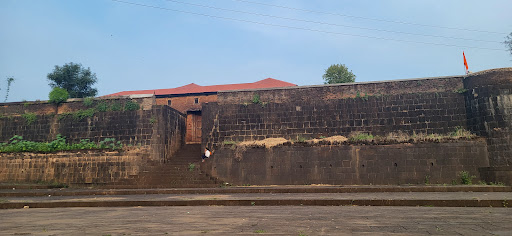
The Nana Phadnavis Wada is a large six-quadrangled, perimeter-protected wada. This construction was completed circa. 1780.
Bhavan Rao Trymbak Pant-Pratinidhi of Aundh and Raghunath Ghanshyam Mantri (Satara) bestowed the village of Menavali to Nana Phadnavis in December 1768.
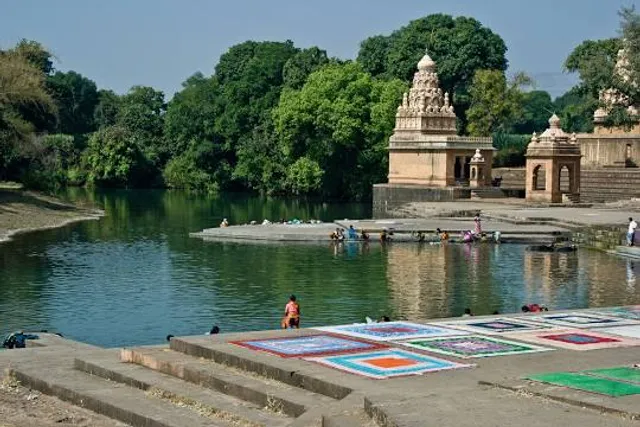
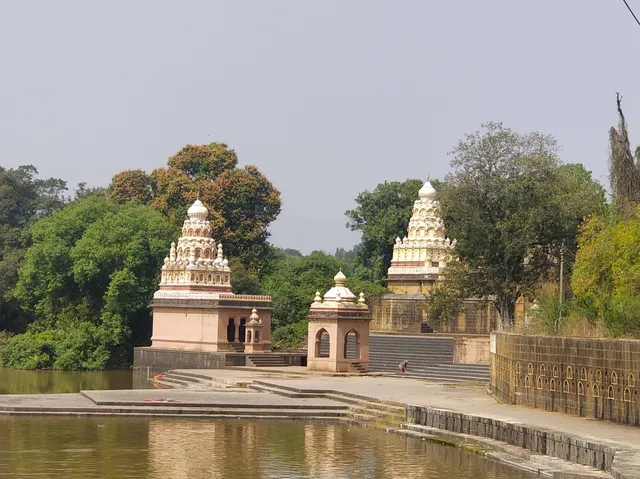
Nana Phadnavis settled the village and built himself the Wada with the ghat on the river Krishna and the two temples, one dedicated to Lord Vishnu and another to Meneshwar (मेणेश्वर) Lord Shiva.
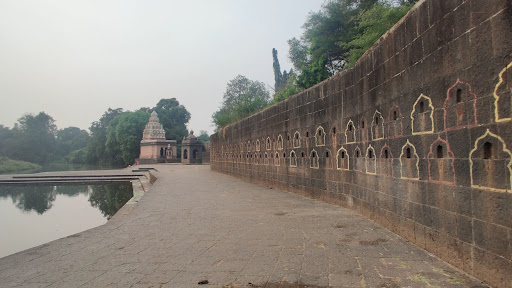
Originally, simple stone steps descending into a river, ghats evolved into an elaborate arrangement of terraces with separate areas for different activities, such as bathing, washing, filling water and performing religious rites. Temples were traditionally built on ghats.
The Peshwa-era saw architectural combinations of a Wada-type residence, a Ghat on a water-body and a Temple.
The Nana Phadnavis wada on the bank of the river Krishna at Menavali, is one of the very rare places where such a combination is preserved intact.
Nana, being the Peshwas' "Phadnavis" transcribed and maintained their documents of accounts and administrative letters in the ancient "Modi" script. These documents, known as the famous "Menavli Daptar" were preserved in this Wada at Menavali.
After Nana Phadnavis died in 1800, the Peshwa Bajirao-II, confiscated the Wada.
The British General Wellesley (brother of Lord Wellesley), Duke of Wellington returned the property to the Nana's wife Jeeubai on 25th March, 1804.
After her death, Sir Bartle Frere (governor of Bombay) handed over the property to Nana's descendants. The Nana Phadnavis Wada today remains with his descendants. Having split the major part of his properties between themselves, the Wada is still owned jointly by them all.
There is a dark musty, narrow, steep staircase concealed in the metre-thick wall to the floor above. The staircase was at once secret and easily secured, admitting only one person at a time into Nana Phadnavis's darbar hall. Nana Phadnavis's reception "darbar" hall has an attached bedroom with a teakwood bedstead. The teakwood bedstead is an intricately carved four-poster. The floor is swept with clay and cowdung.
Wadas are systems of open courtyards of increasing security. Nana's corridors on the upper floor are lined with teak-wood lattice work. A concealed escape stairway in the wall leads out of the Wada. Descending the stone steps leads to the ghat on the river Krishna.
The bell house of the Meneshwar temple houses a six hundred and fifty kilogram bell. This bell was captured by Bajirao-1’s brother Chimaji Appa, from a cathedral in the Portuguese fort at Bassein. Dated 1707, the five-alloy bell bears a bas-relief of Mary carrying the infant Jesus Christ cast into it.
An ancient tree, with a massive coniform trunk has a platform constructed around it as old as the Wada itself. This tree featured in the Bollywood movie Swades. In the movie, the village elders hold a Panchayat on the stone platform...
Read moreNana Phadnavis Wada, Menavali – A Heritage Gem Waiting to Breathe Again
Nestled in the serene village of Menavali near Wai, Nana Phadnavis Wada stands as a proud remnant of Maratha heritage. This 18th-century mansion belonged to Nana Phadnavis, a statesman of the Peshwa era, known for his sharp political acumen and contribution to Maratha diplomacy. The Wada is a prime example of Peshwa-era residential architecture, complete with courtyards, stone staircases, wooden balconies, and classic hallways that echo stories of a bygone era.
What’s Worth Appreciating: • Architecture & Preservation: Structurally, the Wada is still holding strong. For a building that’s over two centuries old, its walls, woodwork, and layout are impressively intact. The black stone base and teak wood elements exude old-world charm, and the corridors make for aesthetically pleasing, symmetrical shots — perfect for history buffs and photographers alike. • Photogenic Appeal: Some of the hallways, verandas, and staircases are simply beautiful in their raw, timeworn state. When it’s not too crowded, you can genuinely soak in the elegance of the craftsmanship — arches, intricate doorways, and the quiet symmetry of the layout. It’s a great place for those seeking vintage textures in their frames.
The Flip Side: • Restoration Woes: On almost every visit, some section of the Wada seems to be under restoration or closed off — often without any clear signage or explanation. While conservation is necessary and appreciated, it makes for a fragmented experience. You’re often left wondering what you missed. • Tourist Rush & Misuse: The place tends to get overcrowded, especially on weekends and holidays. Sadly, it’s more of a “photo-op pitstop” for most visitors, with little regard for the historical importance of the site. People climbing railings, posing on fragile woodwork, or using it like a pre-wedding shoot studio takes away from the sanctity and serenity the place deserves.
Final Thoughts:
Despite the lack of curated information, proper restoration access, or quiet time, Nana Phadnavis Wada remains a place of immense cultural and historical value. It’s a silent witness to the Maratha glory and a rare surviving structure of its kind. But for it to truly shine as a heritage destination, it needs more thoughtful management — not just restoration, but...
Read moreEntry ticket 70rs.. car parking 30 rs
Very well maintained... Even now there are renovation works going on.. people are good.. they voluntarily helped me download the audio guide. Oh yes.. they have an audio guide offered in few languages.... very good effort for such a small place.. i could say this cos I have been to many historical places...
Even the parking guy was veru friendly. He volunteered to take photographs.. i almost left without seeing that big African tree and the krishna river view... It is him who told me about it.. do visit them..
History of Nana Fadnavis Wada:
Built by Nana Fadnavis: The Wada was constructed in the late 18th century as Nana’s residence and administrative center. Nana Fadnavis, a minister in the court of the Peshwas, wielded immense power and was often referred to as the "Maratha Machiavelli" due to his strategic political maneuvers.
Strategic Location: Menavali, where the Wada is located, is near Wai, which was an important town for the Marathas. The town had strategic significance as it lies on the banks of the Krishna River, serving as a trade and travel route.
Architectural Style: The Wada exemplifies traditional Maratha architecture with its wooden structures, intricate carvings, and courtyards. It has a temple complex dedicated to Lord Vishnu and Meneshwar (a form of Shiva), which reflects the strong religious sentiments of the time.
Political Importance: Nana Fadnavis used this Wada as his retreat and administrative base. It was from here that he strategized his political moves and managed state affairs, including diplomacy with the British and other regional powers. His ability to maintain the Maratha Confederacy during turbulent times made this Wada a hub of...
Read more