HTML SitemapExplore
logo
Find Things to DoFind The Best Restaurants

Nurpur Fort — Attraction in Nurpur

Name
Nurpur Fort
Description
Nearby attractions
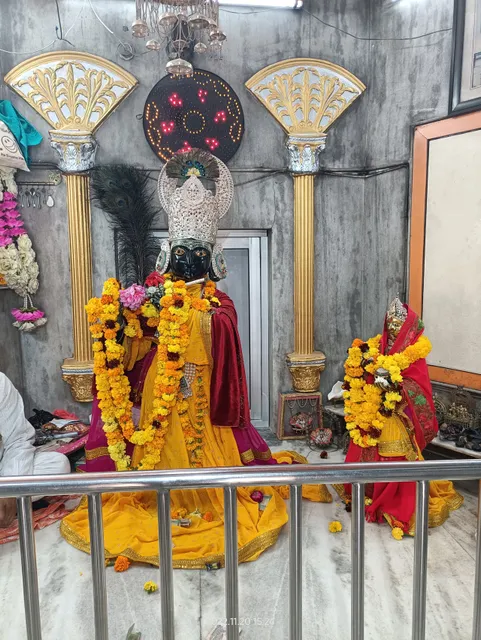
Shri Brij Raj Swami Mandir
inside Nurpur Fort, Nurpur, Himachal Pradesh 176202, India
Nearby restaurants
Sharma Guest House and resturant
Ward no 7, Niazpur bus stand, Nurpur, Himachal Pradesh 176202, India
Nearby hotels
Related posts
Keywords
Nurpur Fort tourism.Nurpur Fort hotels.Nurpur Fort bed and breakfast. flights to Nurpur Fort.Nurpur Fort attractions.Nurpur Fort restaurants.Nurpur Fort travel.Nurpur Fort travel guide.Nurpur Fort travel blog.Nurpur Fort pictures.Nurpur Fort photos.Nurpur Fort travel tips.Nurpur Fort maps.Nurpur Fort things to do.
Nurpur Fort things to do, attractions, restaurants, events info and trip planning
Nurpur Fort
IndiaHimachal PradeshNurpurNurpur Fort

Basic Info

Nurpur Fort

Nurpur, Himachal Pradesh 176202, India
4.4(578)
Open 24 hours
Save
spot

Ratings & Description

Info

Cultural
Scenic
Family friendly
Off the beaten path
attractions: Shri Brij Raj Swami Mandir, restaurants: Sharma Guest House and resturant
logoLearn more insights from Wanderboat AI.
Website
himachaltourism.gov.in

Plan your stay

hotel
Pet-friendly Hotels in Nurpur
Find a cozy hotel nearby and make it a full experience.
hotel
Affordable Hotels in Nurpur
Find a cozy hotel nearby and make it a full experience.
hotel
The Coolest Hotels You Haven't Heard Of (Yet)
Find a cozy hotel nearby and make it a full experience.
hotel
Trending Stays Worth the Hype in Nurpur
Find a cozy hotel nearby and make it a full experience.

Reviews

Nearby attractions of Nurpur Fort

Shri Brij Raj Swami Mandir

Shri Brij Raj Swami Mandir

Shri Brij Raj Swami Mandir

4.7

(454)

Open 24 hours
Click for details

Nearby restaurants of Nurpur Fort

Sharma Guest House and resturant

Sharma Guest House and resturant

Sharma Guest House and resturant

4.8

(15)

Click for details
Get the Appoverlay
Get the AppOne tap to find yournext favorite spots!
Wanderboat LogoWanderboat

Your everyday Al companion for getaway ideas

CompanyAbout Us
InformationAI Trip PlannerSitemap
SocialXInstagramTiktokLinkedin
LegalTerms of ServicePrivacy Policy

Get the app

© 2025 Wanderboat. All rights reserved.
logo

Posts

Sanyam KailaSanyam Kaila
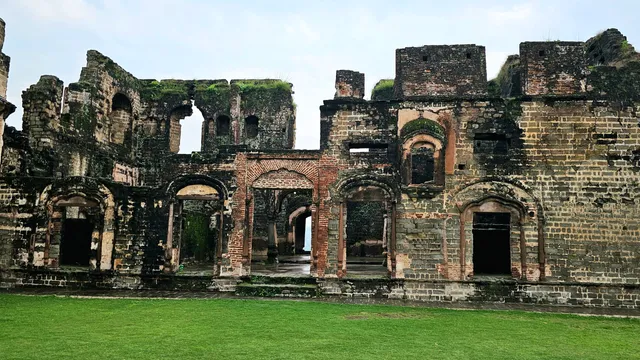
Nurpur Fort, nestled amidst the serene landscapes of Himachal Pradesh, India, stands as a testament to the rich heritage and architectural prowess of the region. Steeped in history and surrounded by breathtaking scenery, this ancient fortification invites visitors to embark on a journey through time. Constructed in the 16th century by Raja Basu, the ruler of the Nurpur kingdom, the fort serves as a reminder of the bygone era of princely states and feudal lords. Its strategic location atop a hill provides commanding views of the surrounding valleys, making it a formidable stronghold in its heyday. Upon approaching the fort, visitors are greeted by massive stone walls that bear the scars of centuries past. These walls, once impenetrable, now stand as silent witnesses to the countless battles and conquests that shaped the destiny of the region. As one steps through the imposing gateways, a sense of awe and reverence washes over, transporting them to a bygone era of valor and chivalry. The architecture of Nurpur Fort is a harmonious blend of Mughal and Kangra styles, reflecting the cultural exchange and artistic influences prevalent during its construction. Intricately carved pillars, ornate domes, and delicate latticework adorn the inner chambers, showcasing the craftsmanship of the artisans of yore. Each corner of the fort exudes an aura of grandeur and opulence, offering a glimpse into the lavish lifestyle of the erstwhile rulers. One of the highlights of a visit to Nurpur Fort is the majestic Raghunath Temple, located within its precincts. Dedicated to Lord Raghunath (an incarnation of Lord Vishnu), this sacred shrine is a masterpiece of ancient architecture. The intricately carved walls, adorned with mythological motifs and religious symbols, narrate tales of devotion and spirituality. The serene atmosphere inside the temple provides a welcome respite from the hustle and bustle of modern life, inviting visitors to pause and reflect. As one wanders through the labyrinthine corridors and courtyards of Nurpur Fort, echoes of the past resonate in every stone. From the durbar halls where kings held court to the hidden chambers where treasures were once safeguarded, each nook and cranny tells a story waiting to be unraveled. History comes alive in this ancient fortress, offering a glimpse into the glory days of a bygone era. Beyond its historical significance, Nurpur Fort also serves as a popular tourist destination, attracting visitors from far and wide. The panoramic views from its ramparts, coupled with the tranquil surroundings, make it a photographer's paradise. Additionally, the fort hosts cultural events and heritage festivals, allowing visitors to immerse themselves in the vibrant tapestry of local traditions and customs. In conclusion, Nurpur Fort stands as a living testament to the rich cultural heritage of Himachal Pradesh. Its majestic architecture, historical significance, and scenic beauty make it a must-visit destination for history enthusiasts and nature lovers alike. As one explores its hallowed precincts, they are transported on a journey through time, where the past merges seamlessly with the present, leaving an indelible mark on the soul.
Bartender RJBartender RJ
It is not every day that you chance upon a hidden jewel like Nurpur Fort on way to spend a quiet holiday in the hills. National Highway 154 or the Mandi Pathankot Road and driven around 25-odd km from Pathankot, Nurpur Fort almost hidden with thick bushes and tall trees a fort-like structure. Nurpur, earlier known as Dhamedi, has been forever famous for its ancient Krishna Temple located in its inner sanctum. The city was named Nurpur after Mughal queen Noorjahan visited the area. Nurpur Fort, on the banks of River Jabbar, was built by the Pathania Rajputs, around 900 years back. The Brij Raj Swami Temple has a black stone idol of Lord Krishna which was transported here from Rajasthan during the reign of Raja Jagat Singh. Legend has it that Raja Jagat Singh was visiting Chittaurgarh with his main priest, somewhere between 1619 and 1623 on the invitation of its king. The room which was allotted to Raja Jagat Singh and the priest was right next to a temple. Around midnight, the two were woken up by the sounds of dancing and bhajan rendition. When they opened the doors of the temple, the saw a woman singing and dancing in the closed room. It was then that the priest told the raja that when they will leave the city, he should ask for the idol of Krishna from the king. And Raja Jagat Singh did the same, only to be obliged by the king. And thus, the idol of Lord Krishna, made in true Rajasthani style arrived in Nurpur. The walls of the temple are adorned by beautiful and magnificent paintings which highlight interesting incidents from the leaves from Krishna’s life. The palace and the fort suffered massive destruction due to an earthquake back in 1905 and resulted in the wonderful structure getting a ruined look. At present, the fort doubles up as an educational institution – Rajkiya Varishth Madhyamik Vidyalaya in one of its corner. There are number of ruins strewn all around the massive fort premises which narrate many a story of its glorious golden past. By Road Around 24 km from Pathankot and 90 km from Palampur By Rail Nearest railhead is Pathankot for broad gauge and Nagrota Bagwan for narrow gauge By Air Nearest airport is Gaggal, around 50 km away.
Anisha HajelaAnisha Hajela
Rediscover bits of heritage in every nook & corner of Nurpur Fort. Recently visited the original Dhameri Fort which later in 1672 named as Nurpur Fort after queen Noor Jahan was enamoured by the beauty of this place in Nurpur, Himachal Pradesh situated at just 25km from Pathankot. The impressive fort stands on a hillock just off the main highway but is only visited by locals, as a temple and a school running inside the fort premises. To reach this charming space you need to climb some distance. Unfortunately, this five century-old fort built by Raja Basu Dev is now almost crumbling. Yet, it retains its charm as it spreads across a long flat plateau and holds sprawling gardens, archaeological ruins, few remains of decorative artworks, a 400-year-old Maulshri tree and an equally old Lord Krishna temple. It indeed is sad that the most charming Nurpur fort is not mentioned anywhere in tourists’ itinerary. We were lucky to see the photograph of this magnanimous fort at the back of the reception of Nurpur Hotel HP, where we stayed. We showed our interest to visit the same. The sturdy fort walls signify that the fort must have been once the stronghold of the Mughal Empire. Most of the part of the fort is now turned into ruins but one can see the impressive structures of the old era. The structures inside the premises include an ancient temple and ―the queen’s quarters, an old well, you may notice some amazingly beautiful and detailed sculptures on the walls and a serene atmosphere to immerse in nature. The fort is a must-visit for heritage enthusiasts and nature lovers. On your way to Jammu (little off) or Dalhousie, plan a short break at Nurpur. One can stay at a decent HPTDC Nurpur Hotel. --
See more posts
See more posts
hotel
Find your stay

Pet-friendly Hotels in Nurpur

Find a cozy hotel nearby and make it a full experience.

Nurpur Fort, nestled amidst the serene landscapes of Himachal Pradesh, India, stands as a testament to the rich heritage and architectural prowess of the region. Steeped in history and surrounded by breathtaking scenery, this ancient fortification invites visitors to embark on a journey through time. Constructed in the 16th century by Raja Basu, the ruler of the Nurpur kingdom, the fort serves as a reminder of the bygone era of princely states and feudal lords. Its strategic location atop a hill provides commanding views of the surrounding valleys, making it a formidable stronghold in its heyday. Upon approaching the fort, visitors are greeted by massive stone walls that bear the scars of centuries past. These walls, once impenetrable, now stand as silent witnesses to the countless battles and conquests that shaped the destiny of the region. As one steps through the imposing gateways, a sense of awe and reverence washes over, transporting them to a bygone era of valor and chivalry. The architecture of Nurpur Fort is a harmonious blend of Mughal and Kangra styles, reflecting the cultural exchange and artistic influences prevalent during its construction. Intricately carved pillars, ornate domes, and delicate latticework adorn the inner chambers, showcasing the craftsmanship of the artisans of yore. Each corner of the fort exudes an aura of grandeur and opulence, offering a glimpse into the lavish lifestyle of the erstwhile rulers. One of the highlights of a visit to Nurpur Fort is the majestic Raghunath Temple, located within its precincts. Dedicated to Lord Raghunath (an incarnation of Lord Vishnu), this sacred shrine is a masterpiece of ancient architecture. The intricately carved walls, adorned with mythological motifs and religious symbols, narrate tales of devotion and spirituality. The serene atmosphere inside the temple provides a welcome respite from the hustle and bustle of modern life, inviting visitors to pause and reflect. As one wanders through the labyrinthine corridors and courtyards of Nurpur Fort, echoes of the past resonate in every stone. From the durbar halls where kings held court to the hidden chambers where treasures were once safeguarded, each nook and cranny tells a story waiting to be unraveled. History comes alive in this ancient fortress, offering a glimpse into the glory days of a bygone era. Beyond its historical significance, Nurpur Fort also serves as a popular tourist destination, attracting visitors from far and wide. The panoramic views from its ramparts, coupled with the tranquil surroundings, make it a photographer's paradise. Additionally, the fort hosts cultural events and heritage festivals, allowing visitors to immerse themselves in the vibrant tapestry of local traditions and customs. In conclusion, Nurpur Fort stands as a living testament to the rich cultural heritage of Himachal Pradesh. Its majestic architecture, historical significance, and scenic beauty make it a must-visit destination for history enthusiasts and nature lovers alike. As one explores its hallowed precincts, they are transported on a journey through time, where the past merges seamlessly with the present, leaving an indelible mark on the soul.
Sanyam Kaila

Sanyam Kaila

hotel
Find your stay

Affordable Hotels in Nurpur

Find a cozy hotel nearby and make it a full experience.

Get the Appoverlay
Get the AppOne tap to find yournext favorite spots!
It is not every day that you chance upon a hidden jewel like Nurpur Fort on way to spend a quiet holiday in the hills. National Highway 154 or the Mandi Pathankot Road and driven around 25-odd km from Pathankot, Nurpur Fort almost hidden with thick bushes and tall trees a fort-like structure. Nurpur, earlier known as Dhamedi, has been forever famous for its ancient Krishna Temple located in its inner sanctum. The city was named Nurpur after Mughal queen Noorjahan visited the area. Nurpur Fort, on the banks of River Jabbar, was built by the Pathania Rajputs, around 900 years back. The Brij Raj Swami Temple has a black stone idol of Lord Krishna which was transported here from Rajasthan during the reign of Raja Jagat Singh. Legend has it that Raja Jagat Singh was visiting Chittaurgarh with his main priest, somewhere between 1619 and 1623 on the invitation of its king. The room which was allotted to Raja Jagat Singh and the priest was right next to a temple. Around midnight, the two were woken up by the sounds of dancing and bhajan rendition. When they opened the doors of the temple, the saw a woman singing and dancing in the closed room. It was then that the priest told the raja that when they will leave the city, he should ask for the idol of Krishna from the king. And Raja Jagat Singh did the same, only to be obliged by the king. And thus, the idol of Lord Krishna, made in true Rajasthani style arrived in Nurpur. The walls of the temple are adorned by beautiful and magnificent paintings which highlight interesting incidents from the leaves from Krishna’s life. The palace and the fort suffered massive destruction due to an earthquake back in 1905 and resulted in the wonderful structure getting a ruined look. At present, the fort doubles up as an educational institution – Rajkiya Varishth Madhyamik Vidyalaya in one of its corner. There are number of ruins strewn all around the massive fort premises which narrate many a story of its glorious golden past. By Road Around 24 km from Pathankot and 90 km from Palampur By Rail Nearest railhead is Pathankot for broad gauge and Nagrota Bagwan for narrow gauge By Air Nearest airport is Gaggal, around 50 km away.
Bartender RJ

Bartender RJ

hotel
Find your stay

The Coolest Hotels You Haven't Heard Of (Yet)

Find a cozy hotel nearby and make it a full experience.

hotel
Find your stay

Trending Stays Worth the Hype in Nurpur

Find a cozy hotel nearby and make it a full experience.

Rediscover bits of heritage in every nook & corner of Nurpur Fort. Recently visited the original Dhameri Fort which later in 1672 named as Nurpur Fort after queen Noor Jahan was enamoured by the beauty of this place in Nurpur, Himachal Pradesh situated at just 25km from Pathankot. The impressive fort stands on a hillock just off the main highway but is only visited by locals, as a temple and a school running inside the fort premises. To reach this charming space you need to climb some distance. Unfortunately, this five century-old fort built by Raja Basu Dev is now almost crumbling. Yet, it retains its charm as it spreads across a long flat plateau and holds sprawling gardens, archaeological ruins, few remains of decorative artworks, a 400-year-old Maulshri tree and an equally old Lord Krishna temple. It indeed is sad that the most charming Nurpur fort is not mentioned anywhere in tourists’ itinerary. We were lucky to see the photograph of this magnanimous fort at the back of the reception of Nurpur Hotel HP, where we stayed. We showed our interest to visit the same. The sturdy fort walls signify that the fort must have been once the stronghold of the Mughal Empire. Most of the part of the fort is now turned into ruins but one can see the impressive structures of the old era. The structures inside the premises include an ancient temple and ―the queen’s quarters, an old well, you may notice some amazingly beautiful and detailed sculptures on the walls and a serene atmosphere to immerse in nature. The fort is a must-visit for heritage enthusiasts and nature lovers. On your way to Jammu (little off) or Dalhousie, plan a short break at Nurpur. One can stay at a decent HPTDC Nurpur Hotel. --
Anisha Hajela

Anisha Hajela

See more posts
See more posts

Reviews of Nurpur Fort

4.4
(578)
avatar
5.0
1y

Nurpur Fort, nestled amidst the serene landscapes of Himachal Pradesh, India, stands as a testament to the rich heritage and architectural prowess of the region. Steeped in history and surrounded by breathtaking scenery, this ancient fortification invites visitors to embark on a journey through time.

Constructed in the 16th century by Raja Basu, the ruler of the Nurpur kingdom, the fort serves as a reminder of the bygone era of princely states and feudal lords. Its strategic location atop a hill provides commanding views of the surrounding valleys, making it a formidable stronghold in its heyday.

Upon approaching the fort, visitors are greeted by massive stone walls that bear the scars of centuries past. These walls, once impenetrable, now stand as silent witnesses to the countless battles and conquests that shaped the destiny of the region. As one steps through the imposing gateways, a sense of awe and reverence washes over, transporting them to a bygone era of valor and chivalry.

The architecture of Nurpur Fort is a harmonious blend of Mughal and Kangra styles, reflecting the cultural exchange and artistic influences prevalent during its construction. Intricately carved pillars, ornate domes, and delicate latticework adorn the inner chambers, showcasing the craftsmanship of the artisans of yore. Each corner of the fort exudes an aura of grandeur and opulence, offering a glimpse into the lavish lifestyle of the erstwhile rulers.

One of the highlights of a visit to Nurpur Fort is the majestic Raghunath Temple, located within its precincts. Dedicated to Lord Raghunath (an incarnation of Lord Vishnu), this sacred shrine is a masterpiece of ancient architecture. The intricately carved walls, adorned with mythological motifs and religious symbols, narrate tales of devotion and spirituality. The serene atmosphere inside the temple provides a welcome respite from the hustle and bustle of modern life, inviting visitors to pause and reflect.

As one wanders through the labyrinthine corridors and courtyards of Nurpur Fort, echoes of the past resonate in every stone. From the durbar halls where kings held court to the hidden chambers where treasures were once safeguarded, each nook and cranny tells a story waiting to be unraveled. History comes alive in this ancient fortress, offering a glimpse into the glory days of a bygone era.

Beyond its historical significance, Nurpur Fort also serves as a popular tourist destination, attracting visitors from far and wide. The panoramic views from its ramparts, coupled with the tranquil surroundings, make it a photographer's paradise. Additionally, the fort hosts cultural events and heritage festivals, allowing visitors to immerse themselves in the vibrant tapestry of local traditions and customs.

In conclusion, Nurpur Fort stands as a living testament to the rich cultural heritage of Himachal Pradesh. Its majestic architecture, historical significance, and scenic beauty make it a must-visit destination for history enthusiasts and nature lovers alike. As one explores its hallowed precincts, they are transported on a journey through time, where the past merges seamlessly with the present, leaving an indelible mark...

   Read more

avatar
4.0
2y

The Nurpur kingdom, originally known as Dhameri (धमेरी was founded towards the middle of the 11th century by Tomaras of Delhi.Jhetpal the founder of Nurpur Kingdom in 1064 A.D was the younger brother of Anangpal II of Tomara dynasty from the family of King Arjuna of Mahabharata fame, 2250 years before him King Vikramaditya who began the Vikrama Samvat era in 57 BCE after defeating the Shakas belonged to the same lineage. The principal era to which the luni-solar system is exclusively adapted is that of Vikramaditya, called Samvat. The prince from whom it was named was of the Tuár dynasty and is supposed to have reigned at Ujjain (Ujjáyini).

Tomar Raja Mahipal a k.a Kunwar Pāla (1021-1051) of Delhi in 1043 defeated Mahmud of Ghazni's grandson Mawdud of Ghazni and liberated the Nagarkot fort.Mahmud of Ghazni's fifth son Abd al-Rashid (1049-1052) appointed Hastagin Hajib as the governor of Punjab and recaptured liberated Nagarkot fort in 1052 after the death of Raja Mahipal Late Raja Mahipal's brother Jhetpal Tomar led an expeditionary force to protect Trigarta king Jagdish Chand of Katoch dynasty and successfully recaptured the Kangra fort in 1060 AD In retaliation, Ibrahim of Ghazna (1059-1099) sent his son, Mahmud, with an army of ghazis consisting of 40,000 cavalry to raid Doab of Punjab region, between 1063 and 1070. Due to these constant attacks Trigarta Kingdom shifted its capital from Doab Jalandhar to Kangra Fort in 1070 A.D. and to double secure Kangra Fort Jhetpal Tomar overpowered the garrison of Ghaznavid Kiladar Kuzbak Khan stationed at Paithan Fort, Pathankot which was the gateway to Kangra Valley between River Ravi and River Beas from the plains of Badi doab. Raja Jhetpal, after the death of Ibrahim of Ghazna in 1099 permanently stationed his garrison at Pathankot and the territorial surname Pathania became surname of clan.

Nurpur reached its peak between 1580 and 1613 during the reign of Raja Basu Dev who built an impressive fort that can still be seen today but his son Suraj Mal of Nurpur was driven away by Mughals in 1618.

In 1620 the change of name from Dhameri to Nurpur was done by Raja Jagat Singh to honour Mughal emperor and empress as 'Nur' was a common prefix to their names Nur-ud-din Muhammad Jahangir and Nur Jahan.Nurpur kingdom paid taxes after it came under Mughals. It rebelled when taxes were raised to 66% and the settlement took place after the War of Taragarh 1640–1642.

Till 1739 kingdom remained a feudatory state of Mughal Empire and became independent during Campaigns of Nader Shah. During Indian campaign of Ahmad Shah Durrani from (1747-1767) Raja Fateh Singh survived the invader but Raja Prithvi Singh (1770-1805) expelled Muslim branch of Pathania (1650-1781) based at Shahpurkandi Fort near Shahpurkandi dam project colony, they migrated to Pakistan in 1947. Also, Prithvi Singh forced his brother Inder Singh (Rey branch) whom he considered as...

   Read more
avatar
5.0
4y

It is not every day that you chance upon a hidden jewel like Nurpur Fort on way to spend a quiet holiday in the hills. National Highway 154 or the Mandi Pathankot Road and driven around 25-odd km from Pathankot, Nurpur Fort almost hidden with thick bushes and tall trees a fort-like structure. Nurpur, earlier known as Dhamedi, has been forever famous for its ancient Krishna Temple located in its inner sanctum. The city was named Nurpur after Mughal queen Noorjahan visited the area. Nurpur Fort, on the banks of River Jabbar, was built by the Pathania Rajputs, around 900 years back. The Brij Raj Swami Temple has a black stone idol of Lord Krishna which was transported here from Rajasthan during the reign of Raja Jagat Singh. Legend has it that Raja Jagat Singh was visiting Chittaurgarh with his main priest, somewhere between 1619 and 1623 on the invitation of its king. The room which was allotted to Raja Jagat Singh and the priest was right next to a temple. Around midnight, the two were woken up by the sounds of dancing and bhajan rendition. When they opened the doors of the temple, the saw a woman singing and dancing in the closed room. It was then that the priest told the raja that when they will leave the city, he should ask for the idol of Krishna from the king. And Raja Jagat Singh did the same, only to be obliged by the king. And thus, the idol of Lord Krishna, made in true Rajasthani style arrived in Nurpur. The walls of the temple are adorned by beautiful and magnificent paintings which highlight interesting incidents from the leaves from Krishna’s life. The palace and the fort suffered massive destruction due to an earthquake back in 1905 and resulted in the wonderful structure getting a ruined look. At present, the fort doubles up as an educational institution – Rajkiya Varishth Madhyamik Vidyalaya in one of its corner. There are number of ruins strewn all around the massive fort premises which narrate many a story of its glorious golden past. By Road Around 24 km from Pathankot and 90 km from Palampur By Rail Nearest railhead is Pathankot for broad gauge and Nagrota Bagwan for narrow gauge By Air Nearest airport is Gaggal,...

   Read more
Page 1 of 7
Previous
Next