HTML SitemapExplore
logo
Find Things to DoFind The Best Restaurants

Nrusinghanath Temple — Attraction in Odisha

Name
Nrusinghanath Temple
Description
Sri Nrusinghanatha, is a temple of Odisha, India, situated at the foothills of Gandhamardhan hills near Paikmal, Bargarh. The King of Patna, Baijal Singh Dev laid the foundation of this historic temple in early 15th century CE.
Nearby attractions
Nearby restaurants
Nearby hotels
Related posts
Keywords
Nrusinghanath Temple tourism.Nrusinghanath Temple hotels.Nrusinghanath Temple bed and breakfast. flights to Nrusinghanath Temple.Nrusinghanath Temple attractions.Nrusinghanath Temple restaurants.Nrusinghanath Temple travel.Nrusinghanath Temple travel guide.Nrusinghanath Temple travel blog.Nrusinghanath Temple pictures.Nrusinghanath Temple photos.Nrusinghanath Temple travel tips.Nrusinghanath Temple maps.Nrusinghanath Temple things to do.
Nrusinghanath Temple things to do, attractions, restaurants, events info and trip planning
Nrusinghanath Temple
IndiaOdishaNrusinghanath Temple

Basic Info

Nrusinghanath Temple

Paikamal, Manbhang, Odisha 768039, India
4.5(1.6K)
Closed
Save
spot

Ratings & Description

Info

Sri Nrusinghanatha, is a temple of Odisha, India, situated at the foothills of Gandhamardhan hills near Paikmal, Bargarh. The King of Patna, Baijal Singh Dev laid the foundation of this historic temple in early 15th century CE.

Cultural
Outdoor
attractions: , restaurants:
logoLearn more insights from Wanderboat AI.
Phone
+91 95567 38375
Open hoursSee all hours
Fri5:03 AM - 8:03 PMClosed

Plan your stay

hotel
Pet-friendly Hotels in Odisha
Find a cozy hotel nearby and make it a full experience.
hotel
Affordable Hotels in Odisha
Find a cozy hotel nearby and make it a full experience.
hotel
The Coolest Hotels You Haven't Heard Of (Yet)
Find a cozy hotel nearby and make it a full experience.
hotel
Trending Stays Worth the Hype in Odisha
Find a cozy hotel nearby and make it a full experience.

Reviews

Get the Appoverlay
Get the AppOne tap to find yournext favorite spots!
Wanderboat LogoWanderboat

Your everyday Al companion for getaway ideas

CompanyAbout Us
InformationAI Trip PlannerSitemap
SocialXInstagramTiktokLinkedin
LegalTerms of ServicePrivacy Policy

Get the app

© 2025 Wanderboat. All rights reserved.
logo

Reviews of Nrusinghanath Temple

4.5
(1,594)
avatar
5.0
1y

This review is for those who are planning to visit Nrusingnath from long distance. Have no doubt that it's a terrific place for the traveler who seeks adventure. So read on for the basic information, lots of PROS and some CONS:

ABOUT THE PLACE: Nrusingnath is an iconic 14th century temple complex at the foot of the Gandharardhan Hill range in Western Odisha. The forest-covered hills are known for their medicinal plants, 14th-century rock carvings as well as unspoilt flora & fauna. Budget hotels are available in Paikmal, and even one OTDC hotel (Nrusingnath nature camp) is there on the first hill that you can book through Ecotour Odisha website.

PROS:

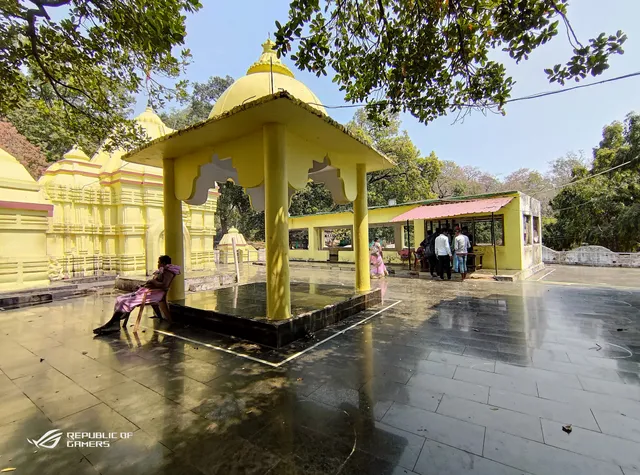
Temple complex: There's a main 14th century temple constructed in a space carved from solid rock of a hill. It has exquisite Kalinga-style architecture and is located in a valley-type area between two hills, with a beautiful and large waterfall "Chaldhar" flowing right next to it (it's just one of the many large waterfalls present in Gandhamardhan hill range). There's a mini temple on a very steep and large rock next to the nearby watefall, with small slippery rock steps leading to it, still devotees climp up to offer water there as custom. The main temple have some iconic idols in its walls, including one black-granite Baraha Avatara.

14th-century rock carvings: On the rocks near the main complex itself you will see religious figures carved in stone, but the real "treasure" is present after you climb one hill (there is a good staired path, though quite tiring to climb), where you will see giant sculptures of Brahma, Vishnu, Panchu Pandav carved into the large boulders alongside the waterfall.

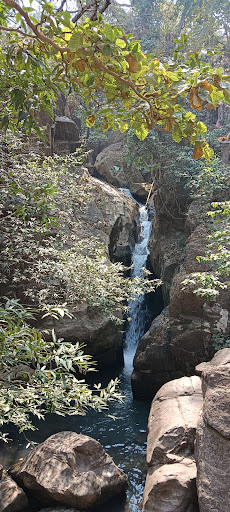
Waterfalls, waterfalls & more waterfalls: There are many waterfalls in these hills. The main one (that comes to the temple) flows down from one hill to other, and down the valley, as you climb up the hills, you will see its various stages, from being a calm soothing stream in the forest, to a roaring flow falling down deep gorges and rocks.

Road to "Kapildhar": This 7-8 km of hilly road is a nature-lover's, botanist's and trekker's paradise. You will enjoy it best if you walk, though it's not possible for all due to fitness and time constraints (we used bike). You have to pass a checkpost and enter your details there. 4-wheelers do go up, but the road is quite dangerous at many places and you won't like to take your family up. After the 8 km path, there's a very large, extremely breath-taking waterfall "Kapildhar" roaring down the hills. It's simply out-of-this world feeling when you can see the waterfall from 3 hills away while approaching it along the path.

Bhim-madua/Raja-ghar/BALCO mine/trek to Harishankar: This option is only for the really fit people seeking high adventure. There's a 16 km trekking route to Harishankar (on other side of the hills). At the top of the hills, there is a flat plateau area 3 km wide where there is the Bhim Madua, disused BALCO mine, one British era hunting lodge ruins, etc. and from there you can trek down to Harishankar. It's a trekker's ultimate dream.

Manbhang dam: 8 km away, next to scenic forested hills.

CONS:

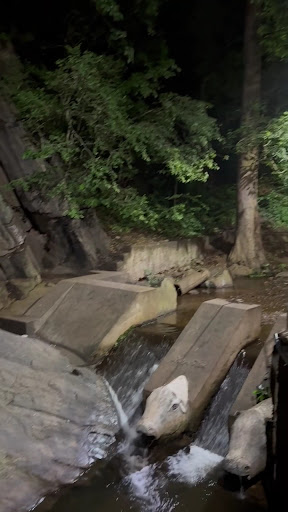
Littering & pollution: The waterfall pool near the main temple is littered with soap & shampoo packets, rags, bottles etc. despite notices not to bath there. Littering is a problem even near the rock-carvings one hill up.

Encroachments: The town of Paikmal is gradually expanding (legally & illegally) towards Nrusingnath and there is risk that Nrusingnath wil turn into an artificial park if strict measures are not taken. The forest road from the Ayurvedic college towards Gurunda is being encroached upon and one can easily see deforestation from Gurunda side.

Dangers: Please don't visit Kapildhar on bike by bypassing the checkpost and without entering details, especially during non-tourist season where it's almost empty. The rocks of the waterfalls here as well as near the temple are slippery and dangerous. Don't get down into gorges to bath as they are very deep...

   Read more

avatar
5.0
9y

The lost of historical place The Epic Mahabharat Sri Nrusinghanath , the great temple of Odisha in India , is situated at the foot hills of Gandhamardhan Hill near Paikmal, Bargarh . The King of Patnagarh , Baijal Singh Dev, laid the foundation of this historic temple in 1313 A.D. It is only 45 feet in height, divided into two parts: the first being the seat of the Lord Nrusinghnath , the second allotted to Jagamohan (antechamber having 3 gates and each supported by 4 pillars. History Around six hundred years ago, a woman Jamuna Kandhuni as referred in the book "Nrusingha Charitra" composed a Kavya that sings the glory of Marjara Keshari in regard to suppression and repression of torture and tyranny of Musika Daitya. According to the legend,when people were greatly afflicted by Musika Daitya (the incarnate Mouse Demon), Vishnu Mani in the appearance(Incarnation) of Marjara Keshari,in His Feline Form,ran to eat the demonic mouse form - Musika Daitya who never came out from the tunnel and Marjara Keshari waited from that day. The temple is reputed from that day with this mythological history. This story is symbolic of the grounding the demonic evil power of tyranny and torture that never dared to come out further and Lord Nrusinghnath alias Marjara Keshari has been guarding it since then. According to Huen Tsang, the Chinese traveler, this place was a centre of Buddhist scriptural learning. Lord Nrushinghanath is a much-adored deity of Orissa and a great fair is held in his honour on the 14th day of bright fortnight in the month of Vaisakha . According to Oriya and Devnagari inscriptions, the temple was built by Baijal Dev in the early 15th century AD. The temple is constructed in Orissan style of architecture. Tourism Step to Harishankar Temple Here you can also visit Chal dhar (400 m from Temple), Bhim Dhar (425 m from Temple), Sita Kunda (500 m from Temple), Panchupandav (1.5 km from Temple), Kapil Dhar (4 km from Temple), Supta Dhar (7 km from Temple), Satyaamb (9 km from Temple), Bhim Madua (11 km from Temple), Happy Point (12 km from Temple). In recent year tourism has been developing in around Gandhamardhan hills . An annual big fair held on Nrusimha-chatrurdasi day during Vaishakha shukla chaturdashi (in May) attracts thousands of pilgrims from far and near. Nrusimhanath Temple is about 110 km west of Baragarh and 164 km from Sambalpur . Khariar Road Railway Station is the nearest railhead. Here also a beautiful garden created just near the temple, where Lord Krishna different avatar shown and also a 28 ft Hanuman Statue created inside the...

   Read more
avatar
5.0
2y

There was a very good place to visit, in this place the environment is very peaceful ,the Mountain Gandhamardan looks very beautiful due to the covering of green forest near Nrusinghanath Temple. The shrine farming different waterfalls and the sound of wild animals and Migratory birds are very amusing to the visitors. •Nrusimhanath Temple is about 110 km west of Baragarh and 164 km from Sambalpur. • History of the temple Around six hundred years ago, a woman Jamuna Kandhuni as referred in the book "Nrusingha Charitra" in Odia language composed a Kavya that sings the glory of Marjara Keshari in regard to suppression and repression of torture and tyranny of Musika Daitya. According to the legend, when people were greatly afflicted by Musika Daitya (the incarnate Mouse Demon), Vishnu Mani in the appearance(Incarnation) of Marjara Keshari, in His Feline Form, ran to eat the demonic mouse form - Musika Daitya who never came out from the tunnel and Marjara Keshari waited from that day. The temple is reputed from that day with this mythological history. This story is symbolic of the grounding the demonic evil power of tyranny and torture that never dared to come out further and Lord Nrusinghnath alias Marjara Keshari has been guarding it since then. According to Huen Tsang, the Chinese traveler, this place was a centre of Buddhist scriptural learning. Lord Nrushinghanath is a much-adored deity of Odisha and a great fair is held in his honour on the 14th day of bright fortnight in the month of Vaisakha. According to Odia and Devnagari inscriptions, the temple was built by Baijal Dev in the early 15th century AD. The temple is a masterpiece of Kalinga Architecture of Deula style prevalent in...

   Read more
Page 1 of 7
Previous
Next

Posts

Bineet PradhanBineet Pradhan
This review is for those who are planning to visit Nrusingnath from long distance. Have no doubt that it's a terrific place for the traveler who seeks adventure. So read on for the basic information, lots of PROS and some CONS: ABOUT THE PLACE: Nrusingnath is an iconic 14th century temple complex at the foot of the Gandharardhan Hill range in Western Odisha. The forest-covered hills are known for their medicinal plants, 14th-century rock carvings as well as unspoilt flora & fauna. Budget hotels are available in Paikmal, and even one OTDC hotel (Nrusingnath nature camp) is there on the first hill that you can book through Ecotour Odisha website. PROS: Temple complex: There's a main 14th century temple constructed in a space carved from solid rock of a hill. It has exquisite Kalinga-style architecture and is located in a valley-type area between two hills, with a beautiful and large waterfall "Chaldhar" flowing right next to it (it's just one of the many large waterfalls present in Gandhamardhan hill range). There's a mini temple on a very steep and large rock next to the nearby watefall, with small slippery rock steps leading to it, still devotees climp up to offer water there as custom. The main temple have some iconic idols in its walls, including one black-granite Baraha Avatara. 14th-century rock carvings: On the rocks near the main complex itself you will see religious figures carved in stone, but the real "treasure" is present after you climb one hill (there is a good staired path, though quite tiring to climb), where you will see giant sculptures of Brahma, Vishnu, Panchu Pandav carved into the large boulders alongside the waterfall. Waterfalls, waterfalls & more waterfalls: There are many waterfalls in these hills. The main one (that comes to the temple) flows down from one hill to other, and down the valley, as you climb up the hills, you will see its various stages, from being a calm soothing stream in the forest, to a roaring flow falling down deep gorges and rocks. Road to "Kapildhar": This 7-8 km of hilly road is a nature-lover's, botanist's and trekker's paradise. You will enjoy it best if you walk, though it's not possible for all due to fitness and time constraints (we used bike). You have to pass a checkpost and enter your details there. 4-wheelers do go up, but the road is quite dangerous at many places and you won't like to take your family up. After the 8 km path, there's a very large, extremely breath-taking waterfall "Kapildhar" roaring down the hills. It's simply out-of-this world feeling when you can see the waterfall from 3 hills away while approaching it along the path. Bhim-madua/Raja-ghar/BALCO mine/trek to Harishankar: This option is only for the really fit people seeking high adventure. There's a 16 km trekking route to Harishankar (on other side of the hills). At the top of the hills, there is a flat plateau area 3 km wide where there is the Bhim Madua, disused BALCO mine, one British era hunting lodge ruins, etc. and from there you can trek down to Harishankar. It's a trekker's ultimate dream. Manbhang dam: 8 km away, next to scenic forested hills. CONS: Littering & pollution: The waterfall pool near the main temple is littered with soap & shampoo packets, rags, bottles etc. despite notices not to bath there. Littering is a problem even near the rock-carvings one hill up. Encroachments: The town of Paikmal is gradually expanding (legally & illegally) towards Nrusingnath and there is risk that Nrusingnath wil turn into an artificial park if strict measures are not taken. The forest road from the Ayurvedic college towards Gurunda is being encroached upon and one can easily see deforestation from Gurunda side. Dangers: Please don't visit Kapildhar on bike by bypassing the checkpost and without entering details, especially during non-tourist season where it's almost empty. The rocks of the waterfalls here as well as near the temple are slippery and dangerous. Don't get down into gorges to bath as they are very deep in few places.
Sipun MaharanaSipun Maharana
There was a very good place to visit, in this place the environment is very peaceful ,the Mountain Gandhamardan looks very beautiful due to the covering of green forest near Nrusinghanath Temple. The shrine farming different waterfalls and the sound of wild animals and Migratory birds are very amusing to the visitors. •Nrusimhanath Temple is about 110 km west of Baragarh and 164 km from Sambalpur. • History of the temple Around six hundred years ago, a woman Jamuna Kandhuni as referred in the book "Nrusingha Charitra" in Odia language composed a Kavya that sings the glory of Marjara Keshari in regard to suppression and repression of torture and tyranny of Musika Daitya. According to the legend, when people were greatly afflicted by Musika Daitya (the incarnate Mouse Demon), Vishnu Mani in the appearance(Incarnation) of Marjara Keshari, in His Feline Form, ran to eat the demonic mouse form - Musika Daitya who never came out from the tunnel and Marjara Keshari waited from that day. The temple is reputed from that day with this mythological history. This story is symbolic of the grounding the demonic evil power of tyranny and torture that never dared to come out further and Lord Nrusinghnath alias Marjara Keshari has been guarding it since then. According to Huen Tsang, the Chinese traveler, this place was a centre of Buddhist scriptural learning. Lord Nrushinghanath is a much-adored deity of Odisha and a great fair is held in his honour on the 14th day of bright fortnight in the month of Vaisakha. According to Odia and Devnagari inscriptions, the temple was built by Baijal Dev in the early 15th century AD. The temple is a masterpiece of Kalinga Architecture of Deula style prevalent in the Odisha region of India.
RP CreationRP Creation
Nursingha Nath is a historic Hindu temple near Paikmal, in Balangir district, Odisha, nestled at the foothills of the Gandhamardan Hills. Built in the early 15th century CE, it was commissioned by King Baijal Singh Dev of Patna state and stands just 45 feet tall, featuring two parts— the sanctum housing Lord Narasimha and the Jagamohan (antechamber) with three gates supported by four pillars. The temple honors Lord Narasimha, the lion‑man avatar of Vishnu. Legend speaks of his form (“Marjara Keshari”) manifested here to defeat the mouse‑demon Musika. The author Jamuna Kandhuni captured the tale in the Odia poem Nrusingha Charitra, highlighting how Lord Narasimha has guarded the region ever since. Set amidst serene nature, the temple is surrounded by waterfalls and natural springs, including Chal Dhar, Bhim Dhar, Sita Kunda and others located within a few kilometers, ideal for nature walks and pilgrim activities. A major pilgrimage event is held during Vaishakha Shukla Chaturdashi (Nrusingha‑Chaturdashi), drawing thousands of devotees. Visitors typically reach the temple via Khariar Road railway station (~50 km away) or by road from Padmapur, Bargarh and Sambalpur. Ideal visiting season is winter, October to February, when weather is cool and comfortable for travel and treks around Gandhamardan Hills. Nrusinghanath Temple blends rich mythological heritage, Odisha’s classic Kalinga architecture, and tranquil natural surrounds, making it a spiritual and scenic highlight of the region.
See more posts
See more posts
hotel
Find your stay

Pet-friendly Hotels in Odisha

Find a cozy hotel nearby and make it a full experience.

This review is for those who are planning to visit Nrusingnath from long distance. Have no doubt that it's a terrific place for the traveler who seeks adventure. So read on for the basic information, lots of PROS and some CONS: ABOUT THE PLACE: Nrusingnath is an iconic 14th century temple complex at the foot of the Gandharardhan Hill range in Western Odisha. The forest-covered hills are known for their medicinal plants, 14th-century rock carvings as well as unspoilt flora & fauna. Budget hotels are available in Paikmal, and even one OTDC hotel (Nrusingnath nature camp) is there on the first hill that you can book through Ecotour Odisha website. PROS: Temple complex: There's a main 14th century temple constructed in a space carved from solid rock of a hill. It has exquisite Kalinga-style architecture and is located in a valley-type area between two hills, with a beautiful and large waterfall "Chaldhar" flowing right next to it (it's just one of the many large waterfalls present in Gandhamardhan hill range). There's a mini temple on a very steep and large rock next to the nearby watefall, with small slippery rock steps leading to it, still devotees climp up to offer water there as custom. The main temple have some iconic idols in its walls, including one black-granite Baraha Avatara. 14th-century rock carvings: On the rocks near the main complex itself you will see religious figures carved in stone, but the real "treasure" is present after you climb one hill (there is a good staired path, though quite tiring to climb), where you will see giant sculptures of Brahma, Vishnu, Panchu Pandav carved into the large boulders alongside the waterfall. Waterfalls, waterfalls & more waterfalls: There are many waterfalls in these hills. The main one (that comes to the temple) flows down from one hill to other, and down the valley, as you climb up the hills, you will see its various stages, from being a calm soothing stream in the forest, to a roaring flow falling down deep gorges and rocks. Road to "Kapildhar": This 7-8 km of hilly road is a nature-lover's, botanist's and trekker's paradise. You will enjoy it best if you walk, though it's not possible for all due to fitness and time constraints (we used bike). You have to pass a checkpost and enter your details there. 4-wheelers do go up, but the road is quite dangerous at many places and you won't like to take your family up. After the 8 km path, there's a very large, extremely breath-taking waterfall "Kapildhar" roaring down the hills. It's simply out-of-this world feeling when you can see the waterfall from 3 hills away while approaching it along the path. Bhim-madua/Raja-ghar/BALCO mine/trek to Harishankar: This option is only for the really fit people seeking high adventure. There's a 16 km trekking route to Harishankar (on other side of the hills). At the top of the hills, there is a flat plateau area 3 km wide where there is the Bhim Madua, disused BALCO mine, one British era hunting lodge ruins, etc. and from there you can trek down to Harishankar. It's a trekker's ultimate dream. Manbhang dam: 8 km away, next to scenic forested hills. CONS: Littering & pollution: The waterfall pool near the main temple is littered with soap & shampoo packets, rags, bottles etc. despite notices not to bath there. Littering is a problem even near the rock-carvings one hill up. Encroachments: The town of Paikmal is gradually expanding (legally & illegally) towards Nrusingnath and there is risk that Nrusingnath wil turn into an artificial park if strict measures are not taken. The forest road from the Ayurvedic college towards Gurunda is being encroached upon and one can easily see deforestation from Gurunda side. Dangers: Please don't visit Kapildhar on bike by bypassing the checkpost and without entering details, especially during non-tourist season where it's almost empty. The rocks of the waterfalls here as well as near the temple are slippery and dangerous. Don't get down into gorges to bath as they are very deep in few places.
Bineet Pradhan

Bineet Pradhan

hotel
Find your stay

Affordable Hotels in Odisha

Find a cozy hotel nearby and make it a full experience.

Get the Appoverlay
Get the AppOne tap to find yournext favorite spots!
There was a very good place to visit, in this place the environment is very peaceful ,the Mountain Gandhamardan looks very beautiful due to the covering of green forest near Nrusinghanath Temple. The shrine farming different waterfalls and the sound of wild animals and Migratory birds are very amusing to the visitors. •Nrusimhanath Temple is about 110 km west of Baragarh and 164 km from Sambalpur. • History of the temple Around six hundred years ago, a woman Jamuna Kandhuni as referred in the book "Nrusingha Charitra" in Odia language composed a Kavya that sings the glory of Marjara Keshari in regard to suppression and repression of torture and tyranny of Musika Daitya. According to the legend, when people were greatly afflicted by Musika Daitya (the incarnate Mouse Demon), Vishnu Mani in the appearance(Incarnation) of Marjara Keshari, in His Feline Form, ran to eat the demonic mouse form - Musika Daitya who never came out from the tunnel and Marjara Keshari waited from that day. The temple is reputed from that day with this mythological history. This story is symbolic of the grounding the demonic evil power of tyranny and torture that never dared to come out further and Lord Nrusinghnath alias Marjara Keshari has been guarding it since then. According to Huen Tsang, the Chinese traveler, this place was a centre of Buddhist scriptural learning. Lord Nrushinghanath is a much-adored deity of Odisha and a great fair is held in his honour on the 14th day of bright fortnight in the month of Vaisakha. According to Odia and Devnagari inscriptions, the temple was built by Baijal Dev in the early 15th century AD. The temple is a masterpiece of Kalinga Architecture of Deula style prevalent in the Odisha region of India.
Sipun Maharana

Sipun Maharana

hotel
Find your stay

The Coolest Hotels You Haven't Heard Of (Yet)

Find a cozy hotel nearby and make it a full experience.

hotel
Find your stay

Trending Stays Worth the Hype in Odisha

Find a cozy hotel nearby and make it a full experience.

Nursingha Nath is a historic Hindu temple near Paikmal, in Balangir district, Odisha, nestled at the foothills of the Gandhamardan Hills. Built in the early 15th century CE, it was commissioned by King Baijal Singh Dev of Patna state and stands just 45 feet tall, featuring two parts— the sanctum housing Lord Narasimha and the Jagamohan (antechamber) with three gates supported by four pillars. The temple honors Lord Narasimha, the lion‑man avatar of Vishnu. Legend speaks of his form (“Marjara Keshari”) manifested here to defeat the mouse‑demon Musika. The author Jamuna Kandhuni captured the tale in the Odia poem Nrusingha Charitra, highlighting how Lord Narasimha has guarded the region ever since. Set amidst serene nature, the temple is surrounded by waterfalls and natural springs, including Chal Dhar, Bhim Dhar, Sita Kunda and others located within a few kilometers, ideal for nature walks and pilgrim activities. A major pilgrimage event is held during Vaishakha Shukla Chaturdashi (Nrusingha‑Chaturdashi), drawing thousands of devotees. Visitors typically reach the temple via Khariar Road railway station (~50 km away) or by road from Padmapur, Bargarh and Sambalpur. Ideal visiting season is winter, October to February, when weather is cool and comfortable for travel and treks around Gandhamardan Hills. Nrusinghanath Temple blends rich mythological heritage, Odisha’s classic Kalinga architecture, and tranquil natural surrounds, making it a spiritual and scenic highlight of the region.
RP Creation

RP Creation

See more posts
See more posts