HTML SitemapExplore
logo
Find Things to DoFind The Best Restaurants

Similipal National Park — Attraction in Odisha

Name
Similipal National Park
Description
Nearby attractions
Nearby restaurants
Nearby hotels
Related posts
Keywords
Similipal National Park tourism.Similipal National Park hotels.Similipal National Park bed and breakfast. flights to Similipal National Park.Similipal National Park attractions.Similipal National Park restaurants.Similipal National Park travel.Similipal National Park travel guide.Similipal National Park travel blog.Similipal National Park pictures.Similipal National Park photos.Similipal National Park travel tips.Similipal National Park maps.Similipal National Park things to do.
Similipal National Park things to do, attractions, restaurants, events info and trip planning
Similipal National Park
IndiaOdishaSimilipal National Park

Basic Info

Similipal National Park

Dist, Bhanjpur, Baripada, Odisha 757002, India
4.3(4.4K)
Open 24 hours
Save
spot

Ratings & Description

Info

Outdoor
Adventure
Family friendly
attractions: , restaurants:
logoLearn more insights from Wanderboat AI.
Phone
+91 6792 259 126
Website
similipal.org

Plan your stay

hotel
Pet-friendly Hotels in Odisha
Find a cozy hotel nearby and make it a full experience.
hotel
Affordable Hotels in Odisha
Find a cozy hotel nearby and make it a full experience.
hotel
The Coolest Hotels You Haven't Heard Of (Yet)
Find a cozy hotel nearby and make it a full experience.
hotel
Trending Stays Worth the Hype in Odisha
Find a cozy hotel nearby and make it a full experience.

Reviews

Get the Appoverlay
Get the AppOne tap to find yournext favorite spots!
Wanderboat LogoWanderboat

Your everyday Al companion for getaway ideas

CompanyAbout Us
InformationAI Trip PlannerSitemap
SocialXInstagramTiktokLinkedin
LegalTerms of ServicePrivacy Policy

Get the app

© 2025 Wanderboat. All rights reserved.
logo

Reviews of Similipal National Park

4.3
(4,446)
avatar
5.0
5y

Similipal, which derives its name from ‘Simul’(Silk Cotton) tree, is a national park and a Tiger Reserve situated in the northern part of Orissa’s Mayurbhanj district. The tiger reserve is spread over 2750 sq km and has some beautiful waterfalls like Joranda and Barehipani. The park is surrounded by high plateaus and hills, the highest peak being the twin peaks of Khairiburu and Meghashini (1515m above mean sea level). At least twelve rivers cut across the plain area, all of which drain into the Bay of Bengal. The prominent among them are Burhabalanga, Palpala Bandan, Salandi, Kahairi and Deo.

Flora and fauna: An astounding 1078 species of plants including 94 species of orchids find their home in the park. The vegetation is a mix of different forest types and habitats, with Northern tropical moist deciduous dominating some semi-evergreen patches. Sal is the dominant tree species here. The park also has extensive grasslands that are grazing grounds for many of the herbivores. These forests boast of many plants that have medicinal and aromatic properties.

The park is known for the tiger, elephant and hill mynah. It holds the highest tiger population in the state of Orissa. 55 species of mammals, 304 species of birds, 60 species of reptiles, 21 species of frogs, 38 species of fish and 164 species of butterflies have been recorded from the Park. Apart from the tiger, the major mammals are leopard, sambar, barking deer, gaur, jungle cat, wild boar, four-horned antelope, giant squirrel and common langur. Grey hornbill, Indian pied hornbill and Malabar pied hornbill are also found here. The park also has a sizeable population of reptiles, which includes the longest venomous snake, the King cobra and the Tricarinate hill turtle. The Mugger Management Programme at Ramatirtha has helped the mugger crocodile to flourish on the banks of the Khairi and Deo Rivers.

History and current status: The Tiger Reserve originated as a hunting ground for the surrounding royalty. It was formally designated a tiger reserve under Project Tiger in May 1973. The Government of Orissa declared Similipal as a wildlife sanctuary in 1979 with an area of 2750 sq. km. Later in 1980, Government of Orissa proposed 303 sq. km of the sanctuary as National Park. Further in 1986, the area of the National Park was increased to 845.70 sq. km. The Government of India declared it as a biosphere reserve in 1994. UNESCO added this National Park to its list of Biosphere Reserves in May 2009. This tiger reserve also comes under Mayurbhanj Elephant Reserve that includes the adjacent Hadgarh and Kuldiha Wildlife Sanctuaries.

Apart from its biodiversity, the region around Similipal forests is home to a variety of tribes. Prominent among these are Kolha, Santhala, Bhumija, Bhatudi, Gondas, Khadia, Mankadia and Sahara. Most of them are settled agriculturists, supplementing their income by collecting firewood and timber except for the last three who are indigenous hunter-gatherer communities living primarily off the forest, collecting forest produce. While the tribes earlier followed a number of traditional conservation practices like closed seasons, hunting taboos on specific species, maintenance of sacred groves (Jharia) etc., of late, these practices have been on the decline due to the increasing influence of modern civilization, increasing human population and decreasing wildlife...

   Read more
avatar
5.0
6y

Simlipal National Park is a national park and a tiger reserve in the Mayurbhanj district in the Indian state of Odisha. It is part of the Similipal-Kuldiha-Hadgarh Elephant Reserve popularly known as Mayurbhanj Elephant Reserve, which includes three protected areas — Similipal Tiger Reserve (2750.00 km2), Hadgarh Wildlife Sanctuary(191.06 km2) and Kuldiha Wildlife Sanctuary(272.75 km2)). Simlipal National Park derives its name from the abundance of semul (red silk cotton trees) that bloom here. It is the 7th largest national park in India.

This article contains content that is written like an advertisement. (December 2014)

Quick facts: Location, Nearest city …

The park has a protected area of 845.70 square kilometres (326.53 sq mi) and has some beautiful waterfalls like Joranda and Barehipani. Simlipal is home to 99 royal Bengal tigers and 432 wild elephants. Besides Simlipal is famous for gaurs (Indian bison), chausingha, as well as an orchidarium.

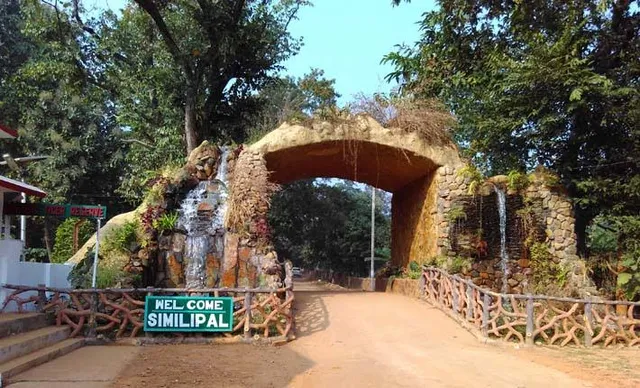
One can enter Similipal through Pithabata (22 kilometres (14 mi) from Baripada) and 98 km via Jashipur. Entry permits can be obtained from the Range Officer, Pithabata check gate upon paying prescribed fees. Day visitors can enter between 6 AM and 12 noon and visitors with reservation between 6 AM and 9 AM. Similipal National Park is open from 1 November to 15 June.

Signboard inside Park

This reserve is part of the UNESCO World Network of Biosphere Reserves since 2009.

Description

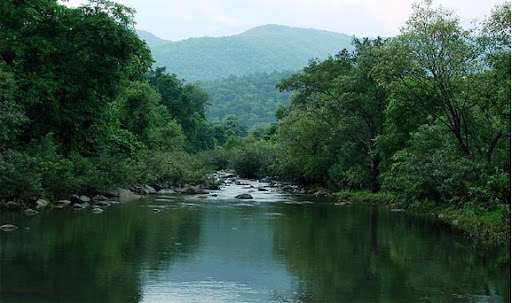
Thick and green forests, extensive grassy lands and meadows, precipitous and sparkling waterfalls, meandering rivers, roaring tigers and trumpeting tuskers, fleeing deer and flying squirrels, talking myna and dancing peacocks et al. are appealing. Covering a vast area of 2750 km2 out of which 303 km2 from the core area, thick biosphere reserve is a sanctuary and one of the tiger projects and national parks of India. With a wide range of rainfall and edaphic variations, from dry deciduous to moist green forests, it is suitable to many species of flora and fauna. About 1076 species of mammals, 29 types of reptiles and 231 species of birds are in this plateau. The average mean elevation of Similipal is 900 meters. There are tall sal trees in large numbers. The peaks of Khairiburu (1178 meters), Meghasani (1158 meters) and others welcome. Sweet scented champak flowers freshen the air. The richly hued orchids on the green foliage are soothing. In the midst of the dense forests, the summer stands humbled. Several rivers like Budhabalanga, Khairi, salandi, Palpala, etc. originate from the hills and meander through the forest. Many of them have cascading rapids and foaming falls before leaving for the plains.

The panoramic views of the waterfalls at Barehipani (217 meters) and Joranda (181 meters) are enchanting. Fish is found in abundance in most of the rivers. The silence of Similipal is occasionally broken by the chirping of the birds. The dense forest and riverine system serve as an excellent home to some of the most beautiful creatures.

Herds of elephants majestically walking across the roads and rivulets could be a regular sight. While you are moving on the hilly tracts, predators like tiger and leopards might be obliviously lulling under the shade. If lucky, you could spot them there, or else see them around the saltlicks at places like Chahala. Forget the apprehensive dear at Similipal is at its...

   Read more
avatar
5.0
44w

Simlipal Forest: A Treasure Trove of Biodiversity.

Located in the Mayurbhanj district of Odisha, India, Simlipal Forest is a vast and diverse ecosystem that covers an area of approximately 2,750 square kilometers. This majestic forest is a part of the Simlipal National Park, which was established in 1979 and is one of the earliest national parks in India.

Geography and Climate

Simlipal Forest is situated in the Eastern Ghats mountain range and is characterized by a varied topography, with hills, valleys, and plateaus. The forest is drained by several rivers, including the Budhabalanga, Khairi, and Salandi. The climate of Simlipal is tropical, with hot summers and cool winters.

Biodiversity

Simlipal Forest is renowned for its incredible biodiversity, which includes:

Flora: The forest is home to over 1,000 species of plants, including trees, shrubs, and herbs. Some of the notable tree species found in Simlipal include sal, teak, and kendu. Fauna: Simlipal is a haven for wildlife enthusiasts, with over 100 species of animals, including: Mammals: Tiger, leopard, elephant, gaur, and sambar. Birds: Over 230 species of birds, including the rare and endangered ones like the Bengal florican and the sarus crane. Reptiles: Snakes, lizards, and turtles. Waterfalls and Rivers: Simlipal Forest is dotted with several waterfalls, including the famous Barehipani and Joranda waterfalls. The forest is also home to several rivers, which provide habitat for a variety of aquatic life.

Conservation Efforts

Simlipal National Park is a protected area, and several conservation efforts are in place to preserve the forest's biodiversity. These efforts include:

Tiger Conservation: Simlipal is one of the tiger reserves in India, and efforts are being made to conserve and protect the tiger population. Forest Protection: The forest is protected from encroachment, poaching, and other human activities that can harm the ecosystem. Sustainable Tourism: Eco-tourism is being promoted in Simlipal, which helps to support the local economy and promote conservation efforts.

Tourist Information

Simlipal Forest is a popular tourist destination, and visitors can enjoy a range of activities, including:

Wildlife Safaris: Guided tours through the forest to spot wildlife. Trekking and Hiking: Explore the forest trails and scenic viewpoints. Birdwatching: Spot a variety of bird species. Waterfall Visits: Visit the Barehipani and Joranda waterfalls.

Best Time to Visit: October to May

Accommodation: Forest rest houses, eco-lodges, and private resorts.

Getting There: Nearest airport is at Bhubaneswar (about 250 km), and nearest railway station is at Baripada...

   Read more
Page 1 of 7
Previous
Next

Posts

Dushmanta Kumar DasDushmanta Kumar Das
Similipal, which derives its name from ‘Simul’(Silk Cotton) tree, is a national park and a Tiger Reserve situated in the northern part of Orissa’s Mayurbhanj district. The tiger reserve is spread over 2750 sq km and has some beautiful waterfalls like Joranda and Barehipani. The park is surrounded by high plateaus and hills, the highest peak being the twin peaks of Khairiburu and Meghashini (1515m above mean sea level). At least twelve rivers cut across the plain area, all of which drain into the Bay of Bengal. The prominent among them are Burhabalanga, Palpala Bandan, Salandi, Kahairi and Deo. Flora and fauna: An astounding 1078 species of plants including 94 species of orchids find their home in the park. The vegetation is a mix of different forest types and habitats, with Northern tropical moist deciduous dominating some semi-evergreen patches. Sal is the dominant tree species here. The park also has extensive grasslands that are grazing grounds for many of the herbivores. These forests boast of many plants that have medicinal and aromatic properties. The park is known for the tiger, elephant and hill mynah. It holds the highest tiger population in the state of Orissa. 55 species of mammals, 304 species of birds, 60 species of reptiles, 21 species of frogs, 38 species of fish and 164 species of butterflies have been recorded from the Park. Apart from the tiger, the major mammals are leopard, sambar, barking deer, gaur, jungle cat, wild boar, four-horned antelope, giant squirrel and common langur. Grey hornbill, Indian pied hornbill and Malabar pied hornbill are also found here. The park also has a sizeable population of reptiles, which includes the longest venomous snake, the King cobra and the Tricarinate hill turtle. The Mugger Management Programme at Ramatirtha has helped the mugger crocodile to flourish on the banks of the Khairi and Deo Rivers. History and current status: The Tiger Reserve originated as a hunting ground for the surrounding royalty. It was formally designated a tiger reserve under Project Tiger in May 1973. The Government of Orissa declared Similipal as a wildlife sanctuary in 1979 with an area of 2750 sq. km. Later in 1980, Government of Orissa proposed 303 sq. km of the sanctuary as National Park. Further in 1986, the area of the National Park was increased to 845.70 sq. km. The Government of India declared it as a biosphere reserve in 1994. UNESCO added this National Park to its list of Biosphere Reserves in May 2009. This tiger reserve also comes under Mayurbhanj Elephant Reserve that includes the adjacent Hadgarh and Kuldiha Wildlife Sanctuaries. Apart from its biodiversity, the region around Similipal forests is home to a variety of tribes. Prominent among these are Kolha, Santhala, Bhumija, Bhatudi, Gondas, Khadia, Mankadia and Sahara. Most of them are settled agriculturists, supplementing their income by collecting firewood and timber except for the last three who are indigenous hunter-gatherer communities living primarily off the forest, collecting forest produce. While the tribes earlier followed a number of traditional conservation practices like closed seasons, hunting taboos on specific species, maintenance of sacred groves (Jharia) etc., of late, these practices have been on the decline due to the increasing influence of modern civilization, increasing human population and decreasing wildlife availability.
Sayed AhemadSayed Ahemad
Simlipal National Park is a national park and a tiger reserve in the Mayurbhanj district in the Indian state of Odisha. It is part of the Similipal-Kuldiha-Hadgarh Elephant Reserve popularly known as Mayurbhanj Elephant Reserve, which includes three protected areas — Similipal Tiger Reserve (2750.00 km2), Hadgarh Wildlife Sanctuary(191.06 km2) and Kuldiha Wildlife Sanctuary(272.75 km2)). Simlipal National Park derives its name from the abundance of semul (red silk cotton trees) that bloom here. It is the 7th largest national park in India. This article contains content that is written like an advertisement. (December 2014) Quick facts: Location, Nearest city … The park has a protected area of 845.70 square kilometres (326.53 sq mi) and has some beautiful waterfalls like Joranda and Barehipani. Simlipal is home to 99 royal Bengal tigers and 432 wild elephants. Besides Simlipal is famous for gaurs (Indian bison), chausingha, as well as an orchidarium. One can enter Similipal through Pithabata (22 kilometres (14 mi) from Baripada) and 98 km via Jashipur. Entry permits can be obtained from the Range Officer, Pithabata check gate upon paying prescribed fees. Day visitors can enter between 6 AM and 12 noon and visitors with reservation between 6 AM and 9 AM. Similipal National Park is open from 1 November to 15 June. Signboard inside Park This reserve is part of the UNESCO World Network of Biosphere Reserves since 2009. Description Thick and green forests, extensive grassy lands and meadows, precipitous and sparkling waterfalls, meandering rivers, roaring tigers and trumpeting tuskers, fleeing deer and flying squirrels, talking myna and dancing peacocks et al. are appealing. Covering a vast area of 2750 km2 out of which 303 km2 from the core area, thick biosphere reserve is a sanctuary and one of the tiger projects and national parks of India. With a wide range of rainfall and edaphic variations, from dry deciduous to moist green forests, it is suitable to many species of flora and fauna. About 1076 species of mammals, 29 types of reptiles and 231 species of birds are in this plateau. The average mean elevation of Similipal is 900 meters. There are tall sal trees in large numbers. The peaks of Khairiburu (1178 meters), Meghasani (1158 meters) and others welcome. Sweet scented champak flowers freshen the air. The richly hued orchids on the green foliage are soothing. In the midst of the dense forests, the summer stands humbled. Several rivers like Budhabalanga, Khairi, salandi, Palpala, etc. originate from the hills and meander through the forest. Many of them have cascading rapids and foaming falls before leaving for the plains. The panoramic views of the waterfalls at Barehipani (217 meters) and Joranda (181 meters) are enchanting. Fish is found in abundance in most of the rivers. The silence of Similipal is occasionally broken by the chirping of the birds. The dense forest and riverine system serve as an excellent home to some of the most beautiful creatures. Herds of elephants majestically walking across the roads and rivulets could be a regular sight. While you are moving on the hilly tracts, predators like tiger and leopards might be obliviously lulling under the shade. If lucky, you could spot them there, or else see them around the saltlicks at places like Chahala. Forget the apprehensive dear at Similipal is at its natural best.
Sayantika PaulSayantika Paul
Simlipal Forest: A Treasure Trove of Biodiversity. Located in the Mayurbhanj district of Odisha, India, Simlipal Forest is a vast and diverse ecosystem that covers an area of approximately 2,750 square kilometers. This majestic forest is a part of the Simlipal National Park, which was established in 1979 and is one of the earliest national parks in India. _Geography and Climate_ Simlipal Forest is situated in the Eastern Ghats mountain range and is characterized by a varied topography, with hills, valleys, and plateaus. The forest is drained by several rivers, including the Budhabalanga, Khairi, and Salandi. The climate of Simlipal is tropical, with hot summers and cool winters. _Biodiversity_ Simlipal Forest is renowned for its incredible biodiversity, which includes: 1. *Flora*: The forest is home to over 1,000 species of plants, including trees, shrubs, and herbs. Some of the notable tree species found in Simlipal include sal, teak, and kendu. 2. *Fauna*: Simlipal is a haven for wildlife enthusiasts, with over 100 species of animals, including: - *Mammals*: Tiger, leopard, elephant, gaur, and sambar. - *Birds*: Over 230 species of birds, including the rare and endangered ones like the Bengal florican and the sarus crane. - *Reptiles*: Snakes, lizards, and turtles. 3. *Waterfalls and Rivers*: Simlipal Forest is dotted with several waterfalls, including the famous Barehipani and Joranda waterfalls. The forest is also home to several rivers, which provide habitat for a variety of aquatic life. _Conservation Efforts_ Simlipal National Park is a protected area, and several conservation efforts are in place to preserve the forest's biodiversity. These efforts include: 1. *Tiger Conservation*: Simlipal is one of the tiger reserves in India, and efforts are being made to conserve and protect the tiger population. 2. *Forest Protection*: The forest is protected from encroachment, poaching, and other human activities that can harm the ecosystem. 3. *Sustainable Tourism*: Eco-tourism is being promoted in Simlipal, which helps to support the local economy and promote conservation efforts. _Tourist Information_ Simlipal Forest is a popular tourist destination, and visitors can enjoy a range of activities, including: 1. *Wildlife Safaris*: Guided tours through the forest to spot wildlife. 2. *Trekking and Hiking*: Explore the forest trails and scenic viewpoints. 3. *Birdwatching*: Spot a variety of bird species. 4. *Waterfall Visits*: Visit the Barehipani and Joranda waterfalls. Best Time to Visit: October to May Accommodation: Forest rest houses, eco-lodges, and private resorts. Getting There: Nearest airport is at Bhubaneswar (about 250 km), and nearest railway station is at Baripada (about 60 km).
See more posts
See more posts
hotel
Find your stay

Pet-friendly Hotels in Odisha

Find a cozy hotel nearby and make it a full experience.

Similipal, which derives its name from ‘Simul’(Silk Cotton) tree, is a national park and a Tiger Reserve situated in the northern part of Orissa’s Mayurbhanj district. The tiger reserve is spread over 2750 sq km and has some beautiful waterfalls like Joranda and Barehipani. The park is surrounded by high plateaus and hills, the highest peak being the twin peaks of Khairiburu and Meghashini (1515m above mean sea level). At least twelve rivers cut across the plain area, all of which drain into the Bay of Bengal. The prominent among them are Burhabalanga, Palpala Bandan, Salandi, Kahairi and Deo. Flora and fauna: An astounding 1078 species of plants including 94 species of orchids find their home in the park. The vegetation is a mix of different forest types and habitats, with Northern tropical moist deciduous dominating some semi-evergreen patches. Sal is the dominant tree species here. The park also has extensive grasslands that are grazing grounds for many of the herbivores. These forests boast of many plants that have medicinal and aromatic properties. The park is known for the tiger, elephant and hill mynah. It holds the highest tiger population in the state of Orissa. 55 species of mammals, 304 species of birds, 60 species of reptiles, 21 species of frogs, 38 species of fish and 164 species of butterflies have been recorded from the Park. Apart from the tiger, the major mammals are leopard, sambar, barking deer, gaur, jungle cat, wild boar, four-horned antelope, giant squirrel and common langur. Grey hornbill, Indian pied hornbill and Malabar pied hornbill are also found here. The park also has a sizeable population of reptiles, which includes the longest venomous snake, the King cobra and the Tricarinate hill turtle. The Mugger Management Programme at Ramatirtha has helped the mugger crocodile to flourish on the banks of the Khairi and Deo Rivers. History and current status: The Tiger Reserve originated as a hunting ground for the surrounding royalty. It was formally designated a tiger reserve under Project Tiger in May 1973. The Government of Orissa declared Similipal as a wildlife sanctuary in 1979 with an area of 2750 sq. km. Later in 1980, Government of Orissa proposed 303 sq. km of the sanctuary as National Park. Further in 1986, the area of the National Park was increased to 845.70 sq. km. The Government of India declared it as a biosphere reserve in 1994. UNESCO added this National Park to its list of Biosphere Reserves in May 2009. This tiger reserve also comes under Mayurbhanj Elephant Reserve that includes the adjacent Hadgarh and Kuldiha Wildlife Sanctuaries. Apart from its biodiversity, the region around Similipal forests is home to a variety of tribes. Prominent among these are Kolha, Santhala, Bhumija, Bhatudi, Gondas, Khadia, Mankadia and Sahara. Most of them are settled agriculturists, supplementing their income by collecting firewood and timber except for the last three who are indigenous hunter-gatherer communities living primarily off the forest, collecting forest produce. While the tribes earlier followed a number of traditional conservation practices like closed seasons, hunting taboos on specific species, maintenance of sacred groves (Jharia) etc., of late, these practices have been on the decline due to the increasing influence of modern civilization, increasing human population and decreasing wildlife availability.
Dushmanta Kumar Das

Dushmanta Kumar Das

hotel
Find your stay

Affordable Hotels in Odisha

Find a cozy hotel nearby and make it a full experience.

Get the Appoverlay
Get the AppOne tap to find yournext favorite spots!
Simlipal National Park is a national park and a tiger reserve in the Mayurbhanj district in the Indian state of Odisha. It is part of the Similipal-Kuldiha-Hadgarh Elephant Reserve popularly known as Mayurbhanj Elephant Reserve, which includes three protected areas — Similipal Tiger Reserve (2750.00 km2), Hadgarh Wildlife Sanctuary(191.06 km2) and Kuldiha Wildlife Sanctuary(272.75 km2)). Simlipal National Park derives its name from the abundance of semul (red silk cotton trees) that bloom here. It is the 7th largest national park in India. This article contains content that is written like an advertisement. (December 2014) Quick facts: Location, Nearest city … The park has a protected area of 845.70 square kilometres (326.53 sq mi) and has some beautiful waterfalls like Joranda and Barehipani. Simlipal is home to 99 royal Bengal tigers and 432 wild elephants. Besides Simlipal is famous for gaurs (Indian bison), chausingha, as well as an orchidarium. One can enter Similipal through Pithabata (22 kilometres (14 mi) from Baripada) and 98 km via Jashipur. Entry permits can be obtained from the Range Officer, Pithabata check gate upon paying prescribed fees. Day visitors can enter between 6 AM and 12 noon and visitors with reservation between 6 AM and 9 AM. Similipal National Park is open from 1 November to 15 June. Signboard inside Park This reserve is part of the UNESCO World Network of Biosphere Reserves since 2009. Description Thick and green forests, extensive grassy lands and meadows, precipitous and sparkling waterfalls, meandering rivers, roaring tigers and trumpeting tuskers, fleeing deer and flying squirrels, talking myna and dancing peacocks et al. are appealing. Covering a vast area of 2750 km2 out of which 303 km2 from the core area, thick biosphere reserve is a sanctuary and one of the tiger projects and national parks of India. With a wide range of rainfall and edaphic variations, from dry deciduous to moist green forests, it is suitable to many species of flora and fauna. About 1076 species of mammals, 29 types of reptiles and 231 species of birds are in this plateau. The average mean elevation of Similipal is 900 meters. There are tall sal trees in large numbers. The peaks of Khairiburu (1178 meters), Meghasani (1158 meters) and others welcome. Sweet scented champak flowers freshen the air. The richly hued orchids on the green foliage are soothing. In the midst of the dense forests, the summer stands humbled. Several rivers like Budhabalanga, Khairi, salandi, Palpala, etc. originate from the hills and meander through the forest. Many of them have cascading rapids and foaming falls before leaving for the plains. The panoramic views of the waterfalls at Barehipani (217 meters) and Joranda (181 meters) are enchanting. Fish is found in abundance in most of the rivers. The silence of Similipal is occasionally broken by the chirping of the birds. The dense forest and riverine system serve as an excellent home to some of the most beautiful creatures. Herds of elephants majestically walking across the roads and rivulets could be a regular sight. While you are moving on the hilly tracts, predators like tiger and leopards might be obliviously lulling under the shade. If lucky, you could spot them there, or else see them around the saltlicks at places like Chahala. Forget the apprehensive dear at Similipal is at its natural best.
Sayed Ahemad

Sayed Ahemad

hotel
Find your stay

The Coolest Hotels You Haven't Heard Of (Yet)

Find a cozy hotel nearby and make it a full experience.

hotel
Find your stay

Trending Stays Worth the Hype in Odisha

Find a cozy hotel nearby and make it a full experience.

Simlipal Forest: A Treasure Trove of Biodiversity. Located in the Mayurbhanj district of Odisha, India, Simlipal Forest is a vast and diverse ecosystem that covers an area of approximately 2,750 square kilometers. This majestic forest is a part of the Simlipal National Park, which was established in 1979 and is one of the earliest national parks in India. _Geography and Climate_ Simlipal Forest is situated in the Eastern Ghats mountain range and is characterized by a varied topography, with hills, valleys, and plateaus. The forest is drained by several rivers, including the Budhabalanga, Khairi, and Salandi. The climate of Simlipal is tropical, with hot summers and cool winters. _Biodiversity_ Simlipal Forest is renowned for its incredible biodiversity, which includes: 1. *Flora*: The forest is home to over 1,000 species of plants, including trees, shrubs, and herbs. Some of the notable tree species found in Simlipal include sal, teak, and kendu. 2. *Fauna*: Simlipal is a haven for wildlife enthusiasts, with over 100 species of animals, including: - *Mammals*: Tiger, leopard, elephant, gaur, and sambar. - *Birds*: Over 230 species of birds, including the rare and endangered ones like the Bengal florican and the sarus crane. - *Reptiles*: Snakes, lizards, and turtles. 3. *Waterfalls and Rivers*: Simlipal Forest is dotted with several waterfalls, including the famous Barehipani and Joranda waterfalls. The forest is also home to several rivers, which provide habitat for a variety of aquatic life. _Conservation Efforts_ Simlipal National Park is a protected area, and several conservation efforts are in place to preserve the forest's biodiversity. These efforts include: 1. *Tiger Conservation*: Simlipal is one of the tiger reserves in India, and efforts are being made to conserve and protect the tiger population. 2. *Forest Protection*: The forest is protected from encroachment, poaching, and other human activities that can harm the ecosystem. 3. *Sustainable Tourism*: Eco-tourism is being promoted in Simlipal, which helps to support the local economy and promote conservation efforts. _Tourist Information_ Simlipal Forest is a popular tourist destination, and visitors can enjoy a range of activities, including: 1. *Wildlife Safaris*: Guided tours through the forest to spot wildlife. 2. *Trekking and Hiking*: Explore the forest trails and scenic viewpoints. 3. *Birdwatching*: Spot a variety of bird species. 4. *Waterfall Visits*: Visit the Barehipani and Joranda waterfalls. Best Time to Visit: October to May Accommodation: Forest rest houses, eco-lodges, and private resorts. Getting There: Nearest airport is at Bhubaneswar (about 250 km), and nearest railway station is at Baripada (about 60 km).
Sayantika Paul

Sayantika Paul

See more posts
See more posts