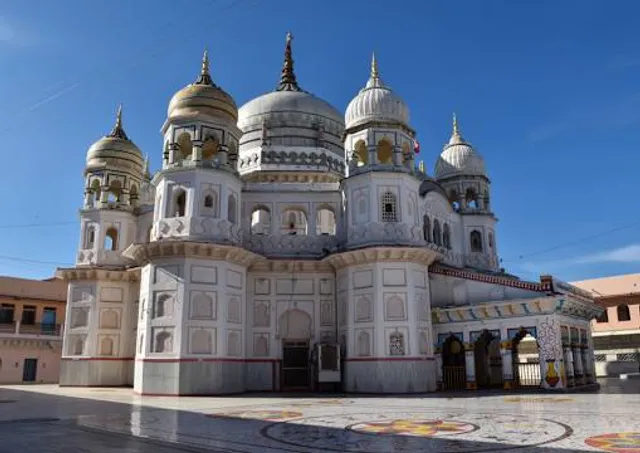
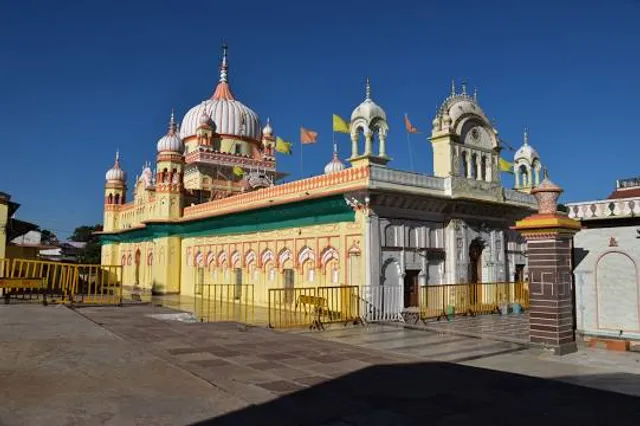
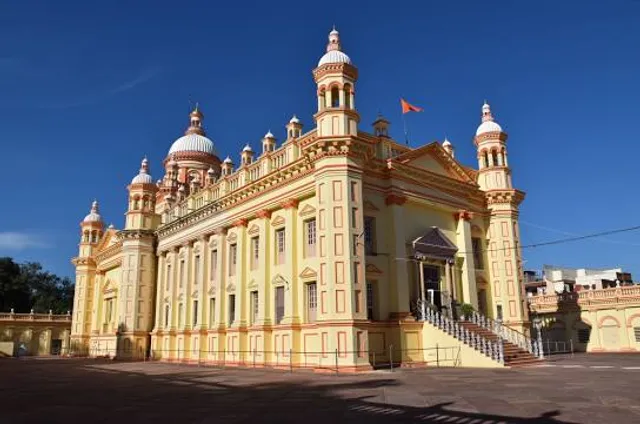
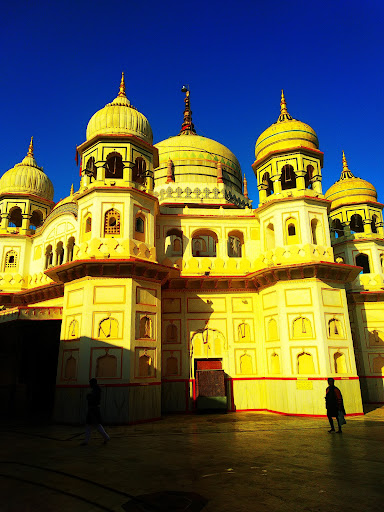
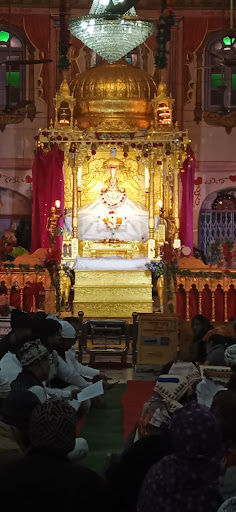
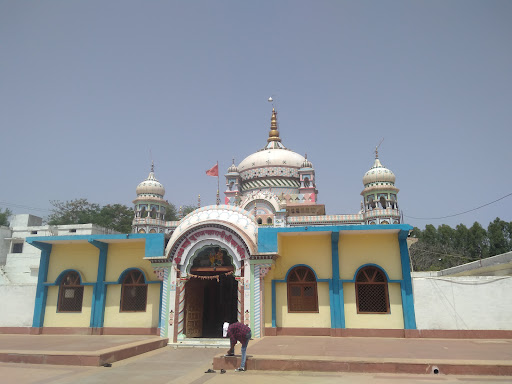
This is the most important temple of pranamies which reflects their social and religious life. The temple is completed in 1692 AD. It is believed that Prannathji livied here and will remain here and thus became the highest Pranami tirtha as Mahamati's Punyasthali, and hence Panna is the param dham for Pranamies. This temple reminds one of the Taj Mahal. The Rang Mahal has eight pahals and each pahal has 201 domes. The spherical central dome is as Muslim architecture and the lotus form on this dome is according to Hindu tradition. The glistering divine golden kalasha is accompanied by the divine panja which denotes Mahamati's blessing and signifies the Aksharatita Purna Brahman. The main entrance of central dome is called Kaman Darwaza, made of silver. On Sharada Purnima every year, thousands of people gather here to celebrate the Mahotsava.
The Praṇāmī sampradaya emerged in the 17th century in Western India, based on the teachings of Bhakti saints, Devcandra Mehtā and his foremost disciple Mehrāj Ṭhākur aka Prāṇanāth. Devcandra (1581–1655) was born into a wealthy Kāyastha family in Umarkot, Sindh and was initiated into the Rādhāvallabhā sect. According to sectarian tradition, Kr̥ṣṇa visited Devcandra and gave him the tārtam mantra, which gives access to the Iīlās of Kr̥ṣṇa. His disciple Mehrāj Ṭhākur aka Prāṇanāth was born into a Ṭhākur family in Jamnagar, Saurashtra. Prāṇanāth worked as a government official in Saurashtra, and travelled through Arabia, Persia, and Iraq studying the Quʾrān, Bible, and other Islamic-Christian texts. In India he founded the Mahāmaṅgalapurī Temple in Surat. In the 1677 Kumbhamelā in Haridvār, he won a religious debate in which he defeated Vaiṣṇava and Śaiva followers, and was awarded the title of mahāmati. In Jamnagar he was arrested several times for allegedly embezzling public funds.7]
The traditions grew after Mughal Empire declined, in the wake of Aurangzeb's religious persecution of non-Muslims, when Hindu rebellion led to new kingdoms. King Chatrasāl of Bundelkhand patronized Prāṇanāth, and he lived in its capital Panna, Panna for the rest of his life until his death in 1694. The Pranami tradition welcomed all castes and religions to join the Supreme Truth Shri Krishna worship tradition. At conversion initiation, Prannathji would invite the new members to dine together regardless of whether they came from any Sanatan background. He would also explain the Pranami ideas by citing Hindu and Islamic texts to make his teachings connect with the background of the converts.[8
The Pranami Sampradaya is also known as the Nijananda Sampradaya, literally, 'nij' meaning, oneself or own and 'ananda' meaning bliss or joy.[9] The Pranami sampradaya's teachings tries to bridge the gap between the Eastern religions and Western religions together stating that both the Eastern and Western religions talk about the same one...
Read more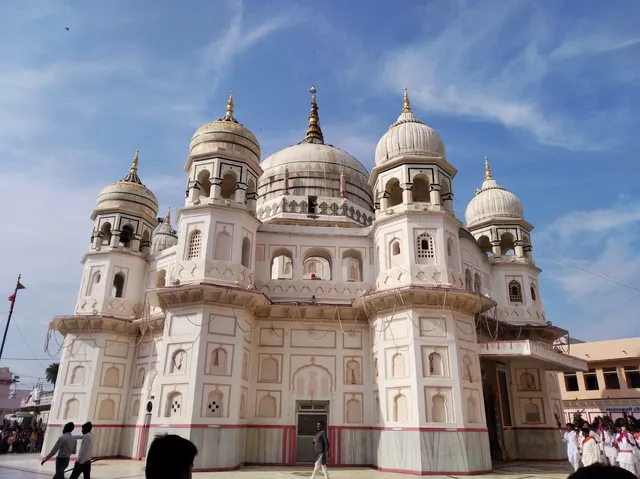
 Learn more insights from Wanderboat AI.