HTML SitemapExplore
logo
Find Things to DoFind The Best Restaurants

The National Martyrs Memorial — Attraction in Punjab

Name
The National Martyrs Memorial
Description
Nearby attractions
Nearby restaurants
Nearby hotels
Related posts
Keywords
The National Martyrs Memorial tourism.The National Martyrs Memorial hotels.The National Martyrs Memorial bed and breakfast. flights to The National Martyrs Memorial.The National Martyrs Memorial attractions.The National Martyrs Memorial restaurants.The National Martyrs Memorial travel.The National Martyrs Memorial travel guide.The National Martyrs Memorial travel blog.The National Martyrs Memorial pictures.The National Martyrs Memorial photos.The National Martyrs Memorial travel tips.The National Martyrs Memorial maps.The National Martyrs Memorial things to do.
The National Martyrs Memorial things to do, attractions, restaurants, events info and trip planning
The National Martyrs Memorial
IndiaPunjabThe National Martyrs Memorial

Basic Info

The National Martyrs Memorial

XGXW+3V6, HUSSAINIWALA, Hussaniwala Border Rd, Machhiwara, Punjab 152002, India
4.7(939)
Open 24 hours
Save
spot

Ratings & Description

Info

Cultural
Accessibility
attractions: , restaurants:
logoLearn more insights from Wanderboat AI.

Plan your stay

hotel
Pet-friendly Hotels in Punjab
Find a cozy hotel nearby and make it a full experience.
hotel
Affordable Hotels in Punjab
Find a cozy hotel nearby and make it a full experience.
hotel
The Coolest Hotels You Haven't Heard Of (Yet)
Find a cozy hotel nearby and make it a full experience.
hotel
Trending Stays Worth the Hype in Punjab
Find a cozy hotel nearby and make it a full experience.

Reviews

Get the Appoverlay
Get the AppOne tap to find yournext favorite spots!
Wanderboat LogoWanderboat

Your everyday Al companion for getaway ideas

CompanyAbout Us
InformationAI Trip PlannerSitemap
SocialXInstagramTiktokLinkedin
LegalTerms of ServicePrivacy Policy

Get the app

© 2025 Wanderboat. All rights reserved.
logo

Reviews of The National Martyrs Memorial

4.7
(939)
avatar
5.0
7y

Beautiful place, one must visit with his family The border crossing is now closed for travelers, although a flag retreat ceremony is still held daily. Until 1970, it was the principal road crossing between India and Pakistan,[2] and was a trade route for truckers, mostly for the import of Kandahari Angoor (dehydrated grapes) and other fruits and food products from Pakistan and Afghanistan. The border crossing was replaced by the border crossing at Wagah, a little further north. In 2005 there were proposals to reopen the border,[3] but it remained closed.

Retreat Ceremony Since 1970 there has been a Retreat Ceremony at the border crossing every day at 6 pm, similar to the Mahavir/Sadaki near Fazilka and Wagah/Atari border ceremony.[4] Attendees are seated in close proximity here, as compared to Wagah where crowds are kept far apart. And unlike the jingoistic display at Wagah which draws nationalistic tourists from all over India and Pakistan, the Hussainiwala ceremony is a more intimate ceremony attended mostly by local Punjabis from either side of the border. As a result, the atmosphere is not as tense, and Indian and Pakistani attendees often smile and wave to one another, and even cheer for each other's guards as they perform the border spectacle. At the outbreak of the Indo-Pakistani War of 1965, the 2nd Maratha Light Infantry (Kali Panchwin) was based in Mathura when it was deployed to Hussainiwala in the Firozpur sector of Punjab. It defended the Hussainiwala headworks against an attack by a full infantry brigade supported by armoured columns of the Pakistan Army. The tower on the other side of the river was captured and razed to ground. Lt KM. Palande, Lt. Feroz Doctor, Lt. S Deshpande showed great courage and ingenuity to thwart an enemy frontal attack. The enemy also used artillery fire and air support in this engagement. Two enemy tanks were destroyed and two captured, with several enemy killed. The commanding officer Col. Nolan was killed by an enemy artillery shelling the next morning while supervising operations. It was a major loss to the battalion. The unit ensured that the Samadhi of Bhagat Singh was not desecrated by the Pak Army. The battalion was visited by then Prime Minister Lal Bahadur Shastri, Defence Minister Kamraj, the Chief of Army Staff and other senior officers. Kali Panchwin was awarded the battle honour "Hussainiwala" for its role in the 1965 War. The citizens of Firozpur, in honour of the Battalion's contribution in defending the Bridge and Firozpur town, presented a silver replica of the Hussaniwala The village is named after the Muslim Peer Baba Ghulam Hussainiwala ji (Saint Hussaini wala or Saint "who is of Husain"), whose tomb is in the Border Security Force, India headquarters at...

   Read more
avatar
4.0
1y

National Martyrs' Memorial: A Tribute to the Fallen The National Martyrs' Memorial is a solemn monument erected to honor and remember those who sacrificed their lives for their nation. While there are numerous memorials of this kind scattered across the globe, each with its unique history and significance, let's explore some common features and purposes. Purpose: Commemoration: These memorials serve as a constant reminder of the sacrifices made by the martyrs and keep their memory alive. Inspiration: They inspire future generations to value freedom, patriotism, and the sacrifices made by those who came before them. Education: Many memorials also serve as educational centers, providing visitors with historical information about the events and individuals being honored. Common Features: Symbolic architecture: The design of these memorials often incorporates symbolism related to the nation's history, culture, or the specific events being commemorated. Names or images: The names of the martyrs are often inscribed on the memorial, along with personal details or quotes to provide a more intimate connection. Eternal flame: An eternal flame is a common feature, symbolizing the enduring spirit of the martyrs and the nation's gratitude. Ceremonial spaces: Many memorials include spaces for ceremonies, such as wreath-laying or remembrance days. Notable Examples: National Martyrs' Memorial, Bangladesh: This monument commemorates those who lost their lives during the Bangladesh Liberation War. Hussainiwala National Martyrs' Memorial, India: This memorial honors Indian freedom fighters Bhagat Singh, Sukhdev Thapar, and Shivaram Rajguru. Vietnam Veterans Memorial, United States: This moving memorial is inscribed with the names of all U.S. service members who died in the Vietnam War. In essence, National Martyrs' Memorials are more than just structures; they are powerful symbols of a nation's gratitude and a testament to the human spirit. They encourage us to reflect on the sacrifices made by those who fought for our freedom and inspire us to build a better future. Would you like to know more about a specific National...

   Read more
avatar
5.0
2y

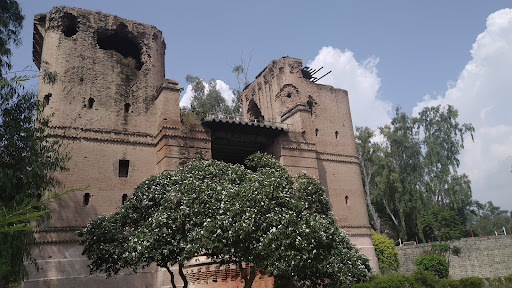
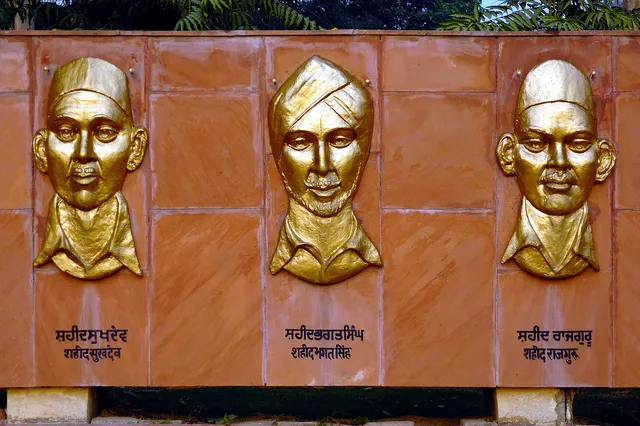
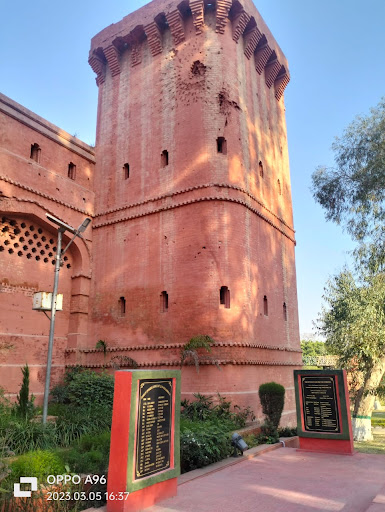
Thinking about the visit to Ferozepur, the first place that comes to mind is the Hussainiwala Border. It is momentous and admirable historical place and border of Hindustan and Pakistan in Village Hussainiwala, Ferozepur. This place is also known as The National Martyrs Memorial. It is established on the bank of the great river: Sutlej. This memorial has a significant place in the heart of natives of Ferozepur as well as other Indians. It always reminds us about the nationalism, braveness and courage of three Martyrs: Shahid Bhagat Singh, Rajguru and Sukhdev. The name of Ferozepur called Land of Martyrs is placed due to this historical monument. This memorial consists of Smadhis' of young martyrs. Here, Amar jot, in the memory of those martyrs, is there. Moreover, a War Memorial is there. There is a train track, which was earlier led to Pakistan before 1947. This track is built over the Sutlej river. However, after 1947, this track was broken and its portion, which was in India, is only there. Numerous people come to visit this place. On one side there is a war memorial which contains an ancient building like a Killa and on the other side one can watch the Retreat by the Indian Army at the border line against Pakistan. There are seats available to see the Retreat ceremony. One has to buy a ticket prior to watching the entire Retreat. The entire area is under controlled by the Indian Army. The military men are assigned to each nook and corner of the border and memorial. The Train to Hussainiwala Border is initiated on the railway track Only on March 23 to pay obeisance to the martyr's tombs. A huge fair is held every year on March 23 in the memory of such sacrifice by youngsters. In a religious aspect, some people of Ferozepur, come to the bank of the river Sutlej on the birthday of Guru Nanak and do some rituals. They have a belief that their every wish will come true by doing these religious deeds...

   Read more
Page 1 of 7
Previous
Next

Posts

Ankush GuptaAnkush Gupta
Beautiful place, one must visit with his family The border crossing is now closed for travelers, although a flag retreat ceremony is still held daily. Until 1970, it was the principal road crossing between India and Pakistan,[2] and was a trade route for truckers, mostly for the import of Kandahari Angoor (dehydrated grapes) and other fruits and food products from Pakistan and Afghanistan. The border crossing was replaced by the border crossing at Wagah, a little further north. In 2005 there were proposals to reopen the border,[3] but it remained closed. Retreat Ceremony Since 1970 there has been a Retreat Ceremony at the border crossing every day at 6 pm, similar to the Mahavir/Sadaki near Fazilka and Wagah/Atari border ceremony.[4] Attendees are seated in close proximity here, as compared to Wagah where crowds are kept far apart. And unlike the jingoistic display at Wagah which draws nationalistic tourists from all over India and Pakistan, the Hussainiwala ceremony is a more intimate ceremony attended mostly by local Punjabis from either side of the border. As a result, the atmosphere is not as tense, and Indian and Pakistani attendees often smile and wave to one another, and even cheer for each other's guards as they perform the border spectacle. At the outbreak of the Indo-Pakistani War of 1965, the 2nd Maratha Light Infantry (Kali Panchwin) was based in Mathura when it was deployed to Hussainiwala in the Firozpur sector of Punjab. It defended the Hussainiwala headworks against an attack by a full infantry brigade supported by armoured columns of the Pakistan Army. The tower on the other side of the river was captured and razed to ground. Lt KM. Palande, Lt. Feroz Doctor, Lt. S Deshpande showed great courage and ingenuity to thwart an enemy frontal attack. The enemy also used artillery fire and air support in this engagement. Two enemy tanks were destroyed and two captured, with several enemy killed. The commanding officer Col. Nolan was killed by an enemy artillery shelling the next morning while supervising operations. It was a major loss to the battalion. The unit ensured that the Samadhi of Bhagat Singh was not desecrated by the Pak Army. The battalion was visited by then Prime Minister Lal Bahadur Shastri, Defence Minister Kamraj, the Chief of Army Staff and other senior officers. Kali Panchwin was awarded the battle honour "Hussainiwala" for its role in the 1965 War. The citizens of Firozpur, in honour of the Battalion's contribution in defending the Bridge and Firozpur town, presented a silver replica of the Hussaniwala The village is named after the Muslim Peer Baba Ghulam Hussainiwala ji (Saint Hussaini wala or Saint "who is of Husain"), whose tomb is in the Border Security Force, India headquarters at Hussainiwala
M DM D
Thinking about the visit to Ferozepur, the first place that comes to mind is the Hussainiwala Border. It is momentous and admirable historical place and border of Hindustan and Pakistan in Village Hussainiwala, Ferozepur. This place is also known as The National Martyrs Memorial. It is established on the bank of the great river: Sutlej. This memorial has a significant place in the heart of natives of Ferozepur as well as other Indians. It always reminds us about the nationalism, braveness and courage of three Martyrs: Shahid Bhagat Singh, Rajguru and Sukhdev. The name of Ferozepur called Land of Martyrs is placed due to this historical monument. This memorial consists of Smadhis' of young martyrs. Here, Amar jot, in the memory of those martyrs, is there. Moreover, a War Memorial is there. There is a train track, which was earlier led to Pakistan before 1947. This track is built over the Sutlej river. However, after 1947, this track was broken and its portion, which was in India, is only there. Numerous people come to visit this place. On one side there is a war memorial which contains an ancient building like a Killa and on the other side one can watch the Retreat by the Indian Army at the border line against Pakistan. There are seats available to see the Retreat ceremony. One has to buy a ticket prior to watching the entire Retreat. The entire area is under controlled by the Indian Army. The military men are assigned to each nook and corner of the border and memorial. The Train to Hussainiwala Border is initiated on the railway track Only on March 23 to pay obeisance to the martyr's tombs. A huge fair is held every year on March 23 in the memory of such sacrifice by youngsters. In a religious aspect, some people of Ferozepur, come to the bank of the river Sutlej on the birthday of Guru Nanak and do some rituals. They have a belief that their every wish will come true by doing these religious deeds in this place.
ANSHUMAN SWAROOPANSHUMAN SWAROOP
National Martyrs Memorial Hussainiwala depicts an irrepressible revolutionary spirit of three National Martyrs namely S Bhagat Singh, Rajguru and Sukhdev who lit eternal flame of liberty by smilingly embracing martyrdom for the motherland. S Bhagat Singh and BK Dutt threw a Bomb in the Central Assembly hall New Delhi on April, 8 1929 to record their protest against the British rule in India. He and his two brave comrades Rajguru and Sukhdev were tried for shooting a British Police Officer Mr Saundras on the 17th December, 1928 These three revolutionaries were awarded death sentence. Following a hasty trial of the Lahore conspiracy case they were executed a day earlier than the hanging scheduled in the Central Jail Lahore at 7.15 PM on March 23,1931 The entire of Lahore was in the grip of National fervor and there were apprehensions of revolt. The Jail authorities broke the back wal of the Jail and secretly brought the dead bodies of S Bhaghat Singh and comrades here, on this spot at the bank of the river Sutlej for an unceremonial cremation. Mr B K Dutt died in Delhi on 19th July 1965 and as per his last will he was also cremated here.
See more posts
See more posts
hotel
Find your stay

Pet-friendly Hotels in Punjab

Find a cozy hotel nearby and make it a full experience.

Beautiful place, one must visit with his family The border crossing is now closed for travelers, although a flag retreat ceremony is still held daily. Until 1970, it was the principal road crossing between India and Pakistan,[2] and was a trade route for truckers, mostly for the import of Kandahari Angoor (dehydrated grapes) and other fruits and food products from Pakistan and Afghanistan. The border crossing was replaced by the border crossing at Wagah, a little further north. In 2005 there were proposals to reopen the border,[3] but it remained closed. Retreat Ceremony Since 1970 there has been a Retreat Ceremony at the border crossing every day at 6 pm, similar to the Mahavir/Sadaki near Fazilka and Wagah/Atari border ceremony.[4] Attendees are seated in close proximity here, as compared to Wagah where crowds are kept far apart. And unlike the jingoistic display at Wagah which draws nationalistic tourists from all over India and Pakistan, the Hussainiwala ceremony is a more intimate ceremony attended mostly by local Punjabis from either side of the border. As a result, the atmosphere is not as tense, and Indian and Pakistani attendees often smile and wave to one another, and even cheer for each other's guards as they perform the border spectacle. At the outbreak of the Indo-Pakistani War of 1965, the 2nd Maratha Light Infantry (Kali Panchwin) was based in Mathura when it was deployed to Hussainiwala in the Firozpur sector of Punjab. It defended the Hussainiwala headworks against an attack by a full infantry brigade supported by armoured columns of the Pakistan Army. The tower on the other side of the river was captured and razed to ground. Lt KM. Palande, Lt. Feroz Doctor, Lt. S Deshpande showed great courage and ingenuity to thwart an enemy frontal attack. The enemy also used artillery fire and air support in this engagement. Two enemy tanks were destroyed and two captured, with several enemy killed. The commanding officer Col. Nolan was killed by an enemy artillery shelling the next morning while supervising operations. It was a major loss to the battalion. The unit ensured that the Samadhi of Bhagat Singh was not desecrated by the Pak Army. The battalion was visited by then Prime Minister Lal Bahadur Shastri, Defence Minister Kamraj, the Chief of Army Staff and other senior officers. Kali Panchwin was awarded the battle honour "Hussainiwala" for its role in the 1965 War. The citizens of Firozpur, in honour of the Battalion's contribution in defending the Bridge and Firozpur town, presented a silver replica of the Hussaniwala The village is named after the Muslim Peer Baba Ghulam Hussainiwala ji (Saint Hussaini wala or Saint "who is of Husain"), whose tomb is in the Border Security Force, India headquarters at Hussainiwala
Ankush Gupta

Ankush Gupta

hotel
Find your stay

Affordable Hotels in Punjab

Find a cozy hotel nearby and make it a full experience.

Get the Appoverlay
Get the AppOne tap to find yournext favorite spots!
Thinking about the visit to Ferozepur, the first place that comes to mind is the Hussainiwala Border. It is momentous and admirable historical place and border of Hindustan and Pakistan in Village Hussainiwala, Ferozepur. This place is also known as The National Martyrs Memorial. It is established on the bank of the great river: Sutlej. This memorial has a significant place in the heart of natives of Ferozepur as well as other Indians. It always reminds us about the nationalism, braveness and courage of three Martyrs: Shahid Bhagat Singh, Rajguru and Sukhdev. The name of Ferozepur called Land of Martyrs is placed due to this historical monument. This memorial consists of Smadhis' of young martyrs. Here, Amar jot, in the memory of those martyrs, is there. Moreover, a War Memorial is there. There is a train track, which was earlier led to Pakistan before 1947. This track is built over the Sutlej river. However, after 1947, this track was broken and its portion, which was in India, is only there. Numerous people come to visit this place. On one side there is a war memorial which contains an ancient building like a Killa and on the other side one can watch the Retreat by the Indian Army at the border line against Pakistan. There are seats available to see the Retreat ceremony. One has to buy a ticket prior to watching the entire Retreat. The entire area is under controlled by the Indian Army. The military men are assigned to each nook and corner of the border and memorial. The Train to Hussainiwala Border is initiated on the railway track Only on March 23 to pay obeisance to the martyr's tombs. A huge fair is held every year on March 23 in the memory of such sacrifice by youngsters. In a religious aspect, some people of Ferozepur, come to the bank of the river Sutlej on the birthday of Guru Nanak and do some rituals. They have a belief that their every wish will come true by doing these religious deeds in this place.
M D

M D

hotel
Find your stay

The Coolest Hotels You Haven't Heard Of (Yet)

Find a cozy hotel nearby and make it a full experience.

hotel
Find your stay

Trending Stays Worth the Hype in Punjab

Find a cozy hotel nearby and make it a full experience.

National Martyrs Memorial Hussainiwala depicts an irrepressible revolutionary spirit of three National Martyrs namely S Bhagat Singh, Rajguru and Sukhdev who lit eternal flame of liberty by smilingly embracing martyrdom for the motherland. S Bhagat Singh and BK Dutt threw a Bomb in the Central Assembly hall New Delhi on April, 8 1929 to record their protest against the British rule in India. He and his two brave comrades Rajguru and Sukhdev were tried for shooting a British Police Officer Mr Saundras on the 17th December, 1928 These three revolutionaries were awarded death sentence. Following a hasty trial of the Lahore conspiracy case they were executed a day earlier than the hanging scheduled in the Central Jail Lahore at 7.15 PM on March 23,1931 The entire of Lahore was in the grip of National fervor and there were apprehensions of revolt. The Jail authorities broke the back wal of the Jail and secretly brought the dead bodies of S Bhaghat Singh and comrades here, on this spot at the bank of the river Sutlej for an unceremonial cremation. Mr B K Dutt died in Delhi on 19th July 1965 and as per his last will he was also cremated here.
ANSHUMAN SWAROOP

ANSHUMAN SWAROOP

See more posts
See more posts