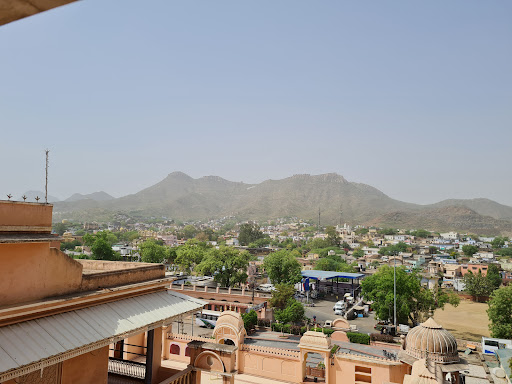
Khetri State - despite its small size among the erstwhile states of Rajasthan - has been popular owing to its progressiveness. Surrounded by stately hills from all sides and beautified by luxuriant growth of towering trees and idyllic grooves, it is a panoramic spot situated at about 100 miles north-west of Jaipur and nearly 120 miles south-west of Delhi. Around Khetri, there are rich copper mines and at a distance of four miles; a modern township called Khetri Nagar exists.
Raja Ajit Singh of Khetri, a patron of talents and ardent lover of arts and fine arts, science and technology, was fortunate to have come in contact with the world-adored Swami Vivekananda, one of the greatest sons of the soil-Bharat. In 1891, inspired by the divine behest of his mentor, Bhagwan Shri. Ramkrishna Paramhamsa, who embodied the symbol of universal religions, Swamiji reached Abu en-route a country-wide tour, undertaken with a resolve to uplift his country and serve his faith for the good of mankind.
There, on June 4, 1891, he had his first meeting with the Khetri Ruler, Ajit Singhji. Inspired by the impressively effulgent personality of erudite Swamiji, the Raja accepted him as his Guru and reverentially brought him to Khetri. Swamiji reached Khetri for the first time on august 7, 1891, and stayed with the Ruler until October 27, 1891.
During his stay at Khetri, both of them had exchange of views on spiritualism, every day. To broaden the mind of the Raja, Swamiji not only brought home the importance of modern science to him, but also taught him this faculty. Not only that, Swamiji too studied the Panini Ashthadhyai along with Patanjala Bhashya under Rajpandit Narayan Das-ji, Shastri of Khetri and enriched his knowledge in this field.
Until then, Raja Ajit Singh had two daughters but no son and hence he was deeply worried. So Swamiji blessed the religious minded benevolent Raja for a son and set out again on a countrywide tour of India. Finally, he reached the Kanya Kumari in South where there is a confluence of three oceans. At a little distance from the shore, there was a rock at this sacred confluence where the imprints of the footprints of Holy Kumarika were present. Swamiji swam across to the rock and, sitting at the Mother's feet and Meditated for the future of the country.
In 1893, a few days before Swamiji's departure to America, the raja sent his Prime Minister, Munshi Jagmohanlal to Madras with a request to Swamiji for visiting Khetri on the occasion of his son's birth celebrations which had come about by Swamiji's blessings. Condescending to his disciple's request, Swamiji had to go to Khetri to join the birth celebrations of the new-born prince. He reached there on April 21, 1893. In the midst of celebrations, an incident took place by which Swamiji attained practical perfection in his Advaita faith and he became equipped for the divinely endowed mission in all respect.
On January 18, 1901, Raja Ajit Singh died and on July 4, 1902, Swamiji attained Samadhi. Therefore, and due to other reasons, the work of the Mission in Rajasthan could not make much progress. The momentum of its work gradually headed towards South India and Uttar Pradesh, but the inspiration of Swamiji was drawing people towards Rajasthan and the Sannyasins of the Mission kept on visiting Alwar, Jaipur, Bikaner, Kishangarh, Ajmer and Abu for propagating the religious message.
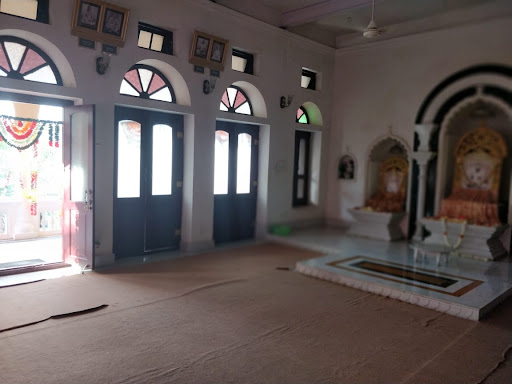
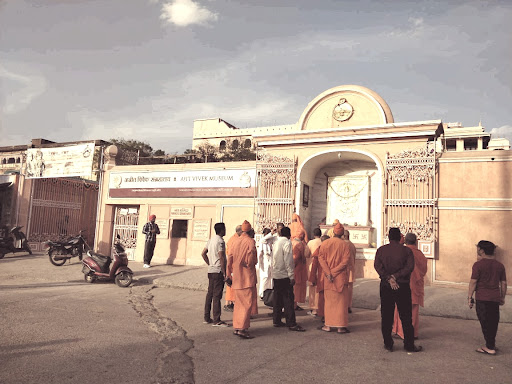
After a long time, the fate smiled on Khetri and the chance of setting up a branch of the world-wide Ramakrishna Mission here, brightened. For this purpose Raja Ajit Singh's grandson, Raja Bahadur Sardar Singhji donated the place (with various facilities in the year 1958) where Swami Vivekananda had his holy stay. With the consistent efforts of Padmabhushan (late) Pandit Jhabarmal Sharma and late Beni Shankar Sharma, the first branch of the Mission was established in Rajasthan and this palatial building, rich with Swamiji's memory, has been named as 'Vivekananda...
Read more

 Learn more insights from Wanderboat AI.