HTML SitemapExplore
logo
Find Things to DoFind The Best Restaurants

Archaeological Museum Kalibangan — Attraction in Rajasthan

Name
Archaeological Museum Kalibangan
Description
Nearby attractions
Nearby restaurants
Nearby hotels
Related posts
Keywords
Archaeological Museum Kalibangan tourism.Archaeological Museum Kalibangan hotels.Archaeological Museum Kalibangan bed and breakfast. flights to Archaeological Museum Kalibangan.Archaeological Museum Kalibangan attractions.Archaeological Museum Kalibangan restaurants.Archaeological Museum Kalibangan travel.Archaeological Museum Kalibangan travel guide.Archaeological Museum Kalibangan travel blog.Archaeological Museum Kalibangan pictures.Archaeological Museum Kalibangan photos.Archaeological Museum Kalibangan travel tips.Archaeological Museum Kalibangan maps.Archaeological Museum Kalibangan things to do.
Archaeological Museum Kalibangan things to do, attractions, restaurants, events info and trip planning
Archaeological Museum Kalibangan
IndiaRajasthanArchaeological Museum Kalibangan

Basic Info

Archaeological Museum Kalibangan

F4CH+3CM, 45 Ssw, Rajasthan 335803, India
4.5(455)
Open 24 hours
Save
spot

Ratings & Description

Info

Cultural
Family friendly
Accessibility
attractions: , restaurants:
logoLearn more insights from Wanderboat AI.

Plan your stay

hotel
Pet-friendly Hotels in Rajasthan
Find a cozy hotel nearby and make it a full experience.
hotel
Affordable Hotels in Rajasthan
Find a cozy hotel nearby and make it a full experience.
hotel
The Coolest Hotels You Haven't Heard Of (Yet)
Find a cozy hotel nearby and make it a full experience.
hotel
Trending Stays Worth the Hype in Rajasthan
Find a cozy hotel nearby and make it a full experience.

Reviews

Get the Appoverlay
Get the AppOne tap to find yournext favorite spots!
Wanderboat LogoWanderboat

Your everyday Al companion for getaway ideas

CompanyAbout Us
InformationAI Trip PlannerSitemap
SocialXInstagramTiktokLinkedin
LegalTerms of ServicePrivacy Policy

Get the app

© 2025 Wanderboat. All rights reserved.
logo

Reviews of Archaeological Museum Kalibangan

4.5
(455)
avatar
5.0
40w

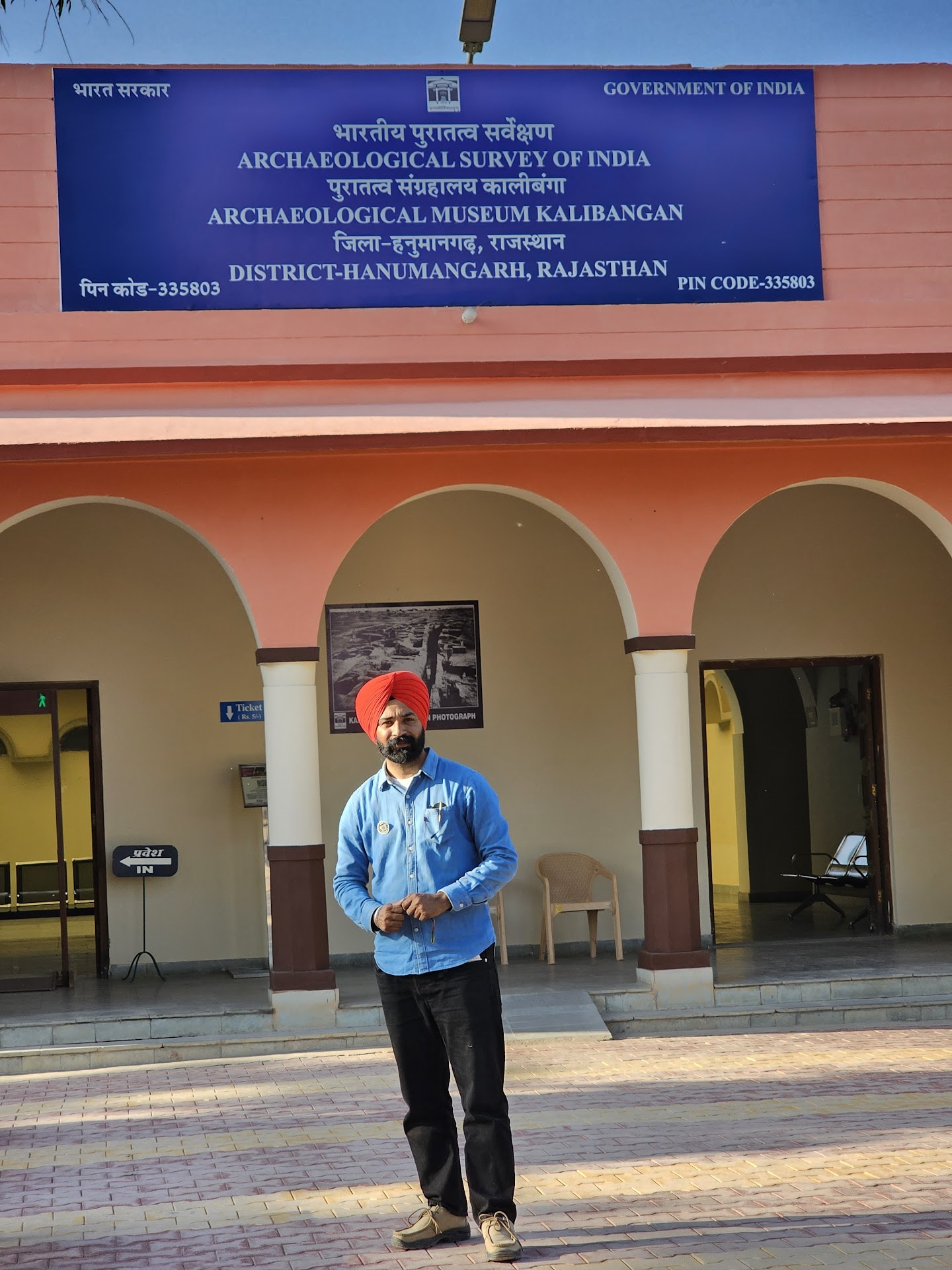
rchaeological Museum Kalibangan in Hanumangarh district is located at 8 kms. distance trom Pilibangan Tehsil Headquarter. The Museum was established in 1985 with the main aim to display the antiquities recovered from the excavation at Kalibangan conducted in nine field scasons (1961-69) under the directions of Prof. B. B. Lal, Shri B. K. Thapar and Shri J. P. Joshi all are former Director Generals of Archaeological Survey of India. The antiquities found in this site are Early Harappan Culture (Circa 300-2700 BCE) and Mature Harappan Culture (Circa 2600-1900 BCE). The Museum has been reopened on 18 May 2017 on the occasion of World Museum Day after renovation work done in three years. Both the Early and Mature Harappan cultures antiquities recovered in nine season excavations are displayed here in t three galleries of Museum.

Second Gallery:- In this gallery the displayed objects are daily need used pots and burial pots. Out of them some have paintings, some are un painting and another have graffities. The painted Pot shreds have leaves, floral, fish and geometric design and the graffities pot shreds have Triangular, Square, and Cross Marks on them.

Third Gallery:- This gallery having objects of Copper like_ Axes, Blades, Knives, Arrow heads, Spear heads which were used for cutting and self defiance), Rods, Beads, Mirrot, Bangles, Rings and Needles etc. The other important objects here are Chert Blades, Agate weights and Terracotta Pans, Timer glass (Damaru type and Scale etc.

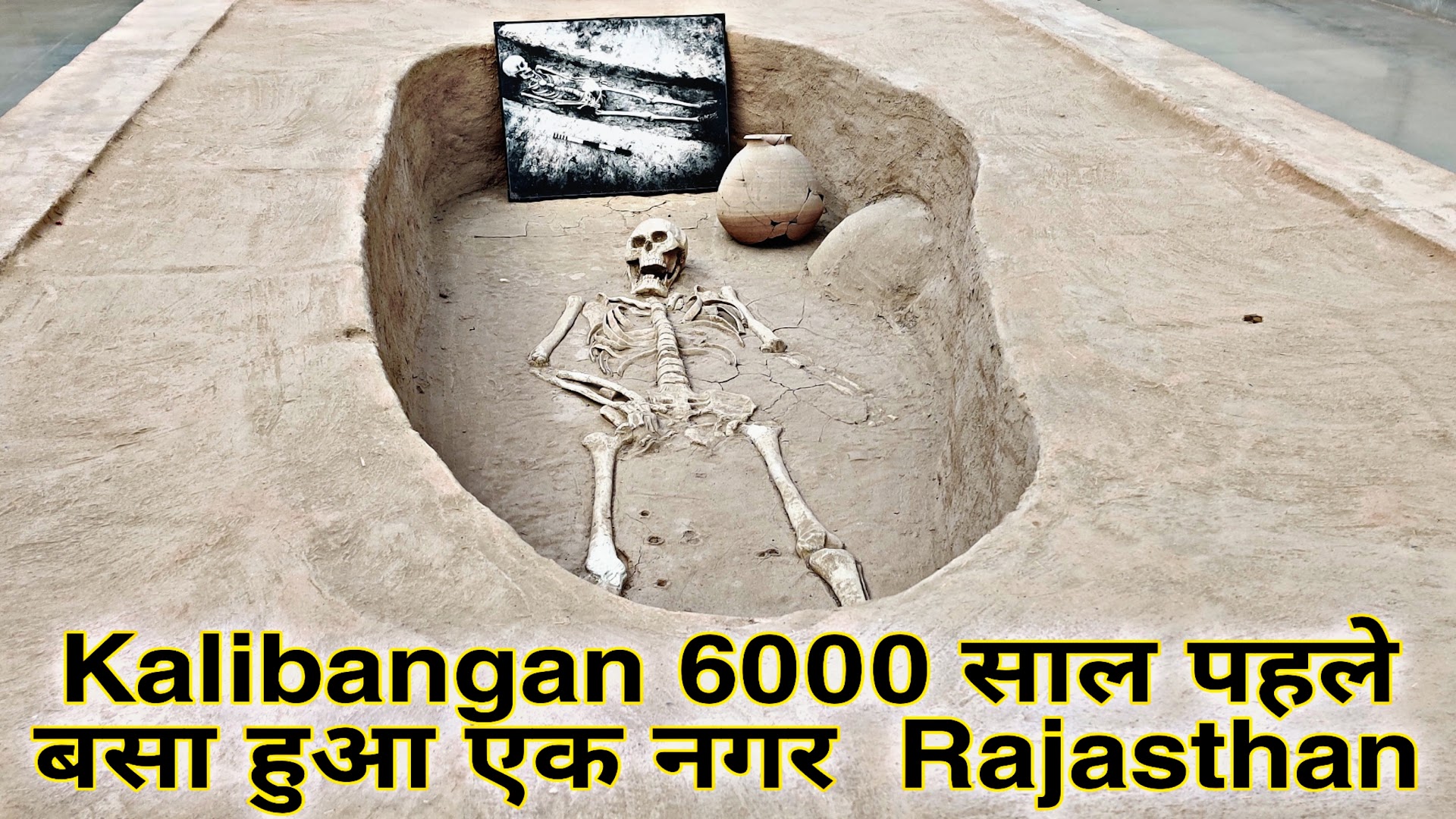
Apart from the above objects, the replica of Skeletal found in burial (KLB-8) is also displayed in the courtyard Museum's premises.

First Gallery:-In this gallery the objects like Chert Blades, Stone Devices, Copper Rings, Copper Arrow heads, Beads of Shell, Agate, Carnelian, Faience, Lap1s Lazuli, Terracotta Cakes and Cot, Terracotta anımal figurines like Bul, Dog. Boar, Ram, Anteater, Camel, Rhinoceros, Elephant and Terracotta Bird Figurines like Sparrow, Eagle, Parrot, Pigeon head, Small Duck ete, have been displayed. The other terracotta objects like feeding Cup, Shivalinga, Ploughs, Chakla and Belan, Gamesman, Dice, Toy Bricks and Rattle etc. also displayed here. The objects displayed in first five showcases of this gallery are pertains to Early Harappan Culture and others to Mature Harappan Culture.

Brief note on Kalibangan site: - The ancient site Kalibngan was situated on the left bank of river Ghaggar (Ancient Saraswati) now dried up which was first highlighted by Shri Amlanand Ghosh during his exploration in 1952. After 9 years this site was excavated by Prof B.B. Lal, Shri B. K. Thapar and Shri J.P.Joshi in nine season from 1961-69. The objective of the excavation was to know the ancient history and archaeological remains of the ancient site Kalibangan. The excavation revealed antiquities of two cultures 1.e. Early Harappan ulture (Circa 3000-2700 BCE) and Mature Harappan Culture (Circa 2600-1900 BCE). The ancient site comprises three mounds the largest one 1s 1n the middle (KLB-2, Mature Harappan) smallet is in the West (KLB-1, Early Harappan) and the smallest is in the East (KLB-3, Mature Harappan). Apart from these three mounds another mound is in the South-West of citadel i.e. mound of Cemetery (KLB-8 Buria). During the excavation three types of burials have been found as Rectangular or Oval Grave Pits: Pot Burials in a Circular Pit and Rectangular or Oval Grave Pits containing only pottery and other funerary objects. The last TWO type burials found without skeletal remains. The Early Harappan settlement was a fortified Parallelogram, measuring 250 meter North-South and 180 meter East- West. The fortification wall was made of mud bricks (30X20X10 cm) SO the houses within the walled area were also of mud bricks. An outstanding discovery of this period was a Ploughed field showing a Cross pattern of furrowS, located to the South-East of the settlement. This 1S perhaps the earliest ploughed field ever discovered in excavation anywhere in the world. The distinctive trait of this period was the pottery which waS...

   Read more

avatar
5.0
4y

तो आज हम लोग देखने जा रहे हैं 4600 साल पहले बसा हुआ एक ऐसा नगर जहां सब सुविधाएं उपलब्ध होती थी एक ऐसा नगर जहां हर चीज की सुविधा हमें मिलती थी तो चलो चलते हैं आज हम लोग घूमेंगे कालीबंगा सभ्यता को

कालीबंगा राजस्थान के हनुमानगढ़ ज़िले का एक प्राचीन एवं ऐतिहासिक स्थल है। यहाँ सिंधु घाटी सभ्यता के महत्वपूर्ण अवशेष मिले हैं। कालीबंगा एक छोटा नगर था। जो की सरस्वती नदी के किनारे बसा एक नगर था | सरस्वती नदी जिसे आज राजस्थान में घग्गर नदी और पाकिस्तान में हकरा नदी केेे नाम  जाना जााता है | कालीबंगा सभ्यता 4000 ईसा पूर्व से भी अधिक प्राचीन मानी जाती है। सर्वप्रथम 1952 ई में अमलानन्द घोष ने इसकी खोज की। बी.के थापर व बी.बी लाल ने 1961-63 में यहाँ उत्खनन का कार्य किया। यहाँ विश्व का सर्वप्रथम जोता हुआ खेत मिला है और और माना जाता है कि यह नगर 2600 ईसा पूर्व तक यहाँ एक विकसित नगर था।

कालीबंगा सिंधु भाषा का शब्द है जो काली+बंगा (काले रंग की चूड़ियां) से बना है। काली का अर्थ काले रंग से तथा बंगा का अर्थ चूड़ीयों से है।

कालीबंगा से सिंधु घाटी (हड़प्पा) सभ्यता की मिट्टी पर बनी मुहरें मिली हैं, जिन पर  पशुओं के चित्र व लिपि में अंकित लेख है जिन्हें अभी तक पढ़ा नहीं जा सका है। वह लिपि दाएँ से बाएँ लिखी जाती थी। यहां मिली कुछ बेलनाकार मोहरों से ऐसा भी लगता है कि कालीबंगा सभ्यता के संबंध विश्व की सबसे पुरानी सभ्यता मोसोपोटलिया से रहे होंगे | और यहां पर भूकंप आने के भी साक्ष्य मिलते हैं और यहां पर बहुत से अग्नि कुंड और हवन वेदिका के अवशेष मिले हैं |

ताँबे या मिट्टी की बनी मूर्तियाँ, पशु-पक्षी व मानव कृतियाँ

मिली हैं जो मोहनजोद़ो व हड़प्पा के समान ही हैं। पशुओं में बैल, बंदर व पक्षियों की मूर्तियाँ मिली हैं जो पशु-पालन, व कृषि में बैल का उपयोग किया जाना प्रकट करता है।

तोलने के बाट

और उस समय कालीबंगा में लोग बाट का उपयोग करने लग गए थे इसके भी  साक्ष्य हमें यहां मिलते हैं और हम कह सकते हैं कि मानव उस समय तोलने के लिए बाट का उपयोग करना सीख गया था

बर्तन

मिट्टी के विभिन्न प्रकार के छोटे-बड़े बर्तन भी प्राप्त हुए हैं जिन पर चित्रांकन भी किया हुआ है। और यह प्रकट करता है कि बर्तन बनाने हेतु 'चारु' का प्रयोग होने लगा था तथा चित्रांकन से पता चलता है कि यह लोग कला का उपयोग भी अपनी चित्रों से प्रकट करते थे

आभूषण

अनेक प्रकार के स्री व पुरुषों द्वारा प्रयुक्त होने वाले काँच, सीप, शंख, घोंघों आदि से निर्मित आभूषण भी मिलें हैं जैसे कंगन, चूड़ियाँ आदि।

नगर नियोजन

मोहन-जोदड़ो व हड़प्पा की भाँति कालीबंगा में भी सूर्य से तपी हुई ईटों से बने मकान, दरवाज़े, चौड़ी सड़कें, कुएँ, नालियाँ आदि पूर्व योजना के अनुसार निर्मित हैं | मोहनजोदड़ो के विपरीत कालीबगाँ के घर कचची ईंटो के बने थे। कालीबंगा एकमात्र ऐसा स्थल है जहां प्रत्येक तीसरे घर में कुए के अवशेष मिले हैं | और यहां पर नालियों के लिए बड़े-बड़े मिट्टी के पाइप के अवशेष भी मिले और कालीबंगा से भी खोपड़ी के सल्य चिकित्सा के प्रमाण मिलते हैं  जोकि दर्शाता है कि यह नगर 4600 साल पहले भी एक विकसित नगर था

कृषि-कार्य संबंधी अवशेष

कपास की खेती के अवशेष मिले है। साथ ही चना व सरसो की फसल के साक्ष्य मिले है। कालीबंगा से प्राप्त हल से अंकित रेखाएँ भी प्राप्त हुई हैं जो यह सिद्ध करती हैं कि यहाँ का मानव कृषि कार्य भी करता था। इसकी पुष्टि बैल व अन्य पालतू पशुओं की मूर्तियों से भी होती हैं। बैल व बारहसिंघ की अस्थियों भी प्राप्त हुई हैं। बैलगाड़ी के खिलौने भी मिले हैं।

खिलौने

लकड़ी,धातु व मिट्टी आदि के खिलौने भी मोहनजोदड़ो व हड़प्पा की भाँति यहाँ से प्राप्त हुए हैं

धर्म संबंधी अवशेष

मोहनजोदड़ो व हड़प्पा की भाँति कालीबंगा से मातृदेवी की मूर्ति नहीं मिली है।

दुर्ग (किला)

सिंधु घाटी सभ्यता के अन्य केन्द्रो से भिन्न कालीबंगा में एक विशाल दुर्ग के अवशेष भी मिले हैं जो यहाँ के मानव द्वारा अपनाए गए सुरक्षात्मक उपायों का प्रमाण है।

अगर आप लोग कालीबंगा सभ्यता को देखना चाहते हैं तो आप हमें हमारा कालीबंगा का वीडियो  यूट्यूब पर भी देख सकते हैं Kalibangan || 4600 साल पहले बसा हुआ एक नगर || Rajasthan

Youtube channel :-...

   Read more
avatar
5.0
19w

Visited this place today with friends. Kalibanga is situated on the banks of river Ghaggar in Rajasthan. Remains of Harappa as well as pre-Harappan civilization have been found from Kalibanga. Both the parts of the city are fortified here. The houses here are made of unbaked bricks. Evidence of wooden plough and ploughed fields have been found here. Kud Agni Kunds have been found here which are connected to the Vajra system. Evidence of the use of wooden pipes has been found at this site. A dead body has been found here which is lying on its stomach and its head is in the south and feet in the north. Remains of a solid wheel with an axle have also been found here which shows the existence of a vehicle. Evidence of surgery has also been found here. The oldest evidence of an earthquake has been found from Kalibanga. The remains of a paired tomb have also been found from Kalibanga. The remains of a paired tomb have also been found from Kalibanga. A razor wrapped in cotton cloth has been found. Many evidences are shown in the Musium located in its premise. Entry fee is...

   Read more
Page 1 of 7
Previous
Next

Posts

Iqbal SinghIqbal Singh
rchaeological Museum Kalibangan in Hanumangarh district is located at 8 kms. distance trom Pilibangan Tehsil Headquarter. The Museum was established in 1985 with the main aim to display the antiquities recovered from the excavation at Kalibangan conducted in nine field scasons (1961-69) under the directions of Prof. B. B. Lal, Shri B. K. Thapar and Shri J. P. Joshi all are former Director Generals of Archaeological Survey of India. The antiquities found in this site are Early Harappan Culture (Circa 300-2700 BCE) and Mature Harappan Culture (Circa 2600-1900 BCE). The Museum has been reopened on 18 May 2017 on the occasion of World Museum Day after renovation work done in three years. Both the Early and Mature Harappan cultures antiquities recovered in nine season excavations are displayed here in t three galleries of Museum. Second Gallery:- In this gallery the displayed objects are daily need used pots and burial pots. Out of them some have paintings, some are un painting and another have graffities. The painted Pot shreds have leaves, floral, fish and geometric design and the graffities pot shreds have Triangular, Square, and Cross Marks on them. Third Gallery:- This gallery having objects of Copper like_ Axes, Blades, Knives, Arrow heads, Spear heads which were used for cutting and self defiance), Rods, Beads, Mirrot, Bangles, Rings and Needles etc. The other important objects here are Chert Blades, Agate weights and Terracotta Pans, Timer glass (Damaru type and Scale etc. Apart from the above objects, the replica of Skeletal found in burial (KLB-8) is also displayed in the courtyard Museum's premises. First Gallery:-In this gallery the objects like Chert Blades, Stone Devices, Copper Rings, Copper Arrow heads, Beads of Shell, Agate, Carnelian, Faience, Lap1s Lazuli, Terracotta Cakes and Cot, Terracotta anımal figurines like Bul, Dog. Boar, Ram, Anteater, Camel, Rhinoceros, Elephant and Terracotta Bird Figurines like Sparrow, Eagle, Parrot, Pigeon head, Small Duck ete, have been displayed. The other terracotta objects like feeding Cup, Shivalinga, Ploughs, Chakla and Belan, Gamesman, Dice, Toy Bricks and Rattle etc. also displayed here. The objects displayed in first five showcases of this gallery are pertains to Early Harappan Culture and others to Mature Harappan Culture. Brief note on Kalibangan site: - The ancient site Kalibngan was situated on the left bank of river Ghaggar (Ancient Saraswati) now dried up which was first highlighted by Shri Amlanand Ghosh during his exploration in 1952. After 9 years this site was excavated by Prof B.B. Lal, Shri B. K. Thapar and Shri J.P.Joshi in nine season from 1961-69. The objective of the excavation was to know the ancient history and archaeological remains of the ancient site Kalibangan. The excavation revealed antiquities of two cultures 1.e. Early Harappan ulture (Circa 3000-2700 BCE) and Mature Harappan Culture (Circa 2600-1900 BCE). The ancient site comprises three mounds the largest one 1s 1n the middle (KLB-2, Mature Harappan) smallet is in the West (KLB-1, Early Harappan) and the smallest is in the East (KLB-3, Mature Harappan). Apart from these three mounds another mound is in the South-West of citadel i.e. mound of Cemetery (KLB-8 Buria). During the excavation three types of burials have been found as Rectangular or Oval Grave Pits: Pot Burials in a Circular Pit and Rectangular or Oval Grave Pits containing only pottery and other funerary objects. The last TWO type burials found without skeletal remains. The Early Harappan settlement was a fortified Parallelogram, measuring 250 meter North-South and 180 meter East- West. The fortification wall was made of mud bricks (30X20X10 cm) SO the houses within the walled area were also of mud bricks. An outstanding discovery of this period was a Ploughed field showing a Cross pattern of furrowS, located to the South-East of the settlement. This 1S perhaps the earliest ploughed field ever discovered in excavation anywhere in the world. The distinctive trait of this period was the pottery which waS significantly
Lala VlogsLala Vlogs
तो आज हम लोग देखने जा रहे हैं 4600 साल पहले बसा हुआ एक ऐसा नगर जहां सब सुविधाएं उपलब्ध होती थी एक ऐसा नगर जहां हर चीज की सुविधा हमें मिलती थी तो चलो चलते हैं आज हम लोग घूमेंगे कालीबंगा सभ्यता को कालीबंगा राजस्थान के हनुमानगढ़ ज़िले का एक प्राचीन एवं ऐतिहासिक स्थल है। यहाँ सिंधु घाटी सभ्यता के महत्वपूर्ण अवशेष मिले हैं। कालीबंगा एक छोटा नगर था। जो की सरस्वती नदी के किनारे बसा एक नगर था | सरस्वती नदी जिसे आज राजस्थान में घग्गर नदी और पाकिस्तान में हकरा नदी केेे नाम  जाना जााता है | कालीबंगा सभ्यता 4000 ईसा पूर्व से भी अधिक प्राचीन मानी जाती है। सर्वप्रथम 1952 ई में अमलानन्द घोष ने इसकी खोज की। बी.के थापर व बी.बी लाल ने 1961-63 में यहाँ उत्खनन का कार्य किया। यहाँ विश्व का सर्वप्रथम जोता हुआ खेत मिला है और और माना जाता है कि यह नगर 2600 ईसा पूर्व तक यहाँ एक विकसित नगर था। कालीबंगा सिंधु भाषा का शब्द है जो काली+बंगा (काले रंग की चूड़ियां) से बना है। काली का अर्थ काले रंग से तथा बंगा का अर्थ चूड़ीयों से है। कालीबंगा से सिंधु घाटी (हड़प्पा) सभ्यता की मिट्टी पर बनी मुहरें मिली हैं, जिन पर  पशुओं के चित्र व लिपि में अंकित लेख है जिन्हें अभी तक पढ़ा नहीं जा सका है। वह लिपि दाएँ से बाएँ लिखी जाती थी। यहां मिली कुछ बेलनाकार मोहरों से ऐसा भी लगता है कि कालीबंगा सभ्यता के संबंध विश्व की सबसे पुरानी सभ्यता मोसोपोटलिया से रहे होंगे | और यहां पर भूकंप आने के भी साक्ष्य मिलते हैं और यहां पर बहुत से अग्नि कुंड और हवन वेदिका के अवशेष मिले हैं | ताँबे या मिट्टी की बनी मूर्तियाँ, पशु-पक्षी व मानव कृतियाँ मिली हैं जो मोहनजोद़ो व हड़प्पा के समान ही हैं। पशुओं में बैल, बंदर व पक्षियों की मूर्तियाँ मिली हैं जो पशु-पालन, व कृषि में बैल का उपयोग किया जाना प्रकट करता है। तोलने के बाट और उस समय कालीबंगा में लोग बाट का उपयोग करने लग गए थे इसके भी  साक्ष्य हमें यहां मिलते हैं और हम कह सकते हैं कि मानव उस समय तोलने के लिए बाट का उपयोग करना सीख गया था बर्तन मिट्टी के विभिन्न प्रकार के छोटे-बड़े बर्तन भी प्राप्त हुए हैं जिन पर चित्रांकन भी किया हुआ है। और यह प्रकट करता है कि बर्तन बनाने हेतु 'चारु' का प्रयोग होने लगा था तथा चित्रांकन से पता चलता है कि यह लोग कला का उपयोग भी अपनी चित्रों से प्रकट करते थे आभूषण अनेक प्रकार के स्री व पुरुषों द्वारा प्रयुक्त होने वाले काँच, सीप, शंख, घोंघों आदि से निर्मित आभूषण भी मिलें हैं जैसे कंगन, चूड़ियाँ आदि। नगर नियोजन मोहन-जोदड़ो व हड़प्पा की भाँति कालीबंगा में भी सूर्य से तपी हुई ईटों से बने मकान, दरवाज़े, चौड़ी सड़कें, कुएँ, नालियाँ आदि पूर्व योजना के अनुसार निर्मित हैं | मोहनजोदड़ो के विपरीत कालीबगाँ के घर कचची ईंटो के बने थे। कालीबंगा एकमात्र ऐसा स्थल है जहां प्रत्येक तीसरे घर में कुए के अवशेष मिले हैं | और यहां पर नालियों के लिए बड़े-बड़े मिट्टी के पाइप के अवशेष भी मिले और कालीबंगा से भी खोपड़ी के सल्य चिकित्सा के प्रमाण मिलते हैं  जोकि दर्शाता है कि यह नगर 4600 साल पहले भी एक विकसित नगर था कृषि-कार्य संबंधी अवशेष कपास की खेती के अवशेष मिले है। साथ ही चना व सरसो की फसल के साक्ष्य मिले है। कालीबंगा से प्राप्त हल से अंकित रेखाएँ भी प्राप्त हुई हैं जो यह सिद्ध करती हैं कि यहाँ का मानव कृषि कार्य भी करता था। इसकी पुष्टि बैल व अन्य पालतू पशुओं की मूर्तियों से भी होती हैं। बैल व बारहसिंघ की अस्थियों भी प्राप्त हुई हैं। बैलगाड़ी के खिलौने भी मिले हैं। खिलौने लकड़ी,धातु व मिट्टी आदि के खिलौने भी मोहनजोदड़ो व हड़प्पा की भाँति यहाँ से प्राप्त हुए हैं धर्म संबंधी अवशेष मोहनजोदड़ो व हड़प्पा की भाँति कालीबंगा से मातृदेवी की मूर्ति नहीं मिली है। दुर्ग (किला) सिंधु घाटी सभ्यता के अन्य केन्द्रो से भिन्न कालीबंगा में एक विशाल दुर्ग के अवशेष भी मिले हैं जो यहाँ के मानव द्वारा अपनाए गए सुरक्षात्मक उपायों का प्रमाण है। अगर आप लोग कालीबंगा सभ्यता को देखना चाहते हैं तो आप हमें हमारा कालीबंगा का वीडियो  यूट्यूब पर भी देख सकते हैं Kalibangan || 4600 साल पहले बसा हुआ एक नगर || Rajasthan Youtube channel :- My Road Trip
Neel KamalNeel Kamal
Visited this place today with friends. Kalibanga is situated on the banks of river Ghaggar in Rajasthan. Remains of Harappa as well as pre-Harappan civilization have been found from Kalibanga. Both the parts of the city are fortified here. The houses here are made of unbaked bricks. Evidence of wooden plough and ploughed fields have been found here. Kud Agni Kunds have been found here which are connected to the Vajra system. Evidence of the use of wooden pipes has been found at this site. A dead body has been found here which is lying on its stomach and its head is in the south and feet in the north. Remains of a solid wheel with an axle have also been found here which shows the existence of a vehicle. Evidence of surgery has also been found here. The oldest evidence of an earthquake has been found from Kalibanga. The remains of a paired tomb have also been found from Kalibanga. The remains of a paired tomb have also been found from Kalibanga. A razor wrapped in cotton cloth has been found. Many evidences are shown in the Musium located in its premise. Entry fee is applicable in musium.
See more posts
See more posts
hotel
Find your stay

Pet-friendly Hotels in Rajasthan

Find a cozy hotel nearby and make it a full experience.

rchaeological Museum Kalibangan in Hanumangarh district is located at 8 kms. distance trom Pilibangan Tehsil Headquarter. The Museum was established in 1985 with the main aim to display the antiquities recovered from the excavation at Kalibangan conducted in nine field scasons (1961-69) under the directions of Prof. B. B. Lal, Shri B. K. Thapar and Shri J. P. Joshi all are former Director Generals of Archaeological Survey of India. The antiquities found in this site are Early Harappan Culture (Circa 300-2700 BCE) and Mature Harappan Culture (Circa 2600-1900 BCE). The Museum has been reopened on 18 May 2017 on the occasion of World Museum Day after renovation work done in three years. Both the Early and Mature Harappan cultures antiquities recovered in nine season excavations are displayed here in t three galleries of Museum. Second Gallery:- In this gallery the displayed objects are daily need used pots and burial pots. Out of them some have paintings, some are un painting and another have graffities. The painted Pot shreds have leaves, floral, fish and geometric design and the graffities pot shreds have Triangular, Square, and Cross Marks on them. Third Gallery:- This gallery having objects of Copper like_ Axes, Blades, Knives, Arrow heads, Spear heads which were used for cutting and self defiance), Rods, Beads, Mirrot, Bangles, Rings and Needles etc. The other important objects here are Chert Blades, Agate weights and Terracotta Pans, Timer glass (Damaru type and Scale etc. Apart from the above objects, the replica of Skeletal found in burial (KLB-8) is also displayed in the courtyard Museum's premises. First Gallery:-In this gallery the objects like Chert Blades, Stone Devices, Copper Rings, Copper Arrow heads, Beads of Shell, Agate, Carnelian, Faience, Lap1s Lazuli, Terracotta Cakes and Cot, Terracotta anımal figurines like Bul, Dog. Boar, Ram, Anteater, Camel, Rhinoceros, Elephant and Terracotta Bird Figurines like Sparrow, Eagle, Parrot, Pigeon head, Small Duck ete, have been displayed. The other terracotta objects like feeding Cup, Shivalinga, Ploughs, Chakla and Belan, Gamesman, Dice, Toy Bricks and Rattle etc. also displayed here. The objects displayed in first five showcases of this gallery are pertains to Early Harappan Culture and others to Mature Harappan Culture. Brief note on Kalibangan site: - The ancient site Kalibngan was situated on the left bank of river Ghaggar (Ancient Saraswati) now dried up which was first highlighted by Shri Amlanand Ghosh during his exploration in 1952. After 9 years this site was excavated by Prof B.B. Lal, Shri B. K. Thapar and Shri J.P.Joshi in nine season from 1961-69. The objective of the excavation was to know the ancient history and archaeological remains of the ancient site Kalibangan. The excavation revealed antiquities of two cultures 1.e. Early Harappan ulture (Circa 3000-2700 BCE) and Mature Harappan Culture (Circa 2600-1900 BCE). The ancient site comprises three mounds the largest one 1s 1n the middle (KLB-2, Mature Harappan) smallet is in the West (KLB-1, Early Harappan) and the smallest is in the East (KLB-3, Mature Harappan). Apart from these three mounds another mound is in the South-West of citadel i.e. mound of Cemetery (KLB-8 Buria). During the excavation three types of burials have been found as Rectangular or Oval Grave Pits: Pot Burials in a Circular Pit and Rectangular or Oval Grave Pits containing only pottery and other funerary objects. The last TWO type burials found without skeletal remains. The Early Harappan settlement was a fortified Parallelogram, measuring 250 meter North-South and 180 meter East- West. The fortification wall was made of mud bricks (30X20X10 cm) SO the houses within the walled area were also of mud bricks. An outstanding discovery of this period was a Ploughed field showing a Cross pattern of furrowS, located to the South-East of the settlement. This 1S perhaps the earliest ploughed field ever discovered in excavation anywhere in the world. The distinctive trait of this period was the pottery which waS significantly
Iqbal Singh

Iqbal Singh

hotel
Find your stay

Affordable Hotels in Rajasthan

Find a cozy hotel nearby and make it a full experience.

Get the Appoverlay
Get the AppOne tap to find yournext favorite spots!
तो आज हम लोग देखने जा रहे हैं 4600 साल पहले बसा हुआ एक ऐसा नगर जहां सब सुविधाएं उपलब्ध होती थी एक ऐसा नगर जहां हर चीज की सुविधा हमें मिलती थी तो चलो चलते हैं आज हम लोग घूमेंगे कालीबंगा सभ्यता को कालीबंगा राजस्थान के हनुमानगढ़ ज़िले का एक प्राचीन एवं ऐतिहासिक स्थल है। यहाँ सिंधु घाटी सभ्यता के महत्वपूर्ण अवशेष मिले हैं। कालीबंगा एक छोटा नगर था। जो की सरस्वती नदी के किनारे बसा एक नगर था | सरस्वती नदी जिसे आज राजस्थान में घग्गर नदी और पाकिस्तान में हकरा नदी केेे नाम  जाना जााता है | कालीबंगा सभ्यता 4000 ईसा पूर्व से भी अधिक प्राचीन मानी जाती है। सर्वप्रथम 1952 ई में अमलानन्द घोष ने इसकी खोज की। बी.के थापर व बी.बी लाल ने 1961-63 में यहाँ उत्खनन का कार्य किया। यहाँ विश्व का सर्वप्रथम जोता हुआ खेत मिला है और और माना जाता है कि यह नगर 2600 ईसा पूर्व तक यहाँ एक विकसित नगर था। कालीबंगा सिंधु भाषा का शब्द है जो काली+बंगा (काले रंग की चूड़ियां) से बना है। काली का अर्थ काले रंग से तथा बंगा का अर्थ चूड़ीयों से है। कालीबंगा से सिंधु घाटी (हड़प्पा) सभ्यता की मिट्टी पर बनी मुहरें मिली हैं, जिन पर  पशुओं के चित्र व लिपि में अंकित लेख है जिन्हें अभी तक पढ़ा नहीं जा सका है। वह लिपि दाएँ से बाएँ लिखी जाती थी। यहां मिली कुछ बेलनाकार मोहरों से ऐसा भी लगता है कि कालीबंगा सभ्यता के संबंध विश्व की सबसे पुरानी सभ्यता मोसोपोटलिया से रहे होंगे | और यहां पर भूकंप आने के भी साक्ष्य मिलते हैं और यहां पर बहुत से अग्नि कुंड और हवन वेदिका के अवशेष मिले हैं | ताँबे या मिट्टी की बनी मूर्तियाँ, पशु-पक्षी व मानव कृतियाँ मिली हैं जो मोहनजोद़ो व हड़प्पा के समान ही हैं। पशुओं में बैल, बंदर व पक्षियों की मूर्तियाँ मिली हैं जो पशु-पालन, व कृषि में बैल का उपयोग किया जाना प्रकट करता है। तोलने के बाट और उस समय कालीबंगा में लोग बाट का उपयोग करने लग गए थे इसके भी  साक्ष्य हमें यहां मिलते हैं और हम कह सकते हैं कि मानव उस समय तोलने के लिए बाट का उपयोग करना सीख गया था बर्तन मिट्टी के विभिन्न प्रकार के छोटे-बड़े बर्तन भी प्राप्त हुए हैं जिन पर चित्रांकन भी किया हुआ है। और यह प्रकट करता है कि बर्तन बनाने हेतु 'चारु' का प्रयोग होने लगा था तथा चित्रांकन से पता चलता है कि यह लोग कला का उपयोग भी अपनी चित्रों से प्रकट करते थे आभूषण अनेक प्रकार के स्री व पुरुषों द्वारा प्रयुक्त होने वाले काँच, सीप, शंख, घोंघों आदि से निर्मित आभूषण भी मिलें हैं जैसे कंगन, चूड़ियाँ आदि। नगर नियोजन मोहन-जोदड़ो व हड़प्पा की भाँति कालीबंगा में भी सूर्य से तपी हुई ईटों से बने मकान, दरवाज़े, चौड़ी सड़कें, कुएँ, नालियाँ आदि पूर्व योजना के अनुसार निर्मित हैं | मोहनजोदड़ो के विपरीत कालीबगाँ के घर कचची ईंटो के बने थे। कालीबंगा एकमात्र ऐसा स्थल है जहां प्रत्येक तीसरे घर में कुए के अवशेष मिले हैं | और यहां पर नालियों के लिए बड़े-बड़े मिट्टी के पाइप के अवशेष भी मिले और कालीबंगा से भी खोपड़ी के सल्य चिकित्सा के प्रमाण मिलते हैं  जोकि दर्शाता है कि यह नगर 4600 साल पहले भी एक विकसित नगर था कृषि-कार्य संबंधी अवशेष कपास की खेती के अवशेष मिले है। साथ ही चना व सरसो की फसल के साक्ष्य मिले है। कालीबंगा से प्राप्त हल से अंकित रेखाएँ भी प्राप्त हुई हैं जो यह सिद्ध करती हैं कि यहाँ का मानव कृषि कार्य भी करता था। इसकी पुष्टि बैल व अन्य पालतू पशुओं की मूर्तियों से भी होती हैं। बैल व बारहसिंघ की अस्थियों भी प्राप्त हुई हैं। बैलगाड़ी के खिलौने भी मिले हैं। खिलौने लकड़ी,धातु व मिट्टी आदि के खिलौने भी मोहनजोदड़ो व हड़प्पा की भाँति यहाँ से प्राप्त हुए हैं धर्म संबंधी अवशेष मोहनजोदड़ो व हड़प्पा की भाँति कालीबंगा से मातृदेवी की मूर्ति नहीं मिली है। दुर्ग (किला) सिंधु घाटी सभ्यता के अन्य केन्द्रो से भिन्न कालीबंगा में एक विशाल दुर्ग के अवशेष भी मिले हैं जो यहाँ के मानव द्वारा अपनाए गए सुरक्षात्मक उपायों का प्रमाण है। अगर आप लोग कालीबंगा सभ्यता को देखना चाहते हैं तो आप हमें हमारा कालीबंगा का वीडियो  यूट्यूब पर भी देख सकते हैं Kalibangan || 4600 साल पहले बसा हुआ एक नगर || Rajasthan Youtube channel :- My Road Trip
Lala Vlogs

Lala Vlogs

hotel
Find your stay

The Coolest Hotels You Haven't Heard Of (Yet)

Find a cozy hotel nearby and make it a full experience.

hotel
Find your stay

Trending Stays Worth the Hype in Rajasthan

Find a cozy hotel nearby and make it a full experience.

Visited this place today with friends. Kalibanga is situated on the banks of river Ghaggar in Rajasthan. Remains of Harappa as well as pre-Harappan civilization have been found from Kalibanga. Both the parts of the city are fortified here. The houses here are made of unbaked bricks. Evidence of wooden plough and ploughed fields have been found here. Kud Agni Kunds have been found here which are connected to the Vajra system. Evidence of the use of wooden pipes has been found at this site. A dead body has been found here which is lying on its stomach and its head is in the south and feet in the north. Remains of a solid wheel with an axle have also been found here which shows the existence of a vehicle. Evidence of surgery has also been found here. The oldest evidence of an earthquake has been found from Kalibanga. The remains of a paired tomb have also been found from Kalibanga. The remains of a paired tomb have also been found from Kalibanga. A razor wrapped in cotton cloth has been found. Many evidences are shown in the Musium located in its premise. Entry fee is applicable in musium.
Neel Kamal

Neel Kamal

See more posts
See more posts