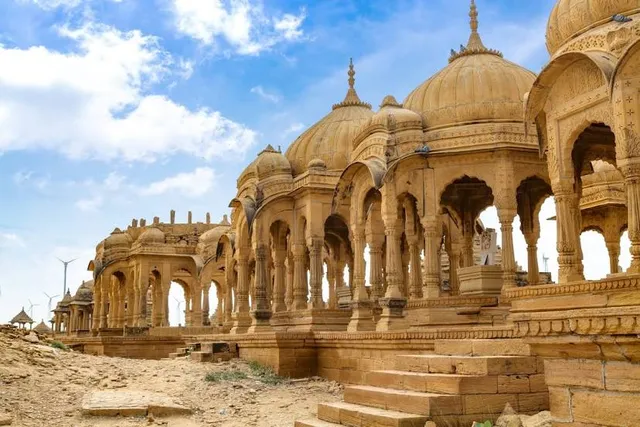
Bada Bagh, also known as Barabagh which means Grand Garden in Hindi. This is a historic garden complex located approximately 6 kilometers north of Jaisalmer in Rajasthan, India.
Its origins date back to the 16th century when Jait Singh II, a descendant of Maharawal Jaisal Singh (the founder of Jaisalmer State), commissioned a dam to create a water tank. This initiative transformed the arid desert landscape into a green area. After Jait Singh II’s death, his son Lunkaran constructed a beautiful garden by the lake and a cenotaph in his memory. Over time, additional cenotaphs were built for Lunkaran and other members of the Bhatti royal family.
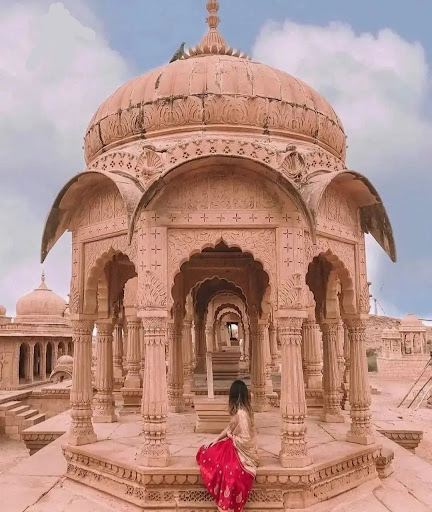
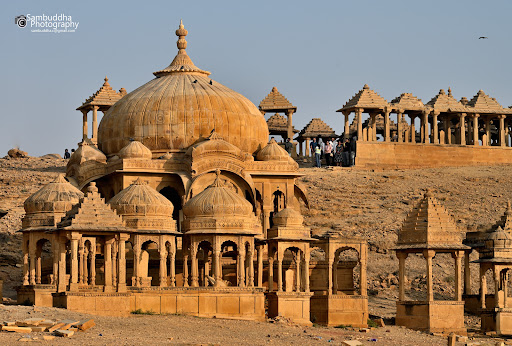
The garden features intricately carved sandstone cenotaphs, or chhatris, serving as memorials for Jaisalmer’s maharajas. The first cenotaph was dedicated to Jai Singh II, renowned for his contributions to the region's development. Each cenotaph includes a marble slab with inscriptions about the deceased royal and a symbolic equestrian statue. The architecture of the cenotaphs combines Hindu and Islamic styles, reflecting Rajasthan's cultural diversity. The ceilings are beautifully carved, and the yellow sandstone structures are adorned with elegant paintings, sculptures, and inscriptions.
The complex is situated on a small hill overlooking a mango plantation, with windmills in the backdrop adding to its picturesque charm. Bada Bagh is a popular spot for photography enthusiasts and history lovers, offering stunning views, especially at sunset. Visitors are advised to wear comfortable shoes due to the uneven terrain.
The entry fee is INR 100 per person, with an additional charge of INR 150 for still cameras. The site is open daily from 8 AM to 6 PM. However, there are no facilities for drinking water or restrooms, and public transportation is unavailable, making personal vehicles necessary. Parking for both bikes and cars is available inside the premises.
While visiting during the winter months (November to February) is recommended for pleasant weather, the summer heat (March to June) can make exploration challenging.
The site offers a glimpse into Jaisalmer's royal past and serves as a serene getaway for those interested in history, architecture, and...
Read moreBada Bagh: A Desert Symphony
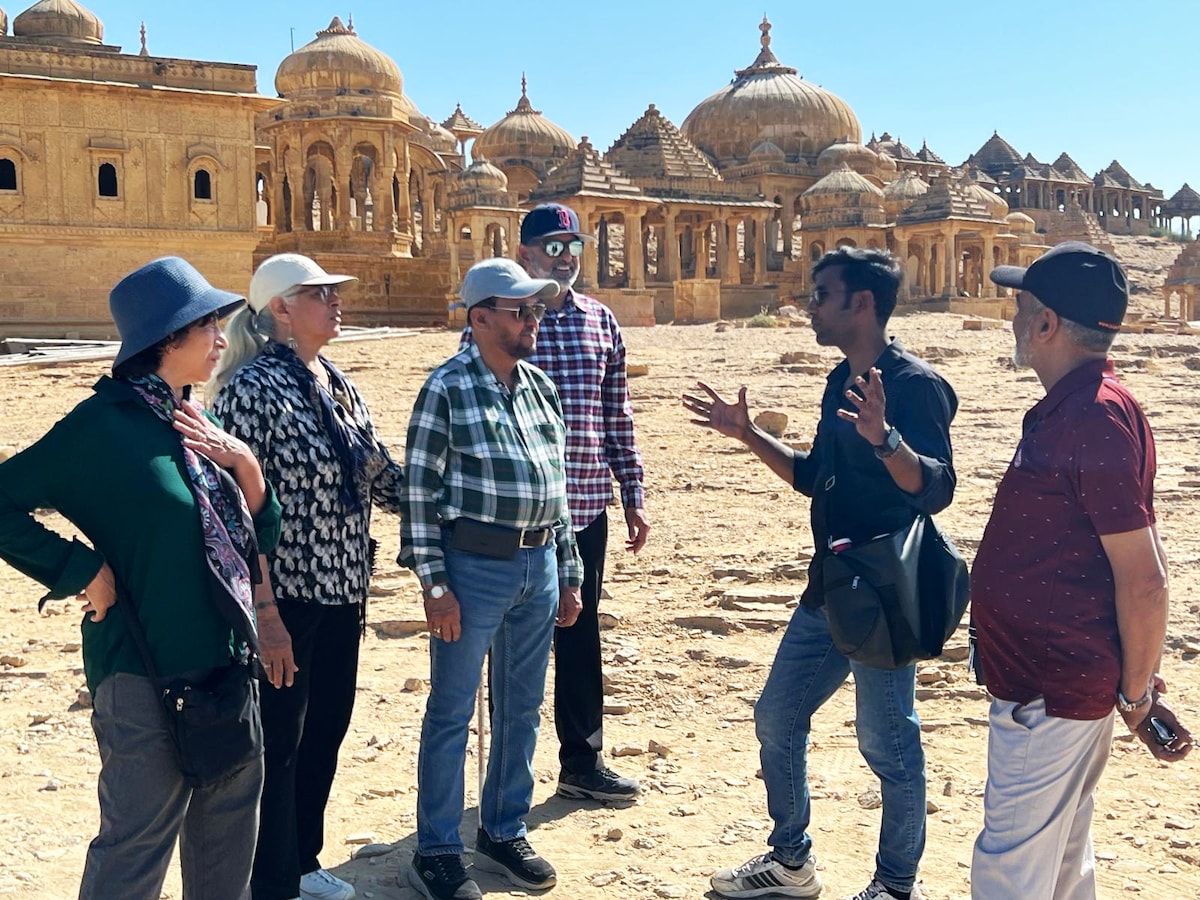
As the sun dipped toward the horizon, we found ourselves standing amidst the ancient royal chhatri or cenotaphs of Bada Bagh, a garden complex located about six kilometers north of Jaisalmer in the Indian state of Rajasthan. The name itself, translating to "Big Garden," belied the grandeur that awaited us. Nestled against the arid landscape, this serene oasis held secrets whispered by the wind.
Golden Hour Magic: Before sunset, the entire expanse of Bada Bagh bathed in a warm, ethereal glow. The sandstone structures, weathered by centuries, stood tall like silent sentinels. Their intricate carvings seemed to come alive, casting elongated shadows on the soft desert floor. We felt like wanderers in a dream, caught between realms. It is a photographer paradise.
Whispers of Royalty: These cenotaphs were no ordinary memorials. They were tributes to the Rajput rulers of Jaisalmer – their final resting places. Each one told a story of valor, love, and legacy. We traced our fingers along the chiseled inscriptions, imagining the lives that once thrived within these walls. As the sun dipped lower, the cenotaphs seemed to converse with the fading light. Their silence held echoes of battles fought and love lost. We sat on a cenotaphs, absorbing the weight of history, and wondered if the spirits of kings still wandered these grounds.
A Soulful Retreat with our furry family: Bada Bagh wasn't just a tourist spot; it was a sanctuary for introspection. Away from the bustling streets of Jaisalmer, we found solace here. The desert breeze carried whispers of forgotten melodies. Our four-legged family member a golden retriever boy named Ghurni, tail wagging in delight, explored the nooks and crannies. His paws left imprints on the sun-kissed sand. Bada Bagh welcomed him, and he reveled in the freedom of open spaces.
In the golden embrace of Bada Bagh, we glimpsed eternity. If you seek a place where time stands still and the sands hold secrets, make your way to this magical garden. 🌅🏜️🐾
Visited during last week of...
Read moreJaisalmer journey was planned by me and by wife in such a manner to explore the Rajsthan and Gujrat and we were touring by Car from home. Of course journey was tiresome but full of excitement natural and Architectural beauty was keeping our enthusiasm alive. Bada Bagh visit was our planned sightseeing.
Bada Bagh is situated about 6 kms from Jaisalmer on the way to Ramnagar. Initially a dam was commissioned by the descendants of Rawal Jaisal, Jai Singh-II and later by Lunkaran a mango garden and cenotaph were built on a small hillock. Because of this garden it has got the name Bada Bagh. Indeed these Cenotaphs were the place where Royals funeral were executed. All Cenotaphs have Sati stones or marble slabs having inscriptions about the Royal also. On these stones a sculpture of a person sitting on a horse, and the horse has both front legs in the air, means the person died in battle. If the horse has one front leg in the air, the person died as a result of wounds received in battle and if the horse has all four legs on the ground, the person died naturally. These Cenotaphs were built with pyramidal roof of yellow stones and no mortar was used in the early structures. Later patterns were changed symmetrical to Mughal Architecture the last one is of Maharaja Jawahar Singh. Stone Sculpture and carvings are magnificent. As all these cenotaphs are built on raised platforms so horizontal borders are carved finely with various motifs. Stone hang outs are supported by decorated stone brackets and pillars are also decorated.
Now Bada Bagh is a popular place for pre wedding shoots and an architectural protected monument of National Importance. It attracts tourists of all tastes and a major attraction among history buffs wanderers soulseekers heritage art and architecture lovers. Photographers are having best opportunities to...
Read more