We visited Deeg palace during our visit to Bharatpur since its just one hour drive from Bharatpur.
Fortunately we got a very experienced guide who explained us the palace in great details. Without him, it would have been just a set of well constructed buildings. He provided us with all the details and that added to the joy of visiting the palace.
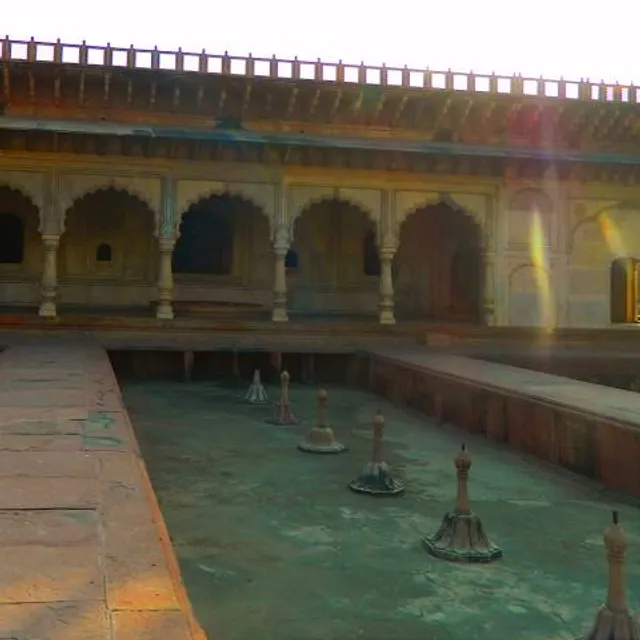
The most important aspect of this palace is the network of 2000+ fountains that get water supply from the water tank with a capacity of 600,000 gallons of water, constructed at a height. It also has an arrangement of spraying colorful water thru it. This entire arrangement is constructed 250+ years back and is still functional. It's operated only twice a year.
the fort is surrounded by two lakes that are interlinked and this keeps the place cooler even during summer.
The area where the kings used to have entertainment programs is also amazing. IT had an arrangement of creating a feeling of thunder even during the summer-time. This all gives a feel of advanced architecture in India during those historic times.
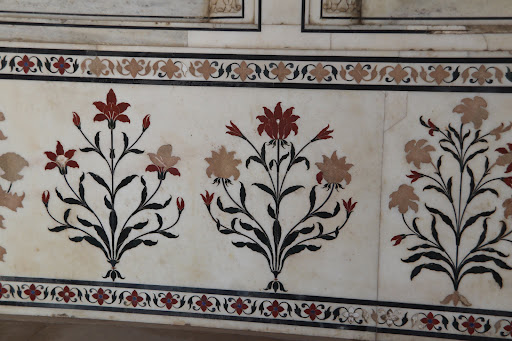
It has an ancient guest house which is made us of marble and has Mughal architecture that one gets to see in Taj Mahal. This entire building was looted from Mughals during the war, each inter-locked stone was separated with proper numbering and was assembled after bringing the stones here! Just the though and project management behind it is astonishing. It has a marble structure for a large swing that was used by the queen of that time. This too was won from Mughals during the war. In the Indian history, one gets to see ample examples of Mughals looting the Kingdoms; however Deeg Palace is perhaps the only place where one gets to see many things looted from Mughals! A great feeling to watch this.
The gardens in the palace are superb too and are reasonably well maintained. The museums are worth watching too.
There is a beautiful idol of Lord Hanuman, made up of brown colored jade stone (usually jade is green in color; however here it's brown jade).
Overall a very good place to visit. Please ensure that you get a knowledgeable guide to explain the...
Read moreThe Deeg Fort was constructed by Raja Badan Singh of Bharatpur in 1730 A.D. The fort was important because of its strategic location and was also centre of trade. In the mid of 18th century this fort was in possession Afgan invader Ahmed Shah Abdali for a few months. Otherwise it remained unconquered. A huge canon was placed in this fort by Maharaja Suraj mal which was brought from the fort of Agra. The fort was used as residence of royal family during war.
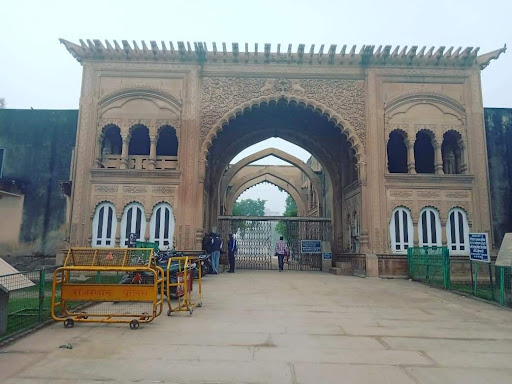
The Deeg Fort, popularly known as Water-Palaces, were raised by the Jat rulers viz. Surajmal (A.D. 1756-63) and Jawahar Singh (1764-68). Built of sandstone slabs of pinkish colour and finely plastered, this architecture is often designated as the Jat style. The buildings include (i) Gopal Bhawan with two flanking pavilions, viz. Sawan and Bhadon Bhawans, (ii) Suraj Bhawan, (iii) Hardev Bhawan, (iv) Kishan Bhawan, (v) Kesava Bhawan, (vi) Nand Bhawan, (vii) Singh Pol, (viii) Central Garden and two tanks named Gopal Sagar and Rup Sagar. The architecture is basically of the trabeate order but the use of arcuate system has been made in certain cases. The general features are engrailed arches resting on ornate pillars, hypostylar halls, flat terraces, balconies and pavilions with Bengal roofs.
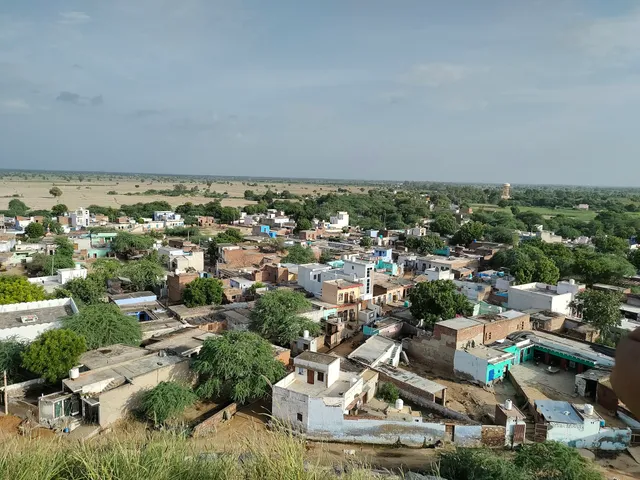
Deeg fort is now just a group of ruins and relics which is surrounded by a lake. It would be in the periphery of 1 km or so and 3-4 canons are placed in different directions. Despite of severely deteriorated buildings in the fort complex, there are some splendid temples , step wells and architectures. When we were exploring that deserted fort, we reached to a building which was one of most fascinating archeological site I ever been. It was an underground building (almost 4 storeyes downwards). There were vents on the top of that building for sun light and seems like none had really been there since a long time. We took the staircases and descended till the bottom of the building.
Entry Fee Rs 10/- for Indians Rs 100/- for Foreginers Timings : 9:00 am to 5:00 pm on all days...
Read more#DeegMahal in Bharatpur is a surprise heritage structure of the nondescript town that is more popular for bird sanctuary, the #UNESCO heritage Keoladeo National Park.Worth a visit.
There are not many options to stay however. But birding enthusiasts will mostly be out there in wild so stay is not the primary issue. Deeg palace can always be added to your itinerary to Bharatpur.
Deeg Palace, Deeg, Bharatpur, Rajasthan. The luxurious palace, built in the late 18th Cen CE, was commissioned and used by Bharatpur rulers. Deeg being the Jat kingdom, and its proximity to Agra, faced turbulent times.
However, during their zenith they, with the support of Marathas, conquered Delhi. The palace complex has several buildings, however, the most noticeable ones are Gopal Bhawan flanked by Savan and Bhadon pavilion overlooking Gopal Sagar, Keshav Bhawan (the monsoon pavilion), Suraj Bhawan, Nand Bhawan and Hardeo Bhawan.
A marble arch (jhoola), looted from Delhi, was brought and installed in the forecourt of Gopal Bhawan. The palace has gardens based on Char Bagh layout with central water channels and a row of fountains, and a network of pathways.
The garden layout and the flaking palaces and pavilions give an idea of the blending of Mughal and Rajputana influences. Of particular interest are the innumerable water fountains fed by gravity from a large reservoir located at a higher level. During Holi, coloured pouches inserted into the channels through which colourful water is fed into the fountains. The spectacle, it is believed, is...
Read more