HTML SitemapExplore
logo
Find Things to DoFind The Best Restaurants

Eklingji Temple — Attraction in Rajasthan

Name
Eklingji Temple
Description
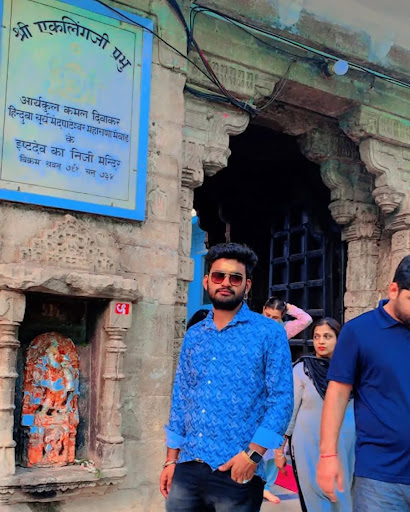
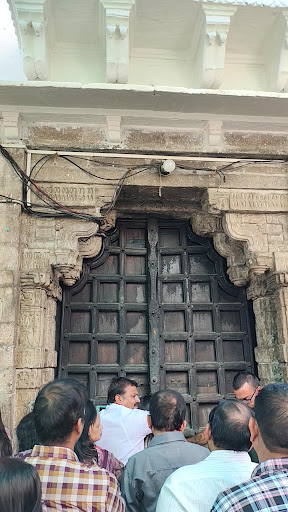
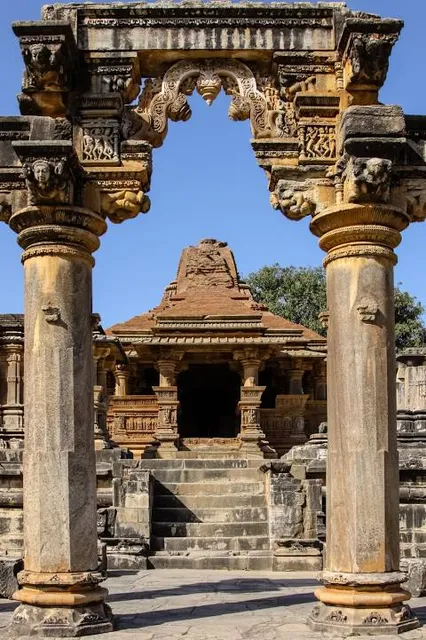
Eklingji is a Hindu temple complex in Udaipur District of Rajasthan in western India. It is situated in Kailashpuri village, near the former capital of Mewar, i.e., Nagda. Eklingji is believed to be the ruling god of Mewar Princely State and the Maharana rules as his Dewan.
Nearby attractions
Nearby restaurants
Nearby hotels
Shri Eklingji Mandir Dharamshala
PPWC+6G5, Eklingji, Rajasthan 313202, India
The Lake Edge Villa
in front of lake Baghela, Eklingji, Siyol, Rajasthan 313001, India
Kailash Villa by Divine Stays
PPQG+P64, Eklingji Rd, Siyol, Rajasthan 313202, India
Related posts
Keywords
Eklingji Temple tourism.Eklingji Temple hotels.Eklingji Temple bed and breakfast. flights to Eklingji Temple.Eklingji Temple attractions.Eklingji Temple restaurants.Eklingji Temple travel.Eklingji Temple travel guide.Eklingji Temple travel blog.Eklingji Temple pictures.Eklingji Temple photos.Eklingji Temple travel tips.Eklingji Temple maps.Eklingji Temple things to do.
Eklingji Temple things to do, attractions, restaurants, events info and trip planning
Eklingji Temple
IndiaRajasthanEklingji Temple

Basic Info

Eklingji Temple

Kailashpuri, Girwa Tehsil, near the former capital of Mewar, Udaipur, Rajasthan 313202, India
4.8(1.8K)
Open 24 hours
Save
spot

Ratings & Description

Info

Eklingji is a Hindu temple complex in Udaipur District of Rajasthan in western India. It is situated in Kailashpuri village, near the former capital of Mewar, i.e., Nagda. Eklingji is believed to be the ruling god of Mewar Princely State and the Maharana rules as his Dewan.

Cultural
Family friendly
attractions: , restaurants:
logoLearn more insights from Wanderboat AI.

Plan your stay

hotel
Pet-friendly Hotels in Rajasthan
Find a cozy hotel nearby and make it a full experience.
hotel
Affordable Hotels in Rajasthan
Find a cozy hotel nearby and make it a full experience.
hotel
The Coolest Hotels You Haven't Heard Of (Yet)
Find a cozy hotel nearby and make it a full experience.
hotel
Trending Stays Worth the Hype in Rajasthan
Find a cozy hotel nearby and make it a full experience.

Reviews

Things to do nearby

All inclusive Sightseeing for Non-Indians Only
Fri, Dec 12 • 10:00 AM
Udaipur, Rajasthan, 313001, India
View details
Get the Appoverlay
Get the AppOne tap to find yournext favorite spots!
Wanderboat LogoWanderboat

Your everyday Al companion for getaway ideas

CompanyAbout Us
InformationAI Trip PlannerSitemap
SocialXInstagramTiktokLinkedin
LegalTerms of ServicePrivacy Policy

Get the app

© 2025 Wanderboat. All rights reserved.
logo

Reviews of Eklingji Temple

4.8
(1,781)
avatar
4.0
12w

The saviour of Mewar – Lord Eklingji The temples in India speaks volume about the historical events , culture and beliefs of people, they are not just a sacred space but cultural and social centers as well .The article delves into the rich history and origin of Eklingji who is considered as the integral part of the Mewar kingdom’s Heritage. The study explores the historical background of the temple by examining the literary and archaeological evidences and provides a valuable insight into history and culture making it a essential read for the Indian heritage enthusiast .

Eklingji, the king of Mewar, is revered as the true monarch of the state, known as Lord Eklingji. The title of Raja is associated with this deity, while the rulers are called Maharaja and serve as the Diwan of the state. The term “Eklingji” originated from two Sanskrit words: “Ek,” which signifies the oneness and unification of different forms of God, reflecting the deity’s power, and “Linga,” meaning phallic symbol, representing progeny, procreation, and fertility. Eklingji is considered the family deity of the Mewar royal lineage, who ruled the kingdom. The temple serves as a site for ancestral worship, hosting royal rituals and maintaining tributes to the lord.

The history of Mewar is closely linked to the construction of the remarkable Eklingji Temple, which holds significant cultural and spiritual value. This temple is located in the Aravalli Valley, about fourteen miles north of Udaipur, in an area known as Kailashpuri. It is believed to be the earliest region within the Maru region where the Guhilot dynasty established control. Various legends surround the origin of Eklingji, represented by the four-faced linga. The Eklingji Temple is dedicated to Lord Shiva, the supreme power of the universe, and it is regarded as one of the earliest and most important examples of Shiva worship in the form of a linga. The four-faced idol, made of black marble, is enshrined at the center of the temple within the Garbha Griha. In the 6th century, the Scythians, a powerful Asian tribe, invaded India and conquered several parts of the northwestern region. During their conquest, they attacked the family of the Maitraka king Shiladitya, who ruled from Ballabhipura and was ultimately killed. The only survivor of this attack was Queen Pushpavati, who was not in the city at the time, as she was on a pilgrimage to pray for the well-being ofher unborn child..The child was named Guhil, meaning “the cave-born.” He spent his childhood with other children of the Bhil tribe in the forest. Eventually, Guhil became the next king of the Bhil tribe and was granted a large tract of land from the forest as the tribe’s chief. The ceremony of applying the vermilion “tikka” on the king’s forehead has been a common practice in Mewar for the past fourteen years.

Bappa Rawal spent his childhood with the tribal who resided in Aravalli mountains. He possessed the quality of a great leader, as his attire seemed like that of a Brahmin and his appearance like that of a royal clan. All the children of his age followed Bappa’s orders whenever any disagreement took place between them. He was a dispute settler, and all the children were fond of his generous behavior and respected his decisions.

Vashistha Rawal in the custody of whom Bappa was nurtured allotted him the duty of grazing cows, Bappa enjoyed the work given to him and fulfilled responsibility judiciously. In the morning after having breakfast, he went to the pasture with the cows taking in hand a small pot of food in the late evening he came back with the cows.

In Tretayug, Nandini, the daughter of Kamdhenu, the celestial cow, came here to seek protection from sage Vishwamitra and overcome the forces of the rishi by the grace of lord shiva, so pleased her master Vashistha, that he shielded her from the Rishi’s wrath. It is said that the famous Sarp Yajna of Mahabharata was...

   Read more

avatar
5.0
2y

Eklingji Temple is a significant Hindu temple located near Udaipur in the state of Rajasthan, India. It is dedicated to Lord Shiva and is considered one of the most revered pilgrimage sites in the region. Here's a review of Eklingji Temple, along with its history and importance:

Review of Eklingji Temple: Eklingji Temple is a magnificent architectural masterpiece that showcases the rich cultural heritage of Rajasthan. The temple complex consists of multiple structures, with the main shrine dedicated to Lord Shiva in the form of Eklingji. The temple is constructed using white marble and features intricate carvings and detailed artwork, making it a visual delight for visitors.

The ambiance of the temple is serene and peaceful, offering a tranquil setting for devotees and tourists alike. The temple complex is well-maintained, and the surrounding gardens add to the overall beauty of the place. The priests at Eklingji Temple are knowledgeable and helpful, providing visitors with spiritual guidance and insights into the temple's history and significance.

Visitors can witness the vibrant religious rituals and ceremonies that take place at the temple. The rhythmic chants, ringing bells, and the fragrance of incense create a divine atmosphere. It is advisable to visit the temple during the auspicious occasions of Maha Shivaratri and Karthik Purnima when the festivities are at their peak.

Overall, Eklingji Temple is a must-visit destination for those seeking a spiritual experience and a glimpse into the rich cultural heritage of Rajasthan.

History of Eklingji Temple: The history of Eklingji Temple dates back to the 8th century when it was established by Bappa Rawal, the founder of the Mewar Kingdom. Over the centuries, successive rulers of the Mewar dynasty contributed to the construction and expansion of the temple complex. It underwent significant renovations during the reign of Maharana Raimal in the 15th century and was further expanded by Maharana Sangram Singh in the 18th century.

Importance of Eklingji Temple: Eklingji Temple holds immense importance in Hindu mythology and is considered the ruling deity of the Mewar Kingdom. Lord Eklingji is believed to be the presiding deity of the region and the ultimate form of Lord Shiva. The temple is revered by both locals and devotees from far and wide.

The temple's significance extends beyond its religious value. It is also considered an architectural marvel, showcasing intricate carvings, pillars, and domes. The artistic brilliance of the temple is a testament to the skilled craftsmanship of the artisans of that era.

Eklingji Temple serves as a cultural and spiritual center, attracting pilgrims and tourists who come to seek blessings, witness the religious rituals, and experience the divine aura of the place.

In conclusion, Eklingji Temple near Udaipur is a highly revered Hindu temple with a rich history and immense cultural and spiritual significance. Its architectural beauty, serene ambiance, and religious importance make it a popular destination for devotees and tourists...

   Read more
avatar
5.0
2y

Eklingji Temple, Kailashpuri, Udaipur Ek means 'one’ while ling means 'lingam or the life-giving a phallic symbol of Lord Shiva'. The Eklingji Temple, one of the popular pilgrimages of Rajasthan is located at a distance of 22 km away from Udaipur. It was initially built by the then King of Udaipur Bappa Rawal, on the side of 72 rooms Jain temple which housed a four-faced statue of Adinath, the first Jain Saint. It stands with the great historic significance dedicated to Lord Eklingji, the benefactor deity of the Mewar clan.

This temple is situated at the bank of the Indersagar Lake has near about 108 shrines and comes within its walls. The main shrine is a double storied building and designed with carved tower and pyramidal styled roof. Inside the complex, the main structured has a pyramid style structure and further supported by hefty pyramidal roof. On entering the temple a silver image of Nandi will welcome you to the deity of Lord Shiva. There are two other images of Nandi that are located in the temple in black stone and brass respectively. In the middle of the temple, a striking four-faced idol of Eklingji, made of black marble is located whose height is near about 50 feet and its four faces depict four forms of Lord Shiva. The east facing part recognised as Surya, west-facing part is Lord Brahma, the north facing part is Lord Vishnu and the south facing part is Rudra. And it is further garlanded by the silver snake, and the major attraction...

   Read more
Page 1 of 7
Previous
Next

Posts

Ankur soniAnkur soni
The saviour of Mewar – Lord Eklingji The temples in India speaks volume about the historical events , culture and beliefs of people, they are not just a sacred space but cultural and social centers as well .The article delves into the rich history and origin of Eklingji who is considered as the integral part of the Mewar kingdom’s Heritage. The study explores the historical background of the temple by examining the literary and archaeological evidences and provides a valuable insight into history and culture making it a essential read for the Indian heritage enthusiast . Eklingji, the king of Mewar, is revered as the true monarch of the state, known as Lord Eklingji. The title of Raja is associated with this deity, while the rulers are called Maharaja and serve as the Diwan of the state. The term “Eklingji” originated from two Sanskrit words: “Ek,” which signifies the oneness and unification of different forms of God, reflecting the deity’s power, and “Linga,” meaning phallic symbol, representing progeny, procreation, and fertility. Eklingji is considered the family deity of the Mewar royal lineage, who ruled the kingdom. The temple serves as a site for ancestral worship, hosting royal rituals and maintaining tributes to the lord. The history of Mewar is closely linked to the construction of the remarkable Eklingji Temple, which holds significant cultural and spiritual value. This temple is located in the Aravalli Valley, about fourteen miles north of Udaipur, in an area known as Kailashpuri. It is believed to be the earliest region within the Maru region where the Guhilot dynasty established control. Various legends surround the origin of Eklingji, represented by the four-faced linga. The Eklingji Temple is dedicated to Lord Shiva, the supreme power of the universe, and it is regarded as one of the earliest and most important examples of Shiva worship in the form of a linga. The four-faced idol, made of black marble, is enshrined at the center of the temple within the Garbha Griha. In the 6th century, the Scythians, a powerful Asian tribe, invaded India and conquered several parts of the northwestern region. During their conquest, they attacked the family of the Maitraka king Shiladitya, who ruled from Ballabhipura and was ultimately killed. The only survivor of this attack was Queen Pushpavati, who was not in the city at the time, as she was on a pilgrimage to pray for the well-being ofher unborn child..The child was named Guhil, meaning “the cave-born.” He spent his childhood with other children of the Bhil tribe in the forest. Eventually, Guhil became the next king of the Bhil tribe and was granted a large tract of land from the forest as the tribe’s chief. The ceremony of applying the vermilion “tikka” on the king’s forehead has been a common practice in Mewar for the past fourteen years. Bappa Rawal spent his childhood with the tribal who resided in Aravalli mountains. He possessed the quality of a great leader, as his attire seemed like that of a Brahmin and his appearance like that of a royal clan. All the children of his age followed Bappa’s orders whenever any disagreement took place between them. He was a dispute settler, and all the children were fond of his generous behavior and respected his decisions. Vashistha Rawal in the custody of whom Bappa was nurtured allotted him the duty of grazing cows, Bappa enjoyed the work given to him and fulfilled responsibility judiciously. In the morning after having breakfast, he went to the pasture with the cows taking in hand a small pot of food in the late evening he came back with the cows. In Tretayug, Nandini, the daughter of Kamdhenu, the celestial cow, came here to seek protection from sage Vishwamitra and overcome the forces of the rishi by the grace of lord shiva, so pleased her master Vashistha, that he shielded her from the Rishi’s wrath. It is said that the famous Sarp Yajna of Mahabharata was performed here
Prathamesh SPrathamesh S
Eklingji Temple, Kailashpuri, Udaipur Ek means 'one’ while ling means 'lingam or the life-giving a phallic symbol of Lord Shiva'. The Eklingji Temple, one of the popular pilgrimages of Rajasthan is located at a distance of 22 km away from Udaipur. It was initially built by the then King of Udaipur Bappa Rawal, on the side of 72 rooms Jain temple which housed a four-faced statue of Adinath, the first Jain Saint. It stands with the great historic significance dedicated to Lord Eklingji, the benefactor deity of the Mewar clan. This temple is situated at the bank of the Indersagar Lake has near about 108 shrines and comes within its walls. The main shrine is a double storied building and designed with carved tower and pyramidal styled roof. Inside the complex, the main structured has a pyramid style structure and further supported by hefty pyramidal roof. On entering the temple a silver image of Nandi will welcome you to the deity of Lord Shiva. There are two other images of Nandi that are located in the temple in black stone and brass respectively. In the middle of the temple, a striking four-faced idol of Eklingji, made of black marble is located whose height is near about 50 feet and its four faces depict four forms of Lord Shiva. The east facing part recognised as Surya, west-facing part is Lord Brahma, the north facing part is Lord Vishnu and the south facing part is Rudra. And it is further garlanded by the silver snake, and the major attraction of the people.
Bharat BamniyaBharat Bamniya
Eklingji Temple is one of the most popular temples of Rajasthan and is sited at a distance of 22 km to the north of Udaipur. Eklingji Temple is dedicated to the Lord Shiva of the Hindu religion and its brilliant architecture drives several tourists here every year. This double-storied temple looks magnificent with its pyramidal style of roof and uniquely carved tower. The outer walls of the temple are stretched with steps that lower touching the serene waters. Established in 734 A.D. by Bappa Rawal, Eklingji is purported to have been the ruling idol of Mewar rulers. On entering this hall, you would see a beautiful silver image of Nandi and inside the temple, there are two other images of Nandi carved in black stone and brass respectively. This temple is filled with an enthralling fragrance and is known for a striking four-faced idol of Eklingji (Lord Shiva) that is made out of black marble. Its height ranges around 50 feet and its four faces depict four forms of Lord Shiva. The Shivlinga garlanded by a silver snake is a major tourist attraction.
See more posts
See more posts
hotel
Find your stay

Pet-friendly Hotels in Rajasthan

Find a cozy hotel nearby and make it a full experience.

The saviour of Mewar – Lord Eklingji The temples in India speaks volume about the historical events , culture and beliefs of people, they are not just a sacred space but cultural and social centers as well .The article delves into the rich history and origin of Eklingji who is considered as the integral part of the Mewar kingdom’s Heritage. The study explores the historical background of the temple by examining the literary and archaeological evidences and provides a valuable insight into history and culture making it a essential read for the Indian heritage enthusiast . Eklingji, the king of Mewar, is revered as the true monarch of the state, known as Lord Eklingji. The title of Raja is associated with this deity, while the rulers are called Maharaja and serve as the Diwan of the state. The term “Eklingji” originated from two Sanskrit words: “Ek,” which signifies the oneness and unification of different forms of God, reflecting the deity’s power, and “Linga,” meaning phallic symbol, representing progeny, procreation, and fertility. Eklingji is considered the family deity of the Mewar royal lineage, who ruled the kingdom. The temple serves as a site for ancestral worship, hosting royal rituals and maintaining tributes to the lord. The history of Mewar is closely linked to the construction of the remarkable Eklingji Temple, which holds significant cultural and spiritual value. This temple is located in the Aravalli Valley, about fourteen miles north of Udaipur, in an area known as Kailashpuri. It is believed to be the earliest region within the Maru region where the Guhilot dynasty established control. Various legends surround the origin of Eklingji, represented by the four-faced linga. The Eklingji Temple is dedicated to Lord Shiva, the supreme power of the universe, and it is regarded as one of the earliest and most important examples of Shiva worship in the form of a linga. The four-faced idol, made of black marble, is enshrined at the center of the temple within the Garbha Griha. In the 6th century, the Scythians, a powerful Asian tribe, invaded India and conquered several parts of the northwestern region. During their conquest, they attacked the family of the Maitraka king Shiladitya, who ruled from Ballabhipura and was ultimately killed. The only survivor of this attack was Queen Pushpavati, who was not in the city at the time, as she was on a pilgrimage to pray for the well-being ofher unborn child..The child was named Guhil, meaning “the cave-born.” He spent his childhood with other children of the Bhil tribe in the forest. Eventually, Guhil became the next king of the Bhil tribe and was granted a large tract of land from the forest as the tribe’s chief. The ceremony of applying the vermilion “tikka” on the king’s forehead has been a common practice in Mewar for the past fourteen years. Bappa Rawal spent his childhood with the tribal who resided in Aravalli mountains. He possessed the quality of a great leader, as his attire seemed like that of a Brahmin and his appearance like that of a royal clan. All the children of his age followed Bappa’s orders whenever any disagreement took place between them. He was a dispute settler, and all the children were fond of his generous behavior and respected his decisions. Vashistha Rawal in the custody of whom Bappa was nurtured allotted him the duty of grazing cows, Bappa enjoyed the work given to him and fulfilled responsibility judiciously. In the morning after having breakfast, he went to the pasture with the cows taking in hand a small pot of food in the late evening he came back with the cows. In Tretayug, Nandini, the daughter of Kamdhenu, the celestial cow, came here to seek protection from sage Vishwamitra and overcome the forces of the rishi by the grace of lord shiva, so pleased her master Vashistha, that he shielded her from the Rishi’s wrath. It is said that the famous Sarp Yajna of Mahabharata was performed here
Ankur soni

Ankur soni

hotel
Find your stay

Affordable Hotels in Rajasthan

Find a cozy hotel nearby and make it a full experience.

Get the Appoverlay
Get the AppOne tap to find yournext favorite spots!
Eklingji Temple, Kailashpuri, Udaipur Ek means 'one’ while ling means 'lingam or the life-giving a phallic symbol of Lord Shiva'. The Eklingji Temple, one of the popular pilgrimages of Rajasthan is located at a distance of 22 km away from Udaipur. It was initially built by the then King of Udaipur Bappa Rawal, on the side of 72 rooms Jain temple which housed a four-faced statue of Adinath, the first Jain Saint. It stands with the great historic significance dedicated to Lord Eklingji, the benefactor deity of the Mewar clan. This temple is situated at the bank of the Indersagar Lake has near about 108 shrines and comes within its walls. The main shrine is a double storied building and designed with carved tower and pyramidal styled roof. Inside the complex, the main structured has a pyramid style structure and further supported by hefty pyramidal roof. On entering the temple a silver image of Nandi will welcome you to the deity of Lord Shiva. There are two other images of Nandi that are located in the temple in black stone and brass respectively. In the middle of the temple, a striking four-faced idol of Eklingji, made of black marble is located whose height is near about 50 feet and its four faces depict four forms of Lord Shiva. The east facing part recognised as Surya, west-facing part is Lord Brahma, the north facing part is Lord Vishnu and the south facing part is Rudra. And it is further garlanded by the silver snake, and the major attraction of the people.
Prathamesh S

Prathamesh S

hotel
Find your stay

The Coolest Hotels You Haven't Heard Of (Yet)

Find a cozy hotel nearby and make it a full experience.

hotel
Find your stay

Trending Stays Worth the Hype in Rajasthan

Find a cozy hotel nearby and make it a full experience.

Eklingji Temple is one of the most popular temples of Rajasthan and is sited at a distance of 22 km to the north of Udaipur. Eklingji Temple is dedicated to the Lord Shiva of the Hindu religion and its brilliant architecture drives several tourists here every year. This double-storied temple looks magnificent with its pyramidal style of roof and uniquely carved tower. The outer walls of the temple are stretched with steps that lower touching the serene waters. Established in 734 A.D. by Bappa Rawal, Eklingji is purported to have been the ruling idol of Mewar rulers. On entering this hall, you would see a beautiful silver image of Nandi and inside the temple, there are two other images of Nandi carved in black stone and brass respectively. This temple is filled with an enthralling fragrance and is known for a striking four-faced idol of Eklingji (Lord Shiva) that is made out of black marble. Its height ranges around 50 feet and its four faces depict four forms of Lord Shiva. The Shivlinga garlanded by a silver snake is a major tourist attraction.
Bharat Bamniya

Bharat Bamniya

See more posts
See more posts