HTML SitemapExplore
logo
Find Things to DoFind The Best Restaurants

Gagron Fort — Attraction in Rajasthan

Name
Gagron Fort
Description
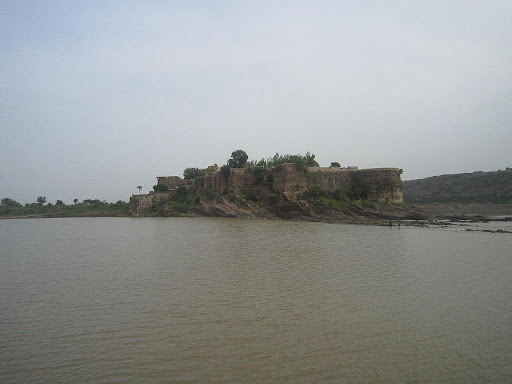
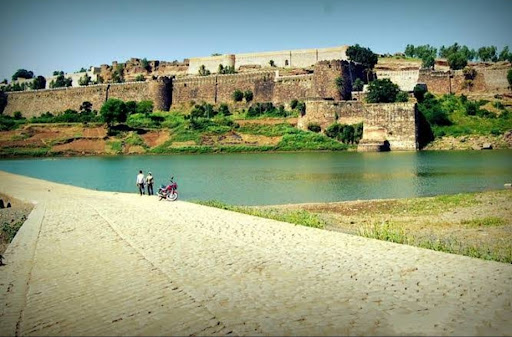
Gagron Fort is a hill and water fort and is situated in Jhalawar district of Rajasthan, in the Hadoti region of India. It is an example of a hill and water fort. The fort was built by Bijaldev Singh Dod in the twelfth century. Later, the fort has also been controlled by Sher Shah and Akbar.
Nearby attractions
Nearby restaurants
Nearby hotels
Related posts
Keywords
Gagron Fort tourism.Gagron Fort hotels.Gagron Fort bed and breakfast. flights to Gagron Fort.Gagron Fort attractions.Gagron Fort restaurants.Gagron Fort travel.Gagron Fort travel guide.Gagron Fort travel blog.Gagron Fort pictures.Gagron Fort photos.Gagron Fort travel tips.Gagron Fort maps.Gagron Fort things to do.
Gagron Fort things to do, attractions, restaurants, events info and trip planning
Gagron Fort
IndiaRajasthanGagron Fort

Basic Info

Gagron Fort

J5HP+59X, Gagron, Rajasthan 326001, India
4.3(1.1K)
Open until 4:00 PM
Save
spot

Ratings & Description

Info

Gagron Fort is a hill and water fort and is situated in Jhalawar district of Rajasthan, in the Hadoti region of India. It is an example of a hill and water fort. The fort was built by Bijaldev Singh Dod in the twelfth century. Later, the fort has also been controlled by Sher Shah and Akbar.

Cultural
Outdoor
Family friendly
attractions: , restaurants:
logoLearn more insights from Wanderboat AI.
Open hoursSee all hours
Sun6 AM - 4 PMOpen

Plan your stay

hotel
Pet-friendly Hotels in Rajasthan
Find a cozy hotel nearby and make it a full experience.
hotel
Affordable Hotels in Rajasthan
Find a cozy hotel nearby and make it a full experience.
hotel
The Coolest Hotels You Haven't Heard Of (Yet)
Find a cozy hotel nearby and make it a full experience.
hotel
Trending Stays Worth the Hype in Rajasthan
Find a cozy hotel nearby and make it a full experience.

Reviews

Get the Appoverlay
Get the AppOne tap to find yournext favorite spots!
Wanderboat LogoWanderboat

Your everyday Al companion for getaway ideas

CompanyAbout Us
InformationAI Trip PlannerSitemap
SocialXInstagramTiktokLinkedin
LegalTerms of ServicePrivacy Policy

Get the app

© 2025 Wanderboat. All rights reserved.
logo

Reviews of Gagron Fort

4.3
(1,087)
avatar
5.0
4y

Gagron Fort (Hindi/Rajasthani: गागरोन का किला) is a hill and water fort and is situated in Jhalawar district of Rajasthan, in the Hadoti region of India. It is an example of a hill and water fort.1 The fort was built by Bijaldev in the twelfth century. Later, the fort has also been controlled by Sher Shah and Akbar. The fort is constructed on the confluence of Ahu River and Kali Sindh River. The fort is surrounded by water on three sides and a moat on the forth side and hence earned the name Jaladurg (Hindi/Rajasthani: जलदुर्ग, translation: Water Fort).3] It was designated a UNESCO world heritage site in 2013 as a part of Hill Forts in Rajasthan.

Gagron fort was constructed during the twelfth century by the king Bijaldev and the fort was ruled by the Khinchi kingdom for 300 years. The exact date on which the fort was constructed remains a mystery but historians estimate that the fort was constructed from the seventh century to the fourteenth century.[3]

The last ruler of this fort is reported to be king Achal Das Khinchi. During the medieval power, there muslim rulers of Malwa attacked Gagron fort. Sultan Hoshang Shah attacked the fort in the year 1423 with an army that included 30 thousand horsemen and 84 elephant riders. Achal Das Khinchi, on realizing that his defeat was inevitable, due to the Sultan's superior numbers and higher grade weapons, did not surrender and fought till he lost his life, which is accordance to Rajput tradition. Furthermore, many women performed jauhar (burnt themselves alive), in order to avoid being taken captive by the Sultan's forces.[5 The fort has reportedly seen 14 battles and 2 jauhars of queens.3

The fort has also been conquered by Sher Shah and Akbar. Akbar also reportedly made this fort a headquarter and later gave it to Prathviraj of Bikaner as a part of his estate.

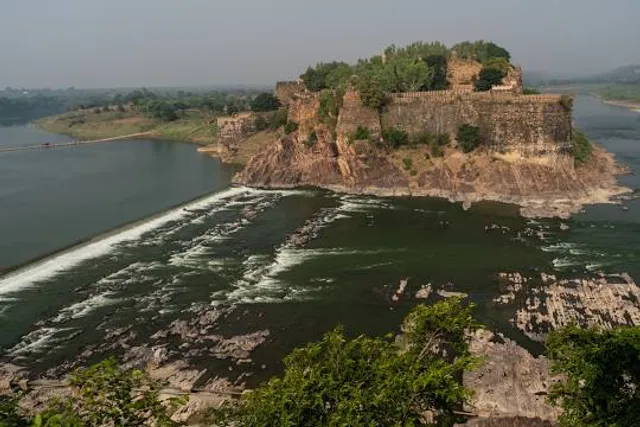
Gagron Fort is surrounded by water on three sides and a moat filled with water on the fourth side. It is constructed on the confluence of Ahu River and Kali Sindh River. The fort also boasts three ramparts as opposed to traditional forts that have only two. The towers of the fort are blended with Mukundara Hills of the Vindhya Range. The mountain that the fort sits on is itself the foundation of the fort. The fort also has two main entrances. One gate leads towards the river, while the other gate leads towards the hilly road.

The fort is the only forth in North India surrounded by water and has been named the Jaladurga (Water Fort) of India.3 A mausoleum of Sufi Saint Mitthe Shah just outside the fort is the venue for an annual colourful fair held during the month of Moharram. There is also a monastery of Saint Pipaji across...

   Read more
avatar
5.0
6y

The foundation of the Gagron Fort was laid during the 7th century and due to its highly defensive and impregnable nature, it took almost 7 more centuries to be completed, which was around the 14th century. The fort was ruled and controlled by the Khinchi rulers of Jhalawar district and was one of the most vibrant cities in the medieval period of India. This was prior to the time when Jhalawar, Kota and Bundi had not appeared as cities or districts on the map of the princely state of Rajasthan.

It was believed that Alaudin Khilji had invaded Gagron in the year 1300 which was snatched away from him by the Maharaja Jaitsi. Maharaja Prataprao, the direct descendant of King Jaitsi transformed Gagron to a full-fledged city and made it the richest city of Malwa plateau. Later, in his life, he castigated all the luxuries of life including his family life went on to attaining Nirvana. This desire of Raja Prataprao made him abdicate the throne and move towards religious preaching and become renowned by the name of “Saint Pipa”. He became one of the 12 saints of the famous ‘Ramanand Sampradaiya’ and there is also a monastery in his name situated in Dwarka within the state of Gujarat, referred to as Pipa Math.

Following the death of these brave Rajput martyrs, their wives indulged in Johar willfully to pay homage to the bravery and sacrifice of their husbands. In Rajasthan Johar was the synonym for the practice of Sati which demanded that the wife to sit on the burning pyre of her husband, while she is alive. Although this seemed like a very heinous practice and was finally banned during the British rule, in this particular case, the wives of the warriors intentionally sacrificed their lives. This is a story of one of the biggest sacrifices made by a particular sect of women in India.

This entire incident inspired the Sultan himself which made him conserve the room of Raja Achaldas Khinchi as a safe haven. Following this, the successor of the brave Khinchi ruler, Raja Palhandas captured the Gagron fort once again from the clutches of the Sultan as form of revenge for his ancestor. Later it was again attacked by the Mughal ruler –Bahadur Shah during the 15th century but it was again captured from him in the 16th century by the king Mukund Singh of Kota which ensured that the fort remains under the Rajputs once and for all.

The grandeur and history of this specific and unique fort is quite inspiring, although it is quite sad that very few people are aware of this symbol of heroism, sacrifice, bravery and true...

   Read more
avatar
5.0
4y

The last ruler of this fort was king Achal Das Khinchi. In medieval period the growing Muslim power in Malwa eyed on the richness of Gagron fort. Sultan Hoshang Shah of Mandu attacked the fort with 30 thousand horsemen, 84 elephant riders and a massive army in 1423. When king Achal Das Khinchi realized his defeat in front of much bigger army and high grade weapons then instead of surrendering cowardly he fought with valor and lost his life in the battle according to Rajput tradition. Thousands of women gave their lives to protect their virtue from foes. View of Gagron Fort This beautiful fort of Gagron is known for its legends, which states that when the ruler of this place, Achal Das Khinchi lost the battle to the ruler of Malwa, Hoshang Shah the Rajput women performed jauhar (burnt themselves alive) in the wake of protecting their chastity from enemies. Hundreds of women embraced death. The construction of this remarkable fort was initiated by Raja Bijal Dev in 12th century and was ruled by Khinchi Dynasty for about 300 years. This fort has been witness to 14 battles and 2 live burning procedures (jauhar) of queens. An excellent thing about the fort is that it is the only fort of North India which is surrounded by water and has been named as Water Fort of India. This is the only fort with three courtyards, normally forts have two courtyards. It does not have any foundation; the support is taken from the Burj.some of the decendent of Achaldas khichi are resides in jagiris named Bakshpura , Balko etc in district Kota and some in Jodhpur - indroka ,...

   Read more
Page 1 of 7
Previous
Next

Posts

CHIDANANDA PATCHALACHIDANANDA PATCHALA
Gagron Fort (Hindi/Rajasthani: गागरोन का किला) is a hill and water fort and is situated in Jhalawar district of Rajasthan, in the Hadoti region of India. It is an example of a hill and water fort.[1][2] The fort was built by Bijaldev in the twelfth century. Later, the fort has also been controlled by Sher Shah and Akbar. The fort is constructed on the confluence of Ahu River and Kali Sindh River. The fort is surrounded by water on three sides and a moat on the forth side and hence earned the name Jaladurg (Hindi/Rajasthani: जलदुर्ग, translation: Water Fort).[3] It was designated a UNESCO world heritage site in 2013 as a part of Hill Forts in Rajasthan. Gagron fort was constructed during the twelfth century by the king Bijaldev and the fort was ruled by the Khinchi kingdom for 300 years. The exact date on which the fort was constructed remains a mystery but historians estimate that the fort was constructed from the seventh century to the fourteenth century.[3] The last ruler of this fort is reported to be king Achal Das Khinchi. During the medieval power, there muslim rulers of Malwa attacked Gagron fort. Sultan Hoshang Shah attacked the fort in the year 1423 with an army that included 30 thousand horsemen and 84 elephant riders. Achal Das Khinchi, on realizing that his defeat was inevitable, due to the Sultan's superior numbers and higher grade weapons, did not surrender and fought till he lost his life, which is accordance to Rajput tradition. Furthermore, many women performed jauhar (burnt themselves alive), in order to avoid being taken captive by the Sultan's forces.[5][3] The fort has reportedly seen 14 battles and 2 jauhars of queens.[3][5] The fort has also been conquered by Sher Shah and Akbar. Akbar also reportedly made this fort a headquarter and later gave it to Prathviraj of Bikaner as a part of his estate. Gagron Fort is surrounded by water on three sides and a moat filled with water on the fourth side. It is constructed on the confluence of Ahu River and Kali Sindh River. The fort also boasts three ramparts as opposed to traditional forts that have only two. The towers of the fort are blended with Mukundara Hills of the Vindhya Range. The mountain that the fort sits on is itself the foundation of the fort. The fort also has two main entrances. One gate leads towards the river, while the other gate leads towards the hilly road. The fort is the only forth in North India surrounded by water and has been named the Jaladurga (Water Fort) of India.[3][5] A mausoleum of Sufi Saint Mitthe Shah just outside the fort is the venue for an annual colourful fair held during the month of Moharram. There is also a monastery of Saint Pipaji across the confluence.
Giriraj lodhaGiriraj lodha
The last ruler of this fort was king Achal Das Khinchi. In medieval period the growing Muslim power in Malwa eyed on the richness of Gagron fort. Sultan Hoshang Shah of Mandu attacked the fort with 30 thousand horsemen, 84 elephant riders and a massive army in 1423. When king Achal Das Khinchi realized his defeat in front of much bigger army and high grade weapons then instead of surrendering cowardly he fought with valor and lost his life in the battle according to Rajput tradition. Thousands of women gave their lives to protect their virtue from foes. View of Gagron Fort This beautiful fort of Gagron is known for its legends, which states that when the ruler of this place, Achal Das Khinchi lost the battle to the ruler of Malwa, Hoshang Shah the Rajput women performed jauhar (burnt themselves alive) in the wake of protecting their chastity from enemies. Hundreds of women embraced death. The construction of this remarkable fort was initiated by Raja Bijal Dev in 12th century and was ruled by Khinchi Dynasty for about 300 years. This fort has been witness to 14 battles and 2 live burning procedures (jauhar) of queens. An excellent thing about the fort is that it is the only fort of North India which is surrounded by water and has been named as Water Fort of India. This is the only fort with three courtyards, normally forts have two courtyards. It does not have any foundation; the support is taken from the Burj.some of the decendent of Achaldas khichi are resides in jagiris named Bakshpura , Balko etc in district Kota and some in Jodhpur - indroka , khinchiyan etc
Tushar SuradkarTushar Suradkar
The Gagron Fort is strategically built on the confluence of two rivers Ahu and KaliSindh that flow in deep gorges. Built by Parmar Rajputs as Dodha-Garh and later developed by Khichi Chauhans of the Jhalawar region of Rajasthan this is one of the 6 forts of Rajashtan included in the UNESCO world heritage list. The other 5 are Chittorgarh Fort, Kumbhalgarh Fort, Jaisalmer Fort, Ranthambhore Fort in Sawai Madhopur, and Amer Fort in Jaipur. The fort has many buildings and structures like the Barudkhana ammunition section, palaces, pavilions, DwarkaDheesh Krishna Temple. These buildings are spread all over the fort premises and there were various entrance gates to control access to these palaces and sections as seen in the collage below. The walls along the river-sides are hundreds of feet tall and wide enough to allow two horsemen each to pass across. The river overflows in the rainy season and the tour guide told me the view is breathtakingly majestic. This is similar in many ways to the views at the Garadia Mahadev temple. There is ample accessible parking and I cold drive right inside the fort through the various gates. There is also a tactile map of the fort for the visually impaired. Ramps are present everywhere to access the various temples, palaces, and sections of the fort. ♿ Accessibility Features: Yes=Ramp access. Yes=A wheelchair-accessible Entrance. Yes=A wheelchair-accessible Restroom/Toilet. Yes=A wheelchair-accessible Seating. Yes=A wheelchair-accessible Parking.
See more posts
See more posts
hotel
Find your stay

Pet-friendly Hotels in Rajasthan

Find a cozy hotel nearby and make it a full experience.

Gagron Fort (Hindi/Rajasthani: गागरोन का किला) is a hill and water fort and is situated in Jhalawar district of Rajasthan, in the Hadoti region of India. It is an example of a hill and water fort.[1][2] The fort was built by Bijaldev in the twelfth century. Later, the fort has also been controlled by Sher Shah and Akbar. The fort is constructed on the confluence of Ahu River and Kali Sindh River. The fort is surrounded by water on three sides and a moat on the forth side and hence earned the name Jaladurg (Hindi/Rajasthani: जलदुर्ग, translation: Water Fort).[3] It was designated a UNESCO world heritage site in 2013 as a part of Hill Forts in Rajasthan. Gagron fort was constructed during the twelfth century by the king Bijaldev and the fort was ruled by the Khinchi kingdom for 300 years. The exact date on which the fort was constructed remains a mystery but historians estimate that the fort was constructed from the seventh century to the fourteenth century.[3] The last ruler of this fort is reported to be king Achal Das Khinchi. During the medieval power, there muslim rulers of Malwa attacked Gagron fort. Sultan Hoshang Shah attacked the fort in the year 1423 with an army that included 30 thousand horsemen and 84 elephant riders. Achal Das Khinchi, on realizing that his defeat was inevitable, due to the Sultan's superior numbers and higher grade weapons, did not surrender and fought till he lost his life, which is accordance to Rajput tradition. Furthermore, many women performed jauhar (burnt themselves alive), in order to avoid being taken captive by the Sultan's forces.[5][3] The fort has reportedly seen 14 battles and 2 jauhars of queens.[3][5] The fort has also been conquered by Sher Shah and Akbar. Akbar also reportedly made this fort a headquarter and later gave it to Prathviraj of Bikaner as a part of his estate. Gagron Fort is surrounded by water on three sides and a moat filled with water on the fourth side. It is constructed on the confluence of Ahu River and Kali Sindh River. The fort also boasts three ramparts as opposed to traditional forts that have only two. The towers of the fort are blended with Mukundara Hills of the Vindhya Range. The mountain that the fort sits on is itself the foundation of the fort. The fort also has two main entrances. One gate leads towards the river, while the other gate leads towards the hilly road. The fort is the only forth in North India surrounded by water and has been named the Jaladurga (Water Fort) of India.[3][5] A mausoleum of Sufi Saint Mitthe Shah just outside the fort is the venue for an annual colourful fair held during the month of Moharram. There is also a monastery of Saint Pipaji across the confluence.
CHIDANANDA PATCHALA

CHIDANANDA PATCHALA

hotel
Find your stay

Affordable Hotels in Rajasthan

Find a cozy hotel nearby and make it a full experience.

Get the Appoverlay
Get the AppOne tap to find yournext favorite spots!
The last ruler of this fort was king Achal Das Khinchi. In medieval period the growing Muslim power in Malwa eyed on the richness of Gagron fort. Sultan Hoshang Shah of Mandu attacked the fort with 30 thousand horsemen, 84 elephant riders and a massive army in 1423. When king Achal Das Khinchi realized his defeat in front of much bigger army and high grade weapons then instead of surrendering cowardly he fought with valor and lost his life in the battle according to Rajput tradition. Thousands of women gave their lives to protect their virtue from foes. View of Gagron Fort This beautiful fort of Gagron is known for its legends, which states that when the ruler of this place, Achal Das Khinchi lost the battle to the ruler of Malwa, Hoshang Shah the Rajput women performed jauhar (burnt themselves alive) in the wake of protecting their chastity from enemies. Hundreds of women embraced death. The construction of this remarkable fort was initiated by Raja Bijal Dev in 12th century and was ruled by Khinchi Dynasty for about 300 years. This fort has been witness to 14 battles and 2 live burning procedures (jauhar) of queens. An excellent thing about the fort is that it is the only fort of North India which is surrounded by water and has been named as Water Fort of India. This is the only fort with three courtyards, normally forts have two courtyards. It does not have any foundation; the support is taken from the Burj.some of the decendent of Achaldas khichi are resides in jagiris named Bakshpura , Balko etc in district Kota and some in Jodhpur - indroka , khinchiyan etc
Giriraj lodha

Giriraj lodha

hotel
Find your stay

The Coolest Hotels You Haven't Heard Of (Yet)

Find a cozy hotel nearby and make it a full experience.

hotel
Find your stay

Trending Stays Worth the Hype in Rajasthan

Find a cozy hotel nearby and make it a full experience.

The Gagron Fort is strategically built on the confluence of two rivers Ahu and KaliSindh that flow in deep gorges. Built by Parmar Rajputs as Dodha-Garh and later developed by Khichi Chauhans of the Jhalawar region of Rajasthan this is one of the 6 forts of Rajashtan included in the UNESCO world heritage list. The other 5 are Chittorgarh Fort, Kumbhalgarh Fort, Jaisalmer Fort, Ranthambhore Fort in Sawai Madhopur, and Amer Fort in Jaipur. The fort has many buildings and structures like the Barudkhana ammunition section, palaces, pavilions, DwarkaDheesh Krishna Temple. These buildings are spread all over the fort premises and there were various entrance gates to control access to these palaces and sections as seen in the collage below. The walls along the river-sides are hundreds of feet tall and wide enough to allow two horsemen each to pass across. The river overflows in the rainy season and the tour guide told me the view is breathtakingly majestic. This is similar in many ways to the views at the Garadia Mahadev temple. There is ample accessible parking and I cold drive right inside the fort through the various gates. There is also a tactile map of the fort for the visually impaired. Ramps are present everywhere to access the various temples, palaces, and sections of the fort. ♿ Accessibility Features: Yes=Ramp access. Yes=A wheelchair-accessible Entrance. Yes=A wheelchair-accessible Restroom/Toilet. Yes=A wheelchair-accessible Seating. Yes=A wheelchair-accessible Parking.
Tushar Suradkar

Tushar Suradkar

See more posts
See more posts