Jessore Sloth Bear Sanctuary is situated in the Banaskantha district formerly under Palanpur State in the Indian state of Gujarat at the Gujarat-Rajasthan border. It was declared as a sanctuary in May 1978, covering an area of about 180 square kilometres (69 sq mi), principally for protection of the sloth bear, which is now categorized as "Vulnerable A2cd+4cd;C1 ver 3.1" on the IUCN Red List. Their numbers are declining in the wild and they are threatened with extinction.13
Jessore Sloth Bear Sanctuary
IUCN category II (national park)

Indian common sloth bear (Melursus ursinus ursinus)


Location in Gujarat, India
LocationBanaskantha district, Gujarat,  IndiaNearest cityPalanpurCoordinates24.2°N 72.3°EArea180.66 km2 (69.75 sq mi)EstablishedMay 1978Governing bodyGovernment of India, Government of Gujarat
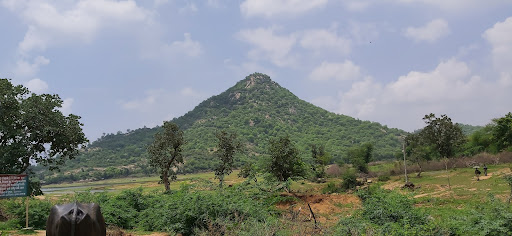
The name "sloth" is said to be the epithet travellers and hunters in India gave to the bear when they saw it hanging upside down from branches of trees and consequently they identified it with sloth, an animal that hangs upside down. While it is now known as sloth bear, initially it was called "bear sloth" since the game hunters identified this species with the sloth of South America as the physical characteristics and arboreal habits of both species matched. Towards the later part of the 18th century, its scientific name was Ursine bradypus, Ursiform sloth or Bradypus ursinus. But when in the early 19th century, a sloth bear, housed in a zoo in France, was examined, scientists identified it correctly as a bear species and thereafter the name was changed from "bear sloth" to "sloth bear".25] Jessore hill, which is the back drop to the sanctuary, is also prefixed to form the full name "Jessore Sloth Bear Sanctuary".[2
Ministry of Environment and Forests of the Government of India, Forest Department of Gujarat, well known Institutes and Universities of the country, stakeholders and local communities in and around the project area have been engaged in Conservation and Sustainable Management of Dryland Biodiversity of North Gujarat under a GEF/UNDP supported project with the objective of conservation of globally significant biodiversity. The two projects identified under the programme, as demonstration project sites were the Jessore and Balaram-Ambaji Sanctuaries. The information gathered under this project in respect of the Jessore Sloth Bear Sanctuary has enhanced the information base and is expected to help in building local establishments to adopt novel ideas to resolve the threats faced by the sanctuary.6]
GeographyEdit
The sanctuary is located in the Jessore hills of Aravalli hills, to the south of the Thar desert. It was declared a sanctuary covering an area of 180.66 square kilometres (69.75 sq mi) in 1978.[7 The sanctuary area lies between the desert ecosystem and the dry deciduous type of ecosystem, and the forested area helps in arresting desertification and advancement of Thar desert.[9]
The nearest airport is that of Ahmedabad, about 190 kilometres (120 mi) away. The nearest railway station is at Palanpur, 45 kilometres (28 mi) away, and iqbalgadh village is at 8 kilometres (5.0 mi) distance.[citation needed] The Sanctuary also houses two temples (one of them is the Kedarnath Mahadev temple), which are frequented by a large number of pilgrims during October–November, and a protected...
Read moreJessore Sloth Bear Sanctuary is situated in the Banaskantha district formerly under Palanpur State in the Indian state of Gujarat at the Gujarat-Rajasthan border. It was declared as a sanctuary in May 1978, covering an area of about 180 square kilometres (69 sq mi), principally for protection of the sloth bear, which is now categorized as "Vulnerable A2cd+4cd;C1 ver 3.1" on the IUCN Red List. Their numbers are declining in the wild and they are threatened with extinction.
The name "sloth" is said to be the epithet travellers and hunters in India gave to the bear when they saw it hanging upside down from branches of trees and consequently they identified it with sloth, an animal that hangs upside down. While it is now known as sloth bear, initially it was called "bear sloth" since the game hunters identified this species with the sloth of South America as the physical characteristics and arboreal habits of both species matched. Towards the later part of the 18th century, its scientific name was Ursine bradypus, Ursiform sloth or Bradypus ursinus. But when in the early 19th century, a sloth bear, housed in a zoo in France, was examined, scientists identified it correctly as a bear species and thereafter the name was changed from "bear sloth" to "sloth bear".Jessore hill, which is the back drop to the sanctuary, is also prefixed to form the full name "Jessore Sloth Bear Sanctuary".
Ministry of Environment and Forests of the Government of India, Forest Department of Gujarat, well known Institutes and Universities of the country, stakeholders and local communities in and around the project area have been engaged in Conservation and Sustainable Management of Dryland Biodiversity of North Gujarat under a GEF/UNDP supported project with the objective of conservation of globally significant biodiversity. The two projects identified under the programme, as demonstration project sites were the Jessore and Balaram-Ambaji Sanctuaries. The information gathered under this project in respect of the Jessore Sloth Bear Sanctuary has enhanced the information base and is expected to help in building local establishments to adopt novel ideas to resolve the threats faced by...
Read moreI had visited this wildlife sanctuary in the month of February 2019 while I was touring Gujrat. As I was staying in Balarampur Resort a classic Heritage Resort. And this site is close to the Resort. This is popular Jessore Sloth Bears Wildlife Sanctuary.
In 1978, in the vicinity of Jassore Hill, which is the arid and biodiversity land area of Aravalli Hill Range, was selected in India to save the extinct species of sloth bears. It was formerly part of the Palanpur princely state but now the Sanctuary is located in Iqbalgarh of District Banaskantha Gujrat, south of the Thar Desert. It's having a preserved land about 180 square kilometres. The forest area has stopped the desert from expanding further. This forest area is operated by the forest department and the government. There are hundreds of species of trees, shrubs, creepers, medicinal herbs, grasses etc. are found and recorded in this forest area. Among trees the Indian Fig which is known as Gular and Tendu are also found. These are sweet fruits and are the favourite of Sloth Bear. As Sloth Bear are fond of eating Termites, Ants and honey including these sweet fruits. They love to hang on trees up side down so they got the name. In this forest and on the River bank many wild animals like Leopard, Crocodile, Deers, wild boars, Heyena, Wolf, Vipers, Cobras, Lizards etc are recorded by the forest department. It's a home to many migratory birds and local birds like Grey Jungle Fowl, White bellied Minivet, White winged black tits, Indian vultures etc are also noticed. As Sloth Bears are the mammalian and Indian Pangolin along with other species are also found.
Due to Jessore hill it has got the name Jessore Sloth Bear Wildlife Sanctuary. It's a major attraction among the naturologist and environmentalists. Also a popular scenic place. Morning is the best time to visit and needs two hours to enjoy the nature and to spot the Sloth Bears and other animals including birds. It's a gateway for the famous pilgrimage and devotees attraction that is Shri Kedarnath...
Read more