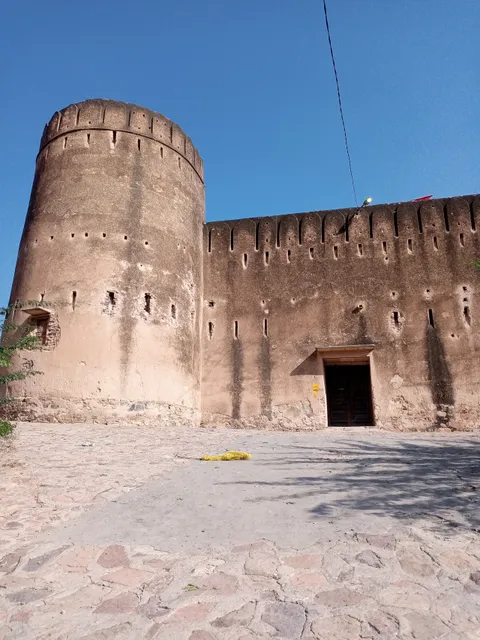
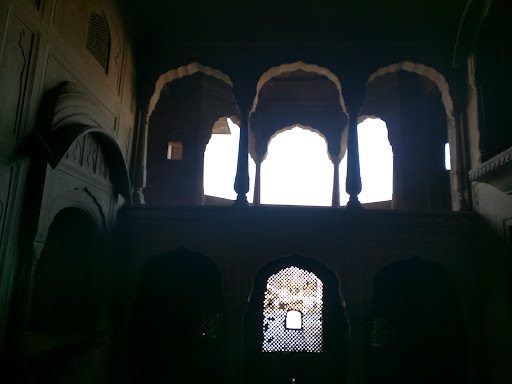
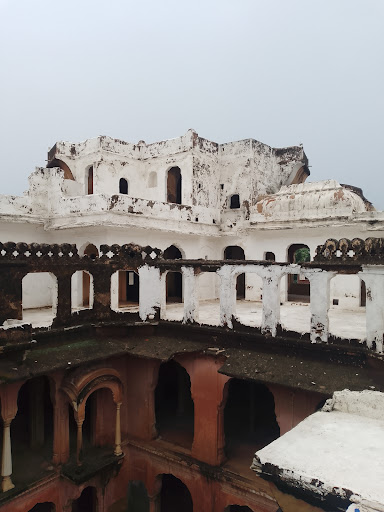
It is Nice Palace but because of Government it is in darkness. It wants take care but because of Currupt and Selfish Politicians it is not possible. If Government not do Take Care of this Beautiful Heritage Palace, One day it will destroyed.
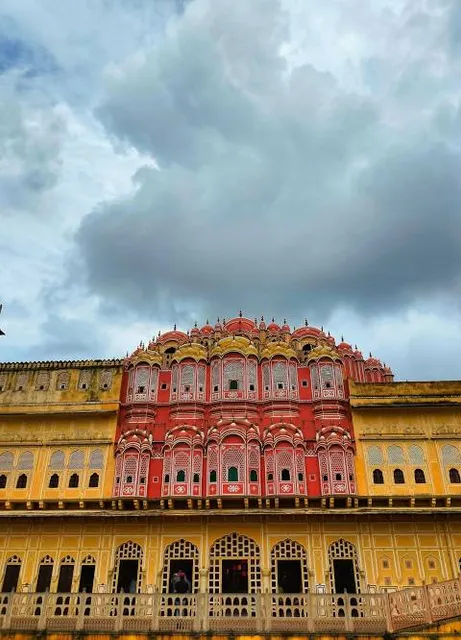
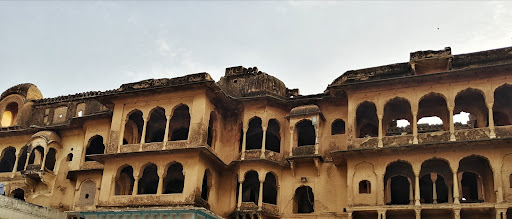
Khetri Mahal is located behind a series of lanes. It is considered to be one of the perfect examples of Shekhawati art and architecture. It is primarily known for its exquisite arrays of paintings and murals mainly supporting the Raghunath temple and Bhopalgarh fort. The uniqueness lies in the continuous flow of wind which invariably makes this structure stand apart from many other such buildings. Pillars have replaced the giant wall structures where ever possible in order to maintain the steady flow of gusting wind in the palace. One can notice the long ramp leading to the vast terrace of the Mahal from the entrance. This was specifically designed to provide ease to Rajputs in riding their horses. In fact the various levels of the Palace are combined with terrace through a series of such ramps. Another objective of these ramps was to provide high enough platform for ‘Thakurs’ to gaze down at their subjects without much effort. The view from the rooftop is particularly worth observing. You can also discover two small alcoves with the fragments of lost era paintings in the private chamber of Thakurs. Most of these paintings were in natural earth pigments. Inside of Khetri Mahal, one can explore huge graceful halls with intricately designed arches and pillars. The most amazing discovery you can make in Khetri Mahal is that it has no doors or windows quite unlike other Mahals. Most of the rooms instead are connected through each other by a well designed series of arches and columns. These arches and columns provide a beautiful symmetrical view to the Palace. The age old lime plaster has been left to its own glory and has a rosy shine in it. Though Khetri Mahal no doubt is one of the rare and unique structures of the Shekhawati era, but the forlorn state of this building is an unfortunate reality. The Palace state as of now certainly requires some immediate attention from the authorities. Such architecture is rare and soon fading, the upkeep and preservation of these unique structure and murals can surely be a huge boost to our Indian tourism...
Read moreKhetri Mahal in Jhunjhunu is a stunning example of historical Rajasthani architecture, often called the "Wind Palace" due to its intricate network of arches and open corridors. Visiting this palace offers a glimpse into the region's royal past, with its spacious courtyards, elegant colonnades, and dramatic facades still retaining an old-world charm. The views from the upper floors are especially impressive, giving a panoramic look at the surrounding Jhunjhunu town and hills.
Architectural Beauty
The Mahal is renowned for its graceful arches, airy halls, and traditional Rajasthani design, which are beautifully showcased in every corner.
Though some areas show signs of age, the structure remains a striking and photogenic spot, ideal for history lovers and photography enthusiasts.
Cultural and Functional Significance
Today, the Khetri Mahal is not just a heritage site but also serves as a hostel for the Kayamkhani community (a prominent Muslim martial caste), adding to its vibrant, lived-in feel.
Exploring the Mahal reveals both preserved sections and authentic daily life, blending historic grandeur with local culture.
Overall Experience
The palace is a must-visit for anyone traveling to Jhunjhunu, combining architectural beauty, cultural depth, and scenic vistas.
Visitors should be prepared for a bit of weathering and restoration needs, but this only adds to its authentic and atmospheric character.
The tranquil courtyards and echoing halls make for a memorable experience steeped in Rajasthan's royal heritage.
Highly recommended for history buffs, architecture admirers, and those wanting to connect with Jhunjhunu’s unique past...
Read moreKhetri Mahal (Hindi: खेतड़ी महल ), also known as the Wind Palace, is a classic example of palace architecture in the state of Jhunjhunu. It is now a ruin, attracting tourists and locals alike.
Khetri Mahal was constructed by Bhopal Singh around 1770. Bhopal Singh was the grandson of Sardul Singh. Maharaja Sawai Partap Singh of Jaipur built his Hawa Mahal, also known as the Wind Palace, on the model of the Khetri Mahal, in 1799. Khetri in itself was considered to be the second wealthiest ‘Thikana’ under Jaipur. Khetri Mahal is located behind a series of lanes. It is a paragon of Shekhawati art and architecture. It is primarily known for its fine paintings and murals mainly supporting the Raghunath temple and Bhopalgarh fort. The palace is remarkable among buildings of its region because of the flow of wind through its open portals rather than stopped windows or doors. Wind Palace Architecture of Mahal
Wherever structurally possible, the walls have been pierced with arched openings. The levels of the Palace are combined through a series of ramps, installed to facilitate the movement of horseback guests toward the terrace, which gives commanding views.
Two small alcoves contain fragments of older paintings in the private chamber of Thakurs. Most of these paintings were executed in natural earth pigments. The interior rooms are open and colonnaded, the columns often surmounted with openwork and curved arches.
Khetri Mahal
Address: Bada Mohalla, Kajiwada Mohalla, Jhunjhunu,...
Read more