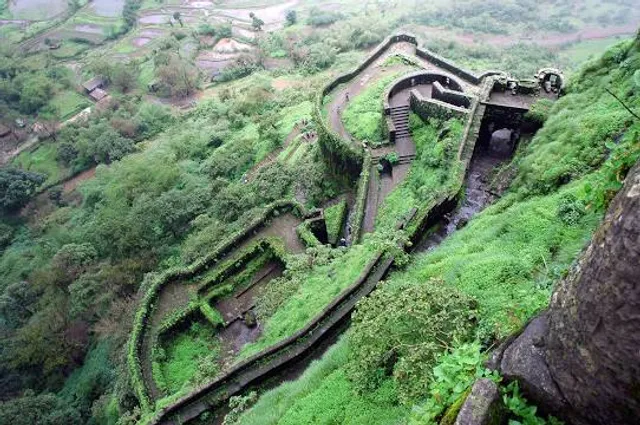
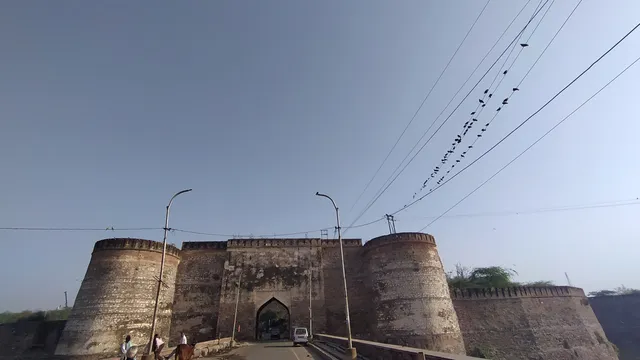
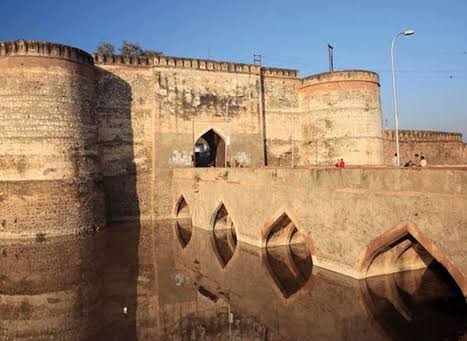
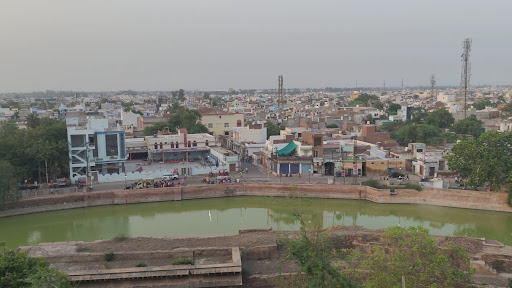
Intro Lohagarh Fort, also known as the Iron Fort, is a formidable historic stronghold in Bharatpur, Rajasthan, India, renowned for its impregnable architecture and military legacy. Unlike the ornate forts of Rajasthan, Lohagarh’s rugged design reflects strength over aesthetics, earning its name for withstanding multiple sieges, including a famous 1805 British assault. Today, it’s a key tourist attraction, housing museums and monuments that showcase Bharatpur’s Jat heritage and offering a glimpse into its storied past.
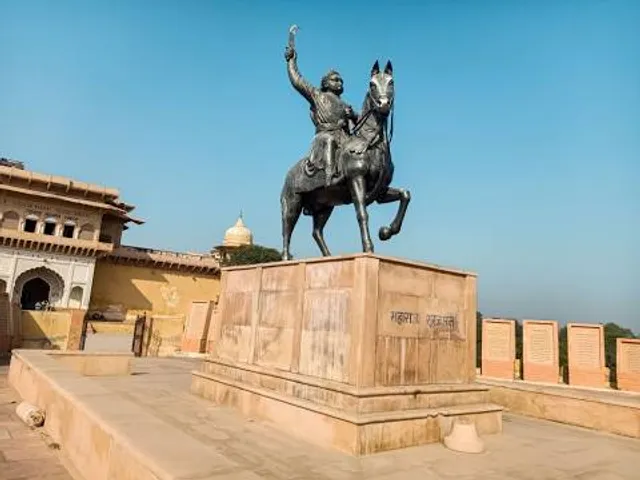
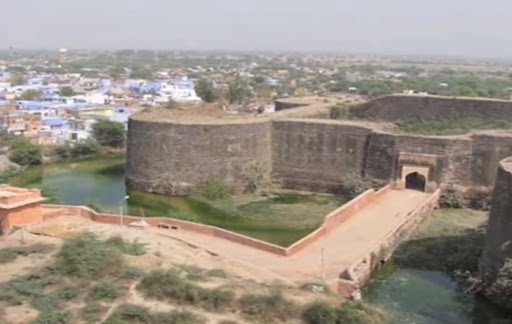
History Built in 1732 by Maharaja Suraj Mal, the founder of the Jat dynasty in Bharatpur, Lohagarh was designed as a defensive fortress. Its thick mud walls and double moats repelled invasions, notably enduring a 13-week siege by Lord Lake’s British forces in 1805, forcing their retreat—a rare feat in colonial India. The fort was expanded by later rulers like Jawahar Singh, and its palaces, like Kamra Khas, were added for royal residence. It remained the Jat capital until Bharatpur’s integration into independent India in 1947. Recent conservation efforts by the state archaeology department aim to preserve its crumbling sections.
Location Lohagarh Fort is centrally located in Bharatpur, Rajasthan, near Mathura Gate, about 2 km from Bharatpur Railway Station and 5 km from the main bus stand. It’s 55 km west of Agra (Taj Mahal) and 180 km south of Delhi, accessible via NH-21 and NH-123. The fort sits amid Bharatpur’s urban sprawl, close to the Keoladeo National Park (4 km), a UNESCO World Heritage Site, making it a convenient stop for heritage and wildlife enthusiasts.
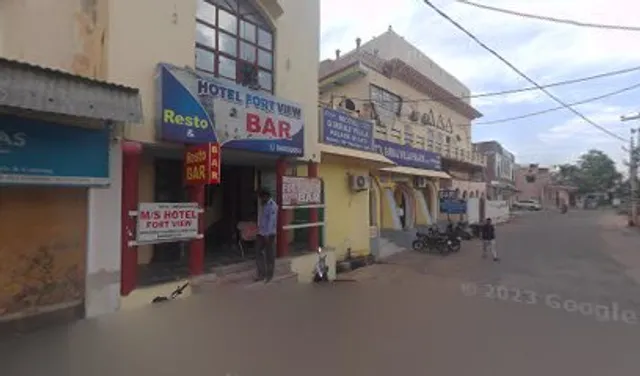
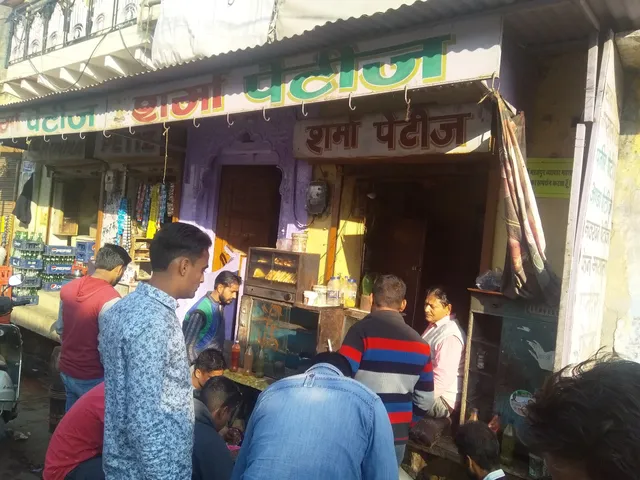
Facilities and Amenities Available Museums: The Government Museum inside Kamra Khas Palace displays Jat artifacts, weapons, miniature paintings, and sculptures (Rs. 10 entry, Rs. 50 for foreigners). Monuments: Includes Ashtdhatu Gate, Jawahar Burj, Fateh Burj, and royal cenotaphs showcasing Jat victories. Rest Areas: Benches in shaded courtyards; no formal waiting rooms. Food and Drink: No eateries inside; nearby stalls outside Mathura Gate sell snacks and water (Rs. 20-50). Accessibility: Wheelchair ramps at the main entrance; uneven terrain in parts may challenge mobility.
Other: Basic restrooms near the museum, free parking outside, and local guides (Rs. 200-500 for 1-2 hours). No Wi-Fi or cloakrooms.
Nearby: Bharatpur Palace (1 km) and street markets for souvenirs.
Best Time to Visit October to March is ideal, with pleasant weather (10°C-30°C) perfect for exploring the fort’s open areas.
Timings The fort is open daily from 9:00 AM to 5:00 PM. The Government Museum inside operates from 10:00 AM to 4:30 PM, closed on Mondays and public holidays like Holi and Diwali. Last entry is typically 30 minutes before closing to ensure a full visit.
Entry Fees, If Any Fort Entry: Free for the main premises, including Jawahar Burj and Fateh Burj. Museum Entry: Rs. 10 for Indian adults, Rs. 5 for students, Rs. 50 for foreigners; children under 12 free. Camera Fee: Rs. 20 for still photography, Rs. 50 for videography (museum only). Guide Fee: Optional, Rs. 200-500 depending on group size and duration. Cash is preferred; carry small denominations for convenience.
Points to Keep in Mind Crowds: Weekends and holidays (Diwali, Republic Day) see more visitors; visit early (9:00 AM) for quieter exploration. Safety: Watch for uneven stone paths and steep steps, especially in Ganga Mandir and Kishori Mahal. Keep valuables secure in crowded areas. Guides: Hire certified guides near the ticket counter for historical insights; negotiate rates upfront. Essentials: Carry water, sunscreen, and hats—summers are harsh, and shade is limited. No food is allowed inside to maintain cleanliness. Photography: Allowed freely outside; museum has restrictions (no flash). Drones require prior permission. Accessibility: The fort’s rugged layout isn’t fully wheelchair-friendly beyond the entrance; plan accordingly. Nearby Sites: Combine with Keoladeo National Park (4 km), Deeg Palace (35 km), or Bharatpur Palace...
Read moreLohagad fort Maharaja Surajmal had envisaged an imposing fort, under which the condition was that the money was too low and was insolent in strength. Raja Sahab had a detailed discussion with the mentor darbario and scholars on this subject, keeping in mind the tools of the war and its mortal ability, the decision was taken to build the fort, on which the strong doors on both sides of the castle, with sharp edges of iron | At that time, the popularity of toopo and barud was very high, so that strong strong walls of kilos could easily be demolished. Therefore, the high width of the high stone was made of high width of the fort, now it is not affected by the Tope's gole, so that the wall of the hundreds of four-footed rough clay around these walls was made and down to make a hundred feet deep and wide trench The water was filled up in it, due to which by the enemy, the gunpowder was shot on the walls, then they should be buried in the soil, and if they struck down, then water should settle down. And crossing the water and climbing on the flat wall was not difficult. In difficult times, the soldiers used to close the castle door, behind the paved walls and on the door, the Front Lekar used to make the whole fort easily impermeable. In which fortress there was no iron, and on the strength of its impenetrable iron was called Lohgarh. Who, from time to time, had made donations of enemies and made the enemy compelled to make his iron. Such was the remote king of Bharatpur. Lohgarh fort was built by Jat ruler Maharaja Surajmal in the beginning of the 18th century. This fort is a symbol of courage and bravery of Jat rulers of Bharatpur. Due to its security system, this fort was known as Lohgarh. The fort is surrounded by four deep pitchers, which provide protection. Although the Lohgarh fort is not as glorious as the other forts of this area, its power and grandeur is wonderful. Important places inside the fort are: Kishori Mahal, palace special, Moti Mahal and Kothi special. Surajmal built Jawahar Burj and Fateh Burj inside the fort in memory of his victory over the Mughals and the British. There is also a door made of Ashtavatu in which huge pictures of...
Read moreLohagarh Fort, which was constructed by Jat ruler Maharaja Suraj Mal in the 18th century, is one of the finest architectural monuments in Rajasthan. Though the fort is not associated with richness, it depicts an atmosphere of strength and glory as it once featured a highly creative defense system that protected it every time. It was in fact named as the Lohagarh Fort, or Iron Fort, due to its invincibility at the time when British attempted to conquer it.
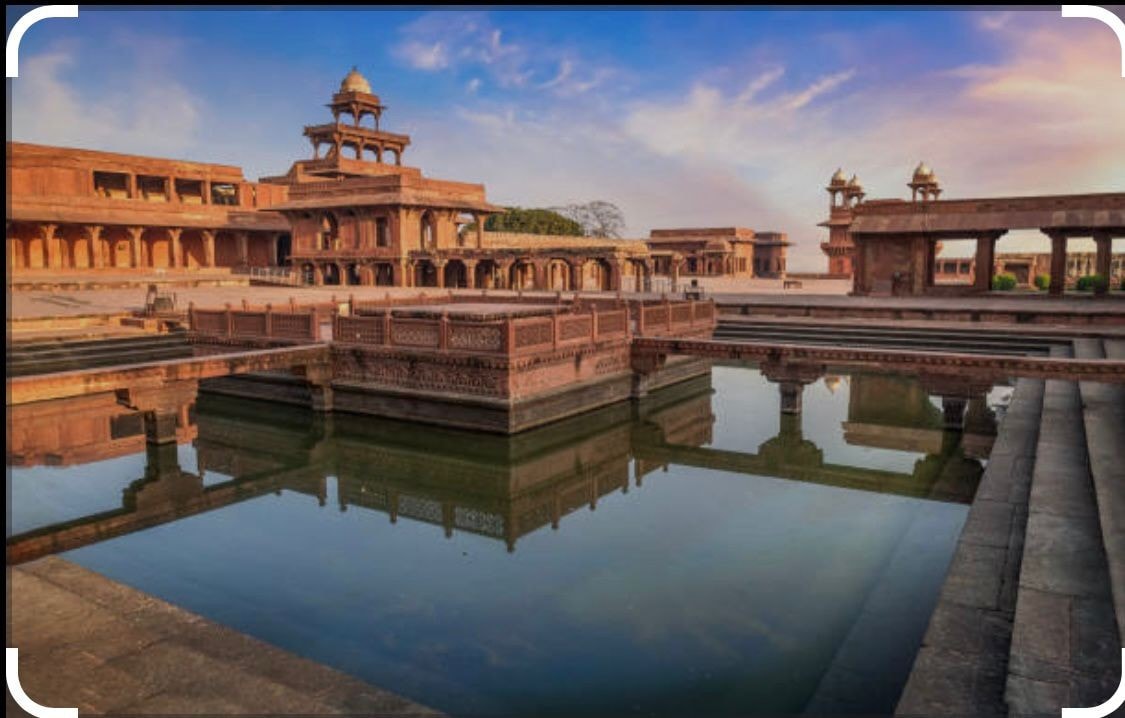
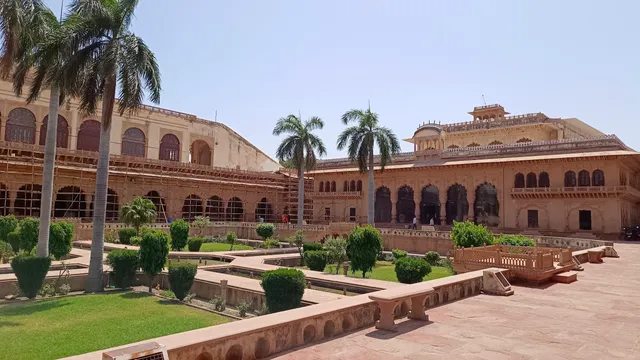
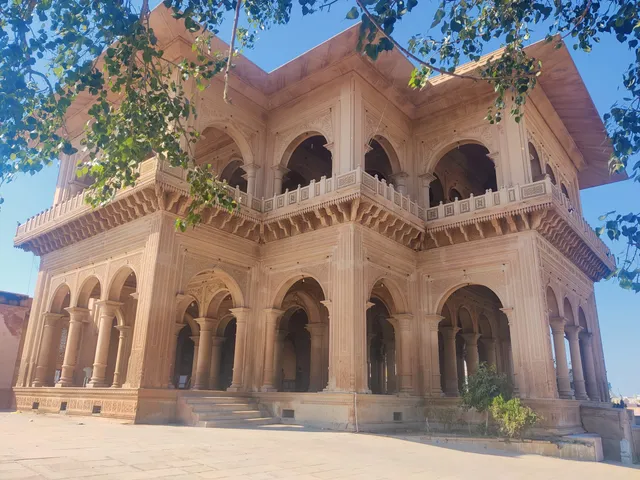
One of the strongest forts ever built in Indian history, Lohagarh Fort has two gates; Ashtdhaatu (eight-metalled) to the north and Chowburja (four-pillared) to the south. The fort encompasses three palaces; Mahal Khas, Kamra Mahal and Purana Mahal. Of these, the Kamra Palace now serves as the State Archaeological Museum. The sandstone durbar, which was once Maharaja's meeting hall, has also been transformed into a museum, lately.
The government museum within the fort exhibits articles like weapons and safety shields. Antiques such as hunted animals, wood articles, jewellery boxes and ornaments are also displayed here. Between the museum and the main entrance lies the Nehru Park, where visitors can just sit and enjoy. The fort is surrounded by deep moats that once thwarted at least four British attempts to lay siege to the Iron Fort.
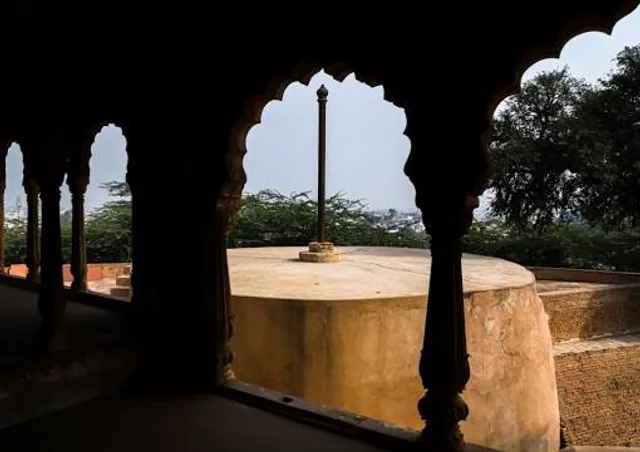
Two towers, Jawahar Burj and Fateh Burj, which were constructed within the walls of the fort for celebrating the victories over Mughals and British, still stand erect. Moti Mahal was constructed to commemorate the victory of the king. Inscribed with the genealogy of the Jat kings, an iron pillar called Vijay Stambha (Victory Column) stands erect in the palace complex. The complex of Iron Fort also houses a Ganga Temple and a Laxman Temple.
An art gallery housed inside the fort exhibits specimens of miniature paintings on peepal leaves, mica and old lithopapers. Old portraits of the Maharajas of Bharatpur are also displayed at this gallery. At the upper storey of the gallery is the Armoury section, displaying various types of guns and...
Read more