Wow superb place for tourists
Meera, also known as Mirabai2, was a 16th-century Hindu mystic poet and devotee of Lord Krishna. She is a celebrated Bhakti saint, particularly in the North Indian Hindu tradition.3
Meera
Meerabai 1.jpg
Raja Ravi Varma's painting of Meera Bai
Other names
Mirabai
Meera Bai
Personal
Born
c.14981]
Kudki, Pali district, Jodhpur State, Rajasthan
Died
c.1573, Dwaraka
Religion
Hinduism
Spouse
Bhojraj Singh Sisodia
Known for
Poet Bhakti movement, Vaishnavism (Lord Krishna)
Other names
Mirabai
Meera Bai
Mirabai was born into a Rajput royal family in Kudki, Pali district, Rajasthan, Mira then spent her childhood in Merta, Rajasthan. She is mentioned in Bhaktamal, confirming that she was widely known and a cherished figure in the Bhakti movement culture by about 1600 CE.[5] Most legends about Meera mention her fearless disregard for social and family conventions, her devotion to Lord Krishna, her treating Lord Krishna as her husband and being persecuted by her in-laws for her religious devotion.[1 She has been the subject of numerous folk tales and hagiographic legends, which are inconsistent or widely different in details.1 Millions of devotional hymns in passionate praise of Lord Krishna are attributed to Meerabai in the Indian tradition, but just a few hundred are believed to be authentic by scholars, and the earliest written records suggest that except for two hymns, most were written down only in the 18th century.7] Many poems attributed to Meera were likely composed later by others who admired Meera. These hymns are commonly known as bhajans, and are popular across India.[8] Hindu temples, such as in Chittorgarh fort, are dedicated to Mira Bai's memory.[1] Legends about Meera's life, of contested authenticity, have been the subject of movies, comic strips and other popular literature in modern times.[9]
Biography Edit
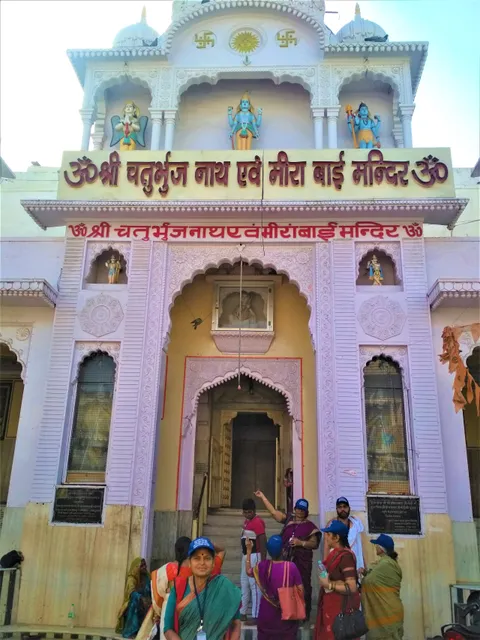
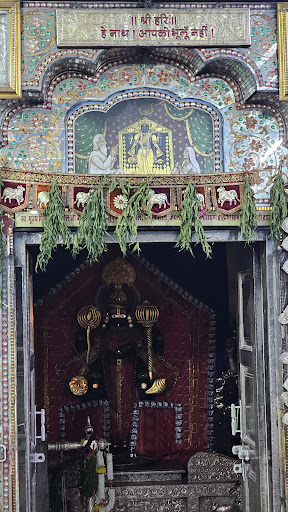
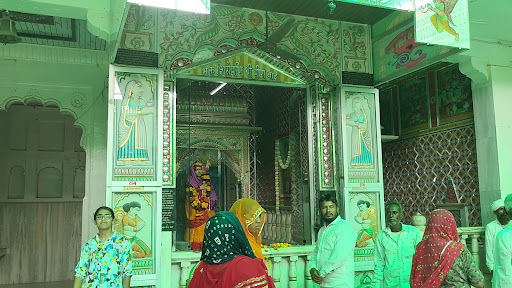
Meera's temple to Krishna at Chittor Fort, Rajasthan
Authentic records about Meera are not available, and scholars have attempted to establish Meera's biography from secondary literature that mention her, and wherein dates and other moments. Meera unwillingly married Bhoj Raj, the crown prince of Mewar, in 1516.[10 Her husband was wounded in one of the ongoing wars with the Delhi Sultanate in 1518, and he died of battle wounds in 1521. Both her father and father-in-law (Rana Sanga) died a few days after the battle of Khanwa in exile as they had vowed not to return to Mewar until they had defeated Babur.
After the death of her father-in-law Rana Sanga, Vikram Singh became the ruler of Mewar. According to a popular legend, her in-laws tried many times to assassinate her, such as sending Meera a glass of poison and telling her it was nectar or sending her a basket with a snake instead of flowers.2 According to the hagiographic legends, she was not harmed in either case, with the snake miraculously becoming a Krishna idol (or a garland of flowers depending on the version).6 In another version of these legends, she is asked by Vikram Singh to go drown herself, which she tries but she finds herself floating on water.[12] Yet another legend states that the Mughal emperor Akbar came with Tansen to visit Meera and presented a pearl necklace, but scholars doubt this ever happened because Tansen joined Akbar's court in 1562, 15 years after she died.[12] Similarly, some stories state that Guru Ravidas was her guru (teacher), but there is no corroborating historical evidence for this. Some versions suggest this could likely have happened. Others disagree.[12]
The three different oldest records known as of 2014 that mention Meera,[13] all from the 17th century and written within 150 years of Meera's death, neither mention anything about her childhood or circumstances of her marriage to Bhojraj, nor do they mention that the people who persecuted her were her in-laws or from some Rajput royal family.[14] Nancy Martin-Kershaw states that to the extent Meera was challenged and persecuted, religious or social conventions...
Read more
 Learn more insights from Wanderboat AI.