After visiting this location, I am very surprised to find out that why this location is not a major tourist destination. May be it is because of its location, as it is almost 90 KMs from Kota as well as from Chittorgarh. Thus, not having proximity to any nearby major city may be the cause here.
Anyways, coming back to the Waterfall, it is an extremely awesome place to visit, especially with friends and family.
When I was reaching there,I had an image of a typical waterfall in my mind, where water was flowing from a steep hill above and it's getting collect ing into a pool sort of area before moving away in a stream. But when I reached there, I found that it was much more than that.
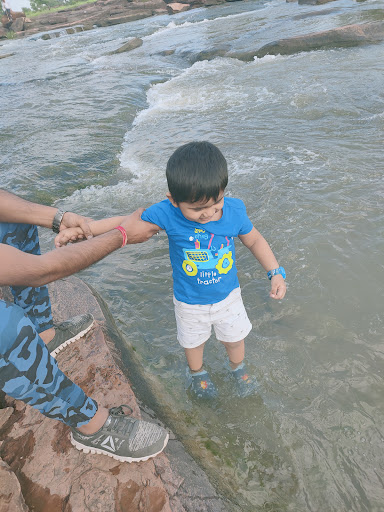
Firstly, there is a stream of river, in a shoehorn shape, that moves calmly ahead, without much speed. So, you can easily wade into it and click photos by going in the middle of it. The whole area surrounding the stream is very scenic and gives you a feeling of calmness as you sit there in the midst of nature.
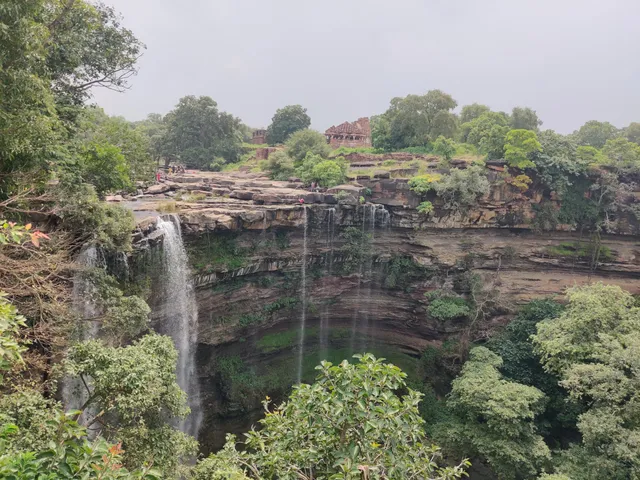
Then, after completing the shoehorn, it falls from a good height from a steep hill. So, unlike other waterfalls, you are in the top of the waterfall and not get the bottom. This gives you a new and majectic look at a waterfall.
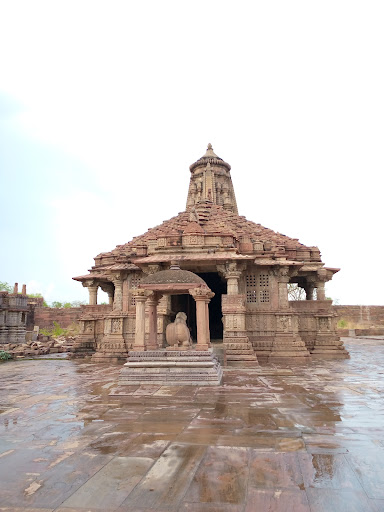
Apart from the river stream and waterfall, there are two 12th century old temples as well. Both on opposite sides of the river stream. While one was small and on a higher ground, where you can reach by climbing few steps; the other one was grand and on the platform itself. But both the temples are extremely beautiful. Although, when we reached there, they were closed due to COVID, but whatever we could see of them, left us awestruck.
Overall, we had a great experience here. It felt like we have rolled back several decades and have reached the ancient times. The still non-commercialization of the area also adds to it.
The only downfall, apart from the distance, is that no proper road is built from the main highway to the water fall. And also there are no signages as well.
Overall, it was a great experience. Do plan a trip here and it is a...
┬а┬а┬аRead moreNestled in the heart of Rajasthan's rugged terrain, Menal Waterfall emerges as a serene retreat, offering a picturesque blend of natural beauty and historical grandeur. Often referred to as the 'Mini Khajuraho' due to its ancient temples reminiscent of the iconic Khajuraho Group of Monuments, Menal is not just a waterfall but a symphony of cascading waters and architectural marvels. The waterfall itself, plunging from a considerable height, is a sight to behold, especially during the monsoon when its full might is unleashed, drawing visitors and photography enthusiasts to capture its majestic flow.
The surrounding area, rich with verdant foliage and the echoes of water hitting the rocks, provides a tranquil backdrop for the Menal Temples, which stand as a testament to the Chauhan dynasty's architectural prowess. Intricate carvings and stone structures narrate stories of a bygone era, inviting history buffs and spiritual seekers alike. The Mahanaleshwar Temple, dedicated to Lord Shiva, is particularly noteworthy for its pyramidal roof and pillared hall, which are enhanced by the soothing melody of the nearby falls.
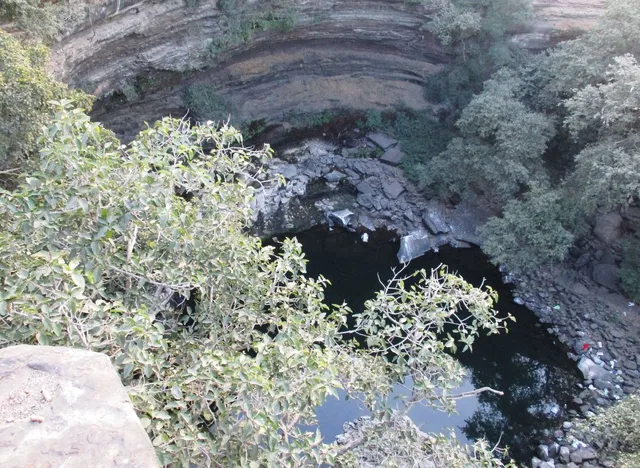
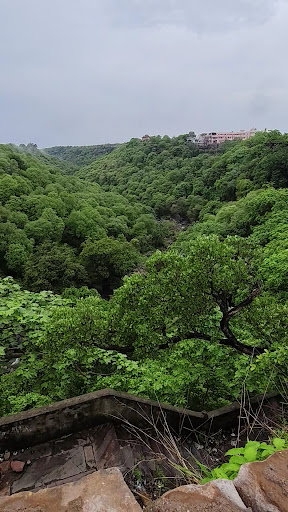
For adventure seekers, the rugged terrain around Menal offers exhilarating hikes, with trails leading through the Aravalli Range, offering expansive views that are sure to leave an indelible mark on one's memory. The natural pool formed at the base of the waterfall serves as a refreshing oasis for those looking to escape the desert heat, making it a popular spot for picnics and leisurely swims.
Despite its many attractions, Menal maintains an air of tranquility, undisturbed by the hustle and bustle of city life. It's a place where one can immerse in the cultural richness of Rajasthan while being surrounded by nature's splendor. Whether it's the historical significance, the architectural beauty, or the natural wonders, Menal Waterfall stands out as a must-visit destination for anyone traveling through...
┬а┬а┬аRead moreAttractions of Menal Waterfall:
Here the water falls from a height of 150 feet in a V-shaped valley with great force. During the rainy season (July to Mid-September), the sound of the waterfall can be heard from a long distance. During this season, the Menali river flows and meets at Triveni with Banas and Badech rivers.
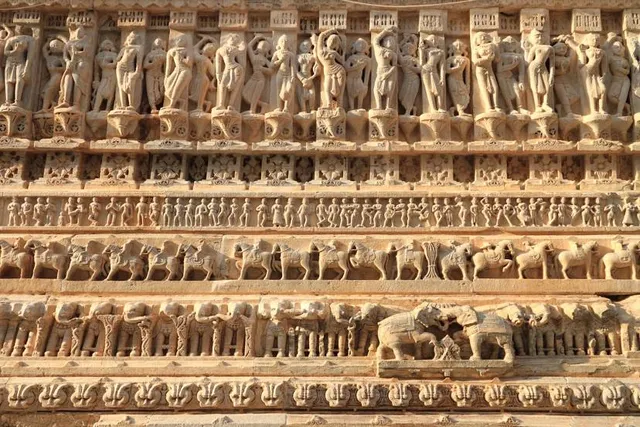
The ruins of a 12th Century Palace built by King Prithviraj Chauhan (1170-1192 A.D.), the Rajput ruler of Delhi and Ajmer, are located on the banks of the Menali river. This Palace was used by him as a mountain retreat during the scorching Summers of Rajasthan. It has a two-storeyed main gateway, carved with the images of Lord Ganesha and Lord Bhairava. There is a square courtyard beyond the entrance which houses a huge Shiva Temple made of stone, built in the ancient Hindu style of architecture with a carved pagoda and pillars. The walls of the Temple are carved with motifs of Hindu deities and various other themes, interspersed with images of elephants. The images of Lord Shiva and Goddess Parvati are depicted in various postures and are surrounded by dancers, musicians, lesser Gods and animals. A large stone lion is located halfway up the pagoda. The Shiva Temple is surrounded by a number of smaller...
┬а┬а┬аRead more