HTML SitemapExplore
logo
Find Things to DoFind The Best Restaurants

Nagaur Fort — Attraction in Rajasthan

Name
Nagaur Fort
Description
Nearby attractions
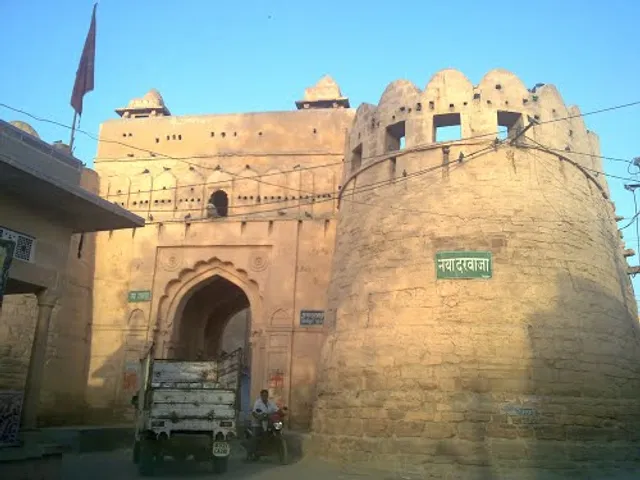
Naya Darwaja
6P3H+QPX, Karni Colony, Nagaur, Rajasthan 341001, India
Nearby restaurants
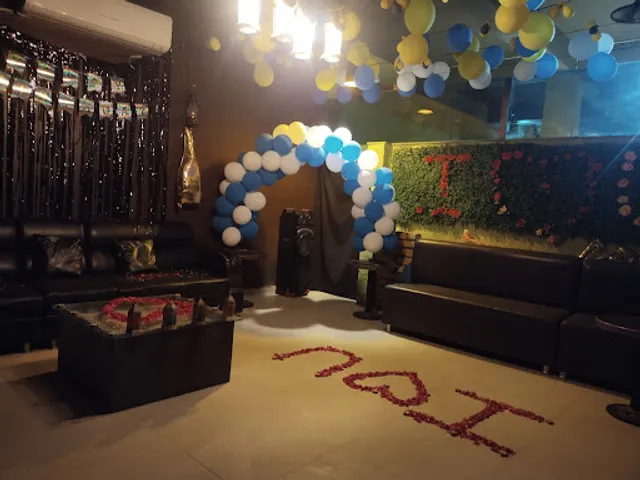
RJ 21 : The Food Court & Cafe | Best Fast Food Restaurant in Nagaur | Best Cafe in Nagaur | Best Party Place in Nagaur
First Floor, Near Indusind bank, Nakas, Gate, Nagaur, Rajasthan 341001, India
Related posts
Keywords
Nagaur Fort tourism.Nagaur Fort hotels.Nagaur Fort bed and breakfast. flights to Nagaur Fort.Nagaur Fort attractions.Nagaur Fort restaurants.Nagaur Fort travel.Nagaur Fort travel guide.Nagaur Fort travel blog.Nagaur Fort pictures.Nagaur Fort photos.Nagaur Fort travel tips.Nagaur Fort maps.Nagaur Fort things to do.
Nagaur Fort things to do, attractions, restaurants, events info and trip planning
Nagaur Fort
IndiaRajasthanNagaur Fort

Basic Info

Nagaur Fort

5PXP+JXP, Bhandariyon Ki Gali, Nagaur, Rajasthan 341001, India
4.3(2.2K)
Open until 1:00 PM
Save
spot

Ratings & Description

Info

Cultural
Outdoor
Family friendly
attractions: Naya Darwaja, restaurants: RJ 21 : The Food Court & Cafe | Best Fast Food Restaurant in Nagaur | Best Cafe in Nagaur | Best Party Place in Nagaur
logoLearn more insights from Wanderboat AI.
Website
nagaur.rajasthan.gov.in
Open hoursSee all hours
Fri9 AM - 1 PM, 2 - 5 PMOpen

Plan your stay

hotel
Pet-friendly Hotels in Rajasthan
Find a cozy hotel nearby and make it a full experience.
hotel
Affordable Hotels in Rajasthan
Find a cozy hotel nearby and make it a full experience.
hotel
The Coolest Hotels You Haven't Heard Of (Yet)
Find a cozy hotel nearby and make it a full experience.
hotel
Trending Stays Worth the Hype in Rajasthan
Find a cozy hotel nearby and make it a full experience.

Reviews

Nearby attractions of Nagaur Fort

Naya Darwaja

Naya Darwaja

Naya Darwaja

4.2

(1.1K)

Open until 12:00 AM
Click for details

Nearby restaurants of Nagaur Fort

RJ 21 : The Food Court & Cafe | Best Fast Food Restaurant in Nagaur | Best Cafe in Nagaur | Best Party Place in Nagaur

RJ 21 : The Food Court & Cafe | Best Fast Food Restaurant in Nagaur | Best Cafe in Nagaur | Best Party Place in Nagaur

RJ 21 : The Food Court & Cafe | Best Fast Food Restaurant in Nagaur | Best Cafe in Nagaur | Best Party Place in Nagaur

4.1

(360)

$

Click for details
Get the Appoverlay
Get the AppOne tap to find yournext favorite spots!
Wanderboat LogoWanderboat

Your everyday Al companion for getaway ideas

CompanyAbout Us
InformationAI Trip PlannerSitemap
SocialXInstagramTiktokLinkedin
LegalTerms of ServicePrivacy Policy

Get the app

© 2025 Wanderboat. All rights reserved.
logo

Reviews of Nagaur Fort

4.3
(2,207)
avatar
4.0
8y

Nagaur

Nagaur wasn’t on our original Rajasthan itinerary but then, so far in our journey, we haven’t really followed any of our planned itineraries completely. In fact, at most times we haven’t even had an itinerary in the first place! But that’s beside the point. We were in Nagaur in February to witness the town’s annual cattle fair and we couldn’t leave there without exploring at least a wee bit of it¦

Nagaur is an ancient town, having been under the rule of conquerors from vastly different cultures. Nothing epitomizes this better than the 4th century Ahichhatragarh Fort, which was originally built by the Nagavanshi clan (hence the name that means ‘Fort of the Hooded Cobra’!) but rebuilt in the 12th century by the Ghaznis to include palaces and mosques. Over time it gained a distinct Rajput-Mughal architectural design as gardens, temples and fountains were added. Since Emperor Akbar’s rule, the Nagaur Fort complex was held by the princes of Rajasthan and even today is managed by trust funds belonging to the erstwhile royal families.

When we heard that the Nagaur Fort was being managed by the Mehrengarh Fort Trust, which manages Jodhpur’s fabulous Mehrengarh Fort, we knew we had to visit it. After all, the Jodhpur fort is one of the most well-preserved and well-presented fort that we had been to. Nagaur being a small town, getting to the fort wasn’t hard; just a Rs.40 auto-rickshaw ride away from our hotel. We got there at 4pm knowing that we had just about a couple of hours to explore the place before it closed for the evening. How we wish we had had more time¦

The outer entrance of the Nagaur Fort is smack in the middle of a crowded market area but once we stepped into the long stone alley that leads up to the inner wall with its main entrance and ticket counter, everything turned serene and under control. We could immediately see the trust funds at work – no litter, polite staff and beautifully preserved buildings. We debated whether we should ramble through the fort ourselves or avail of guide services. In most cases we prefer walking around on our own unless it’s a historically significant monument like the Agra Fort or the Red Fort; this one didn’t really fall in that category. However, since we were short on time, we decided to hire an authorized guide, of whom there seemed to be many in the complex. That was the best decision ever!

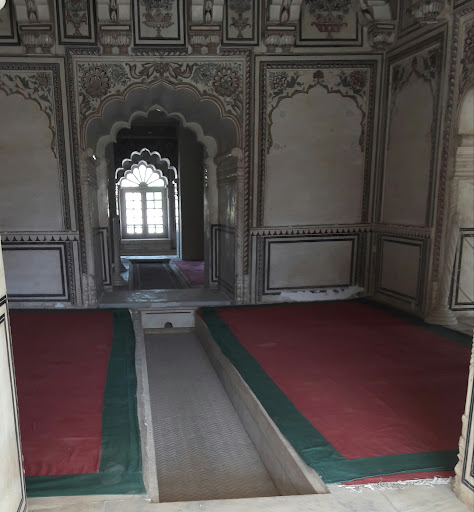
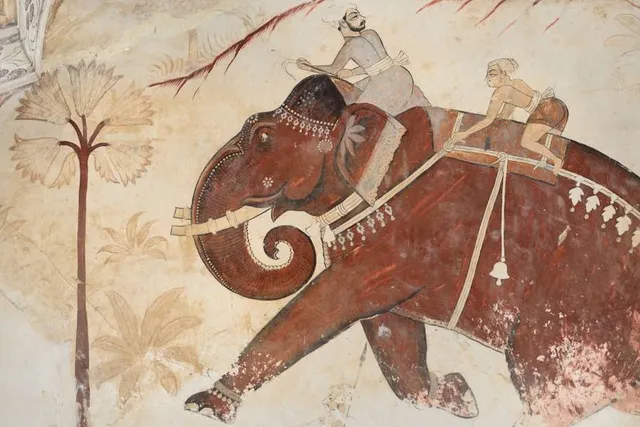
Our guide turned out to be knowledgeable and spoke really well. He ensured that we covered every aspect of the fort and made the maximum use of our short time there. And there was so much to cover! The Nagaur Fort has some unbelievably gorgeous palaces. The biggest and most popular one amongst them, the Hadi Rani Mahal, named after one of the town’s renowned queens had some exquisite murals and Jharokhas with intricate lattice-work. In fact, it is said that this palace has some of the best examples of the celebrated Nagaur style of paintings. Another palace called the Deepak Mahal had Persian-style floral designs and several niches in the inner walls to hold lamps. The Abha Mahal had the most water features in the form of channels, fountains and hamams. The Akbari Mahal was built to commemorate the recapture of Nagaur by the Mughals in the mid-16th century and it was probably the best example of Rajput-Mughal style of architecture. The guide took us to the upper floors of the palace from where we had a bird’s eye view of the entire complex and it looked gorgeous – perfect setting for a Bollywood movie!

We were mesmerized by all this but what we loved most were the central courtyards, which had fountains, gardens and pools spread all over. The guide said that such a large number of water bodies ensured that the palace grounds remained cool and fragrant even during the oppressive summers of the desert. These are, of course, dry at the present.

The fort complex also includes two temples dedicated to Lord Krishna and Lord Ganesha, both of which have primitive paintings and murals. A beautiful mosque built by Emperor Shah Jahan and therefore called the Shah Jahani...

   Read more
avatar
4.0
8y

The Nagaur Fort is of historical importance. Nagaur fort is the fort built by the ancient Kshatriya of India. The original maker of the fort is Naagvansi Kshatriya. The Kshatriya rulers dominated Nagaur for a longer period. Nagaur ruler were repeatedly forced to pay tribute to the Sisodias of Chittor while their lands were slowly annexed by the Rathors of Jodhpur.

In the medieval era the town of Nagaur sat astride trade routes coming north from Gujarat and Sindhand those on the west crossing the Indus from Multan. With a dead flat plain all around, the defense of the fort depended on the military and economic power of its rulers—and from the period of the Ghaznavid invasions Nagaur was under the powerful Chauhan clan. A succession of rulers kept the whole of Jangladesh free from foreign rule down to the reign of Prithviraj Chauhan III at the close of the 12th Century. That Nagaur town came under the invaders is clear since Balban, before becoming Sultan, was given an estate centered on this desert town. But just as there were petty Hindu chiefs (of numerous castes) in the vast lands between Ajmer and Delhi, it is reasonable to suppose that such landholders were also present in the lands between Ajmer and Nagaur, paying land revenue to the Muslims and probably joining their army.

Another similarity between Ajmer and Nagaur is the early founding of Sufi shrines at both places. One of the earliest Sufis to come to Nagaur was Sultan Tarkin, whose shrine was established during Hindu rule. After Khwaja Moinuddinestablished the Chishti Sufi order at Ajmer one of his disciples, named Hamiduddin, came to Nagaur. Hamiduddin accommodated some Hindu principles in his teachings—he became a strict vegetarian and lovingly reared a cow in his shrine.

In 1306 a Mongol army ravaged Nagaur. The Khalji Turks had begun pushing deeper into the lands of the independent Rajput rulers and even further into South India. In the midst of this expansion they lost some of the important Rajput forts like Jaisalmer, Chittor, and Siwana, while guerrilla warfare made the regions of Marwar and Mewarimpassable for the Muslim armies. Some of the other forts and towns were lost to the Rajputs after the break-up of the Delhi Sultanate in 1351. With the death of Firuz Tughlaq in 1388, the remaining strongholds like Ajmer and Nagaur came under their own hereditary governors. Turks of the Dandani tribe became Sultans, The Sultans of Nagaur taxed the money earned by the people from trade, agriculture, and from the vast herds of cattle, goats, and camels. In addition, like in the Delhi Sultanate, jaziya and a pilgrimage tax taken from Hindus brought significant sums to the treasury and enabled the Dandani Turks to match their neighbors in battle.

While Nagaur was still swearing a nominal allegiance to Delhi, two ominous events occurred in the neighborhood within a short period. One was the campaign of Rana Lakha (1389–1404) of Mewar, which saw a Rajput army ravaging Ajmerand pushing on to the Jhunjhunun region near Delhi. The second was the capture of Mandore by Rao Chunda (1390–1422) of the Rathor clan—this city henceforth became the Rathor capital and gave Rao Chunda a convenient base for attacking Nagaur.

Rao Chunda also changed horses mid-stream and formed an alliance with Mewar, where the Rathor princess Hamsabai was married to the old Rana Lakha, who in turn promised to make her son the next Rana. On the strength of this alliance Chunda subdued Rajput clans like the Bhatis and Mohilsand again invaded Nagaur, forcing Muslim rulers to make peace by paying him tribute. In 1422 these three defeated powers made an alliance and killed Chunda on the outskirts of Nagaur—Chunda’s son Ranamalla was then at Mewar and his brothers sought to capture the throne at Mandore

With the help of the Mewar army, Ranamall defeated his brothers and became the head of the Rathor clan. In 1428 he led this joint Sesodia-Rathor army to punish the Turks of Nagaur where he stormed the fort and killed Firuz...

   Read more

avatar
5.0
9y

The city was at the center of Musliminvasion from Central Asia. The fort is of historical importance.[1] The Rajput rulers dominated Nagaur for a longer period. Nagaur ruler were repeatedly forced to pay tribute to the Sisodias of Chittor while their lands were slowly annexed by the Rathors ofJodhpur. In fact the case of Nagaur vividly illustrates the turning back of the tide of Islamic conquests in Rajputana in the 14th and 15th Centuries. Nagaur, north toBikaner, and up to the border of Punjab, was called Jangladesh in ancient times. The remains of some of the earliest settlements along the banks of the long dried-upSaraswati River can be seen to this day—in a later age it came under the Naga rulers after whom the town of Nagaur (Naga-pura) is named.

The name of Jangladesh was known till a very late period. The Rajput rulers of Bikaner, whose territory eventually embraced the bulk of Jangla country, sported the title Jai Jangaldhar Badshah, which was emblazoned on the state coat of arms during the British Raj. In the medieval era the town of Nagaur sat astride trade routes coming north from Gujarat and Sindh and those on the west crossing the Indus fromMultan. With a dead flat plain all around, the defense of the fort depended on the military and economic power of its rulers—and from the period of the Ghaznavid invasions Nagaur was under the powerful Chauhanclan. A succession of rulers kept the whole of Jangladesh free from foreign rule down to the reign of Prithviraj Chauhan III at the close of the 12th Century. That Nagaur town came under the invaders is clear sinceBalban, before becoming Sultan, was given an estate centered on this desert town. But just as there were petty Hindu chiefs (of numerous castes) in the vast lands betweenAjmer and Delhi, it is reasonable to suppose that such landholders were also present in the lands between Ajmer and Nagaur, paying land revenue to the Muslims and probably joining their army.

Another similarity between Ajmer and Nagaur is the early founding of Sufi shrines at both places. One of the earliest Sufis to come to Nagaur was Sultan Tarkin, whose shrine was established during Hindu rule. After Khwaja Moinuddin established the Chishti Sufi order at Ajmer one of his disciples, named Hamiduddin, came to Nagaur. Hazrat Hamiduddin accommodated some Hindu principles in his teachings—he became a strict vegetarian and lovingly reared a cow...

   Read more
Page 1 of 7
Previous
Next

Posts

A J BashhaA J Bashha
Nagaur Fort, located in the heart of Nagaur, Rajasthan, is a magnificent testament to the region's rich history and architectural prowess. This fort, also known as Ahichchhatra Fort, dates back to the 2nd century AD, with significant expansions made during the 12th century by the Chauhan dynasty and later by the Mughals. Nagaur Fort is also associated with the brave warrior Amar Singh Rathore, who etched his name in history in golden letters. Its strategic position along key trade routes has made it a vital stronghold throughout history, witnessing numerous battles and changes in rule. The fort's architecture is a captivating blend of Rajput, Mughal, and Persian styles, characterized by its robust defensive walls, large bastions, and intricately designed gates. Visitors reach impressive entrances adorned with detailed carvings that set the tone for the exploration ahead. Inside, the fort boasts several palaces and residences, including the Hawa Mahal (Palace of Winds), which features beautiful courtyards and frescoes that reflect the opulent lifestyle of its past inhabitants. Among its many attractions are various temples dedicated to Hindu deities and Jain traditions, showcasing the region's diverse religious practices. The extensive walls and bastions not only provide panoramic views of the surrounding landscape but also highlight the fort's strategic importance. Further, the visitors can explore several water reservoirs and lush gardens that were essential for sustaining life during sieges while enhancing the fort's aesthetic appeal. Despite its historical significance, Nagaur Fort remains less crowded than other tourist destinations in Rajasthan, allowing for a more intimate experience. The best time to visit is between October and March when the weather is cooler. Visitors are encouraged to wear comfortable clothing suitable for walking and to consider hiring a local guide for a richer understanding of the fort’s history and architecture. Overall, Nagaur Fort stands as a remarkable piece of Rajasthan's heritage, offering insights into its regal past while providing an immersive experience for history enthusiasts and architecture lovers alike.
Yadvendra RathoreYadvendra Rathore
Naguar Fort also known as Ahichhatragarh Fort is magnificent portrayal of Mughal- Rajput architecture as ruled by both cultures.It is mostly famous for its drainage system and the old cooling system with help of water all over the Fort.The fort Has beautiful garden too as the water cerculated for cooling fort was used in garden itself.It has beautiful built round terraces or chatris having pointed tip like cone facing towards land which collects water and drown it in various reservoirs.There are two hall made of several pillars in an perfect straight line.There is a Dveep Mahal or the place of lights where lamps were lighted and with help of glass the light was reflected making it ignite and charming at night, with melodious notes by musicians the palace served as the resting and calming palace for Ruler. This fort includes 4 major palaces namely Bhakhat Singh Mahal, Akbari Mahal, Abohawa Mahal and Hadi Rani Mahal,Amar Singh Mahal.The famous rulers were Amar Singh and Akhbar which dominated the fortress as two cultures at diffrent time giving it a Mughal-Rajput architecture.The Amar Singh fort is the most beautiful palace having carving and beautiful paintings from roof , pillars to floor.There are 2 temples of lord krishna,lord ganesh and one shah jahani mosque.The Mehrangarh Museum trust done an wonderfull work in restoring and renovating various walls,paintings,and structure by keeping the origniality,with help of various archaeologists from country and other countries as well.And the Fort is in hand and care of Mehrangarh museum Trust and is  working hard to maintain it well.there is parking inside where one can get tickets for parking and sightseeing. A complimentary kmowledgeable tour guide will answer all your question.A part of Fort has been coverted into an heritage hotel where travelers can enjoy their stay. A gem in city Nagaur where one looking for historical structures,drainage system and Mughal-Rajput architecture makes a good point for travellers.
Harful PattidarHarful Pattidar
Nagaur (Nāgaur) is a city in the state of Rajasthan in India. It is the administrative headquarters of Nagaur District. The Nagaur city lies about midway between Jodhpur and Bikaner.Nagaur is famous for spices (Maithi). Nagaur have huge mineral resources. Naguar also has a temple of Maheshwari community kuldevi in the name of deresiya mata mandir. Nagaur is located at 27.2°N 73.73°E.[2] It has an average elevation of 302 metres (990 feet). Nagaur is situated amidst seven districts namely Bikaner, Churu, Sikar, Jaipur, Ajmer, Pali, Jodhpur. Nagaur is the fifth largest district in Rajasthan with a vast terrain spreading over 17,718 km2 (6,841 sq mi) Its geographical spread is a good combine of plain, hills, sand mounds & as such it is a part of the great Indian Thar Desert. The district of Nagaur is poor in forest resources. The total area under including hills, is reported to be 240.92 km2., which is 1.3 percent of total geographical area of the district. Scanty rainfall & other geographical constraints account for this. The western part of the district is divided of natural vegetation cover except for low herbs & grass which grows on low sand dunes. However, the south-eastern part of the district & part of the northern tehsil of Ladnun & Didwana have much greater greenery as compared to north-west part of the district. Khejri trees are commonly found in the district. Its leaves are used as fodder. It also gives gum. Apart from commercial value, this tree is considered holy. The tree also plays an important role in checking soil crosion. The other common species found in the district are babul, neem, shisham, peepal, rohira, kalsi, dhangood, akara etc. Rohira & shisham trees provide timber & is used for making furniture. Dhangood is generally used for making cots. A common shrub-phog provides building material from its roots & twings.
See more posts
See more posts
hotel
Find your stay

Pet-friendly Hotels in Rajasthan

Find a cozy hotel nearby and make it a full experience.

Nagaur Fort, located in the heart of Nagaur, Rajasthan, is a magnificent testament to the region's rich history and architectural prowess. This fort, also known as Ahichchhatra Fort, dates back to the 2nd century AD, with significant expansions made during the 12th century by the Chauhan dynasty and later by the Mughals. Nagaur Fort is also associated with the brave warrior Amar Singh Rathore, who etched his name in history in golden letters. Its strategic position along key trade routes has made it a vital stronghold throughout history, witnessing numerous battles and changes in rule. The fort's architecture is a captivating blend of Rajput, Mughal, and Persian styles, characterized by its robust defensive walls, large bastions, and intricately designed gates. Visitors reach impressive entrances adorned with detailed carvings that set the tone for the exploration ahead. Inside, the fort boasts several palaces and residences, including the Hawa Mahal (Palace of Winds), which features beautiful courtyards and frescoes that reflect the opulent lifestyle of its past inhabitants. Among its many attractions are various temples dedicated to Hindu deities and Jain traditions, showcasing the region's diverse religious practices. The extensive walls and bastions not only provide panoramic views of the surrounding landscape but also highlight the fort's strategic importance. Further, the visitors can explore several water reservoirs and lush gardens that were essential for sustaining life during sieges while enhancing the fort's aesthetic appeal. Despite its historical significance, Nagaur Fort remains less crowded than other tourist destinations in Rajasthan, allowing for a more intimate experience. The best time to visit is between October and March when the weather is cooler. Visitors are encouraged to wear comfortable clothing suitable for walking and to consider hiring a local guide for a richer understanding of the fort’s history and architecture. Overall, Nagaur Fort stands as a remarkable piece of Rajasthan's heritage, offering insights into its regal past while providing an immersive experience for history enthusiasts and architecture lovers alike.
A J Bashha

A J Bashha

hotel
Find your stay

Affordable Hotels in Rajasthan

Find a cozy hotel nearby and make it a full experience.

Get the Appoverlay
Get the AppOne tap to find yournext favorite spots!
Naguar Fort also known as Ahichhatragarh Fort is magnificent portrayal of Mughal- Rajput architecture as ruled by both cultures.It is mostly famous for its drainage system and the old cooling system with help of water all over the Fort.The fort Has beautiful garden too as the water cerculated for cooling fort was used in garden itself.It has beautiful built round terraces or chatris having pointed tip like cone facing towards land which collects water and drown it in various reservoirs.There are two hall made of several pillars in an perfect straight line.There is a Dveep Mahal or the place of lights where lamps were lighted and with help of glass the light was reflected making it ignite and charming at night, with melodious notes by musicians the palace served as the resting and calming palace for Ruler. This fort includes 4 major palaces namely Bhakhat Singh Mahal, Akbari Mahal, Abohawa Mahal and Hadi Rani Mahal,Amar Singh Mahal.The famous rulers were Amar Singh and Akhbar which dominated the fortress as two cultures at diffrent time giving it a Mughal-Rajput architecture.The Amar Singh fort is the most beautiful palace having carving and beautiful paintings from roof , pillars to floor.There are 2 temples of lord krishna,lord ganesh and one shah jahani mosque.The Mehrangarh Museum trust done an wonderfull work in restoring and renovating various walls,paintings,and structure by keeping the origniality,with help of various archaeologists from country and other countries as well.And the Fort is in hand and care of Mehrangarh museum Trust and is  working hard to maintain it well.there is parking inside where one can get tickets for parking and sightseeing. A complimentary kmowledgeable tour guide will answer all your question.A part of Fort has been coverted into an heritage hotel where travelers can enjoy their stay. A gem in city Nagaur where one looking for historical structures,drainage system and Mughal-Rajput architecture makes a good point for travellers.
Yadvendra Rathore

Yadvendra Rathore

hotel
Find your stay

The Coolest Hotels You Haven't Heard Of (Yet)

Find a cozy hotel nearby and make it a full experience.

hotel
Find your stay

Trending Stays Worth the Hype in Rajasthan

Find a cozy hotel nearby and make it a full experience.

Nagaur (Nāgaur) is a city in the state of Rajasthan in India. It is the administrative headquarters of Nagaur District. The Nagaur city lies about midway between Jodhpur and Bikaner.Nagaur is famous for spices (Maithi). Nagaur have huge mineral resources. Naguar also has a temple of Maheshwari community kuldevi in the name of deresiya mata mandir. Nagaur is located at 27.2°N 73.73°E.[2] It has an average elevation of 302 metres (990 feet). Nagaur is situated amidst seven districts namely Bikaner, Churu, Sikar, Jaipur, Ajmer, Pali, Jodhpur. Nagaur is the fifth largest district in Rajasthan with a vast terrain spreading over 17,718 km2 (6,841 sq mi) Its geographical spread is a good combine of plain, hills, sand mounds & as such it is a part of the great Indian Thar Desert. The district of Nagaur is poor in forest resources. The total area under including hills, is reported to be 240.92 km2., which is 1.3 percent of total geographical area of the district. Scanty rainfall & other geographical constraints account for this. The western part of the district is divided of natural vegetation cover except for low herbs & grass which grows on low sand dunes. However, the south-eastern part of the district & part of the northern tehsil of Ladnun & Didwana have much greater greenery as compared to north-west part of the district. Khejri trees are commonly found in the district. Its leaves are used as fodder. It also gives gum. Apart from commercial value, this tree is considered holy. The tree also plays an important role in checking soil crosion. The other common species found in the district are babul, neem, shisham, peepal, rohira, kalsi, dhangood, akara etc. Rohira & shisham trees provide timber & is used for making furniture. Dhangood is generally used for making cots. A common shrub-phog provides building material from its roots & twings.
Harful Pattidar

Harful Pattidar

See more posts
See more posts