Welcome to Ranthambore: Where Nature Goes to Die (Inside a Tourist Truck)
If you've ever wondered what it feels like to be trapped in a diesel-belching clown car barreling through a nature reserve while being serenaded by crying babies and nose-clearing symphonies, congratulations—Ranthambore is your dream come true.
Let’s start with the basics: we are guests in nature, right? Wrong. At Ranthambore, nature is the guest, and humans are the loud, unruly hosts. The kind of hosts who think YouTube videos need to be played on full volume in the middle of a forest, who bring infants on wildlife safaris (because nothing says “zen communion with nature” like a screeching baby), and who treat silence like an optional extra.
But fear not—surely the guide is there to maintain order and enrich the experience? Our guide’s most impressive skill was Olympic-level spitting out the side of the truck. His English and interaction were nonexistent. When he did point something out, he identified a tortoise as a turtle, which wouldn’t be a big deal if this weren’t, you know, his job.
In other parks (say, Kruger National Park, where guides are trained, coherent, and biologically literate), the experience is immersive, respectful, and educational. Here? It felt more like a safari-themed amusement ride curated by people who once skimmed a wildlife magazine while half-asleep. We didn’t learn about trees, birds, reptiles, or the ecosystem because that would require a guide who says more than three words per hour. Instead, we were launched from one dust cloud to the next while the driver treated speed limits like vague suggestions and the guide focused on his spit trajectory.
Proper guides educate the public about nature, because education breeds respect, and respect is the first step toward conservation. But here, with no information, no structure, and no guidance, people behave however they want. No one learns a thing, and no respect is developed—for animals, or the environment.
Now, about the tiger hype. From the moment you arrive, you're relentlessly reminded that tigers are the main attraction. The train station is painted with tigers. The town is covered in tiger murals. Restaurants have tigers on their menus. There are places named things like “Tiger City” and, with remarkable laziness, simply “Tiger Booking.” Even the park’s bathrooms and entrance building are decorated in tiger print. With that kind of relentless branding, it's almost impossible not to develop some level of expectation.
And you know what? I’m actually relieved we didn’t see one. Because had a tiger dared to appear, it would’ve been surrounded by a crowd of yelling humans, guided by someone who can’t distinguish between amphibians and reptiles, and subjected to the soothing sounds of human chaos. Honestly, the tiger would have likely fled—not from the vehicle, but from sheer embarrassment on our behalf.
In conclusion: if you're looking for an authentic nature experience, Ranthambore is an excellent place to learn what not to do. Between the clueless guides, the speed-demon drivers, and the tourist circus onboard, you’ll leave with a profound new respect—for actual wildlife reserves that take conservation seriously.
Ranthambore sells you a dream but delivers a dust cloud. Save your money—and your respect for nature—and go elsewhere. I won't be back. But if they ever offer a safari tour of the parking lot, I might...
Read moreA Thrilling and Unforgettable Wildlife Experience at Ranthambore Tiger Reserve, Sawai Madhopur
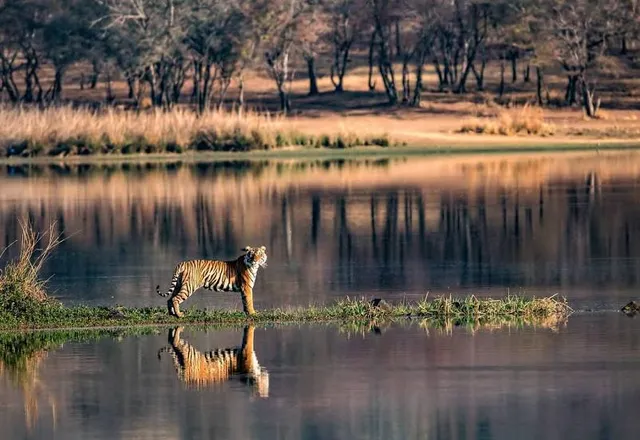
If you're a nature lover, wildlife enthusiast, or someone seeking adventure and serenity in the lap of nature — Ranthambore Tiger Reserve is the perfect destination. Located in the Sawai Madhopur district of Rajasthan, this national park is one of the finest places in India to spot the majestic Royal Bengal Tiger in its natural habitat.
Situated about 130 km from Jaipur and well connected by road and rail, the park lies at the junction of the Aravalli and Vindhya hill ranges, offering a diverse topography — dense forests, dry deciduous trees, grasslands, rocky outcrops, and ancient ruins.
I visited Ranthambore during the winter season and was fortunate enough to spot a tigress with her cubs during a morning safari in Zone 3. The thrill of tracking pugmarks, listening to the forest guide’s cues, and finally witnessing a tiger walking just meters away was beyond words! Apart from tigers, I saw sambar deer, nilgai, wild boars, langurs, and many beautiful birds including peacocks and parakeets.
The forest is also home to leopards, sloth bears, marsh crocodiles, jackals, and over 300 bird species. The presence of ancient Ranthambore Fort (a UNESCO World Heritage Site) within the reserve adds historical depth to your visit — standing tall above the forest canopy, offering panoramic views.
The safaris are well-organized by the Rajasthan Forest Department. You can choose between gypsy (6-seater) and canter (20-seater) vehicles, with two slots daily — morning and evening. It’s best to pre-book your safari online or through your hotel to ensure access to better zones.
Important tips:
Carry valid ID proof for the safari.
Follow silence and park rules strictly — it enhances your chances of sightings.
Wear earthy or neutral-colored clothing to blend in with the environment.
Don’t forget your binoculars and camera!
Accommodation: There are multiple hotels and resorts in Sawai Madhopur ranging from budget lodges to luxury stays, many offering packages with guided safaris and nature walks.
📍 Location & Access:
🏞️ Address: Ranthambore National Park, Sawai Madhopur, Rajasthan – 322001
🚉 Nearest railway station: Sawai Madhopur Junction (just 10–15 minutes away)
🛫 Nearest airport: Jaipur International Airport (~3.5 hours by road)
🚗 Easily reachable by road via NH552 from Jaipur, Kota, or Delhi.
✅ Final Verdict:
Ranthambore is more than just a tiger reserve — it's a blend of raw nature, royal heritage, and thrilling adventure. A must-visit destination for photographers, wildlife lovers, families, and solo travelers alike. The memories will stay with...
Read moreRanthambore National Park, located just 13.5 kilometers from Sawai Madhopur in Rajasthan, sits at the meeting point of the Aravali and Vindhya hill ranges. It’s often hailed as one of the best places to see wildlife, especially tigers, as the animals here seem unbothered by human presence. The park spans roughly 400 sq km, and when combined with the Sawai Man Singh Sanctuary, it covers around 500 sq km. Dotted with ancient ruins and water bodies, it offers a mix of history and nature that’s hard to find elsewhere. The grand Ranthambore Fort, which overlooks the park from atop a hill, adds a touch of history, making the jungle feel like a place where time stands still. Tigers here are even known to hunt in full view of visitors. Established as a game sanctuary in 1955, Ranthambore became a Project Tiger reserve in 1973 and officially a national park in 1980.
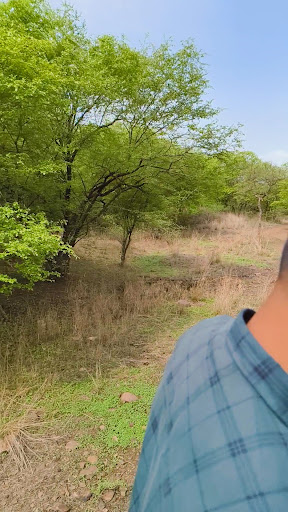
Despite its reputation as a prime spot for tiger safaris, our visit wasn’t quite what we expected. We came in the wrong season—just before the end of the rainy season in September—and the tigers were nowhere to be seen, likely because they were deep in the jungle, enjoying the plentiful water. Gates 7 and 8 had just reopened for the season when we arrived, and we spent 2-3 hours bouncing along rocky, hilly roads in a jeep. It was exhausting, especially at Gate 7, where the road often dips below the jungle, making it hard to spot animals. We did see some deer, but they were either hidden deep in the bushes or far up on higher ground, making it difficult to get a clear view.
Still, there were some memorable moments. Two monkeys greeted us up close, which was a delight, and on the way back, we spotted wild boar and buffalo. But honestly, I wouldn’t recommend going in September. October is probably a much better time to visit, once the rains stop and the tigers venture out to more visible water sources. During our visit, the jungle was lush and beautiful, but the dense greenery made it tough to see much, as there wasn’t enough sunlight filtering through.
Getting to the park was an adventure in itself, as we passed through a small village filled with cows wandering the streets. If you’re sensitive to pollution, I’d suggest wearing a mask, as the air wasn’t the freshest. And for foreigners, the safari isn’t cheap—it costs around 4,000 rupees to book a 6-seater jeep online. Despite the challenges, there’s something special about being in such a raw, untamed environment, even if the tigers decided to hide this...
Read more