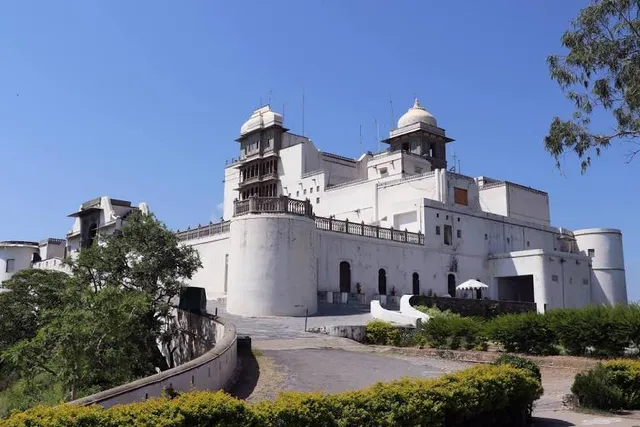
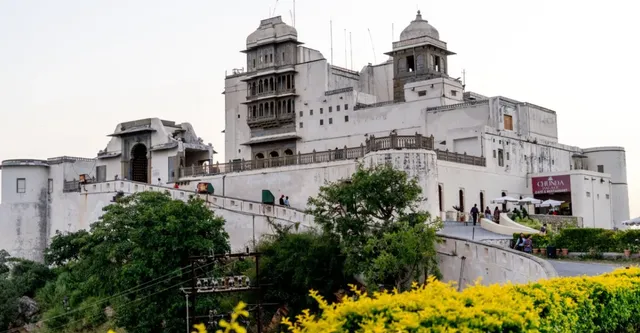
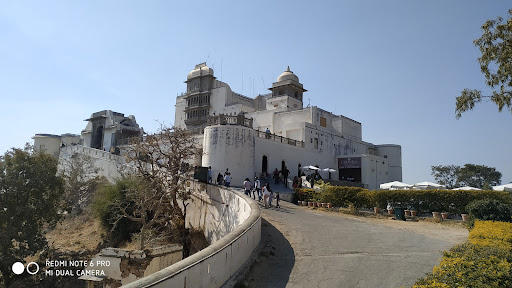
Sajjangarh Monsoon Palace (सज्जनगढ़ मानसून पैलेस), Udaipur is a stunning white marble hilltop palace perched on the Bansdara hills, overlooking the Fateh Sagar Lake and offering breathtaking panoramic views of Udaipur city, its lakes, and the surrounding Aravalli ranges. Built in 1884 by Maharana Sajjan Singh of the Mewar dynasty, the palace was originally intended to be a nine-story astronomical center to track monsoon clouds, but it remained incomplete due to the Maharana’s untimely death. It later served as a monsoon retreat and hunting lodge for the royal family.
The palace stands as a fine example of Rajput architecture, with delicate marble pillars, ornate balconies, jharokhas (overhanging enclosed balconies), and domes that speak of royal elegance. The elevation of the palace, at about 944 meters above sea level, makes it a perfect spot to view the sunset, watch drifting monsoon clouds, and experience the cool breeze even in summer. Its strategic location also gave it a defensive advantage and a commanding view of the surrounding countryside.
The Biological Park located at the base of the hill adds to the attraction of the site, housing a variety of animals and providing a nature-friendly environment. The palace gained popularity internationally after featuring in the James Bond film "Octopussy" as the villain’s lair.
Key Facts:
Built by: Maharana Sajjan Singh in 1884
Purpose: Initially planned as an astronomical observatory, later used as a monsoon palace and royal hunting lodge
Height: Located at 944 meters, offers panoramic views of Udaipur
Architectural Style: Traditional Rajput architecture with domes, arches, and marble flooring
Famous for: Sunset views, monsoon cloud watching, and film shoot location
Best Time to Visit:
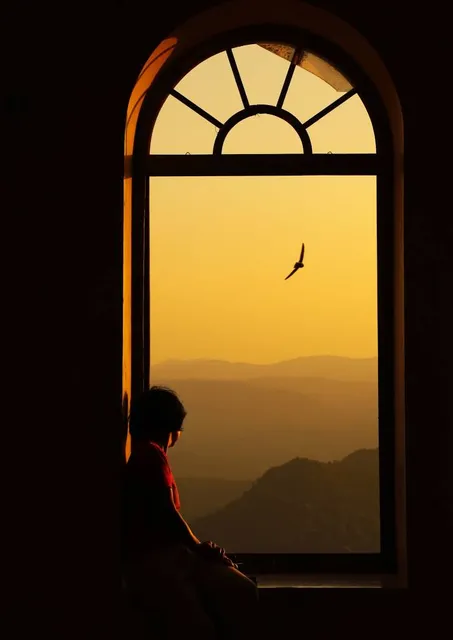
The ideal time to visit Sajjangarh Monsoon Palace is during the monsoon (July to September), when the lush greenery and cloud-covered views are at their most dramatic, and the winter season (October to March), when the climate is pleasant for sightseeing. Evening hours close to sunset are perfect for enjoying the mesmerizing golden hour views from the hilltop.
Visitor Experience:
Visitors are enchanted by the serene atmosphere, scenic beauty, and the regal charm of the palace. The winding drive up the hill adds to the adventure, and the top offers ample spots for photography and quiet contemplation. The palace doesn’t have much interior decoration, but its location and views more than compensate, making it a favorite among tourists, nature lovers, and photographers. A visit to the Sajjangarh Monsoon Palace offers a peaceful retreat with a royal touch, high above the bustling...
Read morePros – What’s Good ✅
Stunning Views – Full 360° view of Udaipur, Lake Pichola, Fateh Sagar Lake, Aravalli Hills.
Best at Sunset – Golden light, changing sky colors, and a magical cityscape.
Great for Photography – Ideal for landscape and panoramic shots.
Peaceful Surroundings – Located away from city noise.
Fresh Air – Open-air location, perfect in cooler weather.
Nice Drive Up – Scenic uphill road.
Monsoon Season Charm – Clouds, mist, and green hills add beauty.
Wildlife Nearby – Close to Sajjangarh Wildlife Sanctuary.
Cons – What’s Not Good ❌
Poor Maintenance – Broken walls, peeling paint, and neglected areas.
No Interiors – Empty halls, no royal décor or artifacts.
Overpriced – High entry + camera + vehicle charges for minimal attractions.
No Historical Info – Few or no boards explaining palace history.
Neglected Grounds – Litter and uneven pathways.
Crowds at Sunset – Overcrowded during peak tourist season.
Limited Facilities – No proper seating or rest areas.
Extra Costs – Separate charges for parking.
Overhyped – Marketed as a palace, but more like a viewpoint.
Tips for Visiting 💡
Come for Views, Not Palace – Treat it as a viewpoint, not a heritage site.
Best Time: Sunset or Sunrise – Avoid midday heat.
Combine with Other Attractions – Pair with Fateh Sagar Lake or Biological Park.
Carry Water & Snacks – Minimal food options.
Wear Comfortable Shoes – Uneven surfaces and steps.
Bring a Camera – Scenic views worth capturing.
Avoid Summer Afternoons – Extremely hot and no shade.
Arrive Early for Sunset – To avoid crowd rush.
Check Weather in Monsoon – Best views in cloudy conditions.
Overall Verdict
Monsoon Palace is worth visiting only for its scenic views. If you’re expecting royal interiors, rich history displays, or a well-maintained heritage site, you’ll be disappointed. The palace structure is almost empty, with little to explore inside.
Think of it as a hilltop viewpoint with an old building rather than a functional palace. The entry feels expensive for what’s offered, but the panoramic view of Udaipur and the lakes can make it worth it—especially if you love photography or sunsets.
Come here if:
You’re a nature or photography lover.
You want a peaceful escape with great scenery.
You’re okay with paying mainly for the view.
Skip if:
You’re here for architecture, history, or...
Read moreThe Monsoon Palace is primarily famous for its stunning location and panoramic views, making it one of Udaipur's essential sunset points. 1. The Main Attraction: The View and Sunset The Vista: Perched atop the Bansdara hills of the Aravalli range, the palace offers a commanding, 360-degree bird's-eye view of the entire Udaipur city. This is the main reason to visit. The Sunset Experience: Reviews universally praise the sunset from the palace. As the sun dips behind the Aravalli mountains, you can watch the lakes (Fateh Sagar and Pichola) shimmer and the entire "White City" below light up, creating a truly spectacular golden hour. Monsoon Charm: The palace was originally built by Maharana Sajjan Singh to watch the monsoon clouds, which gives it its popular name. Visiting during the monsoon (July to September) when the surrounding hills are lush and green is often cited as the most beautiful time. 2. The Palace Structure and Architecture Architectural Style: The 19th-century palace is built of beautiful white marble with intricate floral and leaf motifs carved on the pillars and plastered with lime mortar. It features traditional Rajasthani architectural elements like domes and jharokhas (overhanging balconies). Condition: While majestic, it is important to note that the palace itself is often described as being in a somewhat simple or neglected state compared to the highly maintained City Palace. Its primary value is in its vantage point, not its preserved interiors. Illumination: At night, the palace is lit up with fairy lights, giving it a striking silhouette visible from the city below. 3. Logistics and Getting There Location: It's located about 5 km west of the main city. Access: You must travel to the base of the hill and then take a winding, 4 km-long road through the Sajjangarh Wildlife Sanctuary to reach the top. You can drive your own vehicle (for a fee). Most visitors hire an auto-rickshaw or taxi to the sanctuary gate, then transfer to an authorized shared jeep/taxi service for the final ascent, as private vehicles are often restricted beyond a certain point. Best Time to Visit: Arriving 1-1.5 hours before sunset is ideal. This gives you time to explore the palace, find a good spot, and watch the entire sunset and the city...
Read more