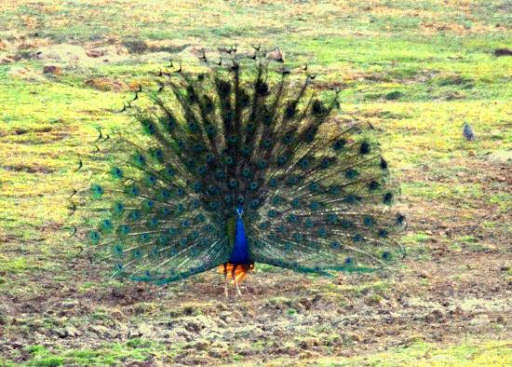
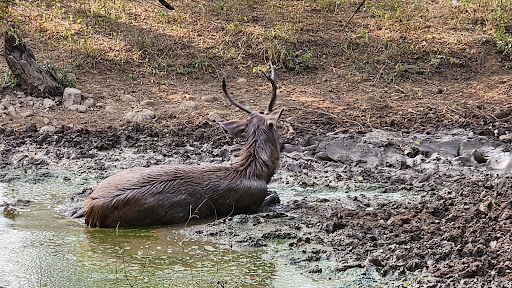
Sharp cliffs of hills and narrow valleys of the Aravallis dominate the landscape of Sariska, whose forests are dry and deciduous. Within the Sariska wildlife sanctuary there are the ruins of medieval temples of Garh-Rajor, belonging to the 10th and 11th centuries. A 17th century castle on a sharp hilltop at Kankwari, provides a panoramic view of flying Egyptian vultures and eagles. The area was declared a sanctuary in 1955 and became a National Park in 1979. Major Wildlife Attractions Sariska park is home to numerous carnivores including Leopard, Wild Dog, Jungle Cat, Hyena, Jackal, and Tiger. These feed on an abundance of prey species such as Sambar, Chitel, Nilgai, Chausingha, Wild Boar and Langur. Sariska is also well known for its large population of Rhesus Monkeys, which are found in large numbers around Talvriksh. The avian world is also well represented with a rich and varied birdlife. These include Peafowl, Grey Partridge, Bush Quail, Sand Grouse, Tree Pie, Golden backed Wood Pecker, Crested Serpent Eagle and the Great Indian Horned Owl. General information Sariska Tiger Reserve SARISKA is the only Tiger Reserve in close proximity of the Country’s capital City of New Delhi and Rajasthan’s capital city Jaipur. Distance and Routes – From Delhi 200 Kms. via Gurgaon – Dharuhera – Bhiwari Tijara - Kishangarhbas - Alwar. From Jaipur 110 Kms. via Shahpura – Bairath – Thanagazi. Travel time – From Delhi maximum 4hrs. From Jaipur approx. 2hrs. Seasons – Winter – mid-October to January. Spring – February to March. Summer – April to June. Monsoon – July to mid-September. Note - Now also open in July to September. Jungle safaris in Sariska's buffer zone from next month! Starting July 1, jungle safaris will be organised in the buffer zone of Rajasthan's Sariska Tiger Reserve.  The monsoon months can never make the wildlife lovers happy. All the protected reserves in the country are closed during that period. But here's something to compensate for that. According to a recent report by The Times of India, tourists will soon be able to enjoy jungle safaris in the buffer zone of Sariska Tiger Reserve, Rajasthan. The report reveals that the forest authorities of Sariska have decided to start these guided tours with an aim to promote ecotourism in the region. Starting from July 1, the focus will more be on showcasing the natural richness of the forest rather than sighting tigers. While 20 petrol vehicles have been registered by the authorities, around 30 nature guides are being trained for the purpose already. The buffer zone tour of Sariska Tiger Reserve will take tourists to places like Siliserh, Bala Kila and Dadikar forest area among others. According to the authorities, tourists are already interested in exploring the buffer areas but are mostly unable to do it due to lack of transportation facilities. will open booking windows at three separate places including Siliserh, Pratapbandh and Bhakheda. Tourist vehicles will be available from these windows. Tourists can explore wildlife from sunrise to sunset."
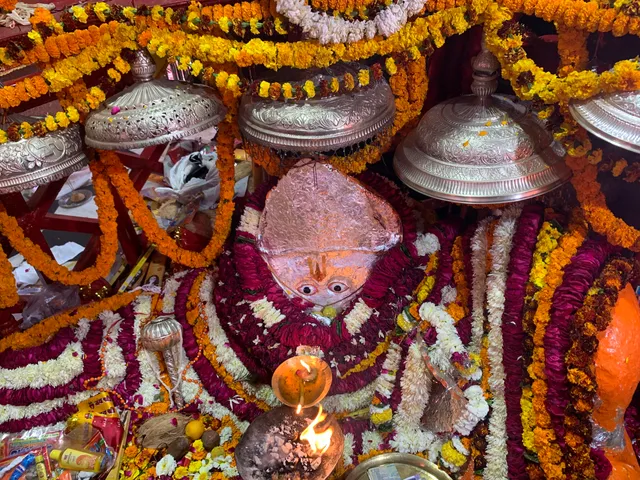
Sariska Tiger Reserve remain open form 1st October to 30th June for all seven days of the week. All other Tiger reserves, National parks, Wildlife sanctuaries of India remain close for three months during Monsoon (Rainy season) from 1st July to 30th September. Unlike all other Tiger reserves, National parks and Wildlife sanctuaries of India, Sariska Tiger Reserve management provide access during Monsoon (Rainy season from 1st July to 30th September) only two days in a week on Tuesday and Saturday between 08:00 hrs. to 15:00 hrs. to pilgrims and tourists up to Pandupol Hanuman (Monkey God) Temple. Pandupol is a natural, legendry and religious site and is located in serene dense forests with magnificent rock formations, streams and rich avifaunal species. Tourists are advised to get entry at the earliest during Monsoon season (Only on Tuesday and Saturday) to enjoy their safari to the fullest. Later it becomes crowded because of the traffic of pilgrims. Best time for visit – Usually early morning and late...
Read moreSariska Tiger Reserve, nestled in the Aravalli Hills of Alwar district (about 107 km from Jaipur), is an exhilarating blend of wilderness, history, and conservation success. Spread over 1,203 km² (322 km² core, 881 km² buffer), it is renowned as the first tiger reserve globally to successfully reintroduce tigers after local extinction .
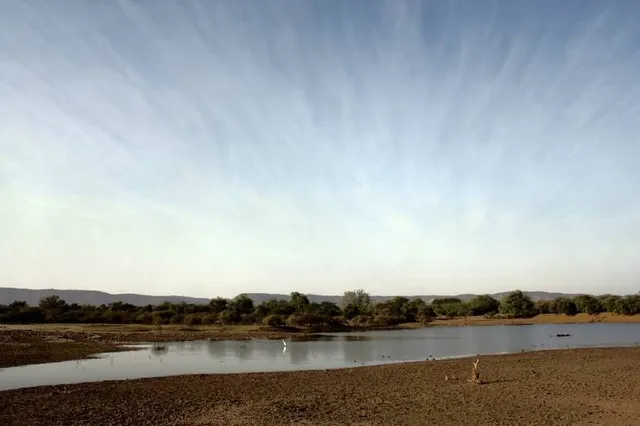
Landscape & Biodiversity : Topography: Comprising rocky cliffs, dry deciduous forests and scrub-thorn woodland, the reserve’s varied terrain—altitude ranging from 300–722 m—creates a rich ecosystem reminiscent of neighboring Ranthambhore .
Flora: Dominated by dhok (Anogeissus pendula), with other species like Boswellia serrata and Butea monosperma. Shrubs such as Capparis decidua add to the dense understory .
Fauna: Beyond the Bengal tiger, one can encounter leopards, sloth bears, hyenas, jackals, nilgai, deer, jungle cats, langurs—and over 200 bird species including kingfishers, peafowl, and eagles .
Tiger Reintroduction Story : In 2005, Sariska faced a crisis—the tiger population had dropped to zero due to poaching and habitat disruptions . The Wildlife Institute of India assisted a bold relocation from Ranthambhore in 2008–09. Today, the population has rebounded impressively—from 7 in 2012 to around 30 by 2023 . The story of the “striped sisters” ST‑9 and ST‑10, transplanted in 2013 and instrumental in breeding success, is emblematic of this triumph .
Safari Experience : Vehicle options: Traditional gypsies (6-seater) and larger canters are the norm, available through advance online booking .
Timings: Winter (Oct–Feb): Morning 7:00–10:30, Evening 14:00–17:30
Summer (Mar–Jun): Morning 6:00–9:30, Evening 15:00–18:30 .
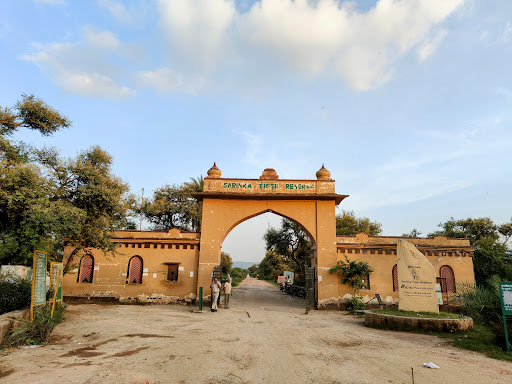
Safari zones: Enter via Sariska Gate (zones 1–3) or Tehla Gate (zone 4). Sariska Gate is favored for tiger sightings .
Costs: Gypsy INR 2,100 per trip, canter INR 5,000, guide INR 300; entrance fee ~INR 75 for adults, foreigners INR 500 .
When to Visit : Ideal window: October–June, when the weather is pleasant and wildlife visibility high . The reserve is closed July–September for monsoon, but buffer zones are intermittently accessible on Tuesdays and Saturdays .
Hidden Wonders : Kankwari Fort: A hilltop 18th-century fort within the park, accessible only by jeep .
Pandupol Hanuman & Neelkanth Temples: Ancient shrines nestled in the forest; private vehicles allowed on select days; an electric shuttle service is being introduced to reduce ecological footprint .
Siliserh Lake, Bhangarh Fort & heritage structures like Sariska Palace offer cultural and scenic depth .
Accommodation & Beyond : Options vary from rustic resorts near Sariska gate (e.g., Sariska Tiger Heaven, Sariska Manor) to luxury retreats like Amanbagh and Ultsav Camp, offering immersive jungle experiences and nature trails . Many travelers recommend staying close to the reserve for early safari access and birding .
Insider Tips: Dress in subdued colors, carry essentials (water, snacks, sunscreen, camera, binoculars, insect repellent) and avoid loud noises or litter .
Pre-book safaris online; buffer zone safaris are less crowded than core zones .
The expert-run eco-infrastructure—electric shuttles, special tiger protection force—signals a future focus on sustainable visitation .
Final Verdict : Sariska seamlessly blends raw wilderness, robust conservation, and rich cultural heritage. As biodiversity thrives and infrastructure evolves toward sustainability, the park offers more than big-cat thrills: it offers a meaningful wildlife experience that’s accessible, responsibly managed, and ever-improving. A resounding recommendation for nature lovers, wildlife photographers, and explorers alike—just remember to book in advance and respect the forest’s rhythms for a truly...
Read moreOur trip to Sariska Tiger Reserve began on a chilly winter morning. Located in the Alwar district of Rajasthan, Sariska is famous for its majestic Bengal tigers and the dense, diverse landscape of the Aravalli hills. As we entered the reserve, a sense of excitement filled the air, fueled by the possibility of spotting a tiger in the wild. The safari started just after sunrise, with the golden light streaming through the trees and casting an ethereal glow over the forest. The air was crisp, and the sounds of birds chirping filled the silence. Our guide, a local with years of experience, briefed us on the animals we might encounter—leopards, sambar deer, langurs, and, of course, the elusive tiger. The first half hour was filled with sightings of spotted deer grazing peacefully and peacocks displaying their vibrant feathers. We marveled at the sheer beauty of the forest, with its rocky terrain, dried riverbeds, and dense clusters of dhok and bamboo trees. Despite the beautiful landscape, we were all silently hoping for a tiger sighting. Suddenly, as we approached a waterhole, our guide signaled for silence. There were fresh pugmarks on the dusty path, an unmistakable sign that a tiger had recently passed through. My heart began to race as we followed the trail, all senses heightened, listening for any sound that might hint at the presence of the majestic animal. After a few minutes of slowly moving through the forest, we heard the distinct “alarm call” of a langur—a sound that sends chills down your spine when you know what it signifies. We stopped the jeep and waited, our eyes scanning the thick foliage, searching for any sign of movement. The guide whispered that a tiger might be nearby, and the silence became almost unbearable. Then, in the distance, I saw a flash of orange and black—the unmistakable stripes of a tiger. The magnificent creature moved gracefully through the trees, its eyes fixed intently on something in the distance. We were spellbound, barely daring to breathe. The tiger’s coat was rich and vibrant, blending with the autumn colors of the forest. It was both beautiful and terrifying to see such a powerful animal up close. The tiger walked to the edge of the waterhole, took a few laps, and then looked around, as if acknowledging our presence. For a brief moment, its eyes met ours, and it felt as though it was looking straight into our souls. The feeling was indescribable—a mix of awe, respect, and reverence for this incredible animal. After a few minutes, the tiger disappeared into the forest, leaving us all in stunned silence. The encounter lasted only a few moments, but it was an experience that would remain etched in our memories forever. As we exited Sariska, I felt an overwhelming sense of gratitude for the chance to witness such raw beauty and power in nature. The thrill of spotting a tiger in the wild is something that words can barely capture, and Sariska Tiger Reserve had given us an...
Read more