
 Learn more insights from Wanderboat AI.
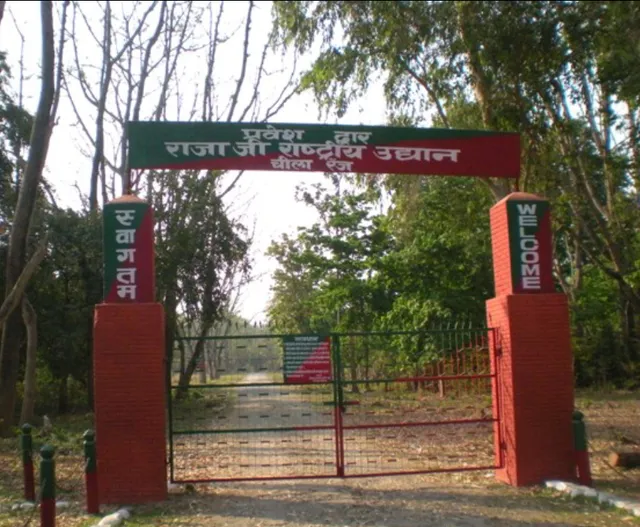
Rajaji National Park is situated in the state of Uttarakhand. The picturesque beauty and rich biodiversity of the park serve as its major attractions for both nature lovers as well as wildlife enthusiasts.
In the year 1983, Rajaji Wildlife Sanctuary of Uttaranchal was merged with Motichur and Chilla wildlife sanctuaries and made into Rajaji National Park. The park has been named after Late Sri C. Rajgopalachari (also known as Rajaji), a famous freedom fighter and first governor general of India . Rajaji National Park of India spreads over an area of 820.42 sq km and is open to visitors only from Mid-November to Mid-June.
Rajaji National Park is situated along the hills and foothills of Shiwalik ranges in the Himalayan foothills and represent the Shiwalik eco-system. Combining three sanctuaries, namely Chilla, Motichur and Rajaji - Rajaji National Park is spread over the Pauri Garwal, Dehradun and Saharanpur districts of Uttarakhand. The Motichur and Rajaji sanctuaries are contiguous, and are separated from the Chilla Sanctuary to the south-east by the Ganges River and the Chilla River.
Motichur and Rajaji wildlife sanctuaries lie to the north and south of the Siwalik Ridge and are dissected by many ravines carrying water which descend from the main ridge, becoming broad pebble/boulder filled streams in the plains. These streams remain dry for most of the year but become raging torrents during the monsoon. The area is covered with diverse forest types ranging from semi-evergreen to deciduous and from mixed broad-leaved to terai grassland and has been classified as Indus-Ganges Monsoon Forest type. Lofty strands of sal dominate in many parts.
The way from Delhi to Rajaji National Park is via Meerut, Khatauli, Muzaffar Nagar, Roorkee, Haridwar to Chilla located on the other side of the river Ganges.
Air : Nearest airport is Jolly Grant, Dehradun, 35km. Jolly Grant Airport which is only a few kilometers away from the Northern Boundary of the Park has a daily 55 minutes flight from Delhi.
Rail : Nearest railhead is at Haridwar ( 24Km.), Dehradun (56Km.) and Rishikesh (18 Km).
Road : The National Park is 220 kms. from Delhi & from Lucknow it is at a distance of 510km.Chilla is 8 Km. from Haridwar Railway Station which is well connected to major cities and 24 Km. from Rishikesh.
Nearest Attractions : Haridwar (9 Km), Rishikesh (18 Km) Some Major Accesses : Kotdwar(75 Km.), Dehradun(56 Km), Mussouri (98 Km.).
Rajaji National Park is situated along the hills and foothills of Shivalik ranges in the Himalayan foothills and represents the Shivalik eco-system. On the map it is located between Haridwar (Latitude 290 56’ 40”) and Dehradun (Latitude 300 20’ North) and 790 80’ E Longitude (Dehradun 780 01’ 15” E (Ramgarh), Chillawali- 770 54’ 30” East). Altitude: 300 meters to 1350 meters.
More than 500 Elephants, 12 Tigers, 250 Panthers and good prey base including Spotted Deer, Sambhar, Wild Boar, Barking deer, Goral Two kinds of Bears Himalayan Black and Sloth, and over 400 bird species makes Rajaji National Park a perfect wild life and bird watching...
Read more
RAJAJI NATIONAL PARK... UTTARAKHAND Entering Rajaji National Park in the blistering afternoon heat, the air was thick with anticipation and the temperature soared to a punishing 45°C. Yet, the oppressive heat did little to deter my excitement as I embarked on a journey into this sprawling sanctuary of wilderness.
My first encounter within the park was with Maya, the elusive sub-adult leopard who reigns as the queen of Rajaji. Her presence was both mesmerizing and intimidating, her sleek form blending effortlessly into the dappled shadows of the forest. Maya rested on a branch of a tree, making us wait for two hours before gracefully descending and walking majestically in front of us.
As I followed Maya's silent footsteps through the underbrush, the park unfolded its treasures before me. Spotted deer grazed peacefully, their delicate white spots standing out against the lush greenery. The haunting calls of barking deer echoed through the woods, adding a primal soundtrack to my journey.
Among the larger herbivores, the majestic Sambar deer moved gracefully, their antlers towering like crowns amidst the dense foliage. Nilgai, with their sturdy builds and slate-blue coats, grazed serenely in the open meadows, embodying the park's sense of rugged beauty.
Birdsong filled the air as I ventured deeper into the park, each melodious chirp and trill adding to the vibrant tapestry of life around me. From the vibrant plumage of peafowl to the melodious calls of bulbuls, Rajaji National Park was alive with avian diversity.
However, it was Maya's story that left the deepest impression on me. Recent accounts had spoken of her hunting prowess and the chilling incident where she had killed a monkey and then played with its baby for almost 40 minutes before ending its life. This display of feline instinct, both cruel and captivating, underscored Maya's position as a true apex predator of the park. Her blue eyes, as locals believe, held a power that could mesmerize any who dared to look into them—a haunting reminder of the wildness that defines Rajaji.
Reflecting on my experiences, Rajaji National Park emerged not just as a protected area but as a living testament to the wonders of nature and the delicate balance of predator and prey. Maya's story, while unsettling, reminded me of the raw, untamed beauty that thrives within these protected boundaries.
In conclusion, Rajaji National Park is more than just a sanctuary for wildlife; it is a sanctuary for the soul, where each encounter with nature leaves an indelible mark. From Maya's hypnotic blue eyes to the tranquil scenes of grazing deer and vibrant birdlife, every moment spent in Rajaji is a reminder of the awe-inspiring diversity and resilience of our...
Read more
Rajaji National Park is an Indian national park and tiger reserve[1] that encompasses the Shivaliks, near the foothills of the Himalayas. The park is spread over 820 km2.,[2] and three districts of Uttarakhand: Saharanpur, Dehradun and Pauri Garhwal. In 1983, three wildlife sanctuaries in the area namely, Chilla, Motichur and Rajaji sanctuaries were merged into one.[2] Rajaji National Park has been named after C. Rajagopalachari (Rajaji), a prominent leader of the Freedom Struggle, the second and last Governor-General of independent India and one of the first recipients of India's highest civilian award Bharat Ratna (in 1954).
Rajaji National Park is predominantly formed from dense green jungles, and this environment forms a habitat for a number of animals. The park is at the northwestern limit of distribution for both elephants and tigers in India. The park is most renowned for its elephants. The mountain goat, goral is another noteworthy resident. It is mainly confined to the precipitous pine-covered slopes. Besides the huge pachyderms and the nimble goats, you might come across huge herds of chital, sometimes as many as 250 to a herd. sambar, barking deer, hog deer, nilgai, wild pigs and sloth bears also inhabit these forests though you may not always catch a glimpse of these. The rhesus macaque and the common langur are fairly common here. Tigers and leopards are the prime predators in Rajaji. The leopard cat, jungle cat, civet and yellow-throated marten are other carnivores. Mammals like the hyena, jackal and the Bengal fox scavenge in the park. The Himalayan black bear though uncommon, can be sighted in the higher reaches of the park.
Rajaji National Park of India is nestled between the Shivalik ranges and the Indo-Gangetic plains. Broadleaved deciduous forests, riverine vegetation, scrubland, grasslands and pine forests form the range of flora in this park. The dense jungles here are home to vivacious wildlife. The varied topography of the national park is also responsible for vivid animal life inhibited here. The under-wood is light and often absent, consisting of rohini Mallotus philippensis, amaltas Cassia fistula, shisham Dalbergia sissoo, Sal Shorea robusta, palash Butea monosperma, arjun Terminalia arjuna, khair Senegalia catechu, baans Dendrocalamus strictus, semul Bombax ceiba, sandan, chamaror Ehretia, amla Phyllanthus emblica, kachnar Bauhienia variegata, ber Ziziphus mauritiana, chilla Casearia, bel Aegle marmelos,...
Read more


&promo_pic=/hotel-sample/coolest.webp)




