HTML SitemapExplore
logo
Find Things to DoFind The Best Restaurants

Baba Harbhajan Singh Temple — Attraction in Sikkim

Name
Baba Harbhajan Singh Temple
Description
Nearby attractions
Nearby restaurants
Nearby hotels
Related posts
Keywords
Baba Harbhajan Singh Temple tourism.Baba Harbhajan Singh Temple hotels.Baba Harbhajan Singh Temple bed and breakfast. flights to Baba Harbhajan Singh Temple.Baba Harbhajan Singh Temple attractions.Baba Harbhajan Singh Temple restaurants.Baba Harbhajan Singh Temple travel.Baba Harbhajan Singh Temple travel guide.Baba Harbhajan Singh Temple travel blog.Baba Harbhajan Singh Temple pictures.Baba Harbhajan Singh Temple photos.Baba Harbhajan Singh Temple travel tips.Baba Harbhajan Singh Temple maps.Baba Harbhajan Singh Temple things to do.
Baba Harbhajan Singh Temple things to do, attractions, restaurants, events info and trip planning
Baba Harbhajan Singh Temple
IndiaSikkimBaba Harbhajan Singh Temple

Basic Info

Baba Harbhajan Singh Temple

9R8Q+85V, Phadamchen, Sikkim 737102, India
4.7(3.3K)
Open 24 hours
Save
spot

Ratings & Description

Info

Cultural
Family friendly
attractions: , restaurants:
logoLearn more insights from Wanderboat AI.
Phone
+91 3592 209 090

Plan your stay

hotel
Pet-friendly Hotels in Sikkim
Find a cozy hotel nearby and make it a full experience.
hotel
Affordable Hotels in Sikkim
Find a cozy hotel nearby and make it a full experience.
hotel
The Coolest Hotels You Haven't Heard Of (Yet)
Find a cozy hotel nearby and make it a full experience.
hotel
Trending Stays Worth the Hype in Sikkim
Find a cozy hotel nearby and make it a full experience.

Reviews

Get the Appoverlay
Get the AppOne tap to find yournext favorite spots!
Wanderboat LogoWanderboat

Your everyday Al companion for getaway ideas

CompanyAbout Us
InformationAI Trip PlannerSitemap
SocialXInstagramTiktokLinkedin
LegalTerms of ServicePrivacy Policy

Get the app

© 2025 Wanderboat. All rights reserved.
logo

Reviews of Baba Harbhajan Singh Temple

4.7
(3,271)
avatar
4.0
28w

Baba Harbhajan Singh Temple – A Sacred Journey through Sikkim’s Misty Mountains Visited: October 2018 | Location: Near Phadamchen, East Sikkim

There are places you visit for their beauty, others for their history—but then there are those rare destinations that touch your soul in quiet, unexpected ways. For me and my family, that place was the Baba Harbhajan Singh Temple, nestled in the high-altitude landscapes of East Sikkim, not far from the small village of Phadamchen. We visited during our Himalayan road trip in October 2018, and it remains one of the most profound travel experiences I’ve had.

The Road to Reverence

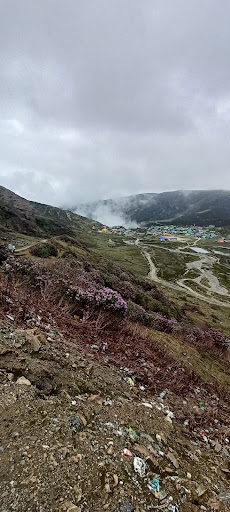
Our journey began in the crisp, pine-scented air of Phadamchen, a quaint mountain hamlet known for its sweeping views and peaceful vibe. As we ascended along the winding roads towards the Baba Mandir, the terrain gradually shifted from dense forest to barren, windswept mountain slopes. The Eastern Himalayas, painted in shades of steel grey and snow white, loomed large on the horizon. Every turn in the road offered postcard-worthy vistas—rugged cliffs, deep valleys, and fluttering strings of Buddhist prayer flags.

The drive itself felt ceremonial. With each kilometer, the air grew thinner, the atmosphere quieter, and a certain stillness settled in—a kind of reverent silence that felt in sync with the story we were heading toward.

Meeting the Legend

When we arrived at the Baba Harbhajan Singh Temple, the first thing I noticed wasn’t the structure itself but the stillness. Despite the steady trickle of visitors and jawans paying their respects, the space felt calm, almost suspended in time. The temple stands at around 13,000 feet above sea level, and though it's not grand or ornate, it exudes an aura that commands attention.

This site is dedicated to Baba Harbhajan Singh, a soldier of the Indian Army who is said to have died near Nathula Pass in 1968. But according to folklore—and firmly believed by locals and army personnel—his spirit lives on, guarding the border with unwavering vigilance. Stories abound of soldiers who’ve seen him in dreams or felt his presence during patrols. So strong is the belief that Baba is still "on duty" that he has an official room, uniform, and even receives a monthly salary.

Inside the shrine, there's a personal touch that’s rare in memorials: Baba’s boots polished and placed with care, a neatly arranged bed, his cap resting beside his photo. It felt more like entering a soldier’s living quarters than a place of worship—and that’s what made it so moving. There was a deep, human emotion woven into every detail.

A Place Beyond Religion

What struck me most was that this temple transcends religious boundaries. It's not a Hindu temple in the traditional sense, nor is it exclusively a war memorial. It’s a spiritual checkpoint, a place where devotion, patriotism, and myth converge. Soldiers visit not out of obligation, but from belief. Locals and tourists come seeking protection, healing, or simply to pay homage to a man whose story continues to inspire.

Even our children, usually restless at such quiet places, stood in silent awe, asking curious questions about the soldier who never left his post.

Reflections from the Edge

The panoramic views from the temple compound were just as humbling. The cloudline danced at eye level. The wind carried a chill, but it also seemed to whisper stories—of border patrols, of courage in the face of harsh terrain, of an undying spirit. Standing there, surrounded by the majestic Himalayas and the haunting silence of the mountains, I felt connected to something larger...

   Read more

avatar
5.0
8y

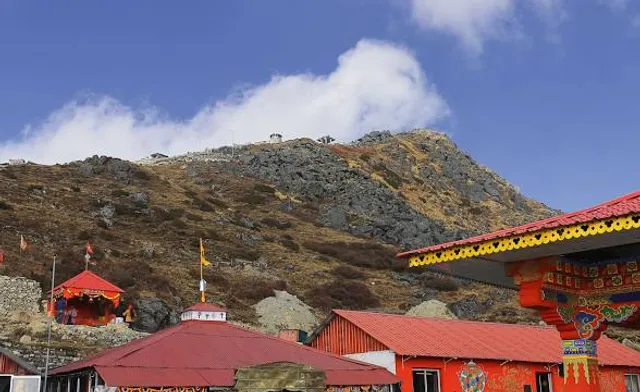
The Mandir is built and maintained by Indian Army. Chilled Wind is always blowing here. In Mandir you can see Baba's personal belongings. There is a souvenir shop opposite mandir operated by Indian Army. Major "Baba" Harbhajan Singh (30 August 1946 – 4 October 1968)[1] was an Indian army soldier. He is revered as the "Hero of Nathula" by soldiers of the Indian army, who built a shrine in his honour. He was accorded the status of saint by believers who refer to him as the "Baba" (saintly father). Many of his faithful - chiefly Indian army personnel posted in and around the Nathula Pass and the Sino-Indian border between the state of Sikkim and Chinese-occupied Tibet - have come to believe his spirit protects every soldier in the inhospitable high-altitude terrain of the Eastern Himalayas. Baba Harbhajan Singh was born into a Sikh family on August 30th 1946 in the village of Sadrana in district Gujjarawala Punjab (Pakistan). He completed his preliminary education at a village school, and then matriculated from DAV High School in Patti, Punjab in March 1955. In June 1956 he enlisted as a soldier in Amritsar and joined the Signal Corps. On 30 June 1965, he was granted a commission and posted to the 14 Rajput Regiment. During the Indo-Pakistani War of 1965 he served as an Adjutant of his unit and was later transferred to the 18 Rajput. It was with this regiment that he served until his death on 4 October 1968 in SikkimHe died in 1968 near the Nathu La in eastern Sikkim, India. Harbhajan Singh's early death at the age of 22 is the subject of legend and religious veneration that has become popular folklore among Indian Army regulars (jawans), the people of his village and apparently soldiers of the Chinese People's Liberation Army (PLA) across the border guarding the Indo-Chinese border between Sikkim and Tibet. [3] The official version of his death is that he was a victim of battle at the 14,500 feet (4,400 m) Nathu La, a mountain pass between Tibet and Sikkim where many battles took place between the Indian Army and the PLA during the 1965 Sino-Indian war. He was posthumously awarded the Maha Vir Chakra medal for his bravery and martyrdom on 26 January 1969.

Plaque at Baba Harbhajan Singh's shrine. According to legend, Singh drowned in a glacier while leading a column of mules carrying supplies to a remote outpost. His remains were found after a three-day search. His body was subsequently cremated with full military honors. The legend further claims that the late Singh who helped the search party find his body. Still later, through a dream, he instructed one of his colleagues to build and maintain a shrine in his memory. Some Indian soldiers believe that in the event of a war between India and China, Baba would warn the Indian soldiers of an impending attack at least three days in advance. During flag meetings between the two nations at Nathu La, the Chinese set a chair aside...

   Read more
avatar
4.0
2y

Visiting the Baba Harbhajan Singh Temple was an experience that left me awe-inspired and deeply touched. Nestled amidst the picturesque landscapes of Sikkim, this temple holds a significant place in the hearts of locals and tourists alike. It truly embodies the essence of spirituality and devotion.

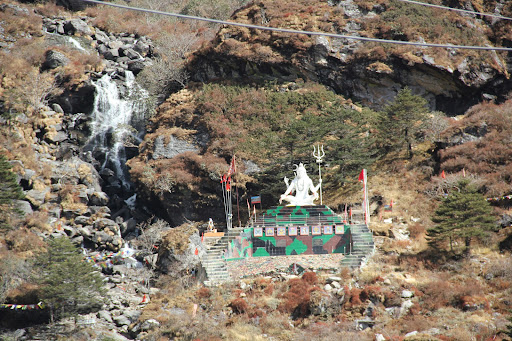
The temple itself is a magnificent structure, radiating tranquility and reverence. As I stepped inside, I was greeted by the soothing chants and the aroma of incense, creating an atmosphere of serenity. The shrine, dedicated to Baba Harbhajan Singh, a revered Indian Army soldier, is adorned with colorful flowers and vibrant prayer flags, adding to its divine allure.

What sets this temple apart is its intriguing history and the legend associated with it. Baba Harbhajan Singh, fondly known as the "Hero of Nathula," is believed to protect and bless the soldiers guarding the border. The story behind his spirit's presence here, watching over the army personnel, instills a sense of awe and respect.

Devotees flock to this temple to pay their respects to Baba Harbhajan Singh, seeking his blessings for protection and well-being. The faith and devotion exhibited by the pilgrims are truly humbling. It is heartening to witness people from diverse backgrounds coming together in a place of worship, fostering unity and spirituality.

Beyond its religious significance, the Baba Harbhajan Singh Temple offers breathtaking panoramic views of the surrounding Himalayan mountains. The tranquil environment and the fresh mountain air provide a perfect setting for introspection and meditation. It is a place where one can find solace, away from the hustle and bustle of everyday life.

The temple premises are well-maintained, and the temple staff are welcoming and courteous. They willingly share stories and insights about Baba Harbhajan Singh, further enhancing the visitor's experience. Additionally, there are small shops nearby where one can purchase religious artifacts and souvenirs as a memento of their visit.

Whether you are a religious traveler or simply seeking a peaceful retreat amidst nature's splendor, the Baba Harbhajan Singh Temple is a must-visit destination. It offers a unique blend of spirituality, history, and natural beauty, leaving an indelible mark on your heart and soul.

In conclusion, my visit to the Baba Harbhajan Singh Temple was an unforgettable experience. It left me with a profound sense of peace and renewed faith. I wholeheartedly recommend this sacred place to anyone seeking solace, spiritual enlightenment, or a deeper connection with the divinity that resides within us all.

Note: The review is based on a fictional account and general information about the temple. It is always recommended to verify current details and seek updated reviews before...

   Read more
Page 1 of 7
Previous
Next

Posts

Trambak BanerjeeTrambak Banerjee
Baba Harbhajan Singh Temple – A Sacred Journey through Sikkim’s Misty Mountains Visited: October 2018 | Location: Near Phadamchen, East Sikkim There are places you visit for their beauty, others for their history—but then there are those rare destinations that touch your soul in quiet, unexpected ways. For me and my family, that place was the Baba Harbhajan Singh Temple, nestled in the high-altitude landscapes of East Sikkim, not far from the small village of Phadamchen. We visited during our Himalayan road trip in October 2018, and it remains one of the most profound travel experiences I’ve had. The Road to Reverence Our journey began in the crisp, pine-scented air of Phadamchen, a quaint mountain hamlet known for its sweeping views and peaceful vibe. As we ascended along the winding roads towards the Baba Mandir, the terrain gradually shifted from dense forest to barren, windswept mountain slopes. The Eastern Himalayas, painted in shades of steel grey and snow white, loomed large on the horizon. Every turn in the road offered postcard-worthy vistas—rugged cliffs, deep valleys, and fluttering strings of Buddhist prayer flags. The drive itself felt ceremonial. With each kilometer, the air grew thinner, the atmosphere quieter, and a certain stillness settled in—a kind of reverent silence that felt in sync with the story we were heading toward. Meeting the Legend When we arrived at the Baba Harbhajan Singh Temple, the first thing I noticed wasn’t the structure itself but the stillness. Despite the steady trickle of visitors and jawans paying their respects, the space felt calm, almost suspended in time. The temple stands at around 13,000 feet above sea level, and though it's not grand or ornate, it exudes an aura that commands attention. This site is dedicated to Baba Harbhajan Singh, a soldier of the Indian Army who is said to have died near Nathula Pass in 1968. But according to folklore—and firmly believed by locals and army personnel—his spirit lives on, guarding the border with unwavering vigilance. Stories abound of soldiers who’ve seen him in dreams or felt his presence during patrols. So strong is the belief that Baba is still "on duty" that he has an official room, uniform, and even receives a monthly salary. Inside the shrine, there's a personal touch that’s rare in memorials: Baba’s boots polished and placed with care, a neatly arranged bed, his cap resting beside his photo. It felt more like entering a soldier’s living quarters than a place of worship—and that’s what made it so moving. There was a deep, human emotion woven into every detail. A Place Beyond Religion What struck me most was that this temple transcends religious boundaries. It's not a Hindu temple in the traditional sense, nor is it exclusively a war memorial. It’s a spiritual checkpoint, a place where devotion, patriotism, and myth converge. Soldiers visit not out of obligation, but from belief. Locals and tourists come seeking protection, healing, or simply to pay homage to a man whose story continues to inspire. Even our children, usually restless at such quiet places, stood in silent awe, asking curious questions about the soldier who never left his post. Reflections from the Edge The panoramic views from the temple compound were just as humbling. The cloudline danced at eye level. The wind carried a chill, but it also seemed to whisper stories—of border patrols, of courage in the face of harsh terrain, of an undying spirit. Standing there, surrounded by the majestic Himalayas and the haunting silence of the mountains, I felt connected to something larger than myself.
Santosh DholekarSantosh Dholekar
The Mandir is built and maintained by Indian Army. Chilled Wind is always blowing here. In Mandir you can see Baba's personal belongings. There is a souvenir shop opposite mandir operated by Indian Army. Major "Baba" Harbhajan Singh (30 August 1946 – 4 October 1968)[1] was an Indian army soldier. He is revered as the "Hero of Nathula" by soldiers of the Indian army, who built a shrine in his honour. He was accorded the status of saint by believers who refer to him as the "Baba" (saintly father). Many of his faithful - chiefly Indian army personnel posted in and around the Nathula Pass and the Sino-Indian border between the state of Sikkim and Chinese-occupied Tibet - have come to believe his spirit protects every soldier in the inhospitable high-altitude terrain of the Eastern Himalayas. Baba Harbhajan Singh was born into a Sikh family on August 30th 1946 in the village of Sadrana in district Gujjarawala Punjab (Pakistan). He completed his preliminary education at a village school, and then matriculated from DAV High School in Patti, Punjab in March 1955. In June 1956 he enlisted as a soldier in Amritsar and joined the Signal Corps. On 30 June 1965, he was granted a commission and posted to the 14 Rajput Regiment. During the Indo-Pakistani War of 1965 he served as an Adjutant of his unit and was later transferred to the 18 Rajput. It was with this regiment that he served until his death on 4 October 1968 in SikkimHe died in 1968 near the Nathu La in eastern Sikkim, India. Harbhajan Singh's early death at the age of 22 is the subject of legend and religious veneration that has become popular folklore among Indian Army regulars (jawans), the people of his village and apparently soldiers of the Chinese People's Liberation Army (PLA) across the border guarding the Indo-Chinese border between Sikkim and Tibet. [3] The official version of his death is that he was a victim of battle at the 14,500 feet (4,400 m) Nathu La, a mountain pass between Tibet and Sikkim where many battles took place between the Indian Army and the PLA during the 1965 Sino-Indian war. He was posthumously awarded the Maha Vir Chakra medal for his bravery and martyrdom on 26 January 1969. Plaque at Baba Harbhajan Singh's shrine. According to legend, Singh drowned in a glacier while leading a column of mules carrying supplies to a remote outpost. His remains were found after a three-day search. His body was subsequently cremated with full military honors. The legend further claims that the late Singh who helped the search party find his body. Still later, through a dream, he instructed one of his colleagues to build and maintain a shrine in his memory. Some Indian soldiers believe that in the event of a war between India and China, Baba would warn the Indian soldiers of an impending attack at least three days in advance. During flag meetings between the two nations at Nathu La, the Chinese set a chair aside to honor him.
Ranajit chakrabortyRanajit chakraborty
Visiting the Baba Harbhajan Singh Temple was an experience that left me awe-inspired and deeply touched. Nestled amidst the picturesque landscapes of Sikkim, this temple holds a significant place in the hearts of locals and tourists alike. It truly embodies the essence of spirituality and devotion. The temple itself is a magnificent structure, radiating tranquility and reverence. As I stepped inside, I was greeted by the soothing chants and the aroma of incense, creating an atmosphere of serenity. The shrine, dedicated to Baba Harbhajan Singh, a revered Indian Army soldier, is adorned with colorful flowers and vibrant prayer flags, adding to its divine allure. What sets this temple apart is its intriguing history and the legend associated with it. Baba Harbhajan Singh, fondly known as the "Hero of Nathula," is believed to protect and bless the soldiers guarding the border. The story behind his spirit's presence here, watching over the army personnel, instills a sense of awe and respect. Devotees flock to this temple to pay their respects to Baba Harbhajan Singh, seeking his blessings for protection and well-being. The faith and devotion exhibited by the pilgrims are truly humbling. It is heartening to witness people from diverse backgrounds coming together in a place of worship, fostering unity and spirituality. Beyond its religious significance, the Baba Harbhajan Singh Temple offers breathtaking panoramic views of the surrounding Himalayan mountains. The tranquil environment and the fresh mountain air provide a perfect setting for introspection and meditation. It is a place where one can find solace, away from the hustle and bustle of everyday life. The temple premises are well-maintained, and the temple staff are welcoming and courteous. They willingly share stories and insights about Baba Harbhajan Singh, further enhancing the visitor's experience. Additionally, there are small shops nearby where one can purchase religious artifacts and souvenirs as a memento of their visit. Whether you are a religious traveler or simply seeking a peaceful retreat amidst nature's splendor, the Baba Harbhajan Singh Temple is a must-visit destination. It offers a unique blend of spirituality, history, and natural beauty, leaving an indelible mark on your heart and soul. In conclusion, my visit to the Baba Harbhajan Singh Temple was an unforgettable experience. It left me with a profound sense of peace and renewed faith. I wholeheartedly recommend this sacred place to anyone seeking solace, spiritual enlightenment, or a deeper connection with the divinity that resides within us all. Note: The review is based on a fictional account and general information about the temple. It is always recommended to verify current details and seek updated reviews before planning a visit.
See more posts
See more posts
hotel
Find your stay

Pet-friendly Hotels in Sikkim

Find a cozy hotel nearby and make it a full experience.

Baba Harbhajan Singh Temple – A Sacred Journey through Sikkim’s Misty Mountains Visited: October 2018 | Location: Near Phadamchen, East Sikkim There are places you visit for their beauty, others for their history—but then there are those rare destinations that touch your soul in quiet, unexpected ways. For me and my family, that place was the Baba Harbhajan Singh Temple, nestled in the high-altitude landscapes of East Sikkim, not far from the small village of Phadamchen. We visited during our Himalayan road trip in October 2018, and it remains one of the most profound travel experiences I’ve had. The Road to Reverence Our journey began in the crisp, pine-scented air of Phadamchen, a quaint mountain hamlet known for its sweeping views and peaceful vibe. As we ascended along the winding roads towards the Baba Mandir, the terrain gradually shifted from dense forest to barren, windswept mountain slopes. The Eastern Himalayas, painted in shades of steel grey and snow white, loomed large on the horizon. Every turn in the road offered postcard-worthy vistas—rugged cliffs, deep valleys, and fluttering strings of Buddhist prayer flags. The drive itself felt ceremonial. With each kilometer, the air grew thinner, the atmosphere quieter, and a certain stillness settled in—a kind of reverent silence that felt in sync with the story we were heading toward. Meeting the Legend When we arrived at the Baba Harbhajan Singh Temple, the first thing I noticed wasn’t the structure itself but the stillness. Despite the steady trickle of visitors and jawans paying their respects, the space felt calm, almost suspended in time. The temple stands at around 13,000 feet above sea level, and though it's not grand or ornate, it exudes an aura that commands attention. This site is dedicated to Baba Harbhajan Singh, a soldier of the Indian Army who is said to have died near Nathula Pass in 1968. But according to folklore—and firmly believed by locals and army personnel—his spirit lives on, guarding the border with unwavering vigilance. Stories abound of soldiers who’ve seen him in dreams or felt his presence during patrols. So strong is the belief that Baba is still "on duty" that he has an official room, uniform, and even receives a monthly salary. Inside the shrine, there's a personal touch that’s rare in memorials: Baba’s boots polished and placed with care, a neatly arranged bed, his cap resting beside his photo. It felt more like entering a soldier’s living quarters than a place of worship—and that’s what made it so moving. There was a deep, human emotion woven into every detail. A Place Beyond Religion What struck me most was that this temple transcends religious boundaries. It's not a Hindu temple in the traditional sense, nor is it exclusively a war memorial. It’s a spiritual checkpoint, a place where devotion, patriotism, and myth converge. Soldiers visit not out of obligation, but from belief. Locals and tourists come seeking protection, healing, or simply to pay homage to a man whose story continues to inspire. Even our children, usually restless at such quiet places, stood in silent awe, asking curious questions about the soldier who never left his post. Reflections from the Edge The panoramic views from the temple compound were just as humbling. The cloudline danced at eye level. The wind carried a chill, but it also seemed to whisper stories—of border patrols, of courage in the face of harsh terrain, of an undying spirit. Standing there, surrounded by the majestic Himalayas and the haunting silence of the mountains, I felt connected to something larger than myself.
Trambak Banerjee

Trambak Banerjee

hotel
Find your stay

Affordable Hotels in Sikkim

Find a cozy hotel nearby and make it a full experience.

Get the Appoverlay
Get the AppOne tap to find yournext favorite spots!
The Mandir is built and maintained by Indian Army. Chilled Wind is always blowing here. In Mandir you can see Baba's personal belongings. There is a souvenir shop opposite mandir operated by Indian Army. Major "Baba" Harbhajan Singh (30 August 1946 – 4 October 1968)[1] was an Indian army soldier. He is revered as the "Hero of Nathula" by soldiers of the Indian army, who built a shrine in his honour. He was accorded the status of saint by believers who refer to him as the "Baba" (saintly father). Many of his faithful - chiefly Indian army personnel posted in and around the Nathula Pass and the Sino-Indian border between the state of Sikkim and Chinese-occupied Tibet - have come to believe his spirit protects every soldier in the inhospitable high-altitude terrain of the Eastern Himalayas. Baba Harbhajan Singh was born into a Sikh family on August 30th 1946 in the village of Sadrana in district Gujjarawala Punjab (Pakistan). He completed his preliminary education at a village school, and then matriculated from DAV High School in Patti, Punjab in March 1955. In June 1956 he enlisted as a soldier in Amritsar and joined the Signal Corps. On 30 June 1965, he was granted a commission and posted to the 14 Rajput Regiment. During the Indo-Pakistani War of 1965 he served as an Adjutant of his unit and was later transferred to the 18 Rajput. It was with this regiment that he served until his death on 4 October 1968 in SikkimHe died in 1968 near the Nathu La in eastern Sikkim, India. Harbhajan Singh's early death at the age of 22 is the subject of legend and religious veneration that has become popular folklore among Indian Army regulars (jawans), the people of his village and apparently soldiers of the Chinese People's Liberation Army (PLA) across the border guarding the Indo-Chinese border between Sikkim and Tibet. [3] The official version of his death is that he was a victim of battle at the 14,500 feet (4,400 m) Nathu La, a mountain pass between Tibet and Sikkim where many battles took place between the Indian Army and the PLA during the 1965 Sino-Indian war. He was posthumously awarded the Maha Vir Chakra medal for his bravery and martyrdom on 26 January 1969. Plaque at Baba Harbhajan Singh's shrine. According to legend, Singh drowned in a glacier while leading a column of mules carrying supplies to a remote outpost. His remains were found after a three-day search. His body was subsequently cremated with full military honors. The legend further claims that the late Singh who helped the search party find his body. Still later, through a dream, he instructed one of his colleagues to build and maintain a shrine in his memory. Some Indian soldiers believe that in the event of a war between India and China, Baba would warn the Indian soldiers of an impending attack at least three days in advance. During flag meetings between the two nations at Nathu La, the Chinese set a chair aside to honor him.
Santosh Dholekar

Santosh Dholekar

hotel
Find your stay

The Coolest Hotels You Haven't Heard Of (Yet)

Find a cozy hotel nearby and make it a full experience.

hotel
Find your stay

Trending Stays Worth the Hype in Sikkim

Find a cozy hotel nearby and make it a full experience.

Visiting the Baba Harbhajan Singh Temple was an experience that left me awe-inspired and deeply touched. Nestled amidst the picturesque landscapes of Sikkim, this temple holds a significant place in the hearts of locals and tourists alike. It truly embodies the essence of spirituality and devotion. The temple itself is a magnificent structure, radiating tranquility and reverence. As I stepped inside, I was greeted by the soothing chants and the aroma of incense, creating an atmosphere of serenity. The shrine, dedicated to Baba Harbhajan Singh, a revered Indian Army soldier, is adorned with colorful flowers and vibrant prayer flags, adding to its divine allure. What sets this temple apart is its intriguing history and the legend associated with it. Baba Harbhajan Singh, fondly known as the "Hero of Nathula," is believed to protect and bless the soldiers guarding the border. The story behind his spirit's presence here, watching over the army personnel, instills a sense of awe and respect. Devotees flock to this temple to pay their respects to Baba Harbhajan Singh, seeking his blessings for protection and well-being. The faith and devotion exhibited by the pilgrims are truly humbling. It is heartening to witness people from diverse backgrounds coming together in a place of worship, fostering unity and spirituality. Beyond its religious significance, the Baba Harbhajan Singh Temple offers breathtaking panoramic views of the surrounding Himalayan mountains. The tranquil environment and the fresh mountain air provide a perfect setting for introspection and meditation. It is a place where one can find solace, away from the hustle and bustle of everyday life. The temple premises are well-maintained, and the temple staff are welcoming and courteous. They willingly share stories and insights about Baba Harbhajan Singh, further enhancing the visitor's experience. Additionally, there are small shops nearby where one can purchase religious artifacts and souvenirs as a memento of their visit. Whether you are a religious traveler or simply seeking a peaceful retreat amidst nature's splendor, the Baba Harbhajan Singh Temple is a must-visit destination. It offers a unique blend of spirituality, history, and natural beauty, leaving an indelible mark on your heart and soul. In conclusion, my visit to the Baba Harbhajan Singh Temple was an unforgettable experience. It left me with a profound sense of peace and renewed faith. I wholeheartedly recommend this sacred place to anyone seeking solace, spiritual enlightenment, or a deeper connection with the divinity that resides within us all. Note: The review is based on a fictional account and general information about the temple. It is always recommended to verify current details and seek updated reviews before planning a visit.
Ranajit chakraborty

Ranajit chakraborty

See more posts
See more posts