Around 10 to 12 centuries after returning from China, Bogar completed the Palani Andavar statue. He built one more Navabasanam Statue at the midpoint of the Palani and Poombari Western gates. Nowadays, its location is referred to as the Yanai Gejam (Bogar Forest), as per inscriptions in the temple which temple has built by king of the Chera dynasty. Kulanthai Velappar temple is situated in the village of Poombarai near Kodaikanal in Dindigul. There is a song/poem (Poombarai Velan) by Sage Arunagiri Nathar. It was Murugan who saved Arunagiri Nathar from a demon by taking the form of a child. Hence the main deity of this temple is called Kuzhanthai Velappar. The temple was built by a Chera King as per the inscription. After completing the Palani Andavar statue, Bogar built one more navabasanam (amalgam of nine poisons) idol at this place between Palani and Poombarai. This place is also called as Yanai Gejam (Bogar kadu).
There are also some people who believe this idol is made up of dasaphasanam (amalgam of ten poisons). A shrine to Sithar Bogar is present in the southwestern corridor of the temple. The idol of Muruga in Poombarai, was created and consecrated by sage Bogar, one of the eighteen great siddhas out of an amalgam of nine poisons or navapashanam. The legend also holds that the sculptor had to work very rapidly to complete its features, but that he spent so much time in creating the face, he did not have time to bestow but a rough grace upon the rest of the body, thus explaining the contrast between the artistic perfection of the face and the slightly less accomplished work upon the body. A shrine to Bogar exists in the southwestern corridor of the temple, which, by legend, is said to be connected by a tunnel to a cave in the heart of the hill, where Bogar continues to meditate and maintain his vigil, with eight idols of Muruga.
The deity, after centuries of worship, fell into neglect and was engulfed by the forest. One night, Perumal a king of the Chera Dynasty, who controlled the area between the second and fifth centuries A.D., wandered from his hunting party and was forced to take refuge at the foot of the hill. It so befell, that Murugan, appeared to him in a dream, and ordered him to restore the idol to its former state. The king commenced a search for the idol, and finding it, constructed the temple that now houses it, and re-instituted its worship. The idol of the deity is said to be made of an amalgam of nine poisonous substances which forms an eternal medicine when mixed in a certain ratio. It is placed upon a pedestal of stone, with an archway framing it and represents the god Kuzhanthai Velappar in the form he assumed at Poombarai - that of a very young recluse, shorn of his locks and all his finery.
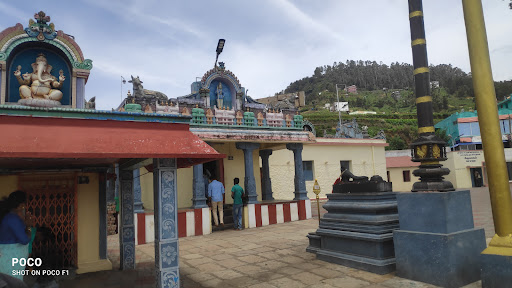
The temple is built in a typical South India temple architectural style. There is no tower. The sanctum sanctorum faces towards the east direction. The main idol, Kulandai Velappan is present in the standing posture in the sanctum sanctorum. His mount (vahanam) peacock is found near the Bali peetham and flag staff facing towards the main shrine.
There is a sub-shrine where the metal Utsava idols of Ganesha and Subramanya with his consorts are placed. It is found near the sanctum sanctorum.
The wall around the main shrine has Nataraja and Dattatreya as the Koshta idols. It is very rare to find Nataraja and Dattatreya in the form of carvings as the Koshta idols. Moreover, it is also rare to find the carving or idol of Dattatreya. The temple also houses many sub-shrines of various deities such as Shiva Linga, Ganesha, Navagraha, Bhairava, Idumban,...
Read moreThe Kuzhanthai Velappar Temple (Kulandai Velayudha Swami Tirukkovil) has three thousand years of history and was consecrated by his holiness Bhogar. The idol is made of Dasabashanam. This temple comes under Pazhani Devasthanam.
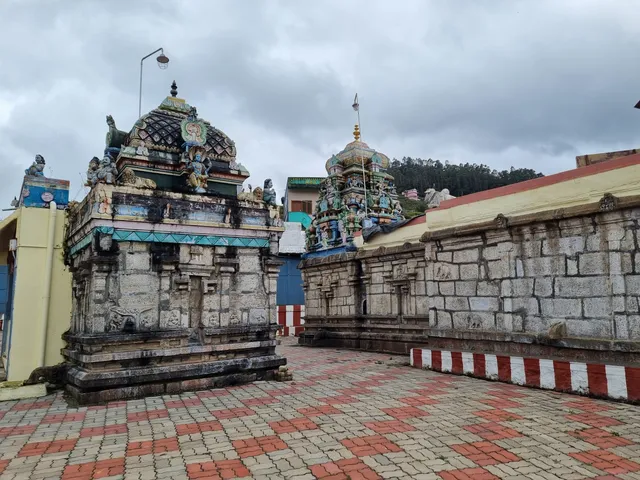
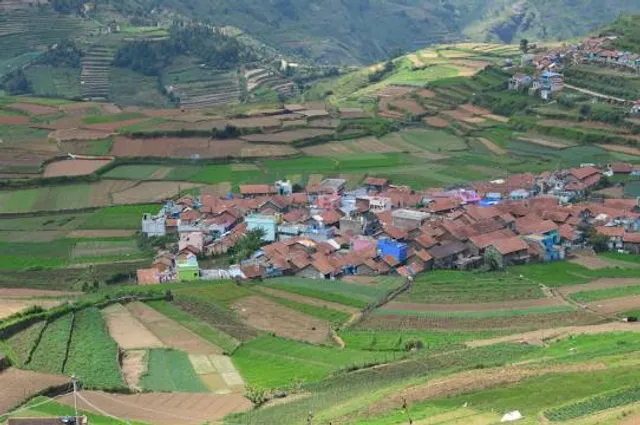
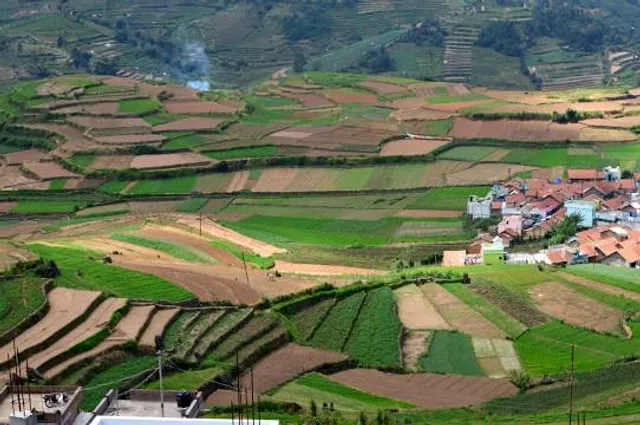
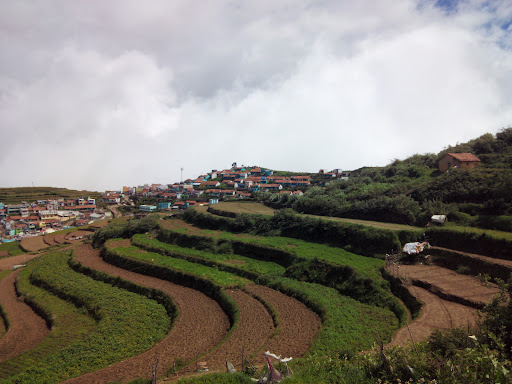
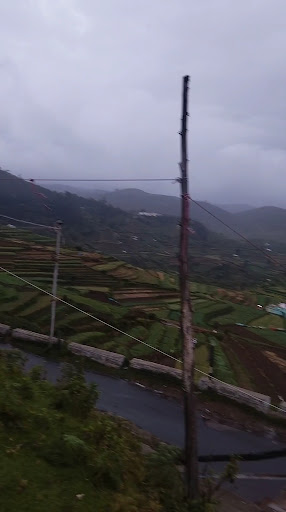
Every year Poombarai celebrates Ther Thiruvizha (car festival) for Lord Muruga. It falls on Kettai nakshatra which comes after Thai Poosam. Normally it comes in Thai or Maasi month.The word Kuzhanthai means infant in Tamil language. Kuzhanthai Velappan means the infant God carrying the weapon Vel. Although it is supposed to be written as Kuzhanthai, people generally mention the name of this temple as 'Kulandai' Velappan Temple. Kulandai Velappan Temple or Kulandai Velayudha Swamy temple is a temple which comes under the administration of the popular Palani Temple. It is located at the heart of Poomparai, a scenic village, near Kodaikanal. The temple is located in a scenic location surrounded by beautiful hills and valleys. The breathtaking Poomparai village view point is very nearby.
Kulandai Velappan temple is one of the popular temples in Kodaikanal region. Although the current structure of the temple located in a huge complex is new, it is believed that the original idol of the main deity was installed by Bogar, the Siddha who migrated from China to Tamil Nadu. Although his period is not confirmed, it is generally believed that he lived between 3rd and 5th century CE. It should be noted that he installed Palani Murugan idol too. Similar to Palani idol, Kulandai Velappan idol is made of nine alloys (Nava Pashanam), which has great medicinal values. It is believed that a devotee prayed to Lord Velappan in this temple and then he got a child. He immediately offered chocolates and candies to his friends and well wishers. Lord appeared in his dream and asked why he did not offer chocolates to him. He immediately rushed to the temple and offered chocolates and candies to Lord Velappan. It has become a ritual and even the other devotees follow this. It is very rare to find chocolates and candies being offered in a Hindu temple in...
Read moreThe idol of the Muruga in Poombarai, was created and consecrated by sage Bogar, one of eighteen great siddhas out of an amalgam of nine poisons or navapashanam. The legend also holds that, the sculptor had to work very rapidly to complete its features, but that he spent so much time in creating the face, he did not have time to bestow but a rough grace upon the rest of the body, thus explaining the contrast between the artistic perfection of the face and the slightly less accomplished work upon the body. A shrine to Bhogar exists in the southwestern corridor of the temple, which, by legend, is said to be connected by a tunnel to a cave in the heart of the hill, where Bhogar continues to meditate and maintain his vigil, with eight idols of Muruga
The deity, after centuries of worship, fell into neglect and was suffered to be engulfed by the forest. One night, Perumal a king of the Chera Dynasty, who controlled the area between the second and fifth centuries A.D., wandered from his hunting party and was forced to take refuge at the foot of the hill. It so befell, that the Murugan, appeared to him in a dream, and ordered him to restore the idol to its former state. The king commenced a search for the idol, and finding it, constructed the temple that now houses it, and re-instituted its worship.((((The idol of the deity is said to be made of an amalgam of nine poisonous substances which forms an eternal medicine when mixed in a certain ratio. It is placed upon a pedestal of stone, with an archway framing it and represents the god Kuzhanthai Velappar in the form he assumed at Poombarai - that of a very young recluse, shorn of his locks and all his finery.
The temple is built in a typical South India temple architectural style. There is no tower. The sanctum sanctorum faces towards the east direction. The main idol, Kuzhandai Velappan is present in the standing posture in the sanctum...
Read more