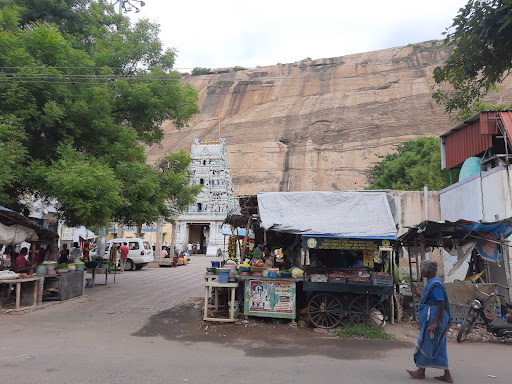
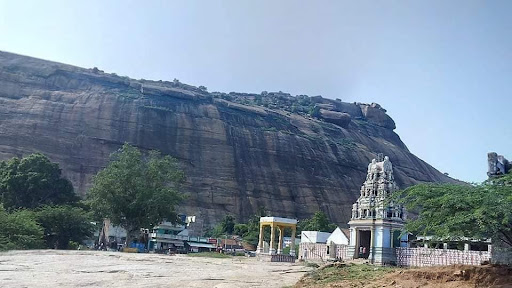
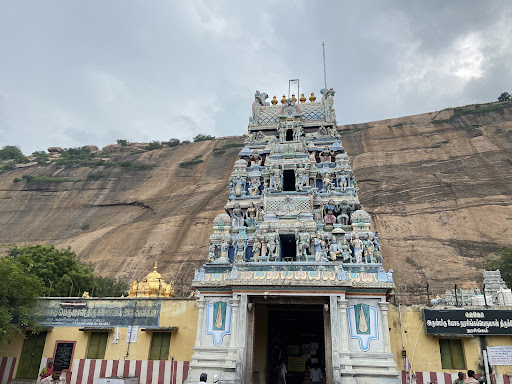
Narasingam is a village located 8 km from Madurai on the road to Melur, in the Indian state of Tamil Nadu. It is named for the nearby cave temple dedicated to Yoga Narasimha Perumal, at the foot of the Yanaimalai hills. This temple was constructed in 770 A.D. by Madurakavi alias Marankaari who was the minister of the Madurai King Parantaka Nedunjadaiyan . There is a front mandapam (court). The sculpture of Narasinga Perumal is carved out of the hill itself. The temple is a good example of the cave sculpturing of the Pandya Kingdom. In front of this there is a stone temple for the goddess Narasingavalli. This place, though not a Divyadesam sanctified by Azhwars' hymns, is situated between two holy places — Alagar Koyil in the north and Thirumohur in the east. ArchitectureEdit
The fort around Azhagarkoil is also known as Iranyan Kottai, and even now a stone icon of Lord Yoga Narasimha is found atop its entrance. A big icon of Yoga Narasimha, found in the outer prakaram (closed precincts of a temple) of the Azhagarkoil temple, known as "Jwala Narasimhar", is said to be ferocious. To pacify Him, regular Thirumanjanam (a bathing ritual) is performed with gingelly oil. A hole is found in the ceiling above the icon which is believed to let out the fire emanating from it. The foot of the hill, where the Narasimha temple is located is known as Narasingam or Hasthigiri or Gajagiri. There one may find the Maha Mandapam, Garuda Mandapam and Mukha Mandapam of the Pandya period. The shrine of the Goddess Narasingavalli faces south, at the entrance. Inscriptions say that there was also an agraharam for Vedic Brahmins, but there is no trace of it now. The temple bustles with activity during the Narasimha Jayanthi festival, and on Masi Maham day, when Sri Kalamega Perumal of Thirumohur visits this place for the Gajendra Moksha festival. The temple is unique for its utsava icon of Narasimha in a standing posture with the Sudarsana and Panchajanya in His upper two hands while the left lower hand holds the Gathai (club weapon) and the right is in the Abhaya Hastha posture (blessing pose).
The fort around Azhagarkoil is also known as Iranyan Kottai, and even now a stone icon of Lord Yoga Narasimha is found atop its entrance. A big icon of Yoga Narasimha, found in the outer prakaram (closed precincts of a temple) of the Azhagarkoil temple, known as "Jwala Narasimhar", is said to be ferocious. To pacify Him, regular Thirumanjanam (a bathing ritual) is performed with gingelly oil. A hole is found in the ceiling above the icon which is believed to let out the fire emanating from it. The foot of the hill, where the Narasimha temple is located is known as Narasingam or Hasthigiri or Gajagiri. There one may find the Maha Mandapam, Garuda Mandapam and Mukha Mandapam of the Pandya period. The shrine of the Goddess Narasingavalli faces south, at the entrance. Inscriptions say that there was also an agraharam for Vedic Brahmins, but there is no trace of it now. The temple bustles with activity during the Narasimha Jayanthi festival, and on Masi Maham day, when Sri Kalamega Perumal of Thirumohur visits this place for the Gajendra Moksha festival. The temple is unique for its utsava icon of Narasimha in a standing posture with the Sudarsana and Panchajanya in His upper two hands while the left lower hand holds the Gathai (club weapon) and the right is in the Abhaya Hastha posture...
Read moreLegends & Puranic Significance • Sage Romasa’s Penance: According to the Brahmanda Purana and local Sthala Purana, Sage Romasa performed penance by the Padma Thadagam (a lotus pond) near the hill. Lord Vishnu appeared as the fierce Ugra Narasimha, whose intense energy terrified the celestial beings. They sought relief through Prahlada and Goddess Lakshmi, who manifested as Narasingavalli, pacifying the Lord into Yoga Narasimha—a gentle, meditative form.    • Shiva’s Redemption: Another legend recounts that Lord Shiva, afflicted by the Brahma Hathi Dosha for plucking one of Brahma’s heads, was purified after bathing in the temple’s sacred Chakra Theertham and worshipping Yoga Narasimha.   • Elephant Transformed to Hill: As per the Thiruvilayadal Purana, a mystical elephant created by Jains to destroy the Pandya kingdom was turned into the hill itself by invoking the Narasimha Astra. Hence, the hill is known as Yanaimalai (Elephant Hill), also called Gajagiri or Hasthigiri.  
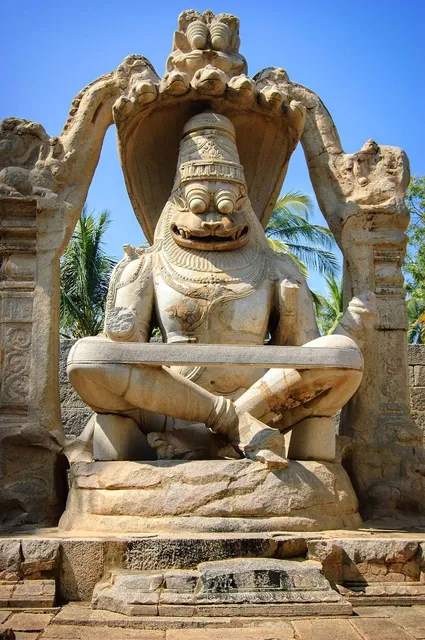
Architectural Highlights & Special Features • Historic Rock-Cut Temple: Carved directly from the Yanaimalai hill by Pandya ministers Maran Kari (circa 770 CE) and completed by his brother Maran Eyinan—this temple is a fine example of Pandya cave architecture.   The Deities: • Yoga Narasimha: A six-foot-high idol sculpted into the rock, seated in yoga posture. His upper pair of hands hold the conch (Shankha) and discus (Chakra), while his lower hands rest on his knees.    • Utsava Idol: Exceptionally rare—Narasimha himself is the festival idol (Utsava murti), standing and holding Sudarsana (discus), Panchajanya (conch), Gathai (club), and making the abhaya (blessing) gesture.    • Narasingavalli (Lakshmi): A separate south-facing shrine at the entrance honors the goddess, depicted with a benign, lotus-like face.   • Temple Layout: Features include a three-tiered Rajagopuram, Maha Mandapam, Artha Mandapam, Garuda Mandapam with traditional Narasimha pillars, and the sanctum embedded in the rocky backdrop. There is also a scenic lotus pond and Chakra Theertham adjacent to the temple.    • Inscriptional Evidence: Stone inscriptions in Brahmi, Tamil, and Vattezhuthu record grants and endowments by rulers like Srivallabha Pandya (1101 CE) and Sundara Pandya (1216 CE), and refer to land gifts, festival arrangements, and the presence of Vedic scholars.  
Festivals & Spiritual Significance • Narasimha Jayanthi: Celebrates the Lord’s incarnation; special rituals commemorate the Gajendra Moksha theme.    • Maasi Pournami & Girivalam: Full-moon day circumambulation around the hill, and abhishekam rituals marking Maasi Makam.   • Swathi Nakshathra & Pradosha: Special poojas are conducted on days associated with Yoga Narasimha’s birth star (Swathi) and on Pradosha evenings, believed to yield spiritual blessings and growth.   • Holy Dip in Chakra Theertham: It is widely believed that bathing here absolves one of past sins and curses. This site is considered highly purifying.  
The Yoga Narasimha Temple at Yanamalai is a fascinating blend of legend, art, faith, and history. From cave-carved sanctum to rich inscriptions, from mythic narratives to living rituals—it remains a deeply spiritual and architecturally...
Read moreNarasingam is a village located 8 km from Madurai on the road to Melur, in the Indian state of Tamil Nadu. It is named for the nearby cave temple dedicated to Yoga Narasimha Perumal, at the foot of the Yanaimalai hills. Narasingam is a village located 8 km from Madurai on the road to Melur, in the Indian state of Tamil Nadu. It is named for the nearby cave temple dedicated to Yoga Narasimha Perumal, at the foot of the Yanaimalai hills. This temple was constructed in 770 A.D. by Madurakavi alias Marankaari who was the minister of the Madurai King Parantaka Nedunjadaiyan . There is a front mandapam (court). The sculpture of Narasinga Perumal is carved out of the hill itself. The temple is a good example of the cave sculpturing of the Pandya Kingdom. In front of this there is a stone temple for the goddess Narasingavalli. This place, though not a Divyadesam sanctified by Azhwars' hymns, is situated between two holy places — Alagar Koyil in the north and Thirumohur in the east. According to the Sthala Purana for the Madurai Koodal Azhagar Temple, sage Romasa had installed the Narasimha icon in a cave in the hill. And the 87th chapter of the Uttara Kanda of the Brahmanda Purana says the sage did penance on the banks of the Padma Thadagam, as it was filled with lotus flowers, near the Gajagiri Kshetram (the present Anaimalai) seeking progeny, and wanted the Lord to appear in His Narasimha avatar. The Lord appeared as Ugra Narasimha and the heat that emanated from Him was unbearable. Even the celestials were affected by it and they all came to Gajagiri Kshetram and prayed to the Lord to calm down. The Lord could not be pacified and then they sought the help of Prahlada, whose arrival quietened Him to some extent. They prayed to the Goddess Mahalakshmi, who also took Her abode in Him as Narasingavalli, after which He became Yoga Narasimha. The Lord later granted the boon sought by the sage. According to another legend, Lord Siva was afflicted by Brahma Hathi Dosham (a curse that descends upon a Hindu if he murders a Vedic Brahman) after He plucked one of the five heads of Lord Brahma. He was relieved of it after He took a bath in the holy water source there, also known as Chakra Theertham, and He worshipped Lord Narasimha. It is believed that taking a dip in the Chakra Theertham, which is near the temple, rids one...
Read more