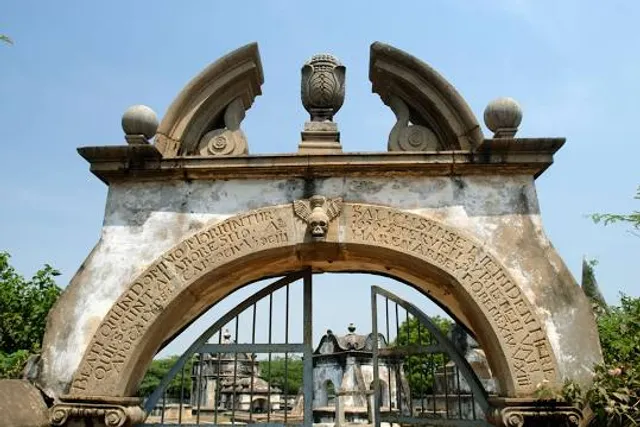
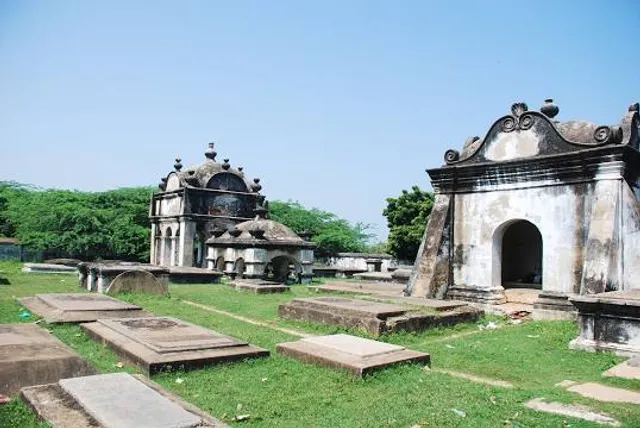
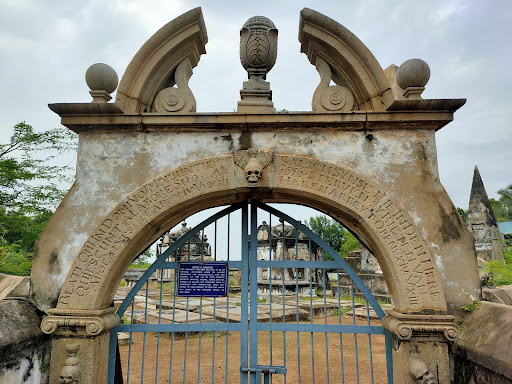
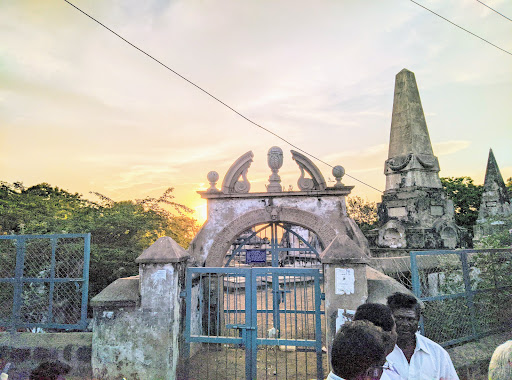
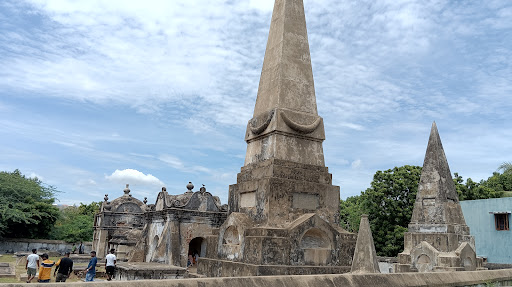
The Dutch Cemetery in Pulicat is a fascinating yet overlooked heritage site that offers deep insights into the colonial history of India’s Coromandel Coast. Located near the serene Pulicat Lake, about 60 km north of Chennai,close to the Tamil Nadu-Andhra Pradesh border, this cemetery dates back to the early 17th century when Pulicat (Pazhaverkadu) served as the headquarters of the Dutch East India Company (VOC) between 1606 and 1690.
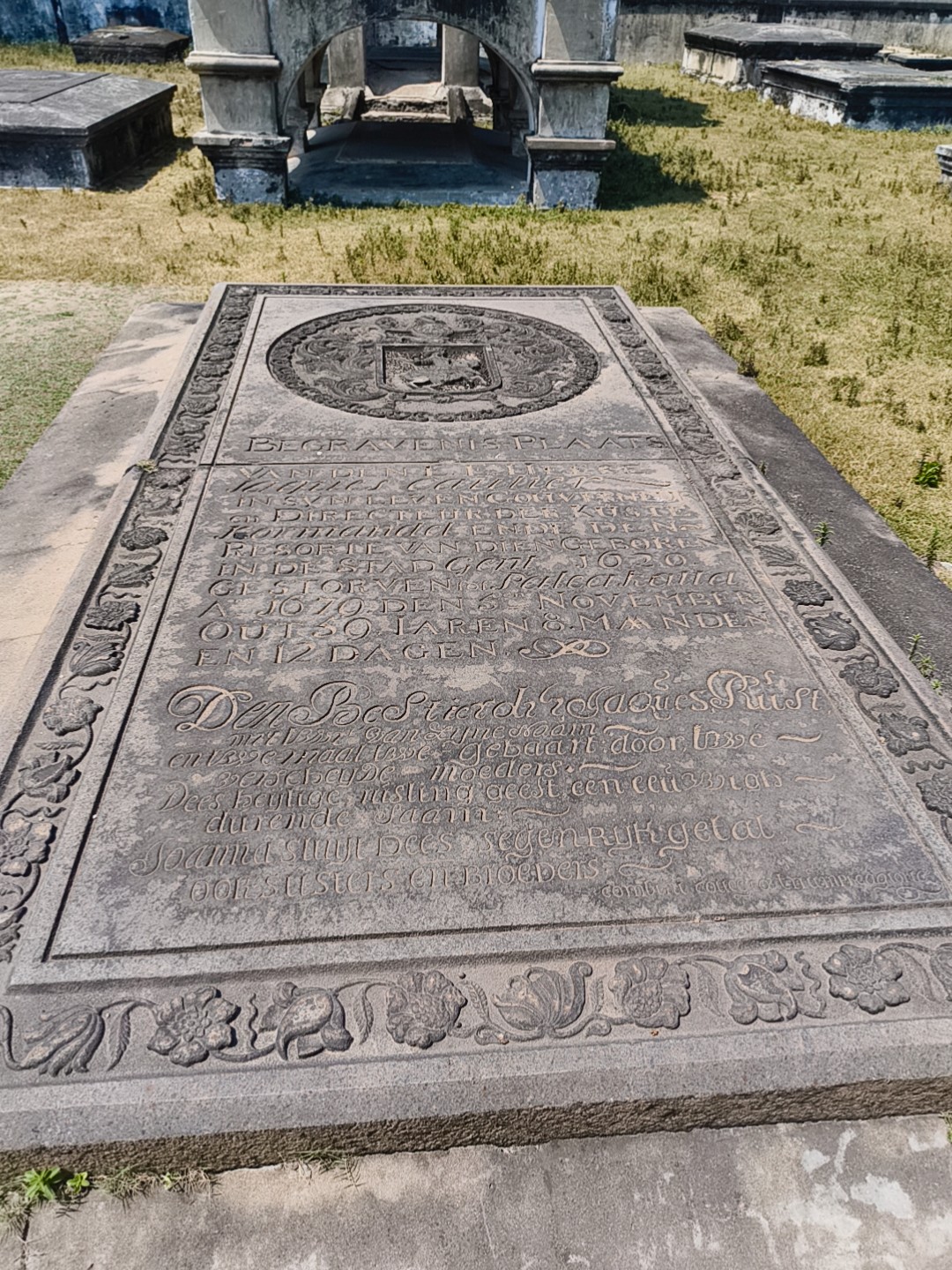
The site contains over 20 tombs of Dutch merchants, officials, and VOC soldiers. Many gravestones feature detailed carvings, skull motifs, coats of arms, and inscriptions in 17th-century Dutch. The architecture of the tombs reflects classical Dutch funerary styles, with barrel-vaulted structures and ornate detailing. Some of the larger tombs are believed to belong to senior VOC governors and high-ranking commanders who played a significant role in the company’s trade operations across Asia.
Despite its historical value, the cemetery is in a fragile state. Weathering, vegetation overgrowth, and partial structural collapse threaten its long-term survival. Although under the protection of the Archaeological Survey of India (ASI), the site is in urgent need of focused restoration and preservation efforts.
This is a must-visit for historians, students, and anyone interested in colonial-era history. Do visit with respect—this is a solemn resting place and a silent storyteller of Pulicat’s forgotten Dutch legacy.
Visiting early in the morning or late afternoon enhances the experience with soft light and...
Read moreIt's not maintained properly 😢
The fort was built on the shores of Pulicat Lake, which provides access to the Bay of Bengal and the Coromandel Coast, an important area for trade and a scene of rivalry between the colonial powers of the Dutch, the Portuguese, and the British. A Portuguese fort had existed previously on the spot, and Fort Geldria was built on its foundations, with the permission of Queen Oboyama, wife of Vijayanagara Emperor Venkatapati Raya, based in Chandragiri Fort, who was supposed to contribute financially and become part-owner. This process, however, proved too slow for the Dutch, and they decided to finance and build it themselves.[6] Local tradition holds that a Dutch ship, stranded in 1606, found aid among a group of expatriate Muslims, and thus began a trade...
Read moreit's a CLOSED fort with beautiful Dutch architech and huge standing gothics however it's still under someone's private control who gets money to allow entry inside..I have heard that someone in Pulicat controling this who opens it for only for a huge amount of transaction to their account like Foreign tourists (especially) Dutch or some around 20 members who can share that huge money...I am still wondering why Indian govt haven't taken control of this heritage site as it's the waste of time travelling so long from Chennai and seeing it's entry gates are closed me being a photolust...I am sad to give 2 stars for this great architech as it's worthless to travel to a heritage place owned by privaters..don't believe the Google and websites as it says it opened all days 24/7...
Read more