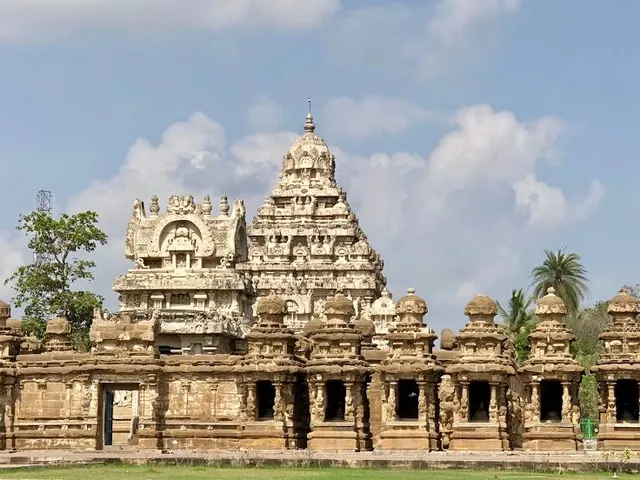
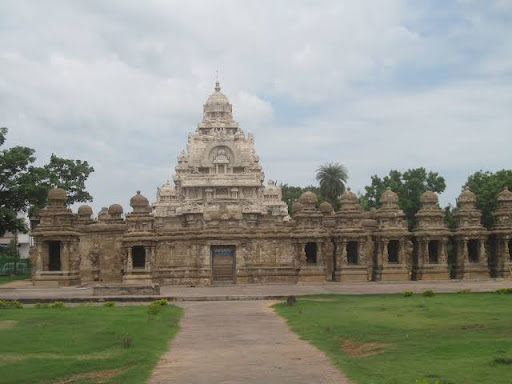
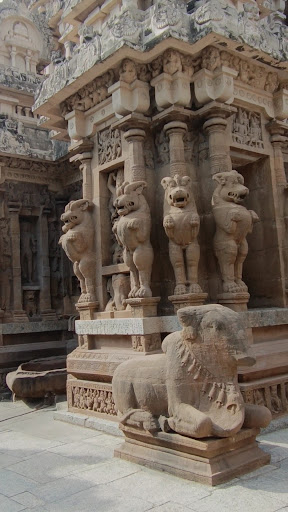
An eighth-century Shaivite temple constructed with the patronage of the Pallava King Narisimhavarman II, also known as Rajasimha, the Kailasanathar temple is the oldest known temple in Kanchipuram, Tamil Nadu. The temple was built along the banks of the Vegavathi river between 700 and 728 CE, and is a prime example of Dravida temple architecture. Among the earliest structural sandstone temples in South India built on a large scale, the Kailasanathar temple establishes two characteristic features that were later shared by most structural Pallava temples: pillars and pilasters with a stylised lion or horned-lion base (simhapada or vyalapada) and a plinth of granite to prevent seepage and stabilise the superstructure. Although the architectural style and general plan were a legacy of the early Pallava period rock-cut temples, the medium of sandstone rendered these later temples more suitable for sculptural ornamentation. Although the temple was originally named after its patron — Rajasimha Pallaveshvara — the later and now-popular moniker of Kailasanathar was derived from an inscription that described its lofty vimana as touching the realm of Shiva (Kailasa).
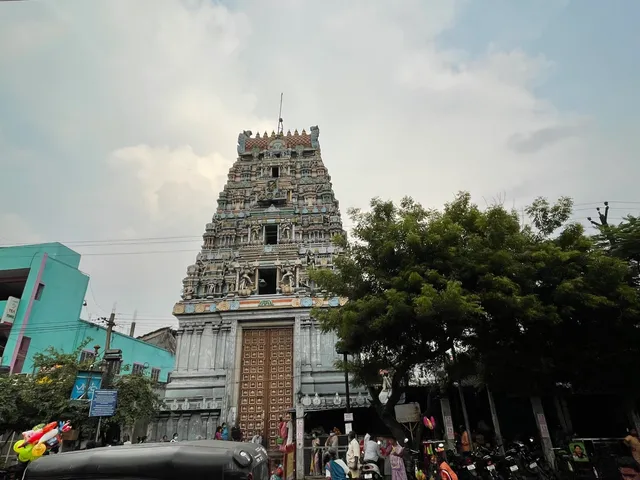
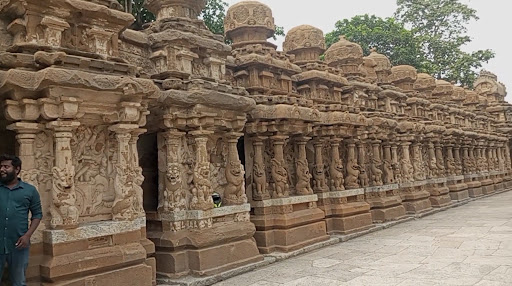
Oriented east–west, the original temple complex consisted of a garbhagriha and a detached mahamandapa, which were later connected by a half-hall or ardhamandapa. Along the inner side of the prakara or perimeter wall of this main court, are a continuous series of fifty-eight alcoves housing sub-shrines, or devakulikas. Later additions to the complex include a low slung entranceway or gopuram encompassing a secondary shrine, and a small forecourt in front of this. The smaller shrine was conceived as a much reduced version of main shrine, with a barrel-vaulted roof form (shala) that echoes the large eastern gopuram. At the centre of the northern wall is a similar gopuram, which has been blocked up and is no longer accessible. The devakullikas on the north and south side that are in line with the garbhagriha, are larger and are surmounted by more prominent alpa-vimana roof forms, mirroring in a reduced form the scheme of the main four-storeyed vimana. A set eight devakulikas, believed to have been commissioned by Rajasimha’s queens, asymmetrically flank the eastern entrance: two on the south side and six lined along the north. A Nandi statue faces the temple across the main courtyard adjacent to the stepped temple tank and a carved well.
mapacademy
ARTICLE Kailasanathar Temple, Kanchipuram Map Academy An eighth-century Shaivite temple constructed with the patronage of the Pallava King Narisimhavarman II, also known as Rajasimha, the Kailasanathar temple is the oldest known temple in Kanchipuram, Tamil Nadu. The temple was built along the banks of the Vegavathi river between 700 and 728 CE, and is a prime example of Dravida temple architecture. Among the earliest structural sandstone temples in South India built on a large scale, the Kailasanathar temple establishes two characteristic features that were later shared by most structural Pallava temples: pillars and pilasters with a stylised lion or horned-lion base (simhapada or vyalapada) and a plinth of granite to prevent seepage and stabilise the superstructure. Although the architectural style and general plan were a legacy of the early Pallava period rock-cut temples, the medium of sandstone rendered these later temples more suitable for sculptural ornamentation. Although the temple was originally named after its patron — Rajasimha Pallaveshvara — the later and now-popular moniker of Kailasanathar was derived from an inscription that described its lofty vimana as touching the realm of Shiva (Kailasa).
Oriented east–west, the original temple complex consisted of a garbhagriha and a detached mahamandapa, which were later connected by a half-hall or ardhamandapa. Along the inner side of the prakara or perimeter wall of this main court, are a continuous series of fifty-eight alcoves housing sub-shrines, or devakulikas....
Read moreThe Kailasanathar Temple in Kanchipuram is a magnificent testament to the grandeur of ancient Dravidian architecture and one of the most iconic landmarks of South India. Dedicated to Lord Shiva, this temple is the oldest structure in Kanchipuram, built during the Pallava dynasty in the 8th century under King Rajasimha (Narasimhavarman II). It is celebrated for its architectural elegance and spiritual significance.
Architectural Marvel
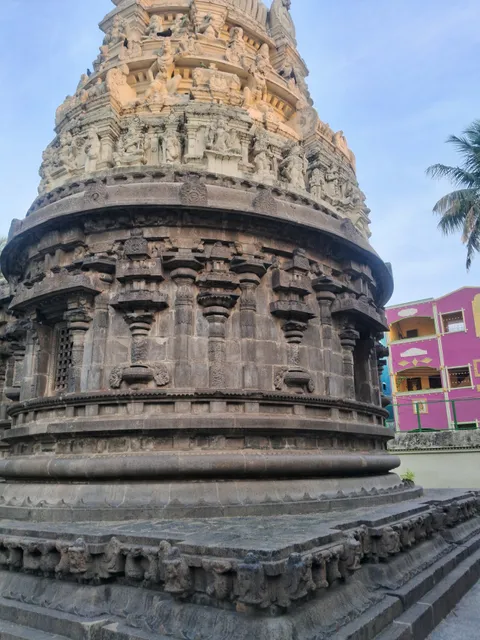
The temple is primarily constructed using sandstone, giving it a unique, earthy charm. The intricate carvings on the walls, pillars, and vimana (tower) are breathtaking, showcasing the skill and artistry of Pallava sculptors. The elaborate sculptures narrate stories from Hindu mythology, depicting gods, goddesses, and celestial beings with stunning detail. One of the highlights is the life-size depiction of Lord Shiva in various forms, including as Nataraja (the cosmic dancer), which adds to the temple's visual appeal.
The temple's layout follows a traditional Dravidian design, with a circumambulatory path around the sanctum, allowing devotees to walk in pradakshina (circumambulation) as part of their worship. The low-lying inner chambers and the beautifully designed mandapas (halls) evoke a sense of intimacy and serenity.
Spiritual Experience
As a functioning temple, it offers a deeply spiritual experience to visitors. The sanctum houses a Shiva Linga, the primary deity, and the atmosphere is serene and meditative. During festivals, the temple comes alive with rituals and celebrations, particularly during Shivaratri. The temple also has a rich tradition of hosting cultural events, adding to its cultural and spiritual significance.
Unique Features
The Fresco-Style Art: Some remnants of ancient frescoes can still be seen on the walls, giving a glimpse into the painting techniques of the Pallava period.
Outer Wall Shrines: The temple complex has several small shrines along its outer walls, each featuring intricate sculptures that represent various forms of Lord Shiva.
Tunnel-Like Pathways: A unique feature is the series of narrow tunnels within the temple, said to have been designed for defensive purposes during invasions.
Visitor Tips
Timings: The temple is open from early morning until evening, with a short break in the afternoon. It's best visited during the morning hours for a peaceful experience.
Guides: Hiring a local guide is recommended to fully appreciate the historical and artistic significance of the temple.
Footwear: Like all temples, footwear is not allowed inside, so wear comfortable sandals that are easy to remove.
Conclusion
The Kailasanathar Temple is not just a historical monument but a living piece of art and devotion. Its timeless beauty, coupled with its spiritual ambiance, makes it a must-visit destination for history enthusiasts, architecture lovers, and spiritual seekers alike. A trip to Kanchipuram is incomplete without experiencing the divine and artistic brilliance of...
Read moreThe Kailasanathar Temple in Kanchipuram is a magnificent ancient Hindu temple dedicated to Lord Shiva, built by the Pallava dynasty in the 8th century during the reign of King Narasimhavarman II (700-728 CE). This temple is considered one of the earliest and most important examples of Pallava architecture, marking the beginning of the Dravidian style of temple construction. The Pallavas, who ruled much of South India from the 3rd to the 9th centuries, were known for their military prowess, administrative skills, and cultural achievements, including their patronage of art and architecture. The Kailasanathar Temple showcases the architectural excellence of the Pallavas, with its intricate carvings, sculptures, and frescoes that adorn the walls and pillars. Built using sandstone and granite, the temple boasts a distinctive Pallava-style architecture, characterized by its simplicity, elegance, and precision. The temple's design and construction reflect the spiritual and cultural significance of the time, making it a UNESCO World Heritage Site and a protected monument by the Archaeological Survey of India.
The temple is open to visitors from 6:00 AM to 12:00 PM and 4:00 PM to 8:00 PM, allowing devotees and tourists to marvel at its beauty and historical significance. The temple's timings may vary on special occasions and festivals, so it's best to check before visiting.
A photographer's paradise, the Kailasanathar Temple offers a plethora of visual delights. The intricate carvings, ornate sculptures, and majestic architecture make for stunning compositions. The soft, warm light of dawn and dusk adds a magical touch, while the vibrant festivities and rituals provide a kaleidoscope of colors and emotions.
Some must-capture shots include:
The temple's facade, with its towering gopuram (entrance tower) and intricate carvings The ornate pillars, adorned with sculptures of gods, goddesses, and mythical creatures The majestic lingam, bathed in a warm, golden light The vibrant festivities, such as the annual Shivaratri celebration, with devotees dressed in colorful attire The intricate carvings and frescoes, showcasing the artistic mastery of the Pallava era
Tips for photographers:
Arrive early to capture the soft morning light Use a polarizing filter to reduce glare and enhance colors Experiment with different angles and perspectives to add depth and interest Respect the temple's rules and regulations, and seek permission for commercial photography or filming
By capturing the beauty and essence of the Kailasanathar Temple, photographers can preserve the memories of this ancient wonder for...
Read more